
LoRaWAN to MQTT Integration: Topic Design, Payload Decoding and Offline Recovery
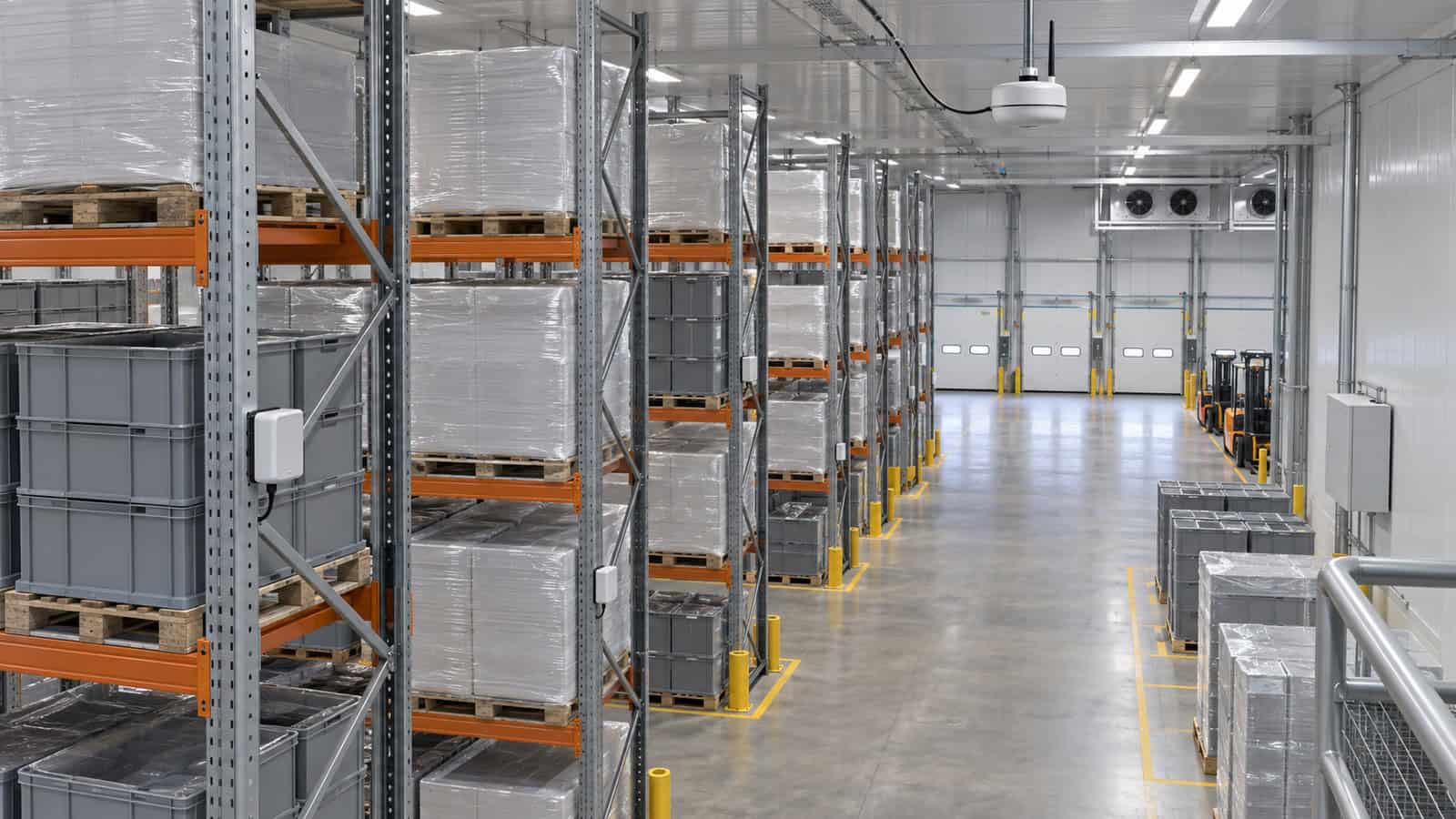
The Robustel LG3120e Industrial Edge Computing LoRaWAN Gateway is a good fit when a project needs LoRaWAN reception, an integrated LNS and local processing close to the field data. For MQTT integration, the gateway choice is only one part. Topic names, decoded payloads, timestamps, quality flags and replay behaviour must form a contract that downstream systems can operate.
The Integration Starts with a Data Contract
An MQTT integration usually becomes expensive at the boundary between a decoded value and the consuming application. The field name may be correct while unit, quality, timestamp or device identity is ambiguous. I would freeze those semantics before optimising the decoder, because downstream dashboards and alarms will otherwise encode assumptions that are hard to unwind later.
Start with the consumer. A maintenance application may need engineering units and quality, while a raw archive may retain original payload bytes and LoRaWAN metadata. Avoid embedding every changing attribute in the topic hierarchy; excessive topic depth makes permissions and subscriptions difficult to maintain.
| Contract field | Design question | Recommended treatment |
|---|---|---|
| トピック | What stable identity and purpose should subscribers select? | Use controlled site/device/message-type levels |
| Payload | Which decoded values and units are required? | Version a documented schema |
| Timestamp | When was the measurement made? | Preserve source time and ingestion time separately |
| Quality | Was decoding complete and data current? | Publish explicit status rather than silent nulls |
| Identity | Which physical sensor produced the value? | Map immutable device identity to managed business naming |
Retain the raw payload or a traceable reference when fault investigation requires it. A convenient JSON object is not sufficient if the team cannot reconstruct how a value was decoded.
The Robustel’s Smart Buildings, Sensors and BMS Integration Application Example illustrates the wider route from field sensing through LoRaWAN into an operational system. It is useful for assigning naming and handoff ownership; it does not prove compatibility with every MQTT broker or BMS.
Decoder Changes Need Their Own Lifecycle
Treat each decoder as software with fixtures. Store known payloads, expected values, units, ranges and failure cases. When a sensor firmware revision changes the format, route it to the correct decoder version rather than silently applying the old schema.
Reject impossible values with a visible error path. Do not let a truncated payload become a plausible zero. Record decoder version beside the output so an incorrect mapping can be traced and replayed.
The Robustel LG3120e Industrial Edge Computing LoRaWAN Gateway in the MQTT Data Path
Robustel LG3120e industrial edge computing LoRaWAN gateway combines LoRaWAN connectivity, an integrated LNS, local edge computing, cellular/Ethernet/Wi-Fi backhaul and industrial interfaces. This allows radio traffic, network-server functions and selected local integration to be placed in one edge platform when the project accepts that consolidation.
For deployments built on Robustel LG3120e, E2C Field adds a matched operational layer for LoRaWAN configuration, data collection, payload handling, local workflows, alarms, continuity and northbound integration. The gateway establishes the field and compute boundary while Robustel E2C Field makes that data path more visible and repeatable to operate, potentially reducing separately assembled integration work. The exact broker, schema and retention policy still belong to the project.
| LG3120e/E2C Field responsibility | Project responsibility |
|---|---|
| LoRaWAN gateway and integrated LNS role | RF survey, regional plan and endpoint qualification |
| Local data handling and supported northbound integration | Topic namespace, schema ownership and broker security |
| Documented continuity functions | Buffer sizing, retention, replay order and duplicate policy |
| Local visibility, alarms and workflows | Operational response and application reconciliation |
The LoRaWAN gateway applications video is useful when explaining the field-to-application path to developers and operations before they agree the MQTT contract.
Offline Recovery Has More Than Two States
When the broker is unavailable, define what is buffered, where, for how long and what happens at capacity. On reconnect, publish in a controlled order and distinguish historical records from live data. Include a stable message identifier or sequence so consumers can handle duplicates.
| State | Producer behaviour | Consumer expectation |
|---|---|---|
| Online | Publish current data normally | Process with current timestamp and quality |
| Broker unavailable | Buffer according to explicit capacity policy | No assumption that silence means zero |
| Reconnecting | Authenticate and establish subscriptions/session | Prepare for backlog plus live flow |
| Replaying | Rate-limit ordered historical data | Deduplicate and preserve source time |
| Buffer exhausted | Drop or aggregate by declared policy | Alarm and mark a known data gap |
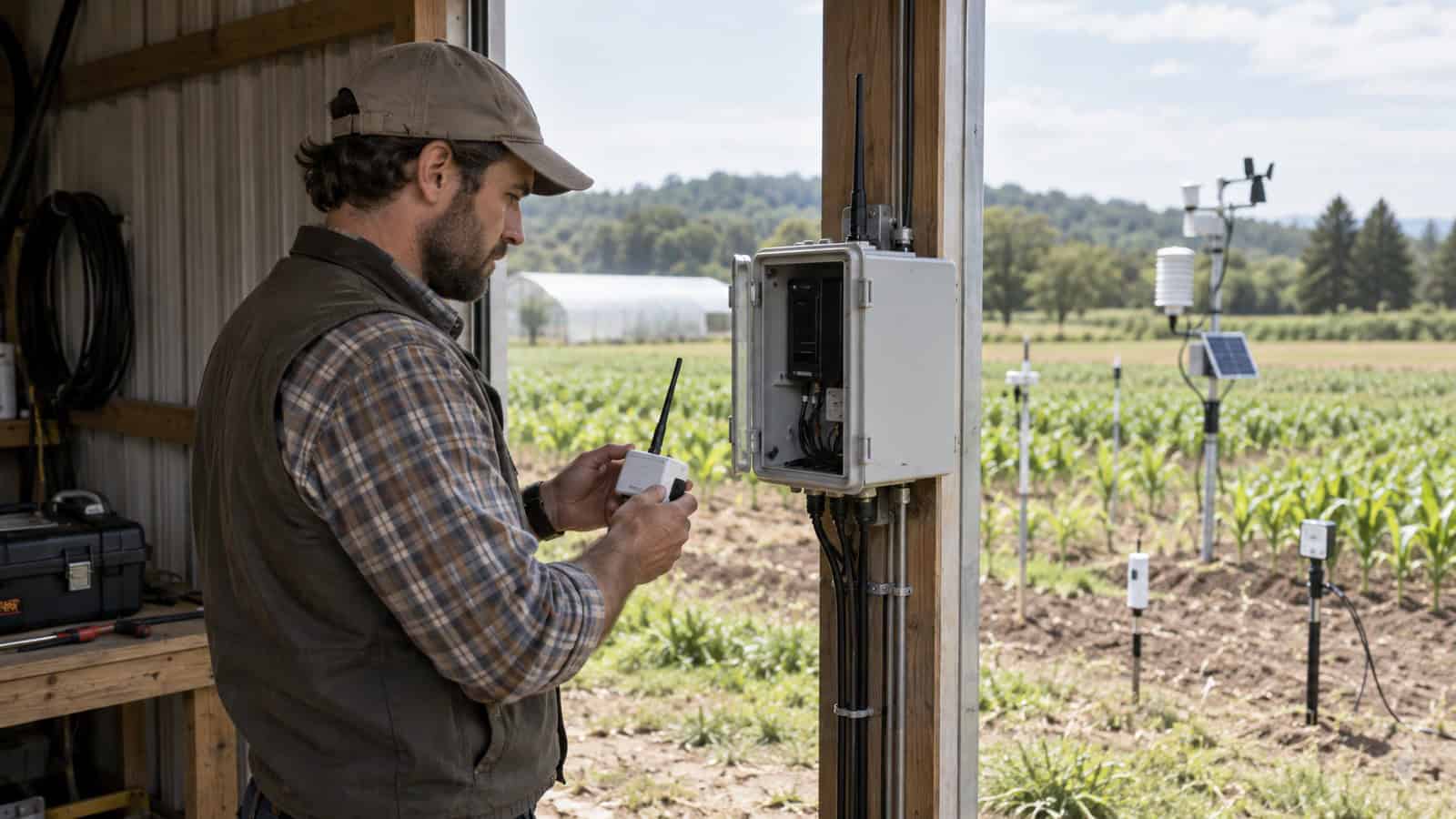
Robustel’s Private LoRaWAN for Smart Farm Sensors with the R1520LG Application Example uses another gateway but illustrates the same sensor–LNS–application separation. It helps identify where MQTT begins; it does not establish LG3120e or E2C Field performance.
Break the Connection Before You Trust the Integration
Test a broker outage long enough to create a meaningful backlog, then restore it while live sensor traffic continues. Verify ordering, duplicates, timestamps, alarm behaviour and resource use. Repeat with a malformed payload and an unexpected decoder version. The integration is ready when the failure produces an explicit state, not a quiet gap.
よくある質問
Q1. Can LoRaWAN send data to MQTT?
Yes. A network server or integration layer can publish LoRaWAN application data to an MQTT broker. The project must define decoding, topic structure, security and recovery behaviour.
Q2. What should an MQTT topic look like for IoT sensors?
Use a stable hierarchy based on managed identities such as organisation, site, device and message type. Keep changing measurements in the payload and design permissions around the topic levels.
Q3. Where is a LoRaWAN payload decoded?
It is normally decoded in the application or integration layer after LoRaWAN network processing. The decoder must match the device’s payload specification and firmware version.
Q4. Does MQTT guarantee no data loss?
No. MQTT quality-of-service levels address message delivery between clients and broker, but outages, storage limits, application acknowledgements and duplicate handling still need an end-to-end design.
Q5. What does the Robustel LG3120e Industrial Edge Computing LoRaWAN Gateway add to MQTT integration?
It combines the LoRaWAN gateway, integrated LNS and local edge-computing role, allowing selected decoding and integration work to remain near the field data. E2C Field can add the matched operational data layer when used on LG3120e.
結論
The Robustel LG3120e Industrial Edge Computing LoRaWAN Gateway fits deployments that want LoRaWAN reception and local data processing within one managed edge boundary. Its strongest role appears when the project treats topic design, payload semantics and replay behaviour as one data contract.
Freeze that contract with the consuming application connected, then test schema change, disconnection, duplicate delivery and recovery. The integration is complete when the receiver can explain what each replayed value means and how it should be handled.
Explore More Articles About Robustel LoRaWAN Gateways
著者について
Robert Liao | Technical Support Engineer
Robert is an IoT Technical Support Engineer at Robustel, specializing in industrial networking and edge connectivity. A certified Networking Engineer, Robert focuses on the deployment and troubleshooting of large-scale IIoT infrastructures. His work centers on architecting reliable, scalable system performance for complex industrial applications, bridging the gap between field hardware and cloud-side data management.