
How to Choose an IoT Edge Gateway for Your Industrial Deployment
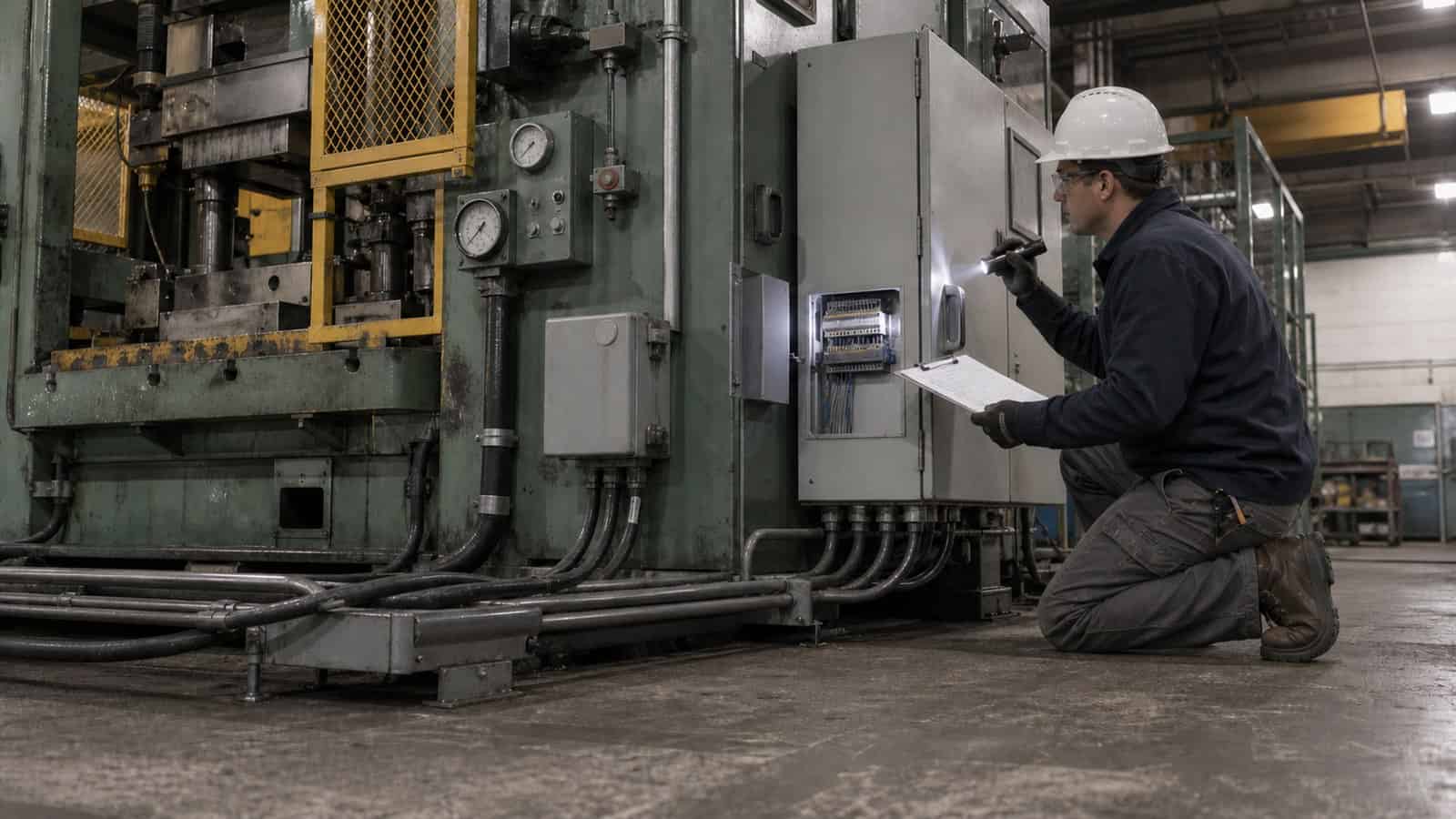
The Robustel EG5100 edge computing gateway is a good example of why an IoT edge gateway should be sized from the workload rather than from maximum available compute. It combines a Debian-based application environment, industrial interfaces and 4G connectivity for protocol bridging, buffering and moderate local processing without assuming that every deployment needs AI-class hardware.
Consider a factory project with two PLCs, twelve Modbus meters, several digital signals, an MQTT connection to a central platform and one containerized application that normalizes data locally. The selection problem is not “Which gateway has the strongest CPU?”
The engineering task is to describe the workload clearly enough that the required compute, storage, interfaces and connectivity can be derived from it.
Start with the Workload, Not the Gateway Model
A repeatable edge-gateway selection process should begin with four questions: what data enters the gateway, how much data arrives, what must happen locally and what leaves the site.
These questions provide a better starting point than a product catalogue because they separate lightweight gateway workloads from applications that genuinely need additional resources.
The Robustel Edge Computing Gateway portfolio can then be viewed as several hardware envelopes for different workloads rather than a hierarchy in which the highest specification is automatically preferable. Models differ in interface density, compute capability and cellular connectivity while sharing an industrial edge-computing software direction.
A useful workload declaration should record data sources, protocols, update frequency, required local processing, storage, northbound systems and environmental constraints before any model is shortlisted.
Quantify What Enters the Gateway and What Must Leave It
Data type can change the gateway requirement dramatically.
A dozen Modbus registers polled every few seconds create a very different workload from several IP cameras or a high-frequency vibration application. Data volume also changes according to whether the gateway forwards raw records, aggregates them locally or publishes only events.
The Robustel Smart Parking Application Example demonstrates this difference inside one application. Cameras, meters and sensors have different data and connectivity needs, while the Robustel EG5120 edge computing gateway is placed specifically where local ANPR processing can reduce what needs to leave the site.
For a new project, quantify at least:
| Workload input | What to establish |
|---|---|
| Data sources | PLCs meters cameras sensors controllers |
| Update pattern | Periodic continuous event-driven burst |
| Data volume | Representative normal and peak traffic |
| Local transformation | Decode normalize filter aggregate |
| Local retention | Buffer duration or database requirement |
| Northbound output | MQTT API SCADA cloud or other target |
The objective is not perfect forecasting. It is to avoid selecting hardware before the engineering team understands whether the workload is kilobytes of periodic telemetry or sustained high-volume processing.
Match Physical Interfaces and Protocols Before Adding Compute
The next step is to convert the workload declaration into physical connectivity.
If the project has two RS-485 buses, one Ethernet PLC and several digital inputs, those requirements should appear explicitly in the selection sheet. A gateway with a powerful processor but the wrong interface mix can create unnecessary converters, switches or redesign work.
The Robustel EG5100 edge computing gateway provides two software-configurable RS-232/RS-485 interfaces, DI/DO and two Fast Ethernet ports, with an optional CAN configuration for relevant workloads. This makes it suitable for many retrofit and machine-integration architectures where serial equipment remains important.
Robustel’s Connected CNC Machines Application Example shows this machine-side requirement in practice. An EG-series gateway connects directly to the CNC controller over serial interfaces so status, alarms and other useful machine data can be made available to remote support without replacing the underlying control system.
This is why interface sizing belongs before CPU sizing. The gateway must first be able to reach the devices that create the workload.
Size Local Applications, Storage and Processing Margin
Once the input side is known, the engineering team can define what the gateway must execute locally.
The RobustOS Pro edge computing operating system provides a Debian environment for containers and native Linux applications across supported Robustel EG gateways. That means resource sizing should include the operating footprint of the application, its dependencies, concurrent services and any local storage requirements.
For a modest protocol-conversion workload, resources required by a containerized connector and local buffering may be relatively limited. For multiple databases, computer vision or complex analytics, the requirement can rise substantially.
The EG5100 currently uses a 792 MHz Cortex-A7, 1 GB DDR3 and 8 GB eMMC. Robustel positions these resources for protocol bridging, buffering and local preprocessing rather than high-end AI inference.
This provides a useful selection boundary. A project should not move to higher compute merely because more capability exists, but it also should not choose a lightweight platform if testing shows the application will operate too close to its CPU, RAM or storage limits.
Representative pilot testing is therefore more reliable than an arbitrary utilization threshold.
Connectivity and Environment Complete the Hardware Requirement
Local compute is only one part of an IoT edge gateway.
The workload declaration should also specify where data goes when it leaves the site and what happens when that connection is interrupted. Ethernet may be primary in a factory, while 4G provides backup. A remote asset may use cellular as its only WAN.
The Robustel EG5100 edge computing gateway combines dual-SIM 4G/LTE with Ethernet WAN options, while its industrial design supports cabinet installations and the remote management functions needed for distributed sites.
The installation environment also changes the requirement. Temperature range, power supply, antenna placement, mounting, enclosure and access for maintenance should all be validated against the real cabinet or field installation.
A gateway that satisfies the application workload but cannot be installed reliably at the site is still the wrong gateway.
How the Robustel EG5100 Edge Computing Gateway Fits Moderate Industrial Edge Workloads
The Robustel EG5100 edge computing gateway is best understood as a moderate industrial edge platform rather than a reduced version of a higher-end model.
It fits workloads where Linux applications, Docker-based protocol connectors, local buffering and industrial interfaces create genuine value, while AI acceleration or very high Ethernet density are not required.
Once those workload boundaries have been established, the differences between EG-series models become easier to interpret. Robustel’s EG5000 Series Quick Pitch video gives a product-level view of the family at the point where workload requirements can be mapped to different gateway configurations.
A typical EG5100 workload could combine serial polling, basic normalization, temporary storage and secure publication to SCADA or cloud infrastructure. A multi-camera analytics application would move the selection towards a substantially different resource profile. The model choice is therefore the output of workload sizing, not the starting assumption.
Turn the Workload Definition into a Repeatable Selection Matrix
A repeatable worksheet helps engineering, procurement and software teams use the same project definition:
| Selection field | Project requirement | Hardware implication |
|---|---|---|
| Data sources | Number and type of assets | Interface count |
| プロトコル | Modbus serial CAN IP etc. | Port and application support |
| Data volume | Normal and peak | CPU storage WAN |
| Local processing | Filter convert analyze | Compute and RAM |
| Local storage | Buffer/history | eMMC or external storage |
| アプリケーション | Container/native software | OS and runtime |
| Northbound path | MQTT SCADA API cloud | Networking and software |
| WAN | Ethernet 4G 5G | Modem/interface |
| Site | Cabinet power temperature | Environmental fit |
| Operations | One site or large fleet | Remote management |
The same method can then be reused when a project changes.
Adding cameras changes the data volume and Ethernet requirements. Adding a local database changes storage. Replacing simple conversion with AI inference changes compute. Expanding from five sites to 500 changes operational requirements.
The framework remains stable even when the product selection changes.
よくある質問
Q1. How much CPU does an IoT edge gateway need?
There is no universal requirement. CPU demand depends on the number of local services, data rate, protocol processing, databases, analytics and other applications. Representative software should be tested on the intended hardware rather than choosing solely from clock speed.
Q2. When is the Robustel EG5100 edge computing gateway a good fit?
The Robustel EG5100 edge computing gateway fits moderate industrial edge workloads involving serial integration, containerized protocol connectors, local buffering and preprocessing. Projects requiring high-volume video or AI inference should evaluate a different compute profile.
Q3. Should I select interfaces before compute?
They should be evaluated together, but physical and protocol requirements are useful early filters. A gateway cannot execute the intended workload if it cannot reach the equipment without additional hardware or redesign.
Q4. How much local storage does an edge gateway need?
Storage depends on application size, logs, databases and the amount of data that must remain available during WAN outages. Calculate these requirements from the intended retention period and expected data rate rather than choosing storage from a generic minimum.
Q5. Is higher compute always safer for future expansion?
Extra capacity creates headroom, but it can also increase cost and may introduce capability that is never used. Future margin should be based on credible application growth rather than an assumption that the most powerful gateway is automatically the safest purchase.
結論
Choosing an IoT edge gateway becomes easier when the project is translated into a workload specification before hardware is compared.
The Robustel EG5100 edge computing gateway illustrates a practical middle ground for projects that need Linux applications, protocol integration, buffering and local preprocessing without high-end edge AI resources.
Define the inputs, data volume, protocols, local applications, storage, WAN and installation environment first. Then select a gateway with enough capacity and appropriate margin to execute that workload reliably.
This method prevents both under-sizing and unnecessary over-specification.
Related Reading on Robustel’s Edge Computing Solutions in Industrial IoT:
著者について
Robert Liao | Technical Support Engineer
Robert is an IoT Technical Support Engineer at Robustel, specializing in industrial networking and edge connectivity. A certified Networking Engineer, Robert focuses on the deployment and troubleshooting of large-scale IIoT infrastructures. His work centers on architecting reliable, scalable system performance for complex industrial applications, bridging the gap between field hardware and cloud-side data management.