
How to Choose a 5G Router for Buses, Fleets and Connected Vehicles
The Robustel R5020 Industrial 5G Router fits connected-vehicle deployments that need 5G/LTE backhaul, onboard Ethernet and Wi-Fi, optional GNSS and vehicle-oriented installation options. But selecting a vehicle router requires more than checking cellular speed: power behaviour, antenna placement, route coverage, traffic separation and remote fleet operations must all work through the vehicle’s complete duty cycle.
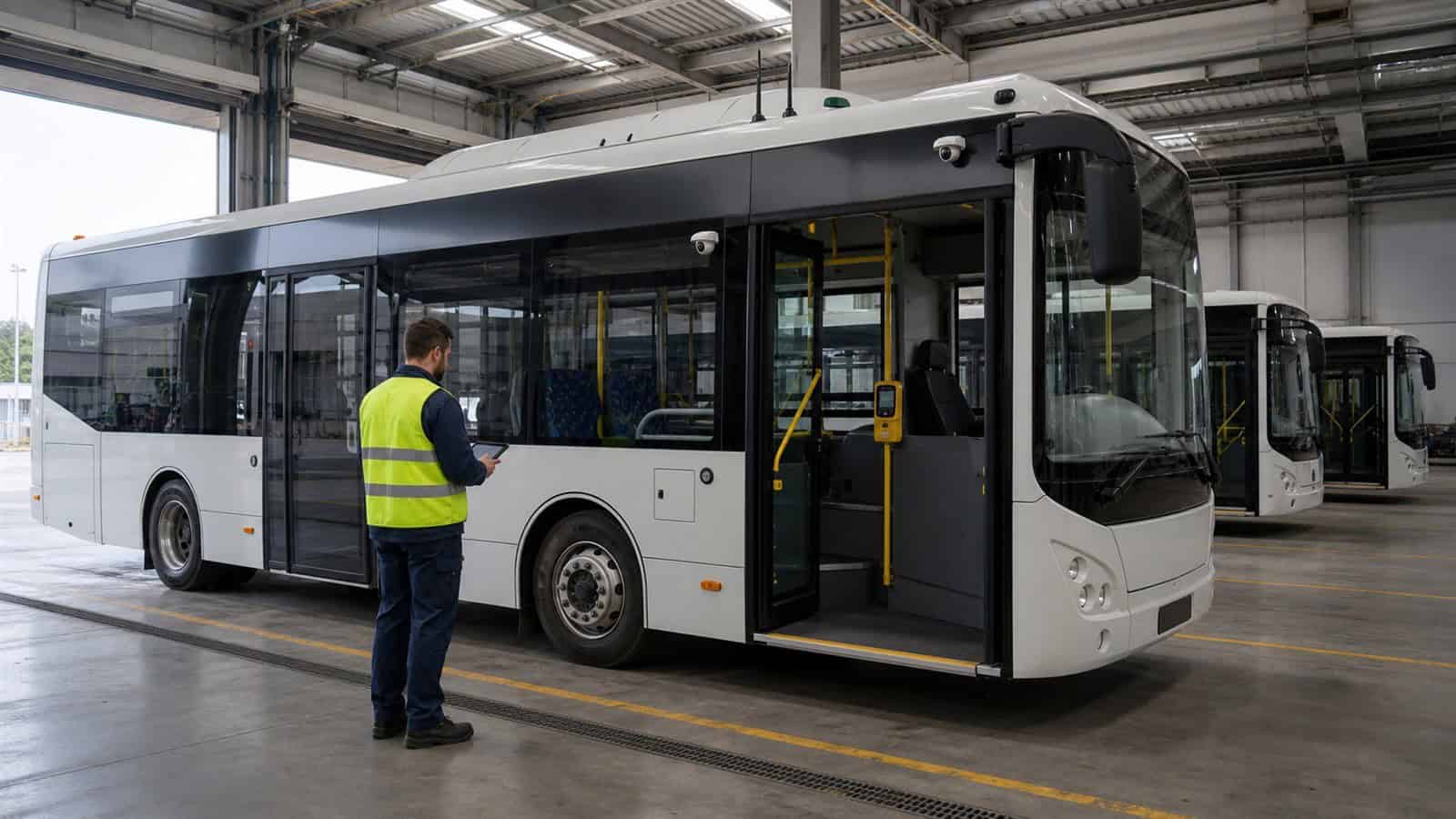
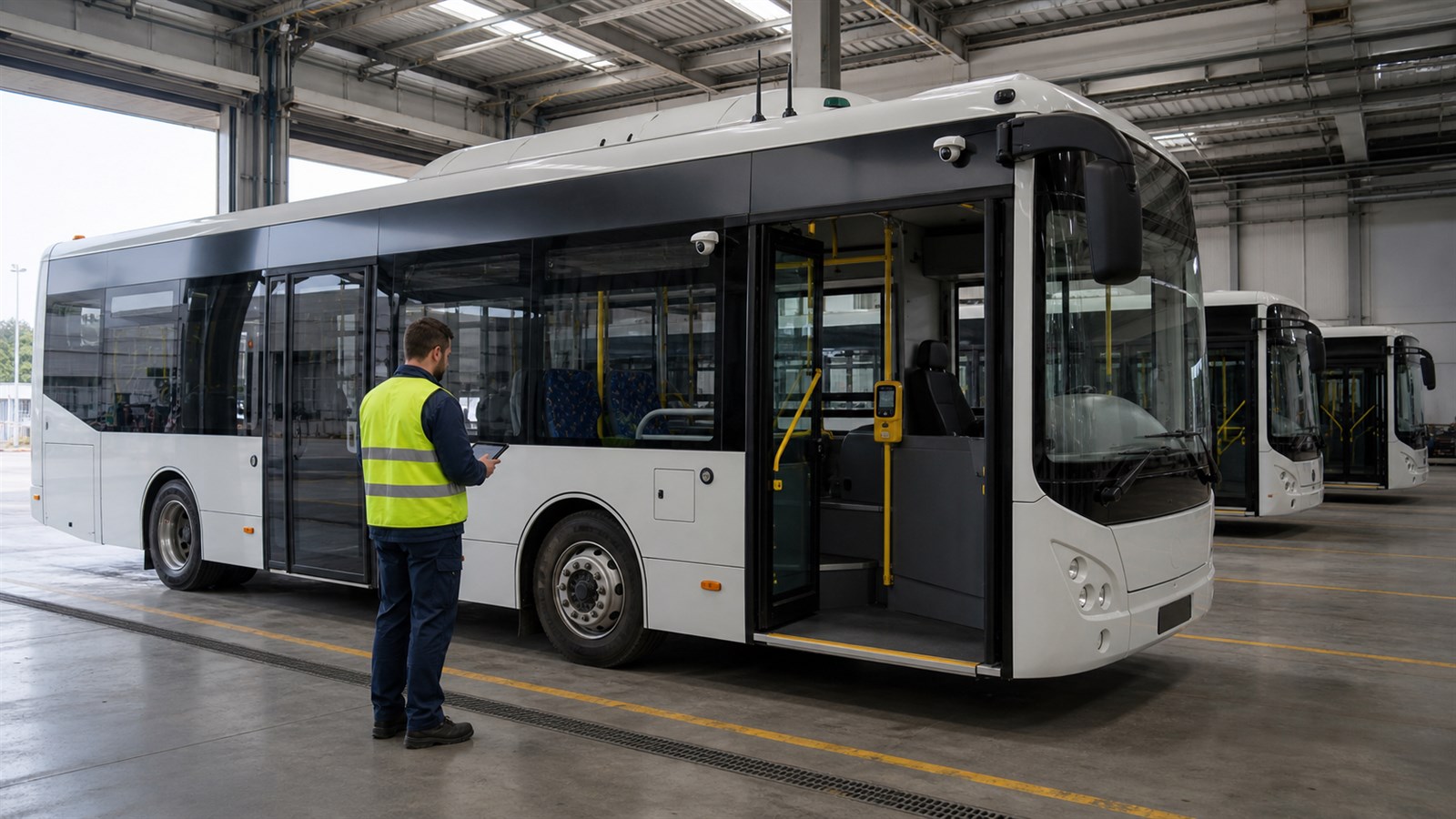
- At 05:30, a bus leaves the depot.
- By 06:00, dozens of passengers may be using onboard Wi-Fi.
- At 09:15, the route crosses a weak cellular area.
- At midday, the operations team needs to diagnose a connectivity complaint without stopping the vehicle.
- At 23:00, the bus returns to the depot and becomes available for maintenance.
The router experiences all of those states. A useful vehicle selection process should therefore follow the journey: Depot → power-up → route → coverage change → onboard services → incident → return
A Vehicle Router Has to Work Through the Whole Journey
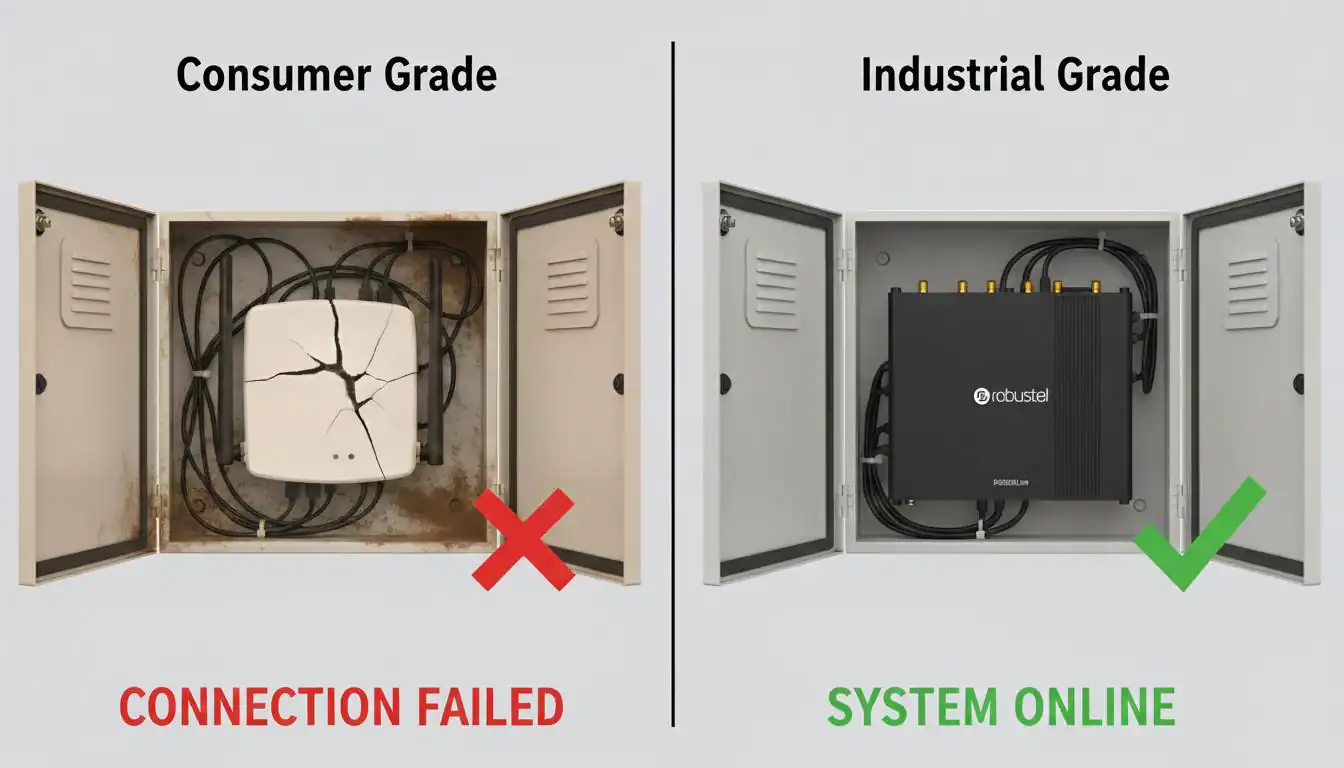
A router that performs well on an office desk has passed only the easiest test.
Vehicle networking adds conditions that fixed-site routers may never experience:
- Repeated power cycles
- Variable input power
- Continuous movement
- Rapid changes in cellular conditions
- Multiple antennas in limited installation space
- Passenger and operational traffic sharing one WAN
- Limited opportunities for physical maintenance
That changes procurement. Instead of asking only: What is the router’s peak 5G speed? Ask: What happens to connectivity from engine start to end of service?
For a Robustel vehicle-router deployment, the operating profile should identify:
- How the router receives vehicle power
- When it starts and shuts down
- Where cellular and Wi-Fi antennas can be installed
- Whether GNSS is required
- Which SIM/carrier strategy is used
- Which onboard devices need Ethernet
- Whether passenger Wi-Fi is required
- Which traffic must remain isolated
- Who supports the router remotely
- What happens after temporary coverage loss
These requirements are connected.
A good antenna cannot compensate for a poor power design. Dual SIM does not solve a router that is repeatedly shut down incorrectly. High 5G throughput does not make passenger traffic safe to mix with operational systems.
Power and Antennas Decide Whether Connectivity Starts Reliably
Vehicle power should be treated as part of the network architecture. A bus, ambulance or service vehicle may expose the router to startup/shutdown cycles that are completely different from a stable 24 V industrial cabinet.
The selected hardware should match the actual voltage environment and installation design. Where ignition-related behaviour is required, verify that it exists on the specific ordered variant rather than assuming every version of a router has the same vehicle interface.
The Robustel R5020 illustrates this point well. Robustel currently lists dedicated Vehicle ACC variants for EMEA/APAC, together with E-Mark certification, and describes an ignition-sense option intended for vehicle deployments. Optional GNSS availability also depends on the specific model.
That means procurement should record an exact orderable variant, not simply: Robustel R5020. Antenna design is equally important. Modern 5G routers may require several cellular antenna connections, plus separate Wi-Fi and GNSS antennas where those features are used.
Their installation should consider:
- Physical separation
- Cable length and loss
- Metal bodywork
- Roof or external mounting options
- Nearby radio systems
- Connector protection
- Installation repeatability between vehicles
The test antenna placed beside a router on a bench is not the final vehicle installation. Coverage acceptance should therefore be performed with the real antennas in their production locations.
Mobility Turns Coverage into a Route-Level Requirement
A fixed branch can be surveyed at one location. A vehicle cannot. One point showing excellent 5G signal tells the fleet team very little about a 70-kilometre route. Map the operating path.
The route may contain:
- Strong 5G
- → congested urban cell
- → tunnel
- → LTE-only area
- → rural weak coverage
- → strong 5G again
A vehicle router therefore needs a tested recovery strategy. Relevant questions include:
- Does the modem remain usable when 5G quality declines?
- Can it fall back to LTE where required?
- How does it recover when stronger coverage returns?
- Does the application tolerate cellular reconnection?
- Is another carrier justified for difficult route sections?
- What happens to VPN sessions during a network transition?
Dual SIM can help where carrier diversity is genuinely available, but it should not be described as seamless connectivity under every failure. Carrier coverage may overlap. Both networks may be poor in the same tunnel. Changing SIM or radio path can also affect IP addressing and application sessions.
Robustel’s Emergency Services and Public Safety Vehicle application example illustrates why route-level connectivity matters. The example combines an R5020 with dual-carrier strategy, encrypted connections, onboard segmentation and central monitoring for vehicles carrying applications such as dispatch, mapping, video and location services.
The design lesson is broader than emergency services: Mobility should be tested as a sequence of changing network conditions, not as one signal-strength reading.
Separate Passenger, Operational and Maintenance Traffic
Now the bus reaches its morning peak. Passengers connect to Wi-Fi. At the same time, onboard systems may include:
- Ticketing
- Vehicle telemetry
- Driver systems
- CCTV
- GNSS/location reporting
- Maintenance equipment
These traffic types should not automatically share one unrestricted LAN because they happen to use the same 5G WAN.
Robustel’s 5G Passenger Wi-Fi for Public Transport application example uses Robustel R5020 with RCMS and Wi-Fi Portal Manager, while explicitly separating passenger Wi-Fi from systems such as ticketing and vehicle telemetry. It also addresses fleet-wide policy, data usage and remote management.
That example highlights an important purchasing requirement: A vehicle router is not simply a “5G hotspot.” It may become the boundary between multiple onboard networks with very different operational consequences. The router therefore needs enough interfaces and policy control for the actual vehicle architecture.
How the Robustel R5020 Industrial 5G Router Fits Connected Vehicle Deployments
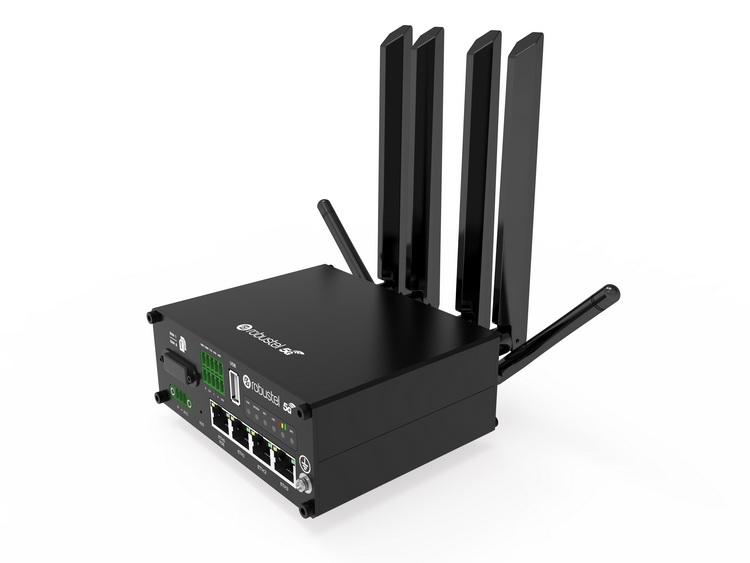
The Robustel R5020 Industrial 5G Router combines several capabilities relevant to connected fleets.
Current product information includes:
- 5G and LTE connectivity
- Dual physical SIMs
- Four Gigabit Ethernet ports
- Dual-band Wi-Fi
- Optional GNSS on supported variants
- Vehicle ACC variants
- E-Mark certification on applicable models
- VPN and firewall functions
- RCMS centralized management
That allows different vehicle architectures.
Public transport
- Passenger Wi-Fi + onboard systems
- → segmented R5020 networks
- → 5G/LTE
- → internet / operations platforms
Emergency vehicle
- MDT + cameras + crew devices
- → R5020
- → cellular backhaul + encrypted corporate access
Service fleet
- Controller / diagnostic equipment
- → Ethernet or Wi-Fi
- → R5020
- → remote operations
The product still needs to be qualified against the vehicle. Do not infer vibration compliance, installation suitability or power behaviour from the word “industrial” alone. Request the current certification/test documentation appropriate to the exact variant and vehicle market.
Likewise, GNSS and ignition-related functions should be specified explicitly in the bill of materials if the deployment depends on them.
Remote Support Becomes Part of Vehicle Availability
A stationary router can wait until someone visits the cabinet.
A vehicle may be 200 kilometres away when the problem occurs.
Fleet support therefore needs enough information to answer:
- Is the router online?
- Which carrier is active?
- What signal conditions is the vehicle seeing?
- Is data usage abnormal?
- Which firmware/configuration is installed?
- Is the issue limited to one vehicle or common to the route?
The Robustel RCMS remote device management platform supports centralized status, alerts, configuration, firmware and fleet-management workflows across Robustel devices. This matters more as fleet size grows. One vehicle can be managed manually.
Two hundred vehicles require:
- Groups
- Known configuration profiles
- Controlled updates
- Alerting
- Activity history
- Consistent support procedures
Remote management does not remove depot maintenance. It helps operations determine whether a connectivity complaint needs network investigation, configuration correction or physical inspection before the vehicle is pulled from service.
Qualify the Router on the Route, Not on a Workbench
Vehicle acceptance should reproduce the real duty cycle. A useful test profile is:
| Vehicle state | What to validate |
|---|---|
| Depot | Provisioning configuration firmware |
| Power-up | Stable startup and intended power behaviour |
| Route start | Cellular registration and required VPNs |
| Normal travel | Application traffic and GNSS where used |
| Weak coverage | LTE fallback/recovery behaviour |
| Carrier change | SIM policy and application impact |
| Passenger load | Wi-Fi usage and traffic separation |
| Incident | Remote diagnostics and recovery |
| Return to depot | Logs updates and maintenance workflow |
The final test should also use production antennas and representative onboard equipment. Do not hand over the fleet because one router completed a speed test.
A connected vehicle is successful when: power → radio → onboard LAN → applications → remote operations all continue working through the environments the vehicle will actually encounter.
よくある質問
Q1. What makes a 5G vehicle router different from a normal office 5G router?
Vehicle deployments add variable power, repeated startup/shutdown, mobility, changing cellular coverage, antenna constraints and remote fleet maintenance. Some projects also require vehicle-specific approvals, GNSS or ignition-related functions. Those requirements should be validated for the exact router variant rather than inferred from 5G capability alone.
Q2. Is the Robustel R5020 Industrial 5G Router suitable for buses?
Yes, the Robustel R5020 Industrial 5G Router has variants and features intended for in-vehicle connectivity, including E-Mark-certified models, vehicle ACC options and optional GNSS. The final variant, power design, antenna installation and network configuration still need to match the specific bus project.
Q3. Does dual SIM guarantee continuous connectivity while a vehicle moves?
No. Dual SIM provides another carrier option, but both networks can have weak coverage in the same area, and switching may affect sessions or IP addressing. Route testing is still required to understand real coverage and recovery behaviour.
Q4. Should passenger Wi-Fi share the same network as ticketing or CCTV?
Normally these traffic classes should be separated according to the project’s security policy. Passenger devices are untrusted compared with operational systems. VLANs, firewall rules and separate SSIDs can be used to maintain logical separation while sharing the same 5G backhaul.
Q5. How should a vehicle 5G router be tested before fleet rollout?
Test with the final power source, antennas, SIMs, onboard devices and route. Include startup, weak coverage, 5G/LTE transitions, application sessions, traffic segmentation, remote management and recovery after network interruptions. A static bench test is not enough for a mobile deployment.
結論
Choosing a 5G router for buses, fleets and connected vehicles means selecting for an operating cycle rather than one network condition. The Robustel R5020 Industrial 5G Router provides 5G/LTE backhaul, onboard networking, vehicle-oriented variants, optional GNSS and centralized fleet management that can fit many connected-vehicle architectures.
But product selection should follow the vehicle: Power-up → route → coverage changes → onboard traffic → remote support → depot
Validate the exact hardware variant, antenna layout, carrier strategy and application behaviour throughout that journey. The best-fit vehicle router is not the one that produces the highest speed beside the depot. It is the one that remains manageable and useful through the complete route and operating day.
Explore more articles about Robustel industrial 5G routers:


著者について
Robert Liao | Technical Support Engineer
Robert is an IoT Technical Support Engineer at Robustel, specializing in industrial networking and edge connectivity. A certified Networking Engineer, Robert focuses on the deployment and troubleshooting of large-scale IIoT infrastructures. His work centers on architecting reliable, scalable system performance for complex industrial applications, bridging the gap between field hardware and cloud-side data management.