
Edge Computing Gateway Cost and TCO Guide: Hardware, Cloud Traffic and Maintenance
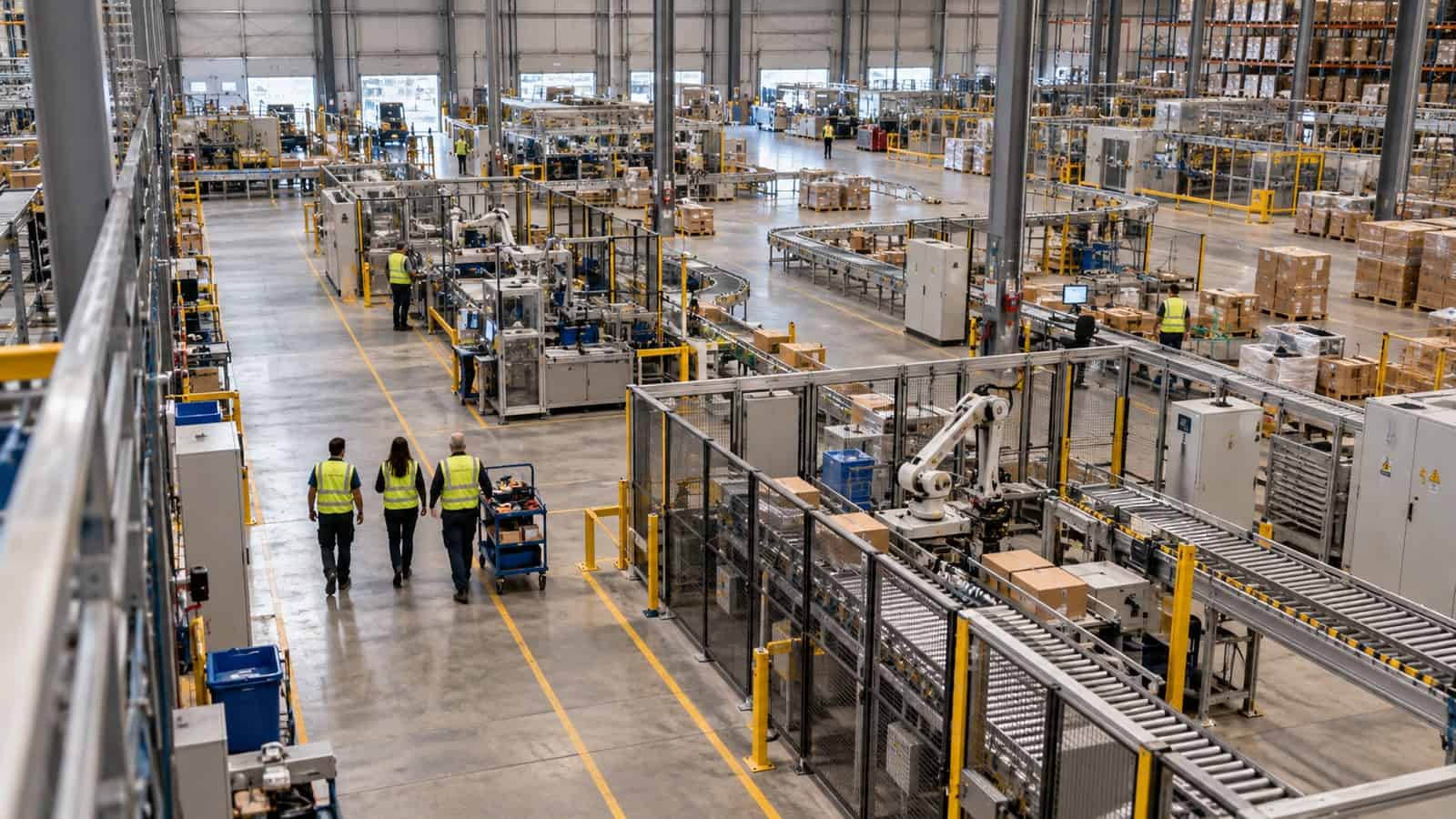
The Robustel EG5120 Edge Computing Gateway should be costed as a managed site platform—hardware, application, mobile service, cloud traffic and field support—not as an isolated purchase price. Edge processing can reduce upstream data and make remote diagnosis easier, but only when those savings exceed application engineering, lifecycle and maintenance effort.
Use a Cost Model With Named Assumptions
Calculate TCO over the intended service life and show site count, labour rate, travel, data plan, storage, cloud ingestion, software support, replacement stock and update frequency. Separate one-time development from recurring operations; otherwise a pilot looks expensive and a bespoke estate looks artificially cheap.
TCO = acquisition + integration + connectivity + cloud + operations + maintenance + retirement − avoided costs
Avoided costs need evidence. Estimate fewer site visits only for faults that can actually be diagnosed or recovered remotely. Estimate lower cloud traffic from a measured before-and-after data profile, not a generic percentage.
The Robustel video “Why Do We Need Edge Computing If We Have the Cloud?” gives commercial stakeholders a useful starting point for the local-versus-cloud cost discussion. The spreadsheet still needs the selected EG5120 configuration, workload, support process and measured traffic profile.
Cloud Traffic Is a Data-Design Choice
Inventory raw sample rate, payload size, metadata, transport overhead, acknowledgements and replay. Then define local filtering, aggregation or event rules. A one-second sample can become a one-minute summary without losing the required operational decision, while an alarm transition may need immediate delivery and its preceding context.
Model normal traffic and incident bursts. Local buffering reduces loss during WAN outages but can produce a large replay bill and cloud-processing spike after reconnection. The receiving system must distinguish delayed history from live alarms.
Robustel’s smart-parking application example includes the EG5120 for local ANPR-related processing and offers a concrete traffic pattern for the TCO workshop: high-volume source data can be handled locally while selected results travel upstream. Price the benefit from the project’s measured before-and-after traffic and support effort, because retention rules and incident replay can materially change the result.
Maintenance Often Dominates the Hardware Delta
Count credential rotation, certificate renewal, container updates, OS maintenance, SIM administration, log review, backups and failed-device replacement. Give each task an owner and a remote/on-site classification. An architecture that saves a small amount of data while requiring manual updates at every site has shifted cost rather than removed it.
Keep engineering time and operational time separate in the model. Building a reusable parser or container image is a one-time investment; investigating a different register map at every site is recurring variation. That distinction helps procurement see whether the proposed platform is genuinely repeatable or merely spreads custom integration across many purchase orders.
Robustel’s secure remote-access application example using the EG5120 shows the same-model service mechanism: a managed gateway can give support teams controlled visibility into deployed equipment. Use the pilot to identify which incidents that visibility resolves remotely and which still need a site visit; those observed hours belong in the TCO model.
| Cost driver | Measure in pilot | Scale question |
|---|---|---|
| Data reduction | Raw versus transmitted bytes | Is the rule stable across sites? |
| Application care | Hours per update and rollback | Can changes be staged in groups? |
| Incident work | Remote diagnosis versus visit | Which faults remain physical? |
| Replacement | Time to restore config and data | Is a known-good image available? |
How the Robustel EG5120 Edge Computing Gateway and E2C Factory Affect TCO
The Robustel EG5120 edge computing gateway supplies a Debian-based RobustOS Pro environment with Docker, industrial interfaces and cellular/Ethernet connectivity for local applications. It can run collection, normalisation, buffering or analytics workloads whose exact resource fit should be benchmarked on the intended memory configuration.
On this compatible model, Robustel E2C Factory can reduce integration friction by bringing documented industrial collection, local operations, visibility, workflows and northbound delivery into a Robustel-developed application. The combined hardware-and-software boundary can make deployment more repeatable and data problems easier to see than a collection of unrelated scripts. Include configuration, training and lifecycle effort in the TCO rather than presenting the application as free operational value.
Robustel RCMS platform supports gateway-fleet visibility, configuration and maintenance workflows. Keep application KPIs and process-data quality in E2C Factory or the consuming system so the management plane does not become the business dashboard.
Run Three TCO Scenarios
Build conservative, expected and stressed cases. The stressed case should include higher mobile use, one extra application update per year, a failed storage device or corrupted configuration, and more site visits than planned. If the business case disappears under a modest stress, the design needs a stronger operating model.
Revisit the model after the pilot with real byte counts and labour records. Procurement can then compare architectures on observed workload instead of feature lists.
よくある質問
Q1. What is the cost of an edge gateway?
Purchase price is only one component. Integration, connectivity, cloud services, application support, field work, spares and retirement often determine the larger lifecycle cost.
Q2. Does edge computing reduce cloud costs?
It can when local filtering or aggregation removes data the cloud does not need. The saving should be measured against the added application-development and maintenance effort.
Q3. What is included in edge computing TCO?
Include hardware, engineering, software, security maintenance, WAN service, cloud ingestion and storage, support labour, replacements and decommissioning over a stated period.
Q4. Is edge computing cheaper than cloud computing?
Neither is universally cheaper. The better split depends on data volume, latency, outage behaviour, local compute needs and the teams available to operate each layer.
Q5. How can the Robustel EG5120 Edge Computing Gateway with E2C Factory improve TCO?
The pairing can provide a more repeatable boundary for industrial data collection, local processing and managed operations. Savings must still be proven from traffic and maintenance records for the target workload.
結論
The Robustel EG5120 Edge Computing Gateway supports a TCO case when local processing and managed remote operations solve measured cost drivers, not when edge computing is added as another technology layer. E2C Factory can strengthen that case on the compatible model by making the industrial data path more coherent and supportable.
Approve the business case with pilot byte counts, update effort and incident records. Those figures reveal whether the project removed recurring work or merely moved it into a new box.
Explore More Articles About Robustel Edge Computing Gateways
著者について
Robustel Editorial Team
The Robustel Editorial Team publishes practical articles on industrial connectivity, edge computing, LoRaWAN and device management, focusing on deployment considerations, technical limitations and long-term operation.