
5G Router Data Usage Cost Guide: Forecasting SIM Plans for Industrial Sites
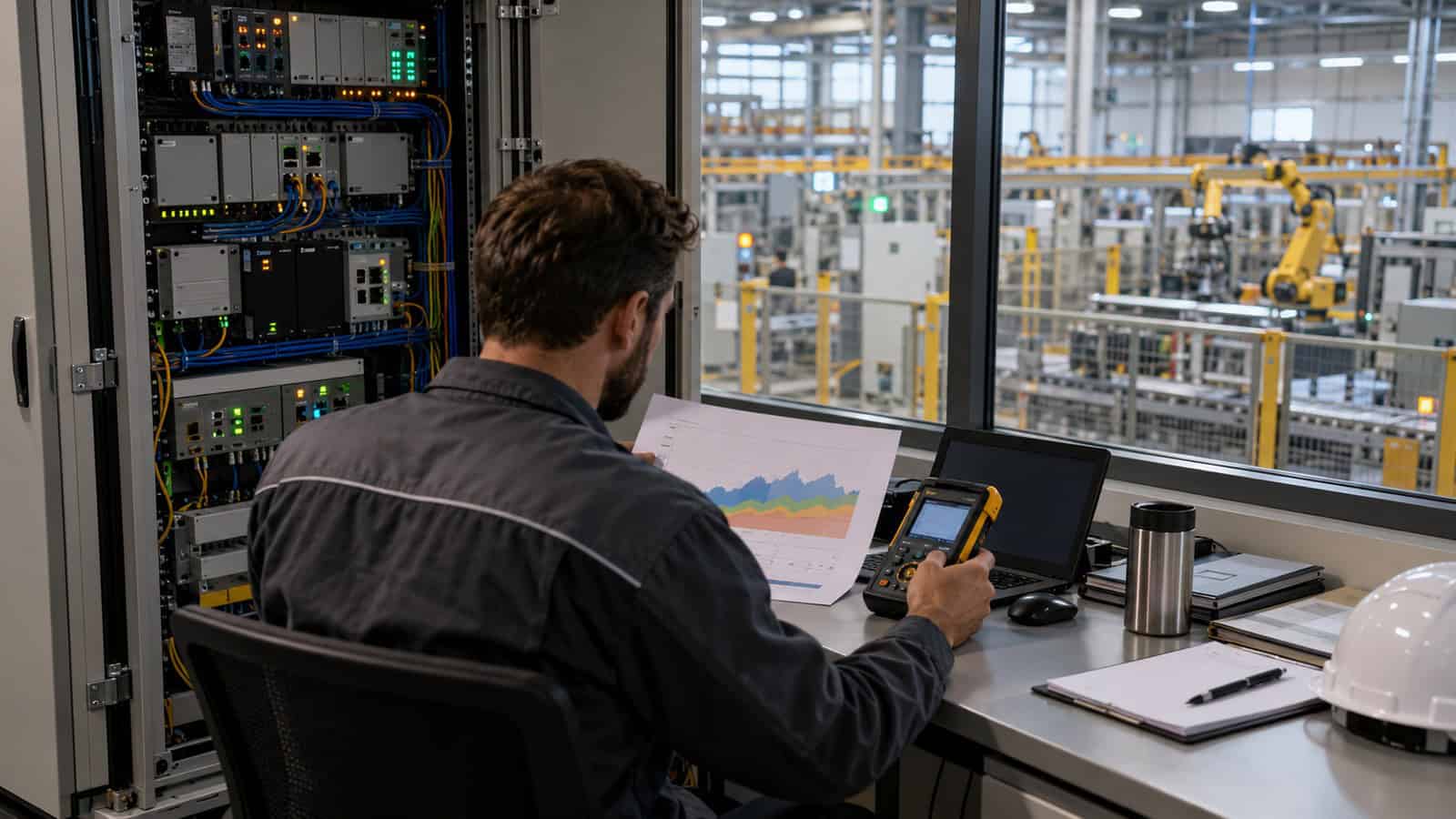
The Robustel R5020 Industrial 5G Router gives an industrial site enough interface and management flexibility to carry several traffic classes, but the SIM plan should be forecast from telemetry, video, updates, remote support, retries and management traffic separately rather than from an assumed monthly average.
Build the Forecast from Workload Events
For each flow, record payload size, messages or active seconds, frequency and number of sources. Then add protocol overhead, retries and exceptional events.
Monthly traffic = Σ(payload × events × assets) + overhead + retries + updates + human sessions
Keep units explicit. A 500-byte payload every minute is not 500 bytes on the mobile bill: transport, encryption, session setup and network accounting add traffic. Video is better estimated from measured bitrate and viewing/upload duration than from frame resolution alone.
| Traffic class | Normal driver | Peak or exception to model |
|---|---|---|
| telemetry | payload × interval × assets | reconnect replay and retries |
| alarms | event frequency | storm or repeated acknowledgement |
| video/images | bitrate or file size × duration | incident review and bulk upload |
| maintenance | engineer session | logs, backups and remote desktop |
| updates | package size × devices | failed/repeated download |
| management | keepalive and reports | shorter intervals during diagnosis |
Work One Day Before Multiplying to a Month
Consider a site with periodic telemetry, two short remote-support sessions per month and a monthly firmware package. Calculate the normal day, the maintenance day and a fault day with retries or video review. Multiply each by its expected frequency; do not spread the fault traffic invisibly across every day.
Robustel’s fixed-line backup application example shows why the scenario matters. A cellular link that normally carries only backup health traffic can become the site’s full WAN during an outage. The data plan must cover that changed workload or enforce an intentional restricted policy.
Validate the three day-types against a pilot record with start and end times for each event. Compare router/application counters with the carrier total, then assign any unexplained traffic to an investigation rather than a rounding allowance. Operations should approve the normal workload, IT the update and support windows, and procurement the commercial headroom used when those events overlap.
Separate the SIM Bill from Management Traffic
RCMS traffic is one component of the total. The Robustel official RCMS cellular data-usage guide documents how keepalive, collection and upload intervals change approximate management usage and notes that network conditions can increase traffic. Use those figures for the applicable RCMS configuration, then add the site’s own applications.
The Robustel’s video of “What Is an Industrial 5G Router and When Do You Need One?” can help non-network stakeholders list the traffic roles passing through the router. Turn that list into owners: operations owns telemetry assumptions, security owns video, IT owns updates and remote access, and procurement owns the commercial plan.
Measure those roles separately during the pilot. Router and RCMS counters can show the cellular total, while application or firewall records should identify the main contributors and their busy periods. Reconcile both views with the carrier record after a known test window; unexplained differences become an investigation item before the monthly allowance is multiplied across the fleet.
How the Robustel R5020 Industrial 5G Router Supports Data-Usage Governance
Robustel R5020 Industrial 5G Router provides four Gigabit Ethernet ports, serial connectivity, dual SIM and RCMS support. That makes it suitable for sites where several local systems share a cellular WAN and the operations team needs visibility across a fleet.
The governance value comes from comparing actual counters and operating events with the forecast. A rising site should be investigated by traffic class: a new camera policy, failed update, changed telemetry interval, VPN session or unstable link may be responsible. The router does not know the business meaning of every byte, so application and change records remain essential.
Robustel’s Jones Technology retail case study demonstrates the operational importance of managing distributed 5G sites consistently. For data planning, the lesson is to compare stores or sites by workload and exception history rather than assuming one estate-wide allowance fits every location.
Review Variance Before Changing the Plan
Set review bands around the forecast, not around an arbitrary universal threshold. When actual use is higher, check time, interface and operational events. When it is lower, confirm that data is still arriving; low consumption can indicate a quiet workload or a failed application.
| Variance pattern | First check | Decision |
|---|---|---|
| short peak, known maintenance | update/support record | retain or schedule differently |
| repeated daily rise | interval or new source | revise configuration/forecast |
| high use with poor signal | retries and reconnects | investigate RF and sessions |
| unexpectedly low | application freshness | restore service before resizing |
よくある質問
Q1. How much data does a 5G router use?
The router carries the traffic generated by connected applications plus its own management and protocol traffic. Usage can range widely, so calculate it from the workload.
Q2. Does a router use data when no one is connected?
It may. Keepalives, monitoring, VPNs, time synchronisation, updates and automated devices can continue to exchange data without an active human session.
Q3. How much data does remote video use?
It depends on measured bitrate, viewing or upload duration, stream count and encoding. Incident review and retained-footage upload often matter more than the normal preview.
Q4. How can mobile data usage be reduced?
Reduce unnecessary reporting, schedule updates, filter or aggregate data, restrict backup-WAN traffic and investigate retries. Confirm that each change preserves the required service.
Q5. How does the Robustel R5020 Industrial 5G Router help manage data usage?
It can consolidate several site flows and expose link and device information through RCMS. Operations still needs a workload ledger to explain which application created the traffic.
結論
The Robustel R5020 Industrial 5G Router fits sites that need a managed cellular boundary for several industrial traffic classes. Its value in cost control comes from making the site observable enough to compare actual behaviour with a workload-based forecast.
Choose the first SIM allowance from normal, maintenance and fault-day scenarios, then review real use alongside change and incident records. A plan adjusted from explained variance is safer than either chronic overbuying or a low allowance that fails during the very outage the 5G path was meant to carry.
Explore More Articles About Robustel 5G Routers
著者について
Robustel Editorial Team
The Robustel Editorial Team publishes practical articles on industrial connectivity, edge computing, LoRaWAN and device management, focusing on deployment considerations, technical limitations and long-term operation.