
5G Router Carrier Diversity Guide: Avoiding Shared Failure Domains
The Robustel R5020e Industrial 5G eSIM Router supports a physical SIM and eSIM/eUICC deployment model, giving fleet teams useful subscription flexibility, but real carrier diversity depends on whether the chosen paths remain independent through the radio site, roaming arrangement, core, APN, internet transit and enterprise tunnel.
Two Provider Names Do Not Necessarily Mean Two Networks
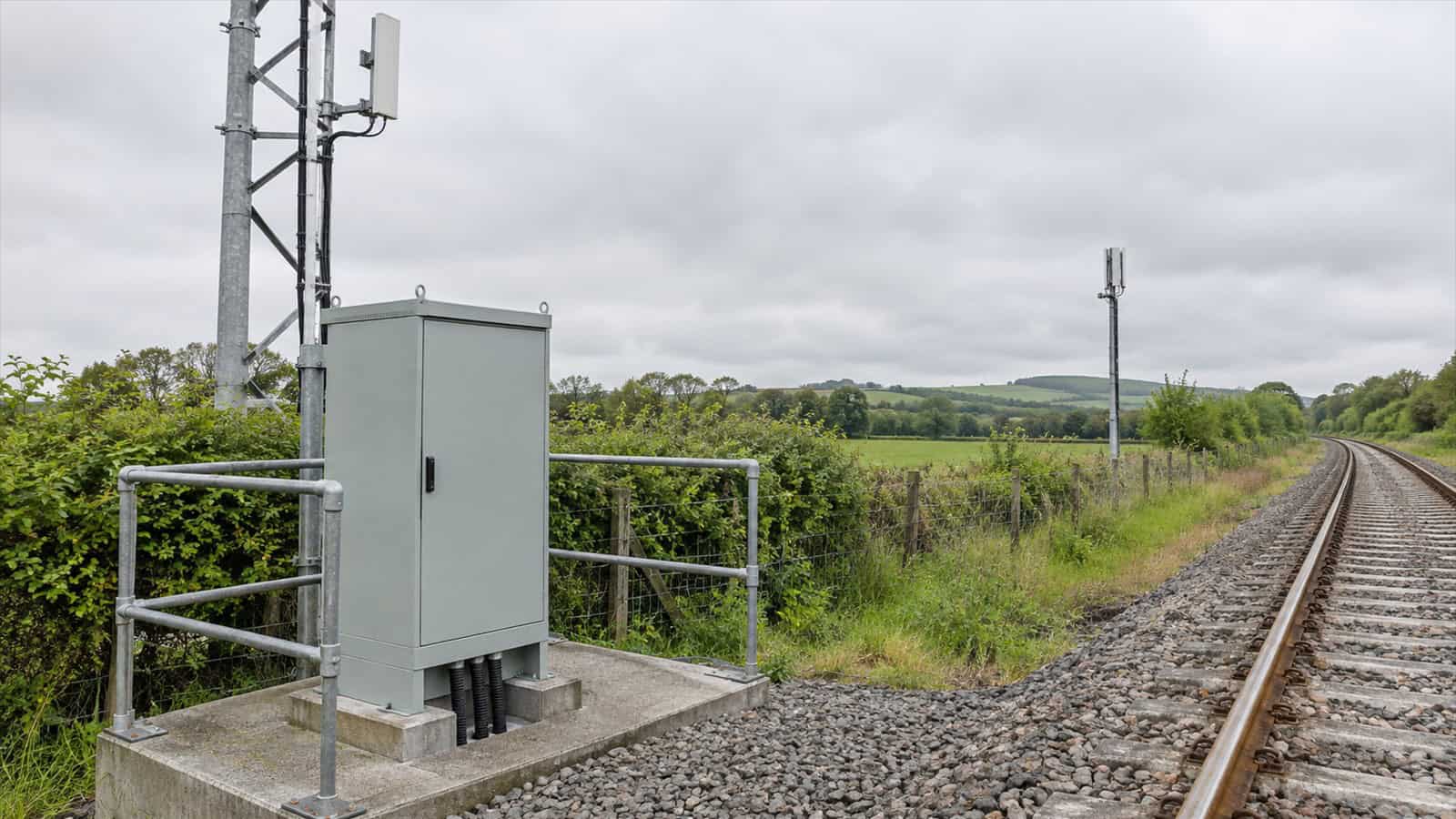
At a rural cabinet, two SIMs can show different logos while using the same host network or tower. In a city, separate radio access may still converge on one enterprise APN, DNS service or VPN concentrator. Commercial failure matters too: a billing suspension or expired eSIM profile can remove both intended options if one supplier manages the complete estate.
Build a dependency map before choosing subscriptions. Ask each provider for the mobile network operator, roaming conditions, APN ownership, address model, voice/data entitlements and escalation route. Treat undisclosed relationships as shared until tested.
| Layer | Diversity evidence | Practical test |
|---|---|---|
| radio | different local serving cells or operators | record cell identity at the installed antenna |
| core/APN | separately operated packet core and APN path | compare assigned path, DNS and outage behaviour |
| enterprise edge | independent tunnel endpoint and power | withdraw one concentrator and observe recovery |
| commercial | separate account/profile lifecycle | simulate suspension or expired profile |
Choose Diversity for the Failure You Can Actually Tolerate
A telemetry site may accept several minutes of delayed data; a payment or safety-adjacent system may have a much shorter recovery objective. Define the application consequence first, then decide whether dual SIM, a second carrier, fixed broadband or satellite is justified. The radio path is only one part of that decision.
Robustel’s 5G internet for farms application example shows why the local operating environment matters. Packhouses and outbuildings can experience different coverage, power and cabling conditions even under one commercial account. A carrier plan should therefore be proven at the final antenna position, not copied from a coverage map or a successful office test.
For each site class, write the event that triggers a path change, the maximum acceptable interruption and the service that confirms recovery. “Signal present” is not recovery if DNS, the VPN or the application session has not returned.
Separate Subscription Choice from Switching Policy
The router needs an observable rule for choosing paths. Define whether loss of registration, packet loss, failed health checks or loss of an application endpoint triggers a change. Prevent rapid oscillation with hold times, but do not make the delay so long that it defeats the recovery objective.
Use a field worksheet:
- preferred and alternate profile, operator and APN;
- health-check destination and interval;
- switch and return thresholds;
- application session behaviour after a new IP address;
- alert recipient and escalation clock;
- maintenance procedure for changing a profile or SIM.
The useful evidence is a timestamped sequence from fault injection to application recovery. A dashboard screenshot after the event cannot show whether the service was unavailable for thirty seconds or thirty minutes.
How the Robustel R5020e Industrial 5G eSIM Router Supports a Managed Policy
| Diversity pain | Verified R5020e capability | Operational mechanism | Acceptance evidence |
|---|---|---|---|
| physical SIM logistics | one eSIM/eUICC plus one removable 2FF SIM | combine remotely managed profile choice with a retained physical recovery path | activate each approved profile and record its operator/core path |
| shared carrier outage | dual-subscription design with Smart Roaming/failover functions | apply an explicit selection policy instead of relying on one subscription | remove each path separately and measure application recovery |
| multiple local services | four Gigabit Ethernet ports | preserve separate downstream roles while the WAN changes | verify routes and security policy after both transitions |
Robustel R5020e Industrial 5G eSIM Router combines one eSIM/eUICC path with one removable SIM, four Gigabit Ethernet ports, serial interfaces and the management functions expected from the R5020 family. The value is not that eSIM is automatically more resilient; it is that an authorized fleet team can align a digital profile strategy with a retained physical recovery option.
Robustel RCMS platform can help teams see fleet state and manage approved changes. Used together, the router and management plane reduce the operational friction of maintaining a known carrier policy across many sites. The organisation still owns provider contracts, profile availability, APN dependencies and the test that proves each alternate path works.
Robustel’s high-speed branch office routing application example provides a close family reference for the WAN role. Its most useful lesson here is to qualify cellular service with the branch’s real traffic and security path, because a successful modem registration alone does not confirm application continuity.
Exercise Common-Mode Failures, Not Only SIM Removal
Removing one SIM proves a narrow mechanism. Also block the health-check destination, make the preferred APN unreachable, withdraw the enterprise tunnel, remove site power and create a valid mobile session with a failed application. These tests reveal shared dependencies and poor health-check choices.
The Robustel video “Where Are Industrial 5G Routers Used in Real IoT Deployments?” can help stakeholders identify which site roles deserve more resilience. Finish the pilot by recording the cell, operator, profile, firmware, antenna, trigger, recovery time and owner so that future sites can reproduce the result.
よくある質問
Q1. What is carrier diversity?
Carrier diversity uses mobile services with sufficiently independent infrastructure and operations to reduce a shared outage. Independence must be checked across radio, core, APN, enterprise endpoints and commercial ownership.
Q2. Does dual SIM mean dual carrier?
No. Dual SIM provides two subscription positions, but both subscriptions may use the same network, tower, roaming partner or account dependency.
Q3. Can eSIM switch between mobile networks?
An eSIM can hold or provision operator profiles where the service and device implementation support it. Profile availability and switching policy still require commercial and technical validation.
Q4. How should cellular failover be tested?
Inject radio, APN, DNS, tunnel, application and power failures separately. Measure application recovery and return-to-primary behaviour, not only modem registration.
Q5. When is the Robustel R5020e Industrial 5G eSIM Router a good carrier-diversity fit?
It is a strong fit when the eSIM and removable SIM are assigned to verified, suitably independent services and the switching policy is proven at representative sites.
結論
The Robustel R5020e Industrial 5G eSIM Router gives fleet operators a practical physical-SIM and eSIM foundation for carrier policy, but the resilience is created by choosing independent dependencies and measuring recovery at application level.
Document the complete path behind each profile before rollout, then test failures beyond SIM removal. That work turns “two carriers” from a purchasing claim into an operating design that engineers can diagnose and renew over the life of the site.
Explore More Articles About Robustel 5G Routers

著者について
Robustel Editorial Team
The Robustel Editorial Team publishes practical articles on industrial connectivity, edge computing, LoRaWAN and device management, focusing on deployment considerations, technical limitations and long-term operation.