
Triple Zero 000 Lift Phone Commissioning Checklist for Australia
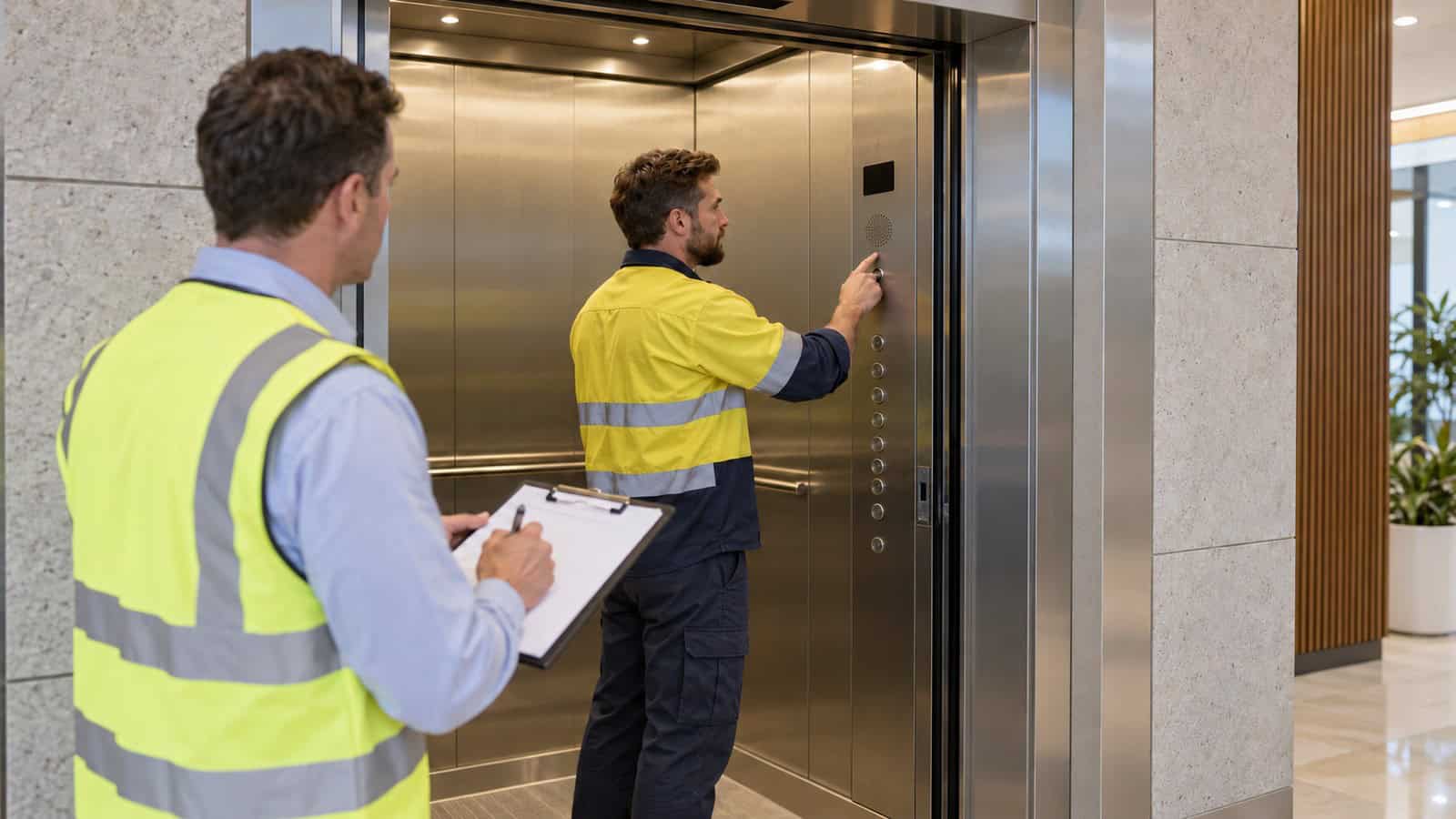
The Robustel EV8100 Elevator Voice Gateway can support an Australian lift-phone migration through FXS, VoLTE/VoIP and dual SIM, but any Triple Zero 000 verification must follow the approved procedure agreed with the lift contractor, carrier, monitoring service and responsible authority—never an unscheduled test call.
Establish Permission and the Test Destination
Before touching the phone, confirm who authorises the test, whether a monitoring centre or approved emergency-call procedure is used, the scheduled window, expected site identity and the person who will close the test. Record carrier, SIM, voice service and destination.
The Robustel EV8100 Quick Pitch video helps brief installers on the gateway’s role. It is not a test procedure; the project parties must supply the authorised Australian call and record process.
Write the permission and destination into the method statement before arriving on site. The record should show who can initiate the call, who expects it, what identification should be received and who declares the exercise closed. If the test destination or procedure changes, pause the commissioning sequence rather than improvising a call from the lift car.
Complete the Readiness Gates
| Gate | Pass evidence |
|---|---|
| installation | correct power, FXS wiring, antennas and mounting |
| service | SIM active, voice service/registration confirmed |
| identity | lift/site record available to receiver |
| backup | approved cells installed and condition checked |
| ownership | carrier, lift contractor and receiver contacts named |
Robustel’s PSTN replacement application example maps the analogue, gateway, voice and receiving boundaries. Use it to ensure the commissioning form covers the whole path.
Stop the test if the receiver, site record or responsible contractor is not ready. Proceeding to a live call without those parties turns commissioning into an uncontrolled service event and leaves no one authorised to interpret or close the result.
How the Robustel EV8100 Elevator Voice Gateway Supports Australian Lift-Phone Commissioning
Robustel EV8100 Elevator Voice Gateway provides FXS for an analogue lift phone or autodialler, SIP and VoLTE voice options, DTMF support, dual SIM and internal battery-holder functions. Robustel RCMS platform can support remote device/network visibility for authorised operations.
The commissioning decision remains end to end. Confirm the exact Australian carrier/SIM and regional device variant, then test the installed phone, voice route, identity, audio and response. A registered mobile data session is not evidence that voice or emergency handling works.
Before the supervised call, export or photograph the accepted configuration and record the firmware version. If the test fails, that baseline lets the authorised parties change one layer at a time and return to a known state instead of improvising across the phone, gateway and service together.
Conduct the Supervised Call and Power Test
Follow the authorised procedure. State that the call is a test where instructed, verify the correct lift/site identity, two-way conversation, DTMF/signalling where used and operator response. End the test only when the receiving party confirms closure.
Repeat under the approved backup-power condition without creating an unsafe situation. Record battery state, call result and restoration to normal supply. Do not invent a universal runtime; cell type, condition, temperature and complete load determine it.
Watch what happens after the test as well as during it. Confirm that the line releases, the gateway returns to its normal registered state and the monitoring centre closes the test record against the correct building and lift.
Handover the Evidence and Change Triggers
Robustel’s smart-elevator application example shows how voice connectivity and remote operational information can sit in a wider lift service. At handover, retain the witnessed result, site identity, settings, contacts and next test date so remote visibility supports—rather than replaces—the inspection record.
Trigger recommissioning after changes to SIM/carrier, destination, monitoring centre, handset/autodialler, firmware, voice mode, gateway or power arrangement.
Häufig gestellte Fragen
Q1. How do you test an emergency phone line?
Use the approved supervised process to verify call routing, correct identity, two-way audio, signalling and receiver response under required power conditions.
Q2. Who receives a lift emergency call?
The destination depends on the installed service and operating arrangement. It may be a monitoring centre or another authorised response service defined for the building.
Q3. Does a lift phone need battery backup?
The project must meet applicable requirements and its approved power design. Verify the complete phone/gateway load and maintain the selected cells.
Q4. What records should be kept after commissioning?
Keep the site identity, configuration, carrier/service, test date, call result, backup-power evidence, participants, exceptions and change triggers.
Q5. How should the Robustel EV8100 Elevator Voice Gateway be commissioned in Australia?
Commission the exact installed system through an authorised supervised procedure covering FXS, voice service, identity, audio/signalling, backup power and handover.
Schlussfolgerung
The Robustel EV8100 Elevator Voice Gateway fits Australian lift-phone projects that need to bridge an analogue endpoint into a managed cellular/IP voice path. Its commissioning value comes from making each technical boundary observable and owned.
Schedule the approved test, preserve the result and state exactly which changes invalidate it. That approach protects emergency services from casual testing while giving the building a defensible record of how the installed call path was verified.
Explore More Articles About Robustel Lift Connectivity


Über den Autor
Robustel Editorial Team
The Robustel Editorial Team publishes practical articles on industrial connectivity, edge computing, LoRaWAN and device management, focusing on deployment considerations, technical limitations and long-term operation.