
How to Manage eSIM Profiles Across Industrial Router Fleets
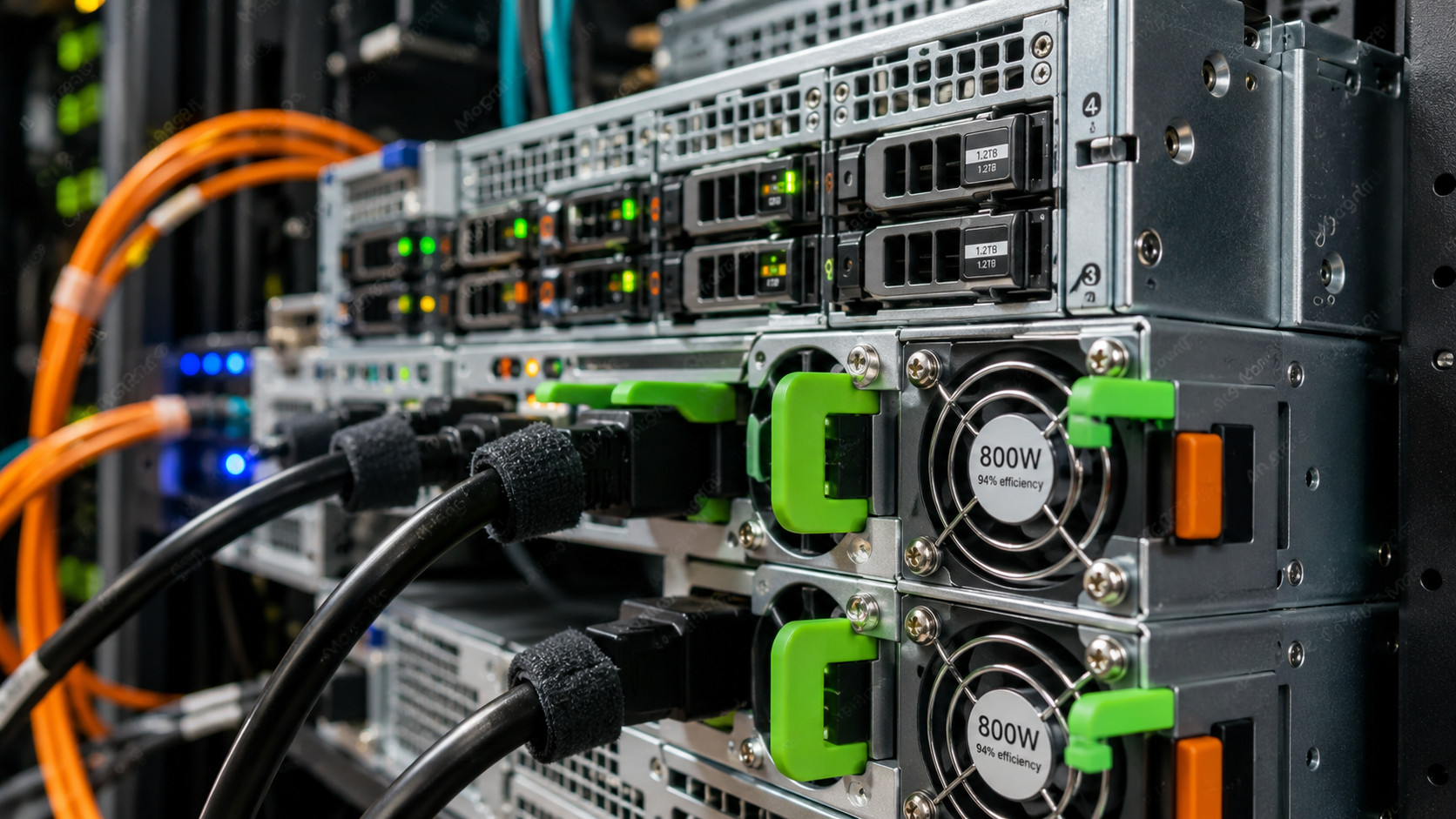
Robustel R1520e Global eSIM Router gives industrial IoT teams a practical hardware and management foundation for operating eSIM profiles across distributed fleets. However, fleet-scale profile management depends less on the ability to switch one profile and more on inventory accuracy, access control, staged changes, rollback procedures, and clear ownership.
Managing one eSIM router is largely a configuration task. Managing hundreds or thousands of routers is an operations discipline. Every profile must be linked to the correct router, operator, region, customer, tariff, and business owner throughout deployment, maintenance, reassignment, and retirement.
Stop Treating Profiles as Individual Router Settings
A profile stored on an eUICC is not only a technical setting. It represents a live relationship between the router, mobile operator, subscription, billing account, deployment region, and operational policy.
Small projects can sometimes track these relationships through spreadsheets, emails, or installer notes. That approach becomes unreliable as the fleet grows. Records may show that a profile was assigned but not whether it was downloaded, activated, replaced, suspended, or still generating charges after the router was removed.
The problem becomes more serious when several teams are involved:
- Procurement purchases connectivity services
- Deployment teams install routers
- Network teams manage APNs and VPNs
- Operations teams monitor devices
- Service partners troubleshoot field sites
- Finance reconciles subscriptions
- Security teams control remote access
- Asset owners approve reassignment or retirement
Without a shared operating model, each team may hold only part of the profile history.
Robustel’s eSIM and RCMS approach helps move profile information and supported actions into a centrally managed environment. The organisation still needs to define the records, permissions, and approval process that sit around the technology.
Robustel’s practical guide to eSIM and eUICC for industrial IoT explains how the eUICC, RobustOS, Remote SIM Provisioning platform, operator systems, and RCMS contribute to profile management across industrial fleets.
Build a Fleet Profile Inventory
A reliable inventory should link each router to its current and permitted connectivity options. Recording only the ICCID or profile name is not enough for operational decisions.
Link the Router, Profile, and Business Context
Each fleet record should identify:
| Inventory Field | Why It Matters |
| Router identity | Links the profile to the correct physical asset |
| eUICC identity | Distinguishes the embedded subscription environment |
| Active profile | Shows which subscription currently provides service |
| Installed standby profiles | Identifies available recovery or regional options |
| Operator and profile provider | Clarifies technical and commercial ownership |
| Deployment country or region | Supports regulatory, roaming, and coverage checks |
| Customer or project | Prevents profiles from being moved across contracts incorrectly |
| Tariff or billing account | Supports cost control and reconciliation |
| Business owner | Identifies who approves changes |
| Last profile action | Provides operational and audit history |
The profile purpose should also be recorded. A profile may exist for bootstrap connectivity, normal operation, regional reassignment, emergency recovery, testing, or decommissioning.
Without this context, an operator may activate a technically valid profile that does not match the commercial or recovery policy.
Keep Inventory and Device Status Aligned
An inventory becomes untrustworthy when it describes the intended state rather than the actual router state.
Operations teams should regularly reconcile:
- The profile listed as active in the inventory
- The profile reported by the router
- The operator currently serving the device
- The subscription shown by the provider
- The device status visible through RCMS
- Billing records for active and inactive profiles
This comparison helps identify routers using unexpected profiles, profiles that remain active after equipment removal, and records that were not updated after emergency changes.
Define a Profile State Model
Fleet teams need a common language for profile status. Terms such as “available,” “installed,” and “active” should not be used interchangeably.
A practical state model can include:
| Profile State | Operational Meaning |
| Available | The profile can be assigned through the provider but is not on the router |
| Assigned | The profile has been allocated to a specific router or project |
| Downloaded | The profile is stored on the eUICC |
| Active | The router is currently using the profile |
| Standby | The profile is installed but not currently selected |
| Suspended | The profile remains recorded but service is temporarily disabled |
| Failed | A download, activation, or connection attempt did not complete successfully |
| Retired | The profile is no longer authorised for operational use |
The organisation should define which transitions are allowed. For example, an available profile may move to assigned and downloaded, but it should not become active before commercial approval, coverage validation, and APN preparation are complete.
A failed profile should not remain in an undefined state. The system should record:
- Which operation failed
- Which router was affected
- Whether connectivity was restored
- Which profile is now active
- Who reviewed the incident
- Whether another attempt is permitted
The state model also improves decommissioning. A profile should not disappear from the fleet inventory simply because the router has been removed. It should move through a controlled retirement process that includes service termination, billing closure, access revocation, and historical retention.
Control Who Can Change Profiles
Remote profile management creates operational flexibility, but it also creates the possibility of large-scale mistakes. A profile change can affect connectivity, billing, routing, roaming, and access to remote applications.
Separate Request, Approval, and Execution
For production fleets, one person should not normally request, approve, and execute a high-impact profile change without review.
A simple responsibility model may include:
| Activity | Typical Owner |
| Request a regional or operator change | Project or fleet owner |
| Confirm commercial eligibility | Procurement or connectivity manager |
| Review technical compatibility | Network operations |
| Approve the change window | Service owner |
| Execute the profile action | Authorised platform administrator |
| Confirm application recovery | Operations or application team |
| Reconcile billing and records | Finance or asset administration |
Smaller organisations may combine roles, but the approval and audit trail should remain clear.
Limit Emergency Privileges
Emergency access may be necessary when a fleet loses connectivity or an operator experiences a major outage. These privileges should be restricted, time-limited, and reviewed after use.
The organisation should define:
- Who can initiate emergency changes
- Which profiles may be used
- Whether changes can affect one router or an entire group
- What evidence is required before activation
- How rollback is triggered
- When normal policy must be restored
Robustel RCMS can support grouping and centralised actions across supported Robustel fleets, but platform capability should not replace organisational change control.
How Robustel R1520e Global eSIM Router Supports Managed Profile Operations
Robustel R1520e Global eSIM Router combines one embedded MFF2 eSIM/eUICC with one removable 2FF physical SIM. Its current SGP.22-based implementation supports profile download and removal operations and typically accommodates up to eight eSIM profiles.
The hybrid architecture gives fleet teams two connectivity paths to incorporate into their operating policy. The embedded eSIM can support remotely managed profiles, while the physical SIM can serve an approved local, commissioning, customer-supplied, or recovery role.
RobustOS provides the on-device eSIM and networking environment. RCMS supports central visibility, device grouping, configuration management, troubleshooting, and supported profile actions across Robustel fleets, subject to the capabilities of the selected operator and eSIM/RSP provider.
Robustel R1520e Global also provides five Fast Ethernet ports, RS-232, RS-485, DI/DO, analog input, Wi-Fi, and optional GNSS. These interfaces allow one managed router platform to support varied industrial sites, but the profile-governance process should remain consistent even when the connected equipment differs.
The Robustel R1520e Global eSIM Router product page provides the current SIM architecture, profile support, interfaces, regional model information, and RCMS capabilities for product validation.
The router does not decide which operator a company should use, who is authorised to make changes, or whether a tariff is commercially suitable. Those responsibilities remain with the organisation and its connectivity partners.
Measure the Operations Process
Fleet teams should monitor profile-management performance using operational indicators such as:
- Profile-change success rate
- Rollback rate
- Average recovery time
- Routers with an unknown or mismatched profile state
- Profiles installed but never used
- Retired devices with active subscriptions
- Changes made outside the approved window
- Profile incidents by operator, region, or firmware version
These measures reveal whether remote profile management is reducing operational risk or simply moving uncontrolled manual work into a digital platform.
Roll Out Changes Without Creating Fleet-Wide Outages
A profile that works on one router should not be pushed immediately to every device. Differences in location, firmware, operator coverage, APN requirements, and application routing can produce different outcomes across the fleet.
Start with a Canary Group
Select a small group of representative routers that covers:
- Different regions
- Strong- and weak-signal sites
- Different operator environments
- Different router configurations
- Critical and non-critical applications
- Sites with and without alternative connectivity paths
The canary group should remain online long enough to confirm registration, IP connectivity, VPN recovery, RCMS visibility, and application performance.
Expand in Controlled Batches
After the canary stage, changes should move through small batches rather than one fleet-wide action.
Each batch should have:
- A defined maintenance window
- A maximum number of routers
- A success threshold
- A stop condition
- A rollback decision point
- An operations contact
- An application-validation step
Robustel’s eSIM portfolio includes profile failsafe behaviour intended to return supported devices to the last working profile if a profile download or switch fails. Project teams should still verify the exact behaviour with the selected model, firmware, eSIM provider, and workflow before relying on it at scale.
Freeze Changes When Evidence Is Incomplete
A deployment should stop when:
- Failure rates exceed the agreed threshold
- Routers return online but applications remain unreachable
- Profile state cannot be confirmed
- Billing or operator records do not match device status
- The previous working profile cannot be restored
- Several routers in one region fail in the same way
Continuing a rollout because most routers appear online can turn a limited issue into a fleet-wide incident.
Häufig gestellte Fragen
Q1. What information should an industrial eSIM profile inventory include?
A fleet profile inventory should link each router to its eUICC identity, active profile, installed standby profiles, operator, profile provider, deployment region, customer or project, tariff, billing account, business owner, and most recent profile action. It should also record the profile’s purpose, such as bootstrap, normal operation, regional reassignment, emergency recovery, testing, or retirement. Recording only an ICCID or profile name is not enough.
Q2. What is the difference between an available, downloaded, and active eSIM profile?
An available profile can be assigned through the provider but is not yet stored on the router. A downloaded profile is present on the eUICC but may not be in use. An active profile currently provides the cellular subscription. Fleets may also define assigned, standby, suspended, failed, and retired states. Using a shared state model helps prevent technically valid profiles from being activated without commercial approval, APN preparation, or coverage validation.
Q3. Who should be allowed to change eSIM profiles across a router fleet?
Production fleets should separate the request, approval, execution, and validation stages where practical. A project owner may request a change, procurement may confirm commercial eligibility, network operations may verify technical compatibility, and an authorised administrator may execute the profile action. Operations teams should then confirm application recovery. Emergency permissions should be limited, time-bound, auditable, and restricted by device group and approved profile.
Q4. How should eSIM profile changes be rolled out across a large industrial fleet?
Profile changes should begin with a small canary group representing different regions, signal conditions, operators, configurations, and application criticality. After successful validation, the change can expand through controlled batches with defined maintenance windows, success thresholds, stop conditions, rollback points, and application checks. The rollout should stop when profile status is unclear, failure rates rise, applications remain unreachable, or the previous working profile cannot be restored.
Q5. When is the Robustel R1520e Global eSIM Router suitable for fleet profile management?
Robustel R1520e Global eSIM Router is suitable for distributed industrial fleets that need an embedded eSIM, removable physical SIM, multiple supported eSIM profiles, varied Ethernet and serial interfaces, and RCMS-based central management. Its hybrid architecture can support normal, commissioning, local-operator, or recovery connectivity roles. The router does not replace organisational control over operator selection, tariffs, permissions, compliance, billing, or profile-change approval.
Conclusion: Fleet Profile Management Takeaway
Robustel R1520e Global eSIM Router provides a practical foundation for centrally managed industrial connectivity through hybrid SIM hardware, multiple eSIM profiles, RobustOS, and RCMS fleet management. Its value at scale depends on accurate inventory, defined profile states, controlled permissions, staged deployment, rollback testing, and measurable operational ownership.
The ability to change profiles remotely is only the technical starting point. A reliable fleet process must know which profile belongs to each router, why it exists, who may change it, and what happens when the action fails.
When those controls are established, eSIM profile management becomes a repeatable operations capability rather than a collection of individual router settings. That is what allows industrial organisations to manage connectivity across large fleets without increasing uncertainty as the device count grows.
Explore more articles about eSIMe/UICC routers in industrial IoT:


Über den Autor
Robert Liao | Technical Support Engineer
Robert is an IoT Technical Support Engineer at Robustel, specializing in industrial networking and edge connectivity. A certified Networking Engineer, Robert focuses on the deployment and troubleshooting of large-scale IIoT infrastructures. His work centers on architecting reliable, scalable system performance for complex industrial applications, bridging the gap between field hardware and cloud-side data management.