
Edge Gateway Architecture Checklist: From Sensors to Cloud
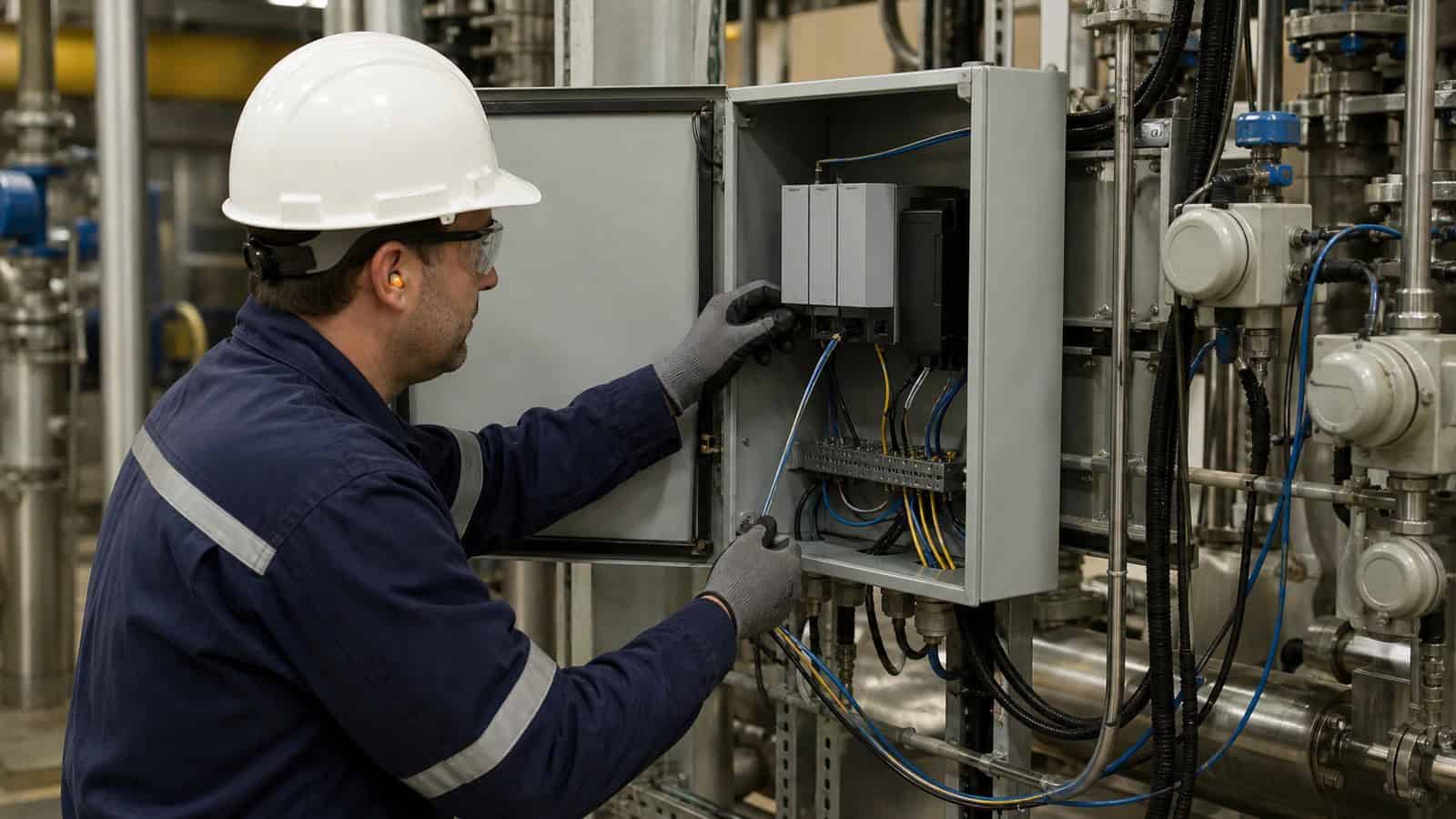
The Robustel EG5120 edge computing gateway fits industrial architectures that need to connect field equipment, run local applications and maintain an upstream path to cloud or enterprise systems. A useful edge gateway architecture, however, should describe more than how sensor data reaches the cloud; it must also define management access, trust boundaries, ownership and what happens when individual parts of the path fail.
Consider a smart infrastructure site containing occupancy sensors, meters, cameras and an ANPR application. The normal drawing is easy to produce: field devices connect to a gateway, the gateway processes data, and selected information travels over cellular or Ethernet to an upstream platform.
That diagram is incomplete if it does not show how the gateway is administered, which systems are trusted to communicate across each boundary, what continues locally during a WAN outage and who is responsible for recovery.
An Architecture Diagram Needs More Than a Sensor-to-Cloud Arrow
An edge architecture should begin with responsibilities rather than products.
Field devices produce measurements or control data. The edge layer collects and interprets that information. Local applications may normalize, filter or analyze it. A WAN carries selected data upstream, while cloud or enterprise applications provide storage, visualization or fleet-level services.
The Robustel Edge Computing Gateway portfolio provides different compute, interface and cellular profiles for these roles, but the product family does not define one universal industrial architecture. A machine cell, roadside cabinet and energy site can all use an edge gateway while placing very different responsibilities around it.
Robustel’s “What Is an Edge Gateway” video helps establish this architectural role: the gateway sits between field equipment and upstream systems while also providing a location for selected local processing. Once that position is clear, the architecture can be divided into more precise functional paths.
Robustel’s Smart Parking Application Example illustrates why this matters. Cameras, meters, sensors and ANPR workloads do not all create the same traffic or processing requirement, so the site architecture assigns different connectivity and local-compute responsibilities according to the device type.
The architecture therefore needs to describe which data is collected, where it changes form and which component owns that transformation.
Separate the Data Plane from the Management Plane
One of the most useful architecture checks is to draw two paths instead of one.
The data plane describes application traffic: sensor readings, PLC values, processed events, images, MQTT messages or API calls moving from field equipment towards the consuming system.
The management plane describes how the gateway itself is configured, monitored, updated and diagnosed.
These paths may share the same WAN, but they have different security and operational responsibilities.
For a Robustel deployment, the RCMS remote device management platform can form part of that management plane by providing centralized visibility, configuration and device-maintenance workflows for supported gateways. This does not make RCMS part of the process-data application itself; it gives operations teams another controlled path for managing the infrastructure carrying that application.
Keeping the two planes separate helps answer practical questions. A gateway may still collect and buffer local data while the WAN is unavailable. Conversely, the application may be functioning correctly while remote management temporarily cannot reach the device.
If both paths are represented as one generic “cloud connection,” those conditions become difficult to reason about during commissioning or troubleshooting.
Mark Every Protocol and Trust Boundary
The next architecture layer is the boundary between systems.
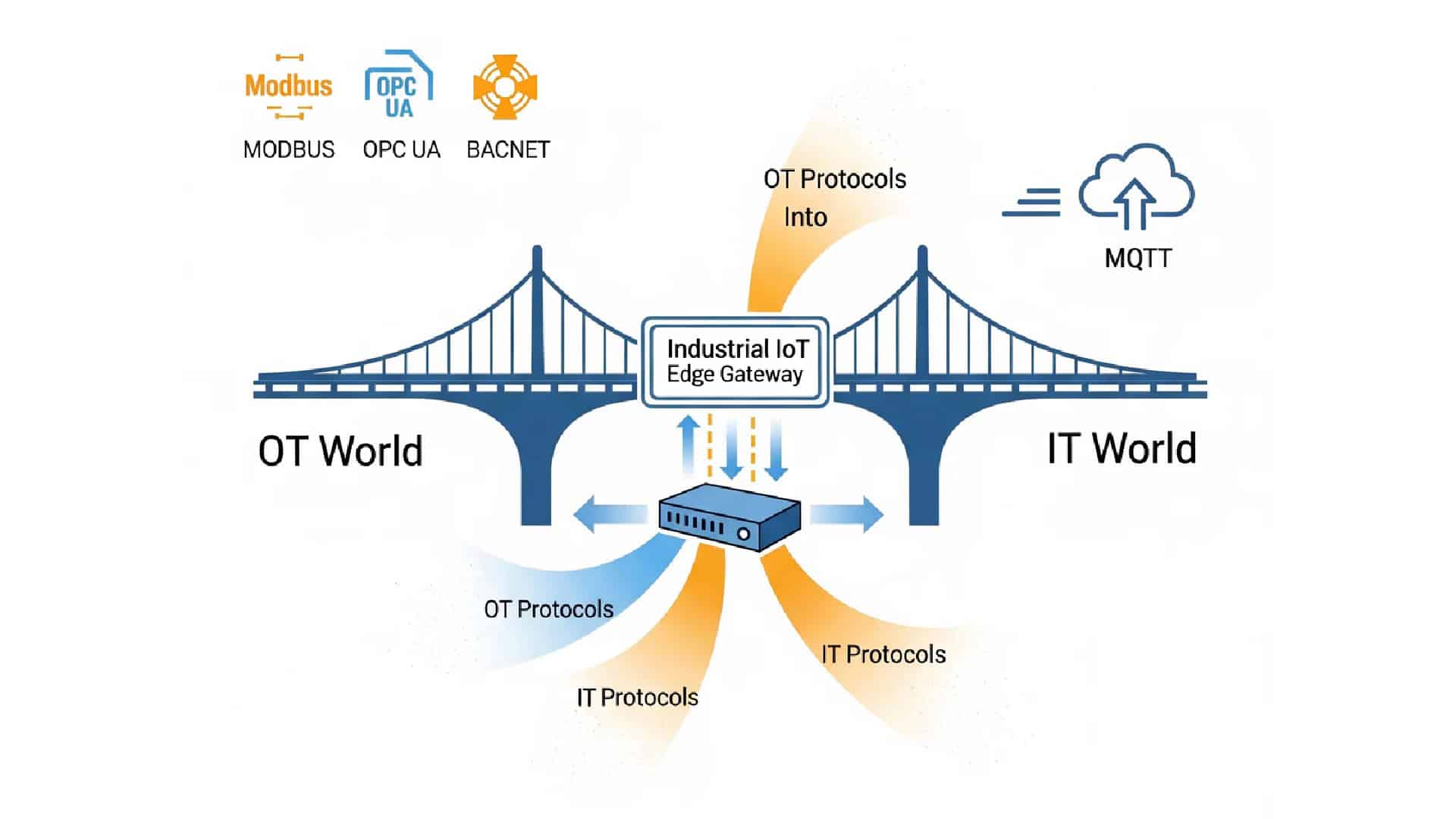
A sensor connection, local application, cellular WAN and cloud API should not be treated as one continuous trusted network. Each transition can change the protocol, identity model and security responsibility.
A typical industrial edge path might include an RS485 or Ethernet device feeding a local application, which then publishes selected information through an encrypted WAN path to an upstream API. The site should identify who owns the field-device mapping, which local application is allowed to read it, which remote destination can receive the data and which users are authorized to administer the gateway.
The same principle applies to remote maintenance.
Robustel’s Secure Remote Access to Industrial Robots Application Example places an EG5120 between the robot-controller environment and remote support infrastructure. The important architectural lesson is not simply that remote access exists; it is that the gateway creates a controlled boundary rather than making the production controller directly responsible for external connectivity.
An architecture review should therefore identify the trust change at every transition. VPN availability alone does not define the security model. Firewall policy, credentials, certificates, reachable subnets and ownership of administrative access still need to be specified.
Design the Failure Path Before the Normal Path Is Approved
A normal data-flow diagram describes what happens when every component is available.
Industrial architecture becomes more useful when the same diagram also explains what happens when one component is not available.
If a sensor stops responding, the local application should distinguish missing data from a valid zero or stale value. If the WAN disappears, the project should know whether processing continues locally, whether data is buffered and how the application behaves when connectivity returns. If the upstream API is unavailable, the gateway should not automatically become responsible for unlimited storage.
The failure behavior also depends on workload ownership.
A machine-control function that must continue without cloud connectivity belongs in a different architectural category from fleet-wide reporting that can wait until the WAN returns. The edge gateway can support selected local autonomy, but the application designer must decide which functions require it.
A useful architecture review therefore treats availability as a sequence of degraded states rather than a binary online/offline condition.
How the Robustel EG5120 Edge Computing Gateway Fits a Layered Edge Architecture
The Robustel EG5120 edge computing gateway provides a practical platform for architectures where field integration, local applications and upstream networking need to coexist at the same site.
Its industrial interfaces can connect local equipment, while RobustOS Pro provides a Debian-based environment for containerized or native applications. Cellular and Ethernet connectivity provide upstream paths, and the device can participate in VPN and centralized-management architectures where those functions are required.
This makes the EG5120 particularly relevant when the gateway must do more than forward packets. A local application can collect approved device data, transform or analyze it and publish only the required result upstream.
The higher-compute profile, including its NPU capability, can also be relevant to compatible inference workloads, but that capacity should follow the architecture rather than define it. A site performing simple protocol conversion may not need the same resource profile.
The product therefore fits the edge layer of the architecture; it does not replace the PLC, cloud service, enterprise security policy or application owner.
Commission the Architecture End to End
Architecture approval should produce a commissioning plan rather than end with a diagram.
A practical responsibility map can be used as the acceptance checklist:
| Architecture layer | Main responsibility | Boundary to verify | Failure condition to test |
|---|---|---|---|
| Field equipment | Produce operational data | Device interface and protocol | Device unavailable or invalid data |
| Edge ingestion | Collect and interpret | Register/data ownership | Mapping or polling failure |
| Local application | Process, buffer or infer | Runtime and application identity | App restart or resource exhaustion |
| WAN | Transport selected traffic | OT/WAN security boundary | Link loss and recovery |
| Cloud/API | Store or consume data | Authentication and API contract | Service unavailable |
| Management plane | Configure and diagnose | Administrative access | Remote management unavailable |
The final commissioning exercise should use representative field equipment, the production WAN, actual application software and the intended upstream destination.
For a Robustel EG5120 deployment, it should also confirm that local applications recover as intended after reboot, remote management is available through the approved path and loss of cloud connectivity does not unintentionally affect functions that are supposed to remain local.
The architecture is complete only when the project can explain both the normal flow and the degraded behavior of every important layer.
Häufig gestellte Fragen
Q1. What should an edge gateway architecture include?
It should include field devices and protocols, local processing, network connectivity, upstream APIs or cloud services, security boundaries and the management path used to maintain the gateway. Failure behavior should also be defined so the architecture remains meaningful when part of the system is unavailable.
Q2. Where does the Robustel EG5120 edge computing gateway sit in an industrial architecture?
The Robustel EG5120 edge computing gateway typically sits between field equipment and upstream IT or cloud infrastructure. It can provide industrial interfaces, local application hosting and network connectivity while leaving machine control, enterprise applications and their respective responsibilities in their appropriate layers.
Q3. Is the management plane the same as the application data path?
Not necessarily. Application data may move from equipment through the gateway to an upstream platform, while the management plane is used to configure, monitor and update the gateway itself. Separating them makes security and troubleshooting responsibilities clearer.
Q4. Should an edge gateway continue working when the cloud is unavailable?
Only the functions designed for local operation should continue independently. Data collection, buffering or local logic may remain active, while cloud-dependent analytics or reporting may pause. The expected behavior should be defined during architecture design rather than assumed.
Q5. Does one reference architecture fit every industrial IoT project?
No. Protocols, workloads, trust boundaries, WAN conditions and operational requirements differ between applications. A reference architecture provides questions and layers to evaluate, but the final design should follow the specific site and workload.
Schlussfolgerung
A useful edge gateway IoT architecture describes responsibilities, boundaries and failure behavior rather than only drawing a path from sensors to cloud.
The Robustel EG5120 edge computing gateway can provide the field-facing compute and connectivity layer in this architecture, but the overall design still depends on application ownership, WAN policy, security boundaries, management and upstream systems.
Separate the data plane from the management plane, mark where protocols and trust change, and commission the failure path as carefully as the normal path.
The architecture is ready for deployment when every important data flow has an owner and every important failure has an expected response.
Related Reading on Edge Computing in Industrial IoT:

Über den Autor
Robert Liao | Technical Support Engineer
Robert is an IoT Technical Support Engineer at Robustel, specializing in industrial networking and edge connectivity. A certified Networking Engineer, Robert focuses on the deployment and troubleshooting of large-scale IIoT infrastructures. His work centers on architecting reliable, scalable system performance for complex industrial applications, bridging the gap between field hardware and cloud-side data management.