
DTMF In-Band vs RFC 2833 vs SIP INFO for Lift Emergency Phones
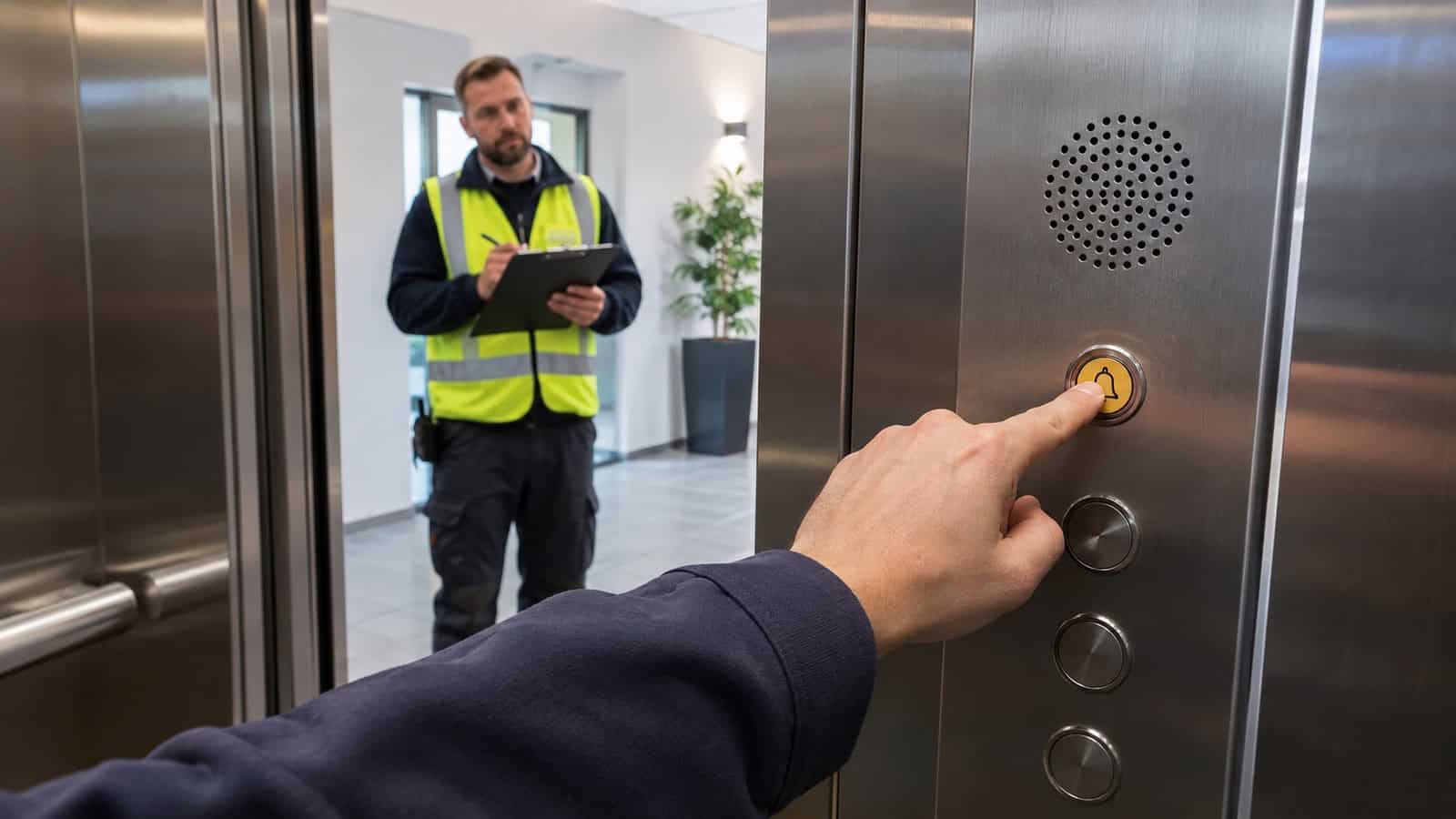
The Robustel EV8100 Elevator Voice Gateway supports in-band DTMF, RFC 2833 telephone events and RFC 2976 SIP INFO, but the correct method is determined by the complete phone, gateway, codec, SIP/carrier route and monitoring-centre chain. Test the actual identification and menu digits end to end; a local tone detector does not prove the destination received them correctly.
Lift phones may use digits for car identification, call handling or monitoring-centre workflows. A call with clear speech can still fail operationally if those digits are distorted, suppressed or delivered by a method the far end does not process.
Compare the three transport methods
| Method | How digits travel | Strength | Main dependency |
|---|---|---|---|
| In-band | audible tones inside the voice media | simple where the full path preserves tones | codec, gain, noise suppression and transcoding |
| RFC 2833 | named telephone events in RTP | separates digits from audio waveform | both endpoints/media path support the negotiated events |
| SIP INFO (RFC 2976) | signalling messages in the SIP dialogue | independent of audio encoding | SIP platform and endpoint handling |
The Robustel EV8100 Quick Pitch video provides product-path orientation. DTMF selection still requires provider and monitoring-centre confirmation for each route.
Start with the analogue phone behaviour
Record how the existing lift phone generates digits, their timing and the identification sequence expected by the monitoring centre. Confirm the phone can seize the EV8100 FXS line and produce consistent digits before changing SIP settings.
If in-band tones are used, check level, duration, gaps and the codecs/transcoding applied along the path. Speech optimisation can alter tones even when conversation remains understandable.
Robustel’s IoT-enabled smart elevators application example illustrates the EV8100 between legacy lift equipment and managed services. Use the installed phone and monitoring workflow for acceptance rather than a generic desk handset.
Choose a method by route, not by preference
Use in-band only when every media segment and codec reliably preserves the required tones. Use RFC 2833 when the SIP/media providers and destination support the negotiated telephone-event payload. Use SIP INFO when both signalling endpoints and the monitoring service explicitly support and route those messages.
| Route condition | Preferred starting test | Reason |
|---|---|---|
| G.711 end-to-end with analogue decoder | in-band plus comparison to RFC 2833 | media may preserve tones, but prove it |
| compressed/transcoded media | RFC 2833 where supported | avoids relying on audio waveform |
| provider mandates signalling digits | SIP INFO | follows the provider contract |
| VoLTE fallback path | carrier/monitoring-approved method | SIP-path result may not transfer |
There is no universal winner. A method that works through the SIP provider may fail on the VoLTE route, and the project may need route-specific configuration or a different monitoring-centre design.
How Robustel EV8100 Elevator Voice Gateway supports DTMF comparison
The Robustel EV8100 Elevator Voice Gateway product specification lists in-band, RFC 2833 and RFC 2976 DTMF. Its FXS, SIP/VoIP and VoLTE-capable paths create clear test points from the analogue phone through each external route.
| Site pain | Verified capability | Test mechanism | Acceptance evidence |
|---|---|---|---|
| phone produces analogue tones | FXS interface | capture/observe phone digit sequence safely | local sequence and timing record |
| IP route handles digits differently | three documented DTMF methods | test one method at a time on SIP route | provider and monitoring-centre log |
| fallback changes the voice path | VoLTE backup capability | repeat the same identification sequence | successful fallback-route decoding |
Robustel’s EV8100 and Tsaro case study emphasises end-to-end call evidence. The DTMF test should be part of that call record, alongside two-way audio and identification.
Run a monitored route-by-route test
Create a digit script containing the real identification pattern plus repeated and closely spaced digits if the phone uses them. For each codec and route, record selected DTMF method, call identifier, received digits, errors, audio result and monitoring-centre action.
Do not mix multiple changes in one call. If digits fail, keep the route constant while changing only the DTMF method or codec under approved change control. Then repeat normal and fallback routes and restore the supported production configuration.
Preserve the result as a compatibility record
The final record should name phone model/firmware, gateway firmware, FXS wiring, SIP provider, carrier, monitoring platform, codec, DTMF method and received sequence. Include who confirmed the result at the monitoring centre.
Retest after a phone, gateway, SIP provider, carrier, codec or monitoring-centre change. DTMF compatibility is a path property, not a permanent attribute of one device.
Häufig gestellte Fragen
Q1. Is DTMF still used today?
Yes. DTMF remains common for menu control, identification and signalling in analogue and VoIP services, including some lift emergency-phone workflows.
Q2. What is the difference between in-band and out-of-band DTMF?
In-band sends audible tones in the voice stream. Out-of-band methods represent digits separately, such as RTP telephone events or SIP INFO messages.
Q3. What are DTMF signals used for?
They can select menus, identify equipment, enter codes or control call workflows. In lift systems, the monitoring centre may depend on the sequence to identify the car or event.
Q4. How do you decode DTMF tones reliably?
Use a compatible end-to-end method, appropriate timing and levels, and test through the exact codec and route. Validate the received digits at the real destination rather than only near the source.
Q5. Which DTMF methods does the Robustel EV8100 Elevator Voice Gateway support?
The EV8100 product specification lists in-band DTMF, RFC 2833 and RFC 2976 SIP INFO. The selected method must also be supported by the phone path, provider and monitoring centre.
Schlussfolgerung
The Robustel EV8100 Elevator Voice Gateway is best suited to DTMF-sensitive lift retrofits where its three documented methods can be tested through each production voice route. The gateway provides options; the complete path determines compatibility.
Choose from provider and monitoring-centre support, then prove the actual identification sequence on every codec, primary route and fallback route. Keep that result with the service configuration so later changes trigger a targeted retest.
Explore More Articles About Robustel Lift Connectivity


Über den Autor
Robustel Editorial Team
The Robustel Editorial Team publishes practical articles on industrial connectivity, edge computing, LoRaWAN and device management, focusing on deployment considerations, technical limitations and long-term operation.