
5G Wireless Router vs Wired Industrial Router: Which Deployment Fits?
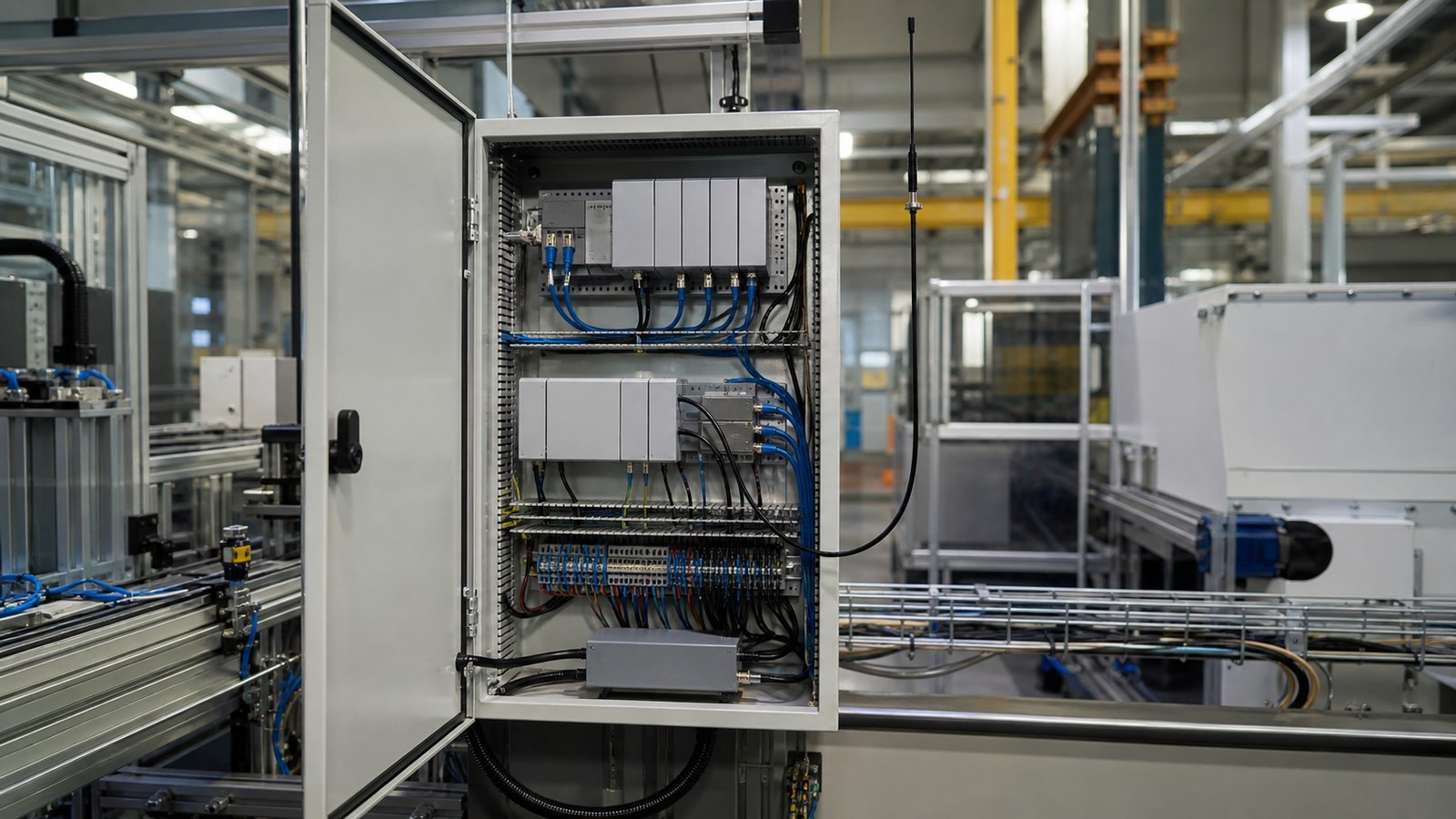
The Robustel R5020 Industrial 5G Router fits deployments where machines still use wired Ethernet or serial connections locally but the site, vehicle or mobile asset needs 5G for upstream connectivity. Choosing between a 5G wireless router and a wired industrial router therefore starts by separating machine access, local networking and WAN backhaul, rather than treating wireless and wired connectivity as direct substitutes.
A factory may connect a PLC to a router over Ethernet and still send the resulting traffic to a central system over 5G. An AGV may use a wired connection between its controller and onboard router while relying on private 5G as it moves across the production floor. A fixed machine beside an existing industrial Ethernet network may need no cellular WAN at all. All three are valid industrial architectures.
The useful question is not simply “Wireless or wired?”
It is: Which network segment needs mobility or rapid deployment, and which connections are better kept wired?
“Wireless or Wired?” Is Often the Wrong First Question
The term 5G wireless router can create the impression that every connection around the router becomes wireless. In practice, an industrial router often sits between several different network segments.
A Robustel industrial 5G router may receive data from a controller over Ethernet or RS-485, connect local engineering devices over Wi-Fi, and use 5G as its WAN connection at the same time.
That architecture might look like:
- PLC / controller
- → Ethernet or serial
- → industrial 5G router
- → 5G/LTE
- → remote application
A different installation may use:
- Local equipment
- → Ethernet
- → industrial router
- → wired WAN
- → enterprise network
And another may combine both:
- Local machine network
- → router
- → Ethernet as primary WAN
- → 5G as backup WAN
The wireless-versus-wired decision therefore occurs separately at each link.
This distinction matters because Ethernet, Wi-Fi and cellular solve different engineering problems. Ethernet provides a physical local connection where cabling is practical. Wi-Fi provides local wireless access within a defined area. Cellular provides wide-area connectivity without requiring the site to be physically connected to the enterprise WAN. A project becomes easier to design once those roles are separated.
Separate Machine Connectivity from WAN Backhaul
Consider a packaging machine installed inside an established production hall. The machine controller already exposes Ethernet. The factory has industrial switching and a managed backbone nearby. There is no mobility requirement, and the machine will remain in the same position for years.
Replacing the local Ethernet connection with 5G simply because a Robustel 5G router is available would add another wireless dependency without solving an obvious problem. The existing wired connection may already be the better fit. Now change one condition.
The same machine is installed in a temporary production area where running a new WAN cable would require civil work or delay commissioning.
The local connection can remain: Machine → Ethernet → Router
while the upstream connection becomes: Router → 5G → Central system
5G has not replaced industrial Ethernet. It has replaced or avoided the WAN cable between the site and the wider network. That distinction is useful during procurement because different requirements belong to different interfaces:
| Network role | Typical requirement | Possible interface |
|---|---|---|
| Machine access | Connect PLC, controller or local device | Ethernet / serial |
| Local LAN | Connect several nearby devices | Ethernet |
| Local wireless access | Connect laptops, tablets or selected devices | WLAN |
| Site WAN | Reach central IT or cloud systems | Ethernet / 5G |
| Mobile WAN | Maintain connectivity while equipment moves | 5G/LTE |
| Backup WAN | Provide another path after fixed-WAN failure | 5G/LTE |
A router should be selected from this connectivity-role map, not from a blanket preference for wireless or wired networking.
For readers who want a short visual companion to the role of 5G in industrial connectivity, Robustel’s R5010 Industrial 5G Router quick pitch video can be viewed alongside this architecture discussion. The key question remains where 5G adds operational value rather than whether it is technically available.
Three Industrial Sites Lead to Different Architectures
The differences become clearer when the same router category is placed into three real deployment types.
A Fixed Machine Beside Existing Industrial Ethernet
A CNC machine, packaging line or control cabinet sits inside a plant where the required network infrastructure already reaches the installation point.
The machine is stationary. Its traffic is predictable. The plant IT/OT team already manages the switches and upstream network. Here, a wired architecture may remain the simplest choice.
A 5G router could still have a role if the project needs:
- Independent backup connectivity
- Temporary connectivity during commissioning
- A separate network path from the plant LAN
- Remote-site access where the fixed WAN is unavailable
But 5G should solve one of those requirements rather than be added only because it offers higher nominal wireless performance.
The important engineering advantage of a Robustel industrial 5G router in this situation is architectural flexibility: wired machine connections can remain intact while cellular is introduced only where a WAN requirement justifies it.
An AGV Moving Across a Factory Floor
An AGV creates the opposite problem. Its controller moves continuously, so a fixed WAN cable is impossible. But that does not mean the connection between the controller and onboard router should also be wireless.
Robustel’s AGV private 5G application example illustrates this separation clearly. The example uses a direct Ethernet connection between the AGV controller and a Robustel 5G industrial router or gateway installed on the vehicle, while the router communicates over a private cellular network as the AGV moves through the facility.
The architecture is therefore:
- AGV controller
- → wired Ethernet
- → onboard 5G router
- → wireless private 5G
- → plant network
This is not a wireless replacement for every cable. It keeps the short, controlled machine-side connection wired while using wireless connectivity for the segment that must support movement. That principle applies beyond AGVs to autonomous mobile robots, service vehicles and other moving industrial equipment.
Heavy Equipment Beyond the Fixed Network
A mining truck presents another variation. The machine may contain controllers, telemetry equipment and legacy interfaces that are naturally connected through Ethernet or serial links. The truck, however, operates far beyond any practical wired WAN. In this situation, the local machine network and the wide-area link solve completely different problems.
Robustel’s mining truck and heavy mobile equipment application example uses this architecture: onboard systems connect locally to the 5G router, while cellular connectivity provides the upstream path required for monitoring and operational data.
The network can therefore remain wired where the equipment is physically close together and become wireless only at the boundary where mobility or distance makes cabling impractical. That is the recurring design pattern across all three scenarios.
Keep Wired Links Where They Already Solve the Problem
5G should not be treated as an automatic upgrade from Ethernet.
A wired industrial network can be preferable where:
- Equipment is stationary
- Cabling already exists
- The physical route is controlled
- Local traffic should remain inside the plant
- Deterministic local networking requirements are already being met
- There is no business reason to introduce another WAN service
- Network ownership is clearly established
The cost of replacing a working wired architecture includes more than router hardware.
A cellular design can introduce:
- SIM provisioning
- Operator contracts
- Antenna installation
- RF coverage assessment
- Data-plan management
- Carrier troubleshooting
- Additional security and routing decisions
These are reasonable responsibilities when cellular solves an installation, mobility or resilience problem. They are unnecessary overhead when the existing wired infrastructure already meets the requirement.
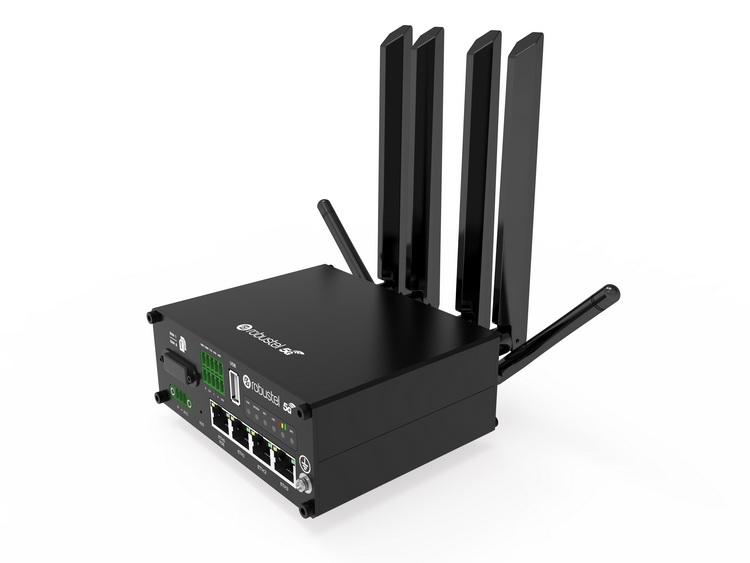
A Robustel R5020 Industrial 5G Router can also work with wired WAN architecture rather than against it. Its four Gigabit Ethernet ports are LAN interfaces by default, with a configuration option for one WAN plus three LAN ports, while cellular provides another available upstream path. The product also includes RS-232 and RS-485 interfaces for equipment that is not Ethernet-native.
That combination supports an important industrial principle: Modernising the WAN does not require redesigning every machine interface. A project can preserve existing controller connections and introduce cellular connectivity at the network boundary where it creates value.
How the Robustel R5020 Industrial 5G Router Bridges Wireless WAN and Wired Machine Networks
The Robustel R5020 Industrial 5G Router is particularly relevant to mixed wired/wireless sites because it combines the interfaces required on both sides of that boundary.
Its current architecture includes:
- 5G and LTE cellular connectivity
- Four Gigabit Ethernet interfaces
- Wi-Fi AP and client operation
- One RS-232 interface
- One RS-485 interface
- VPN capabilities
- RCMS remote device management
That does not make every interface necessary in every project. Instead, it allows the R5020 to take different roles depending on the site.
For a fixed industrial machine: Machine → Ethernet → R5020 → Ethernet WAN, 5G retained where backup connectivity is required
For a newly commissioned remote site: Machine → Ethernet/serial → R5020 → 5G primary WAN
For a moving industrial asset: Controller → Ethernet → R5020 → cellular network
For a mixed local environment: Wired industrial devices + selected Wi-Fi clients → R5020 → appropriate WAN
The advantage is not that wireless replaces wired networking. It is that the same router can terminate a wired machine network and a cellular WAN at the point where the two need to meet.
That is especially relevant when an industrial equipment manufacturer wants to keep one controller architecture while deploying machines into sites with very different WAN infrastructure. One customer may provide Ethernet. Another may have no fixed circuit at commissioning. A mobile version of the same equipment may never have a wired WAN.
The local machine interface can stay consistent while the router adapts the upstream connection to the deployment environment.
Choose the Network Role Before the Router Interface
Before deciding between a 5G wireless router and a wired industrial router, draw the network without choosing the product.
Start with the equipment.
- What needs to connect locally?
- A PLC?
- An IP camera?
- A serial controller?
- Several Ethernet devices?
- Wi-Fi clients?
Then move one step upstream.
2. Where does the data need to go?
- A local SCADA system?
- A company data centre?
- A cloud service?
- A private 5G network?
- A remote operations platform?
Then ask what changes physically over the operating life of the system.
3. Does the equipment move?
If yes, a cellular WAN becomes more relevant.
4. Does the site already have managed Ethernet?
If yes, reusing it may reduce complexity.
5. Will fixed connectivity be delayed?
5G may provide day-one access.
6. Would losing the wired WAN stop an important process?
A cellular backup path may be justified.
7. Are the machines themselves already wired?
Keep those connections unless there is a specific reason to change them.
The resulting architecture might be entirely wired, primarily cellular or deliberately hybrid. That final category is often the most useful.
A hybrid architecture does not require the project to choose one connectivity technology for every part of the system. It assigns Ethernet, Wi-Fi and 5G to the network segments where each one has a clear job.
Häufig gestellte Fragen
Q1. Is a 5G wireless router completely wireless?
No. An industrial 5G router can use cellular for WAN connectivity while still connecting machines locally through Ethernet or serial interfaces. Wi-Fi may provide another local access method, but it is separate from the 5G cellular WAN. The correct architecture depends on which network segment actually needs wireless connectivity.
Q2. Can 5G replace industrial Ethernet?
It can replace or supplement a wired connection in some parts of a network, particularly where equipment moves, fixed WAN installation is impractical or a backup path is required. It does not follow that existing machine-level Ethernet should be replaced. Wired and cellular links often operate together in the same industrial architecture.
Q3. When is the Robustel R5020 Industrial 5G Router a good fit?
The Robustel R5020 Industrial 5G Router fits sites and mobile equipment that need 5G/LTE connectivity while retaining Ethernet, serial or Wi-Fi connections locally. Typical requirements include mobile equipment, remote industrial assets, primary cellular broadband and cellular backup for fixed-WAN sites.
Q4. Should a factory use 5G instead of Wi-Fi for moving equipment?
Not automatically. The decision depends on the existing wireless infrastructure, mobility behaviour, coverage, private cellular availability, application requirements and operating responsibility. Private 5G can be valuable for mobile industrial fleets, but a well-designed Wi-Fi network may remain appropriate for other applications.
Q5. What should I check before replacing a wired WAN with 5G?
Confirm cellular coverage, supported bands, antenna placement, data-plan requirements, IP addressing, VPN and security requirements, expected traffic and recovery behaviour. Also define whether 5G will become the primary connection or remain an alternate path alongside the existing wired WAN.
Schlussfolgerung
Choosing between a 5G wireless router and a wired industrial router should not begin with a technology preference.
The Robustel R5020 Industrial 5G Router demonstrates why the distinction is rarely binary: industrial equipment can remain connected locally through Ethernet or serial interfaces while 5G provides mobility, remote-site connectivity, rapid deployment or WAN resilience.
Break the architecture into separate roles: Machine connectivity → local network → WAN backhaul
Then decide where a cable already solves the problem and where wireless connectivity removes a real deployment constraint.
For a stationary machine beside an established industrial network, wired connectivity may remain the simplest design. For an AGV or mining vehicle, cellular WAN may be fundamental. For many remote and branch installations, the strongest architecture may deliberately combine both.
The better industrial network is not the one that uses more wireless connectivity. It is the one that gives wired and wireless links a clear role at the point where each technology fits the deployment best.
Explore more articles about Robustel industrial 5G routers:


Über den Autor
Robert Liao | Technical Support Engineer
Robert is an IoT Technical Support Engineer at Robustel, specializing in industrial networking and edge connectivity. A certified Networking Engineer, Robert focuses on the deployment and troubleshooting of large-scale IIoT infrastructures. His work centers on architecting reliable, scalable system performance for complex industrial applications, bridging the gap between field hardware and cloud-side data management.