
Multi-Tenant LoRaWAN Gateway Architecture Guide for Campuses and Managed Services
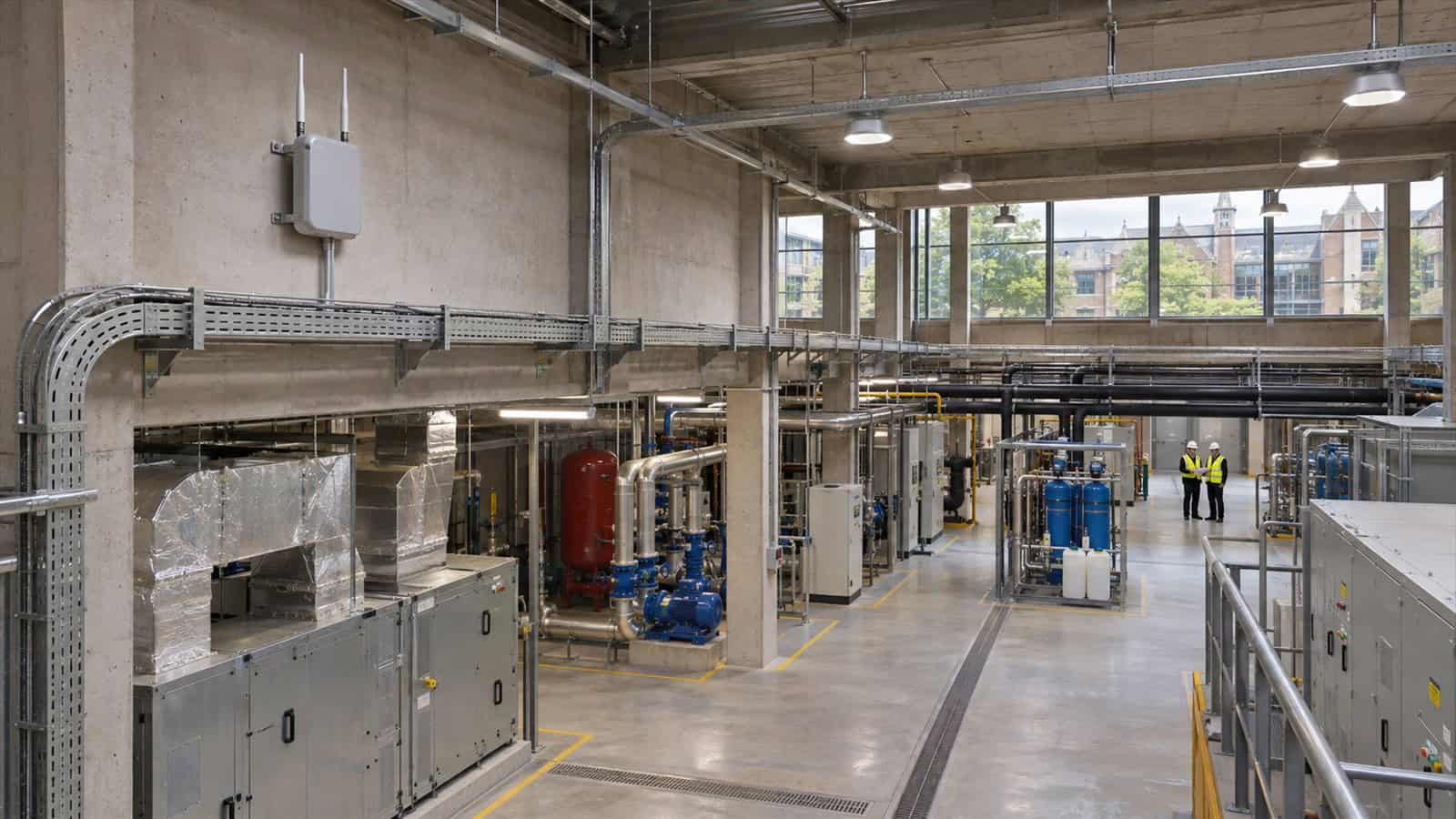
The Robustel R1520LG LoRaWAN Gateway can provide shared radio coverage and resilient backhaul, while tenant separation belongs in LNS roles, device registries, routing and application permissions rather than in the enclosure alone.
Define Tenancy by Ownership
A tenant should name who owns devices, keys, decoded data, integrations, support decisions and cost. One building can contain facilities, research and third-party services that need different administrators.
Write onboarding, credential rotation, incident visibility, export and offboarding rules before the first production device joins. Shared administrator accounts make the boundary weaker than the diagram suggests.
| Layer | Typical sharing | Control |
|---|---|---|
| RF/backhaul | shared | site operations |
| gateway trust | shared, restricted | LNS operations |
| device registry | tenant-separated | tenant admin |
| applications | tenant-separated | data owner |
Control Fair Use and Change Windows
Tenant growth affects airtime, downlinks, backhaul and support workload. Monitor traffic by tenant where the LNS permits it, and give noisy devices an owner rather than silently suppressing them.
Frequency-plan or gateway changes can affect everyone. Publish the window, expected symptom and evidence of recovery so one tenant’s decoder fault is not mistaken for a campus-wide radio issue.
- tenant device and traffic limits
- downlink and change approval
- incident data visibility
- exit and data-retention rules
Prove Isolation with a Tenant Exit
Create a test tenant, onboard devices, route data, revoke an administrator and remove the tenant. Confirm other tenants continue operating and logs identify the change without exposing unrelated data.
This lifecycle test is stronger than a screenshot of separate folders because it exercises identity, routing and retention controls together.
How the Robustel R1520LG LoRaWAN Gateway Fits a Shared Estate
| Tenant pain | Verified Robustel R1520LG capability | Architecture consequence | Acceptance evidence |
|---|---|---|---|
| shared campus coverage | LoRaWAN radio plus multi-path backhaul | share RF and gateway infrastructure while tenancy remains in LNS roles/routing | remove one test tenant without affecting another |
| different LNS tenancy models | Basics Station, UDP and LORIOT external options | choose a server architecture that implements the required separation | verify per-tenant identities, routes and administration |
| distributed gateway estate | RCMS-ready management | operate gateways separately from tenant application accounts | revoke a gateway administrator and retain tenant service |
Robustel R1520LG LoRaWAN Gateway provides LoRaWAN connectivity plus dual-SIM cellular, Ethernet and Wi-Fi backhaul. External LNS options allow tenancy to be implemented in the selected server architecture; embedded ChirpStack can suit bounded local designs after scale and roles are validated.
Robustel RCMS platform supports gateway fleet operations, while tenant keys and application permissions remain in their own systems. Separate those administrative planes and audit who can cross them.
Field Evidence and Acceptance
Robustel’s smart-buildings LoRaWAN application example shows field sensing, gateway transport and building applications as distinct layers—the right starting point for tenant responsibility.
Robustel’s Voytech BMS case study shows LoRaWAN inside a wider building service, where contractor and data ownership must remain clear.
The Robustel video “LoRaWAN Gateway Applications” below illustrates the workloads that may share coverage. Use that diversity to challenge the governance plan rather than assuming all tenants behave alike.
FAQs
Q1. What is multi-tenancy in LoRaWAN?
It is shared network infrastructure with separated device, administrative, data and integration ownership.
Q2. Can one LoRaWAN gateway serve multiple applications?
Yes. The LNS and application layers determine routing, decoding and access.
Q3. Where is tenant isolation enforced?
Primarily in LNS identity, roles, registry and routing, plus application permissions.
Q4. How do you stop one tenant affecting another?
Use separate credentials, limits, monitoring, change control and tested offboarding.
Q5. Is the Robustel R1520LG LoRaWAN Gateway suitable for multi-tenant sites?
It can provide shared radio and backhaul when paired with an LNS that implements the required separation.
Conclusion
The Robustel R1520LG LoRaWAN Gateway can anchor a shared campus estate, while trustworthy tenancy comes from roles, routing and data contracts around it.
A clean tenant exit without disruption or data exposure is the most useful proof that the architecture delivers more than shared coverage.
Explore More Articles About Robustel LoRaWAN Gateways
About the Author
Robustel Editorial Team
The Robustel Editorial Team publishes practical articles on industrial connectivity, edge computing, LoRaWAN and device management, focusing on deployment considerations, technical limitations and long-term operation.