
LoRa vs LoRaWAN: What Gateway Buyers Need to Know
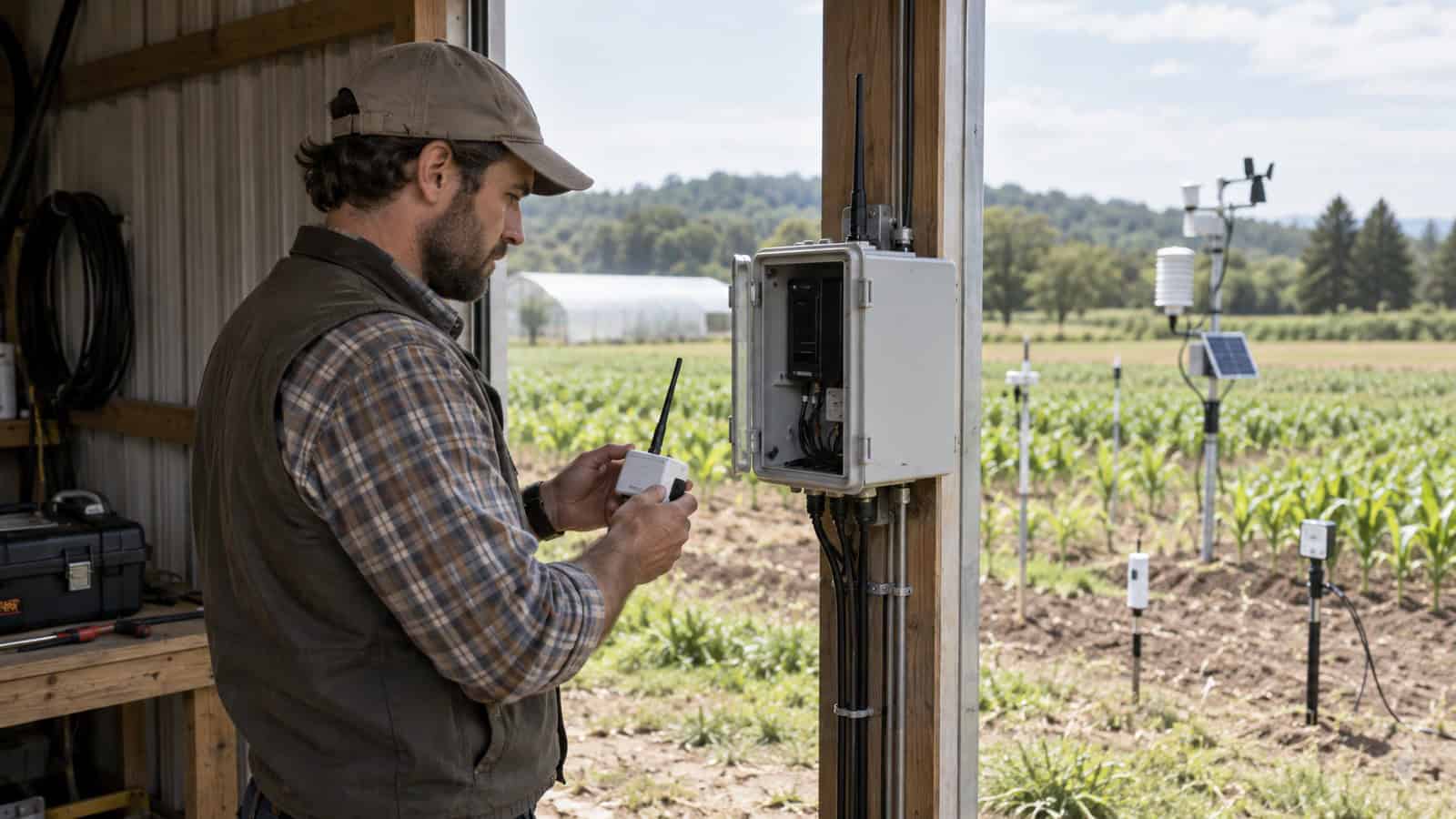
The Robustel R1520LG LoRaWAN Gateway belongs in a LoRaWAN network, not merely a collection of devices described as “LoRa.” LoRa is the radio modulation used on the link. LoRaWAN defines the network architecture, device classes, joining, security and message handling that allow compatible endpoints, gateways and network servers to work together.
Confusing the terms creates procurement failures: a proprietary LoRa radio device is not automatically a LoRaWAN endpoint, and a gateway with a LoRa concentrator does not by itself define where the LoRaWAN Network Server runs.
Radio Compatibility Is Not Network Compatibility
Two devices can use LoRa modulation and still lack a common application protocol. A LoRaWAN endpoint must implement the appropriate LoRaWAN specification and regional parameters, then join a network whose keys, frequency plan and server configuration match.
| Layer | Main responsibility | Buyer question |
|---|---|---|
| LoRa radio | Physical modulation and link characteristics | Are frequency and radio settings legal and compatible? |
| LoRaWAN endpoint | Join, security, device class and messaging | Which version, class and regional plan are supported? |
| Gateway | Receive radio packets and forward them over IP | How many channels, what backhaul and what environment? |
| Network server | Deduplication, security and network control | Embedded locally or hosted externally? |
| Application | Decode and use sensor data | Who owns payload codecs and operational workflows? |
This stack is why buying “a LoRa gateway” without specifying the server and application boundary is incomplete.
Regional Frequency Plans Must Match
LoRaWAN operates under regional radio rules. EU868, US915, AU915 and AS923 are not interchangeable labels. Endpoint, gateway and network-server configuration must align with the permitted plan and the exact product variant.
Do not import range, transmit power or channel assumptions from another region. Duty-cycle or dwell-time constraints, channel plans and permitted power affect both capacity and commissioning. The purchasing record should name the deployment country and required plan, not simply “global LoRa.”
Gateway Channels Do Not Equal Endpoint Capacity
The current R1520LG documentation specifies up to eight simultaneous receive channels. That is a gateway radio capability, not a guaranteed endpoint count. Practical capacity depends on message rate, payload length, spreading factor, retransmissions, downlink demand, interference and gateway density.
A thousand devices reporting twice per day create a different airtime problem from a hundred devices sending frequent alarms. Build a traffic model before deciding that one gateway is sufficient.
How the Robustel R1520LG LoRaWAN Gateway Defines the Architecture
The R1520LG can forward to external LNS platforms using documented options including UDP, LoRa Basics Station and LORIOT, and it offers an embedded ChirpStack option. This lets buyers decide whether the network-server responsibility belongs centrally or at the site.
Its backhaul and local interfaces include dual cellular SIMs, two Fast Ethernet ports, Wi-Fi, separate RS-232 and RS-485 connections and optional PoE-PD. These capabilities help the gateway fit different sites; they do not prove that a protocol used by attached serial equipment is supported by the selected application.
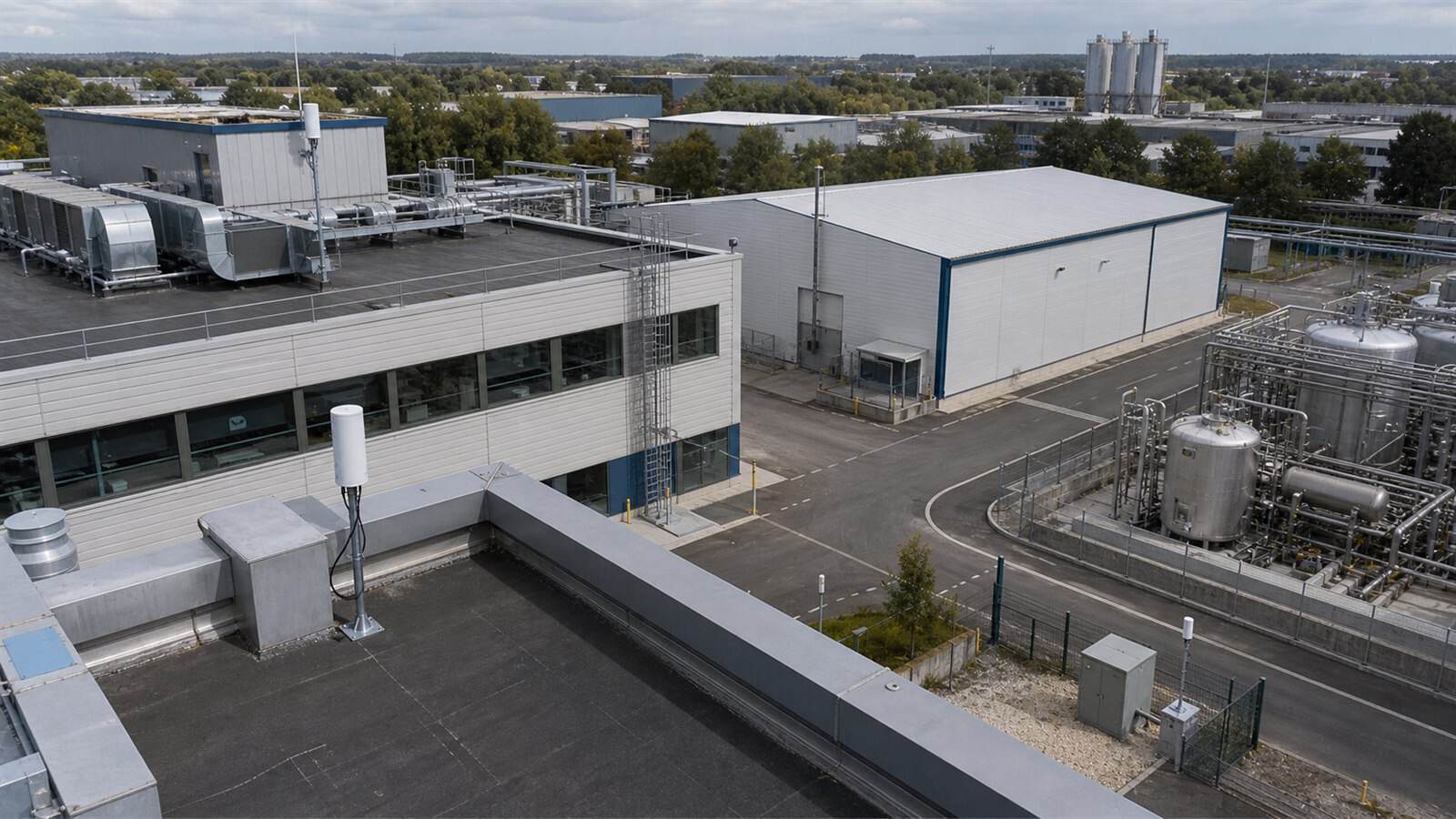
Robustel’s Voytech Systems LoRaWAN BMS case study records R1520-LG gateways in a real building deployment. It is evidence of LoRaWAN architecture applied to difficult sensor locations, not evidence that arbitrary LoRa devices will interoperate.
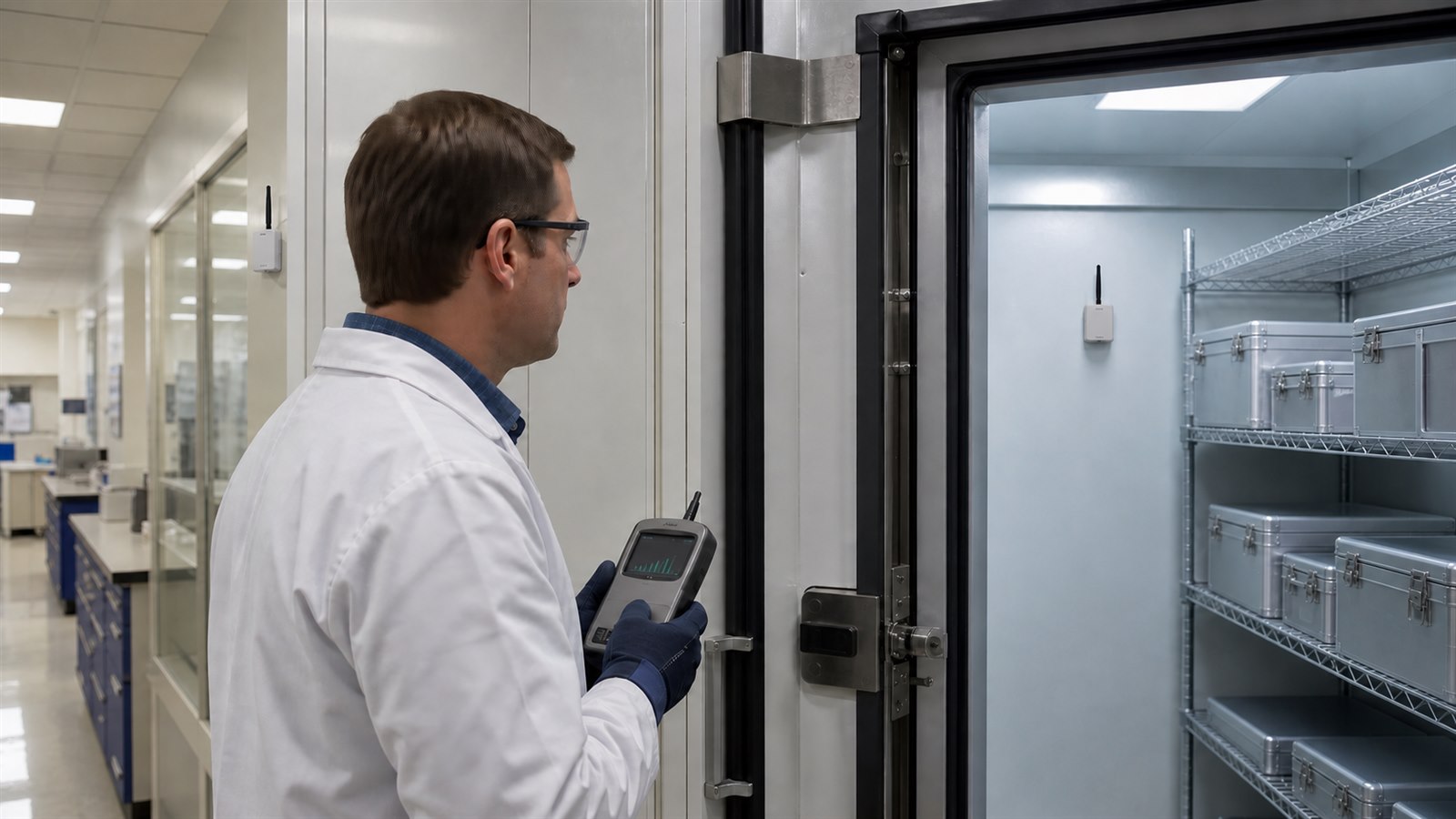
Another Robustel’s KoolZone cold-chain case study provides another documented deployment where LoRaWAN sensing and cellular backhaul form separate parts of the service. Results remain specific to that implementation.
Select the Robustel LoRaWAN Gateway by Server and Application Role
| Required role | Robustel direction | Key boundary |
|---|---|---|
| Packet forwarding to existing ChirpStack | Robustel R1320LGe | External server ownership |
| Flexible external or embedded LNS | Robustel R1520LG | Confirm chosen LNS workflow |
| Integrated LNS with local compute | Robustel LG3120e | Separate edge-gateway role |
| Building-oriented gateway architecture | Robustel LG5120 | Keep facility-specific capabilities separate |
The Robustel LoRaWAN Gateway Portfolio webinar gives a useful visual overview of these roles. Current datasheets remain the authority for exact interfaces, variants and supported specifications.
Commission Every Layer
Verify the endpoint’s LoRaWAN version, class, regional plan and keys. Confirm gateway reception at difficult locations, LNS forwarding or local-server behaviour, payload decoding and northbound delivery. Then interrupt the IP backhaul and observe what the selected architecture retains or loses.
An RF packet received by the gateway is not yet an application record. Logs and timestamps should let the commissioning team trace the path through gateway, network server, codec and application.
FAQs
Q1. Are LoRa and LoRaWAN the same?
No. LoRa describes the radio modulation, while LoRaWAN defines a networking specification that uses LoRa at the physical layer. A device can therefore use LoRa radio technology without being able to join a LoRaWAN network.
Q2. Can you use LoRa without LoRaWAN?
Yes. Developers can build a proprietary point-to-point or star network over LoRa, but they then own the addressing, security, retries and application protocol. That freedom can be useful for a tightly defined system, although it does not provide LoRaWAN interoperability.
Q3. Is LoRa better than Wi-Fi?
Neither is better in isolation. LoRa favours small payloads, long reach and low power, while Wi-Fi favours much higher local data rates; the correct choice follows the traffic, power budget, coverage area and device-management model.
Q4. What is replacing LoRaWAN?
No single technology is replacing it across all applications. Cellular LPWAN, Wi-Fi variants and proprietary sub-GHz links each suit different ownership, payload, coverage and power requirements, so the practical decision starts with the sensor workload rather than a technology trend.
Q5. What network-server options does the Robustel R1520LG LoRaWAN Gateway support?
It can work with external architectures using UDP, LoRa Basics Station or LORIOT, and it also offers an embedded ChirpStack option. That lets a buyer choose between centralized server ownership and a more self-contained site design without confusing the LoRa radio layer with the LoRaWAN network architecture.
Conclusion
The Robustel R1520LG LoRaWAN Gateway is a good fit when a project needs a clearly defined LoRaWAN gateway with flexible network-server placement and several backhaul options.
Specify the full stack—endpoint, frequency plan, gateway, LNS and application—before purchasing. That one discipline prevents most LoRa-versus-LoRaWAN misunderstandings from reaching site commissioning.
Explore more articles about Robustel’s LoRaWAN gateways in industrial IoT:
About the Author
Robert Liao | Technical Support Engineer
Robert is an IoT Technical Support Engineer at Robustel, specializing in industrial networking and edge connectivity. A certified Networking Engineer, Robert focuses on the deployment and troubleshooting of large-scale IIoT infrastructures. His work centers on architecting reliable, scalable system performance for complex industrial applications, bridging the gap between field hardware and cloud-side data management.