
Lift Phone Monitoring Centre Compatibility Guide: Call Routing, DTMF and Site Identity
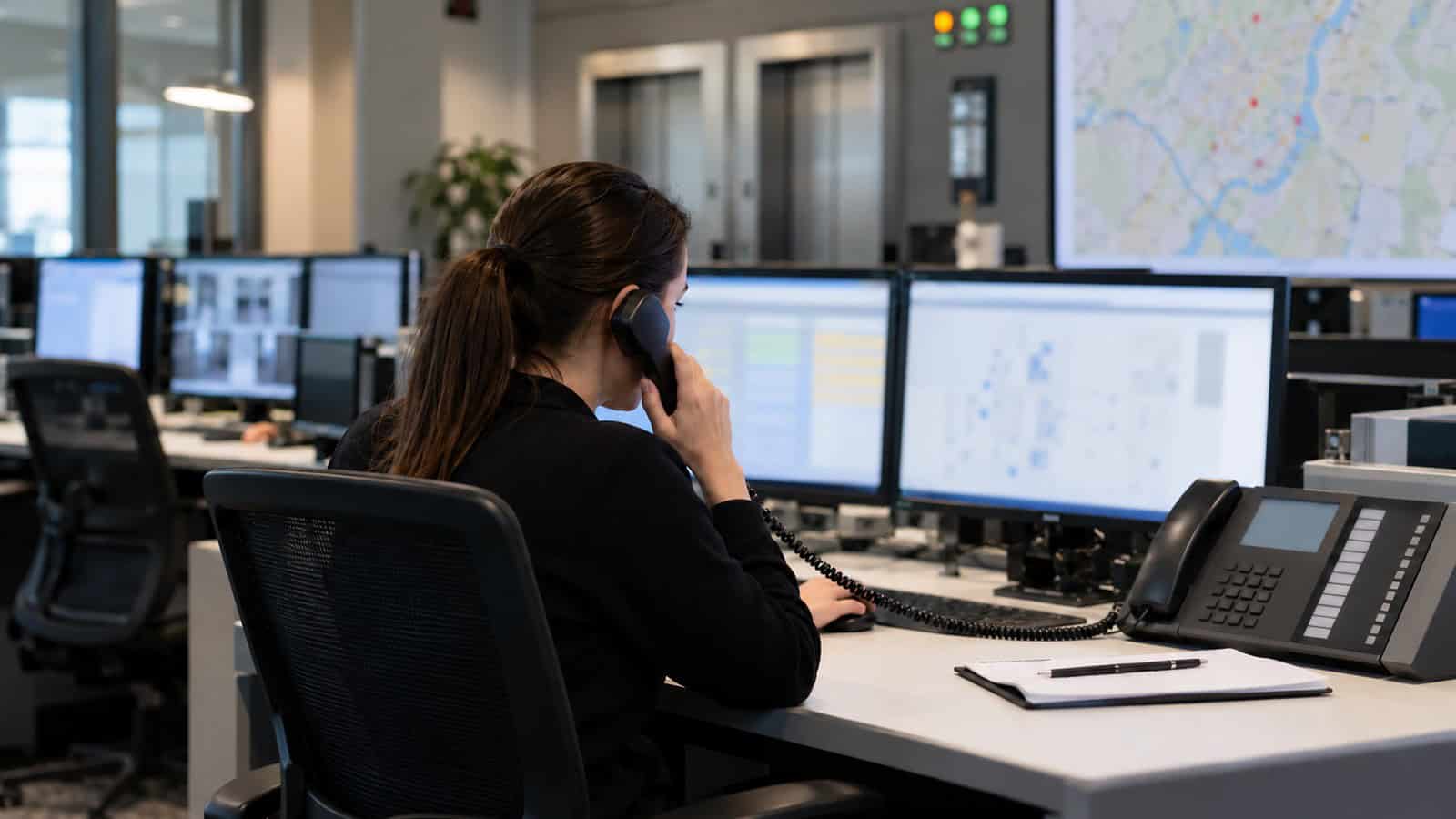
The Robustel EV8100 Elevator Voice Gateway is designed to bridge an existing analogue lift phone through FXS to SIP or cellular voice, but monitoring-centre compatibility must be accepted as an end-to-end call path with verified DTMF, site identity, audio and response.
Map the Complete Call Before Contracting
Record handset/autodialler type, loop requirements, dial sequence, call destination, SIP or VoLTE route, DTMF method, caller/site identification and the monitoring centre’s expected workflow. Include what happens after the operator answers and how the correct lift is displayed.
| Boundary | Question | Acceptance evidence |
|---|---|---|
| phone to FXS | does the line seize and dial correctly? | observed call sequence |
| gateway to voice service | which route and credentials are used? | registration and call record |
| DTMF/signalling | which method is expected? | digits received correctly |
| site identity | how is the lift identified? | correct record appears |
| human response | can two-way conversation complete? | witnessed script |
Test the Existing Handset, Not a Substitute
Bench testing with a different phone can bypass travelling cable, autodialler timing and installed audio characteristics. Test from the lift car and other required points. Include call release, redial and power restoration.
Robustel’s PSTN replacement application example shows the complete chain from analogue handset through FXS and mobile/IP voice to the receiving service. Use that chain as the interoperability worksheet rather than treating a dial tone as acceptance.
Capture the symptom at the point where it occurs. Off-hook without dialling points first to the handset, loop or FXS boundary; a connected call with unrecognised site identity points towards DTMF mode, dial sequence or monitoring-centre interpretation. The lift contractor and receiver should compare timestamps and call records before changing gateway settings, otherwise a downstream compatibility fault can be mistaken for an analogue wiring problem.
How the Robustel EV8100 Elevator Voice Gateway Supports Monitoring-Centre Compatibility
Robustel EV8100 Elevator Voice Gateway provides one FXS interface, SIP/VoLTE capability and documented DTMF options including in-band and RFC methods. Dual SIM, Ethernet and RCMS support give integrators several operating and management tools around the voice path.
Those capabilities create a configurable bridge between the installed analogue endpoint and the selected voice service. The integration team still has to map how the autodialler seizes the line, how digits and site identity are sent, which SIP/VoLTE route carries the call and what the monitoring centre expects in return. That map determines whether a failed test belongs to the local loop, gateway configuration, carrier/service or receiver.
Freeze the accepted voice route, DTMF mode, identifiers and firmware in the site record, then repeat the call under normal and approved backup-power conditions. The Robustel EV8100 Quick Pitch video below can orient service teams before the witnessed interoperability test. EV8100 fits when its FXS and voice options can be configured to the verified endpoint and receiving workflow; equipment with unsupported dial or signalling behaviour needs a different interface or migration plan rather than another round of generic gateway changes.
Use a Supervised Acceptance Script
Arrange the test with the lift contractor, monitoring centre and voice/carrier provider. Confirm site identity before discussing the fault scenario, verify two-way audio and any DTMF exchange, then repeat under the approved backup-power condition.
Robustel’s TSARO case study provides deployment evidence for standardised EV8100 installations and remote operational records. The practical lesson is repeatability: each site still needs its own witnessed call and correct monitoring-centre record.
Use a script that records the same checkpoints on both sides: lift ID presented, destination reached, audio in both directions, DTMF or protocol exchange, release behaviour and the gateway/voice state at the time. If one checkpoint fails, stop at that boundary and assign the next action to its owner. Re-running an unscripted call after several simultaneous changes removes the evidence needed to understand why it later passed.
Hand Over the Voice Path
Retain destination numbers, SIP/carrier ownership, DTMF settings, site ID, test date, response contact, escalation route and authorised change process. A future SIM or monitoring-centre migration should trigger the same acceptance sequence.
Add the observed call result and the configuration revision that produced it, not only a statement that the phone was tested. The monitoring centre should confirm the site record, the lift contractor should retain the car-side result, and the voice-service owner should retain routing evidence. Handover is complete when a future maintainer can identify which party to contact before changing the accepted path.
よくある質問
Q1. How does a lift emergency phone work?
It establishes a two-way call from the lift to a responsible receiving service, using the installed handset/autodialler, gateway or line service and monitoring workflow.
Q2. What is DTMF signalling?
DTMF represents keypad digits as tones or telephony events. Lift systems may use it for identification or interaction with the receiving platform.
Q3. What is an FXS port?
An FXS port provides the analogue line interface used by a phone or autodialler. Electrical and signalling compatibility still needs verification.
Q4. How do you test a lift phone with a monitoring centre?
Follow an approved supervised procedure that confirms routing, site identity, DTMF where used, two-way audio, response and required power conditions.
Q5. When is the Robustel EV8100 Elevator Voice Gateway compatible with a monitoring centre?
It is suitable when the installed handset, EV8100 configuration, chosen voice service and monitoring-centre signalling have passed a witnessed end-to-end test.
結論
The Robustel EV8100 Elevator Voice Gateway fits lift-phone migrations that need a managed FXS-to-SIP/VoLTE boundary and a repeatable acceptance process. Its value is clearest when every party can see which part of the call path it owns.
Do not close compatibility on registration or dial tone alone. Close it when the real lift identifies itself correctly, supports a clear two-way conversation and leaves an evidence record that can be repeated after the next service change.
Explore More Articles About Robustel Lift Connectivity


著者について
Robustel Editorial Team
The Robustel Editorial Team publishes practical articles on industrial connectivity, edge computing, LoRaWAN and device management, focusing on deployment considerations, technical limitations and long-term operation.