
Lift Phone Audio Quality Troubleshooting Guide: FXS, VoLTE, SIP and Monitoring Centre Checks
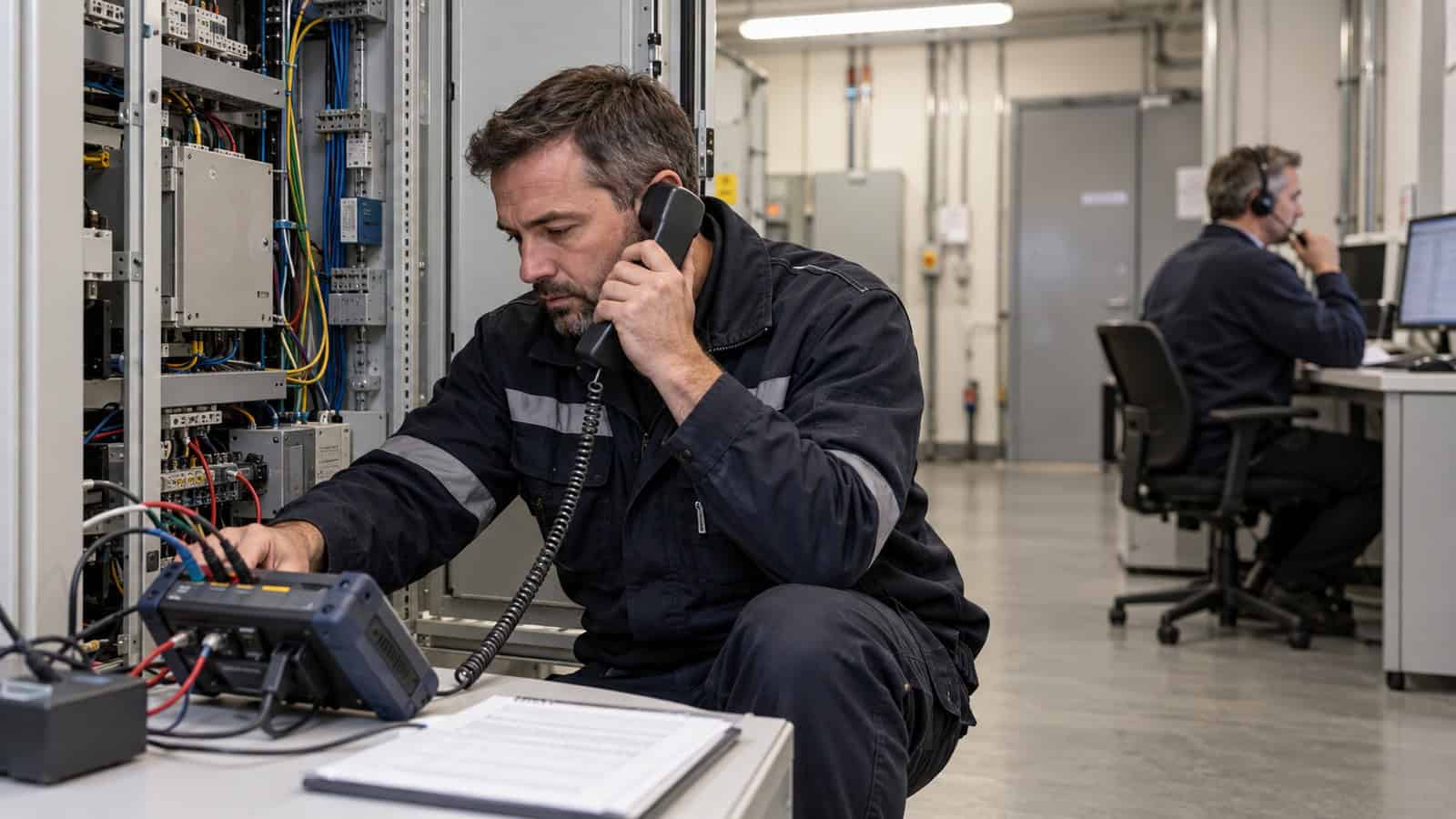
The Robustel EV8100 Elevator Voice Gateway connects an analogue lift phone through FXS to VoLTE or VoIP service, which makes audio troubleshooting an end-to-end task. A connected call can still have one-way speech, echo, clipping, low level or failed DTMF, so change one layer at a time and retain a known-good rollback.
Classify the Audio Symptom First
| Symptom | First comparison | Likely layers |
|---|---|---|
| one-way audio | direction of failure and SIP/RTP path | NAT, firewall, codec/media or endpoint |
| echo | which party hears it and delay | handset/acoustic coupling, hybrid or network delay |
| low or distorted speech | local handset versus remote endpoint | FXS level, wiring, codec, RF or receiver |
| DTMF not recognised | in-band/out-of-band mode and receiver | autodialler, gateway/voice service, monitoring centre |
| intermittent drop | timestamps, RF and registration | mobile service, power or voice session |
Do not begin by raising every gain setting. That can turn one directional fault into clipping and make the original cause harder to see.
Establish a Known-Good Physical Baseline
Inspect handset/autodialler compatibility, FXS wiring, travelling cable and power. If authorised, compare with a known-good analogue device at the gateway and compare the installed handset on a known-good line. Those two tests separate local wiring from the upstream voice path.
The Robustel’s EV8100 Quick Pitch video below helps service teams understand the product boundary before testing. Use the hardware and service documentation for actual settings.
Trace VoLTE or SIP Media Separately from Registration
Registration proves that a service relationship exists; it does not prove both audio directions. Record call setup, codec/media behaviour, NAT/firewall path and whether the symptom follows one SIM, one operator or one monitoring endpoint.
Compare the two audio directions separately. If the monitoring centre hears the lift car but the passenger hears nothing, trace the return media path and local receive chain; if the opposite direction fails, begin with the handset microphone, FXS transmit path and upstream media. A single “one-way audio” label hides which owner needs the evidence.
Repeat the call against a known-good destination or service path where the approved procedure allows it, changing one variable at a time. Robustel’s PSTN replacement application example shows the complete FXS-to-cellular voice path and helps the team identify the last point where audio is known to be correct before changing configuration.
How the Robustel EV8100 Elevator Voice Gateway Supports Audio Diagnosis
Robustel EV8100 Elevator Voice Gateway brings the FXS line, cellular voice service, dual SIM and remote device visibility into one gateway. This allows an authorised team to compare line behaviour, registration and network events around the same call timestamp.
- Check device and service state before changing audio parameters.
- Compare one controlled call through the normal and alternative approved path.
- Retain the original configuration and define the rollback trigger.
- Confirm every repair with the monitoring centre and lift-car handset.
The gateway does not hear the call as a human does. Remote states can narrow the cause; usable speech and correct DTMF remain end-to-end acceptance results.
Include the Monitoring Centre in the Test
Audio processing, endpoint equipment and DTMF handling at the monitoring centre can affect the outcome. Record which party hears the problem, the destination, the operator position and whether another known-good site shows the same symptom.
Robustel’s TSARO case study provides a useful operating reference for standardising voice-gateway estates and records. In an audio incident, consistent call timestamps and site identity make it easier to compare the gateway event with provider and monitoring-centre evidence.
Validate the Repair Under Real Conditions
Test from the lift car with doors and machinery in representative states. Verify both speech directions, volume, echo, clipping, DTMF and the monitoring-centre response. Repeat on approved backup power if the service requires it.
Repeat the call and have both ends describe the symptom rather than relying on one operator’s “clear” result. Where gain or codec settings were changed, record the original value and rollback point before testing the next adjustment. This keeps an improvement in one direction from hiding clipping or low level in the other.
Close the incident with the changed setting or replaced component, before/after observations and rollback status. A call that happened to sound clear once is weaker evidence than a reproducible record showing both directions, the power condition, destination and monitoring-centre response.
よくある質問
Q1. What causes poor call quality on a mobile network?
RF conditions, congestion, voice-service provisioning, codecs, packet loss, latency and endpoint equipment can all contribute. Separate mobile registration from the actual media test.
Q2. What is an FXS port?
It is the interface that provides an analogue telephone line to a phone or autodialler. Compatibility and line behaviour should be verified with the installed device.
Q3. What is DTMF and why does it matter?
DTMF is the signalling produced by keypad tones or an autodialler. Lift systems may rely on it for identification or menu interaction, so the complete path must preserve the selected method.
Q4. How can echo on a VoIP call be reduced?
First identify which party hears it and whether the cause is acoustic, analogue-line or network related. Change one approved parameter at a time and compare with a known-good baseline.
Q5. How does the Robustel EV8100 Elevator Voice Gateway help troubleshoot lift-phone audio?
It provides the FXS and cellular voice boundary plus remotely visible device/network states. These observations help isolate the fault before an end-to-end call confirms the repair.
結論
The Robustel EV8100 Elevator Voice Gateway gives technicians a clear boundary between the analogue lift phone and the mobile voice service. Effective audio diagnosis follows that boundary in both directions instead of treating every symptom as weak signal or changing several settings together.
Classify the symptom, establish a physical baseline, compare the voice paths and involve the monitoring centre. Preserve the evidence with one call timestamp, one controlled change and a witnessed result that another technician can reproduce.
Explore More Articles About Robustel Lift Connectivity




著者について
Robustel Editorial Team
The Robustel Editorial Team publishes practical articles on industrial connectivity, edge computing, LoRaWAN and device management, focusing on deployment considerations, technical limitations and long-term operation.