
Lift Gateway Remote Firmware Update Guide: Change Control and Rollback Planning
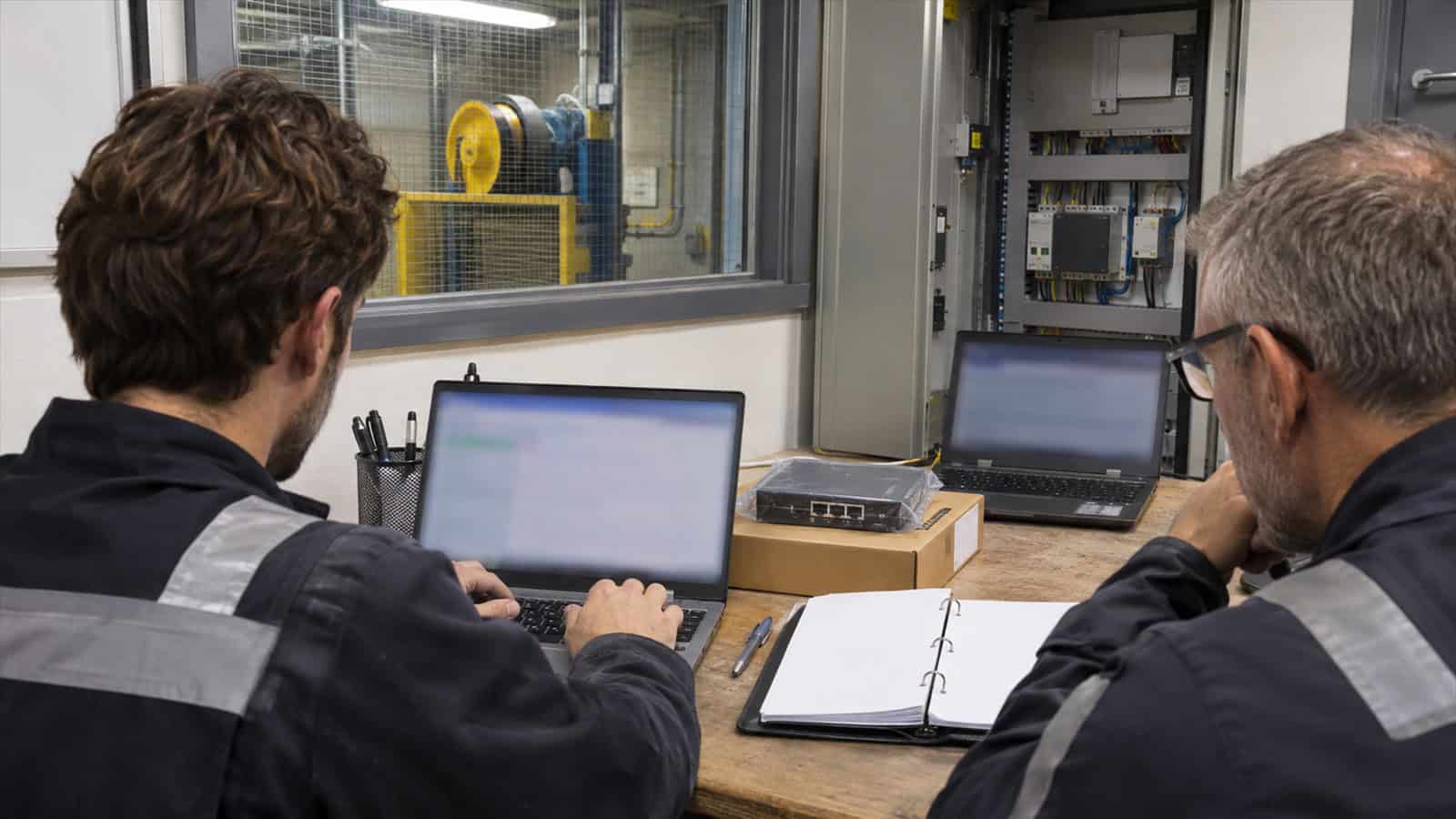
The Robustel EV8100 Elevator Voice Gateway can be managed remotely through RCMS, but an in-service lift communication device should be updated only under an authorised change plan with a tested return path. A remote firmware update is not just a software task; teams should confirm the target device and firmware, preserve the existing configuration, define the maintenance window, and decide how service will be recovered if the update or communication check fails.
For lift operators and service providers, the acceptance point is the communication service rather than the firmware-update status alone. After updating a Robustel EV8100, teams should verify that the gateway is back online, the expected configuration remains in place, connectivity is available, and the required lift communication path still works as intended. This is where RCMS remote management adds value: it supports maintainability across a distributed EV8100 fleet while change approval, recovery planning, and post-update validation remain controlled operational responsibilities.
Define the Service State That Must Survive
Inventory handset/auto-dialler, FXS settings, mobile registration, SIP/VoLTE path, DTMF method, monitoring-centre identity and site power. Firmware is one component in that chain.
Agree the maintenance window, lift status and test-call procedure with the lift contractor, building owner and receiving centre. Do not improvise emergency dialing outside the authorised plan.
| Gate | Evidence | Rollback trigger |
|---|---|---|
| backup | restorable config and credentials | backup incomplete |
| pilot | representative site passes | call/DTMF failure |
| rollout | cohort health stable | repeated anomaly |
| close | witnessed call and records | no end-to-end proof |
Use a Pilot That Represents the Difficult Sites
Choose an old handset type, weak-signal building and each active voice architecture. A convenient lab unit cannot expose travelling cable, carrier or monitoring-centre behaviour.
Observe power-up, mobile and voice registration, inbound management, outbound call, audio, DTMF and event reporting. Keep versions and timestamps so support can compare a later fault.
- authorised window and contacts
- pre-change call result
- configuration and firmware backup
- post-change witnessed call
- documented rollback owner
How the Robustel EV8100 Elevator Voice Gateway and RCMS Support Controlled Updates
| Change-control pain | Verified Robustel EV8100 capability | Update mechanism | Acceptance evidence |
|---|---|---|---|
| distributed firmware/configuration | RCMS-ready RobustOS Pro management | stage canary work and retain version/configuration visibility | update one representative site and complete documented rollback |
| voice service regression | one FXS port plus SIP/VoIP and VoLTE support | retest the exact analogue-to-mobile voice path after change | witnessed call with identity, audio, DTMF and disconnect |
| alternate mobile path | dual Mini SIM with failover | verify the approved secondary subscription after update | remove the preferred service and repeat the call path |
Robustel EV8100 Elevator Voice Gateway provides one FXS port, dual SIM, SIP/VoLTE capability and RCMS-ready management on RobustOS Pro. This lets authorised teams stage configuration and firmware work across a fleet.
Robustel RCMS platform reduces travel and improves version visibility, but it does not replace lift access control, the receiving centre or the witnessed call. Tie each remote action to a local owner and acceptance record.
Rollback should restore the known configuration and service path, not merely install an older file. Verify which modem, certificate or provider states require separate recovery.
Recover from an Interrupted Update
Remove the WAN during a lab or approved pilot update and follow the documented recovery route. Confirm the device returns to a known state and that local emergency settings have not silently changed.
Stop the fleet if evidence is ambiguous. A slow, reversible cohort is safer than completing a schedule with no accepted call result.
Evidence from Related Deployments
Robustel’s PSTN replacement application example shows the complete chain from analogue handset through FXS and mobile voice service to the receiving endpoint.
Robustel’s TSARO case study demonstrates the operational value of standardised EV8100 deployments and retained fleet records.
The Robustel EV8100 Quick Pitch video is useful for stakeholder orientation; terminal wiring, carrier acceptance and witnessed calls still require the current product documents and site procedure.
よくある質問
Q1. Can firmware updates be done remotely?
Yes when the product and management system support it, but authorization, maintenance windows and recovery remain necessary.
Q2. What is a rollback plan?
It defines triggers, files, credentials, people and steps needed to restore the last accepted service.
Q3. Why use a pilot group?
A pilot exposes compatibility and site conditions before a fleet-wide change.
Q4. Should lift phones be tested after updates?
Yes, through the authorised installed-system test process, including audio, DTMF and receiving-centre identity.
Q5. How does the Robustel EV8100 Elevator Voice Gateway support remote updates?
It is RCMS-ready, enabling managed fleet work when paired with local change control and witnessed acceptance.
結論
The Robustel EV8100 Elevator Voice Gateway provides the FXS, cellular voice and management functions for this lift-phone workflow, while the accepted result comes from an authorised end-to-end test in the installed building.
Keep the observed evidence, responsible people and recovery steps together. That record gives the next technician a starting point and prevents a changed network or handset from being treated as the same proven system.
Explore More Articles About Robustel Lift Connectivity


著者について
Robustel Editorial Team
The Robustel Editorial Team publishes practical articles on industrial connectivity, edge computing, LoRaWAN and device management, focusing on deployment considerations, technical limitations and long-term operation.