
Lift Gateway Cybersecurity Vendor Guide: SIP, VPN, Updates and Remote Access
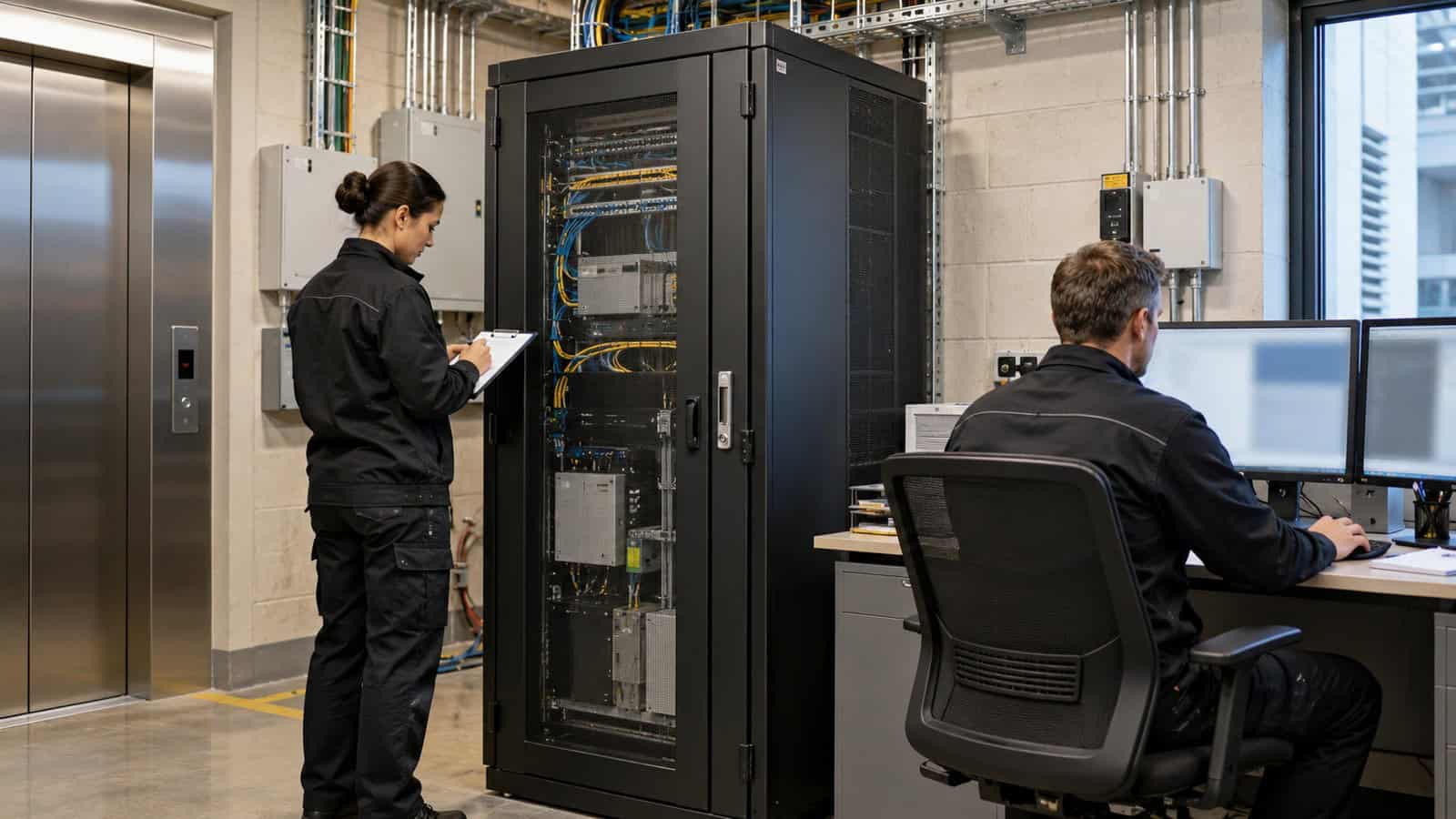
The Robustel EV8100 Elevator Voice Gateway provides SIP/SRTP, firewall, VPN, RobustOS Pro and RCMS capabilities that can support a secure lift-phone architecture, but compliance and risk depend on the deployed identities, rules, update process and ownership around those features.
Evaluate the Voice and Management Planes Separately
The voice plane needs trusted destinations, SIP credentials, media protection where supported and monitored failure. The management plane needs named administrators, least privilege, restricted source paths, strong credentials and logs. Do not expose the web interface or SSH broadly because the voice service needs internet access.
| Risk | Control evidence | Operational owner |
|---|---|---|
| credential theft | unique storage/rotation process | voice or platform team |
| broad remote access | VPN and source/role restriction | IT/security |
| outdated firmware | advisory and approved patch workflow | gateway owner |
| untraceable change | logs, account attribution, backup | service provider |
| voice outage after change | rollback and witnessed call | lift contractor |
Ask for Evidence That Matches the Exact Deployment
Request the firmware branch, supported encryption/policies, vulnerability-advisory route, update method, support period and configuration backup/restore process. A feature name without the enabled configuration and lifecycle owner is not enough for a vendor decision.
Robustel’s PSTN replacement application example shows the voice-service boundaries that the threat review should follow: analogue endpoint, gateway, carrier/SIP service and receiver. Protect each boundary without preventing an emergency call or authorised recovery.
Ask the bidder to map every control to an owner and a retained artefact: configured rule, account list, certificate, advisory subscription, backup or test result. Review one representative deployed configuration rather than accepting a generic feature sheet. A vendor answer becomes operational evidence only when the team can show how the control is enabled, maintained and checked after a voice-service or firmware change.
How the Robustel EV8100 Elevator Voice Gateway Supports a Least-Privilege Design
Robustel EV8100 Elevator Voice Gateway documents SIP/SIPs and SRTP capabilities, firewall functions, VPN options, RobustOS Pro and RCMS management. These give the architect tools to separate voice, local interfaces and authorised remote operations.
Use VPN and firewall policy to expose only required services. Keep temporary support access time-bounded where the operating process allows it. Robustel RCMS can support fleet visibility and controlled remote operations; its accounts, permissions and incident process need the same governance as the device.
The Robustel EV8100 Quick Pitch video below is suitable for identifying interfaces and stakeholders before the security workshop. Use current manuals and advisories for the actual control and version evidence.
Approve the design against the real support route. The lift contractor may need a narrow maintenance path, the voice provider needs only the services required for SIP/VoLTE, and the building or security team owns administrative access and review. EV8100 is a good fit when its network controls and managed operations can be assigned within that model; leaving permanent shared access for convenience would undo the least-privilege benefit of the platform.
Patch Without Turning Maintenance into an Outage
Stage firmware on a representative unit, back up configuration, review release notes and define rollback. After updating, verify FXS behaviour, voice registration, destination, audio, DTMF, remote visibility and backup-power state.
Robustel’s TSARO case study demonstrates why consistent fleet records matter. Security maintenance should add the firmware and change evidence to the same operational record rather than treating patching as an IT-only event.
Time the maintenance from loss of the accepted path through return of the witnessed call, and record which rollback point was available at each stage. If registration returns but DTMF, audio or receiver identity does not, the change remains open. The gateway owner can close software state only after the lift contractor and monitoring centre close the end-to-end service result.
Contract Incident and Exit Responsibilities
Name who revokes an account, blocks a SIM, rotates SIP credentials, investigates logs, performs an urgent update and confirms call restoration. Require export or deletion of credentials and records when the service provider, building owner or gateway changes.
Attach response targets and decision authority to those names. A lost credential may require immediate revocation before a full incident review, while a firmware issue may require a staged update and witnessed call. The exit plan should identify which accounts, certificates, backups and portal records transfer to the new owner and which are destroyed, so the emergency voice path is not left dependent on a former supplier.
よくある質問
Q1. Is SIP encrypted?
Basic SIP is not automatically encrypted. SIP over TLS and SRTP can protect signalling and media when both endpoints and the service are configured to support them.
Q2. What is SRTP used for?
SRTP protects real-time media such as voice. Key exchange and endpoint compatibility must also be configured correctly.
Q3. Does a VPN make remote access secure?
A VPN protects a network path, but security still depends on identity, permissions, endpoint condition, logging and how access is approved.
Q4. How often should gateway firmware be updated?
Follow the vendor advisory and risk process. Test updates in the deployed voice configuration and verify the call path after each approved change.
Q5. How does the Robustel EV8100 Elevator Voice Gateway support cybersecurity?
It provides voice-security, firewall, VPN and managed-operations capabilities that can form part of a least-privilege architecture with defined lifecycle controls.
結論
The Robustel EV8100 Elevator Voice Gateway fits lift-phone projects that need voice migration and remote operations to share one governed platform. Its documented controls provide useful building blocks, while the deployed identities and maintenance process determine the security result.
Select the vendor on evidence for the exact configuration, then test patching, rollback and call recovery as one workflow. A secure gateway that cannot be maintained without losing the emergency path is not an operable security design.
Explore More Articles About Robustel Lift Connectivity



著者について
Robustel Editorial Team
The Robustel Editorial Team publishes practical articles on industrial connectivity, edge computing, LoRaWAN and device management, focusing on deployment considerations, technical limitations and long-term operation.