
How to Select an Edge Gateway for SCADA Modernization
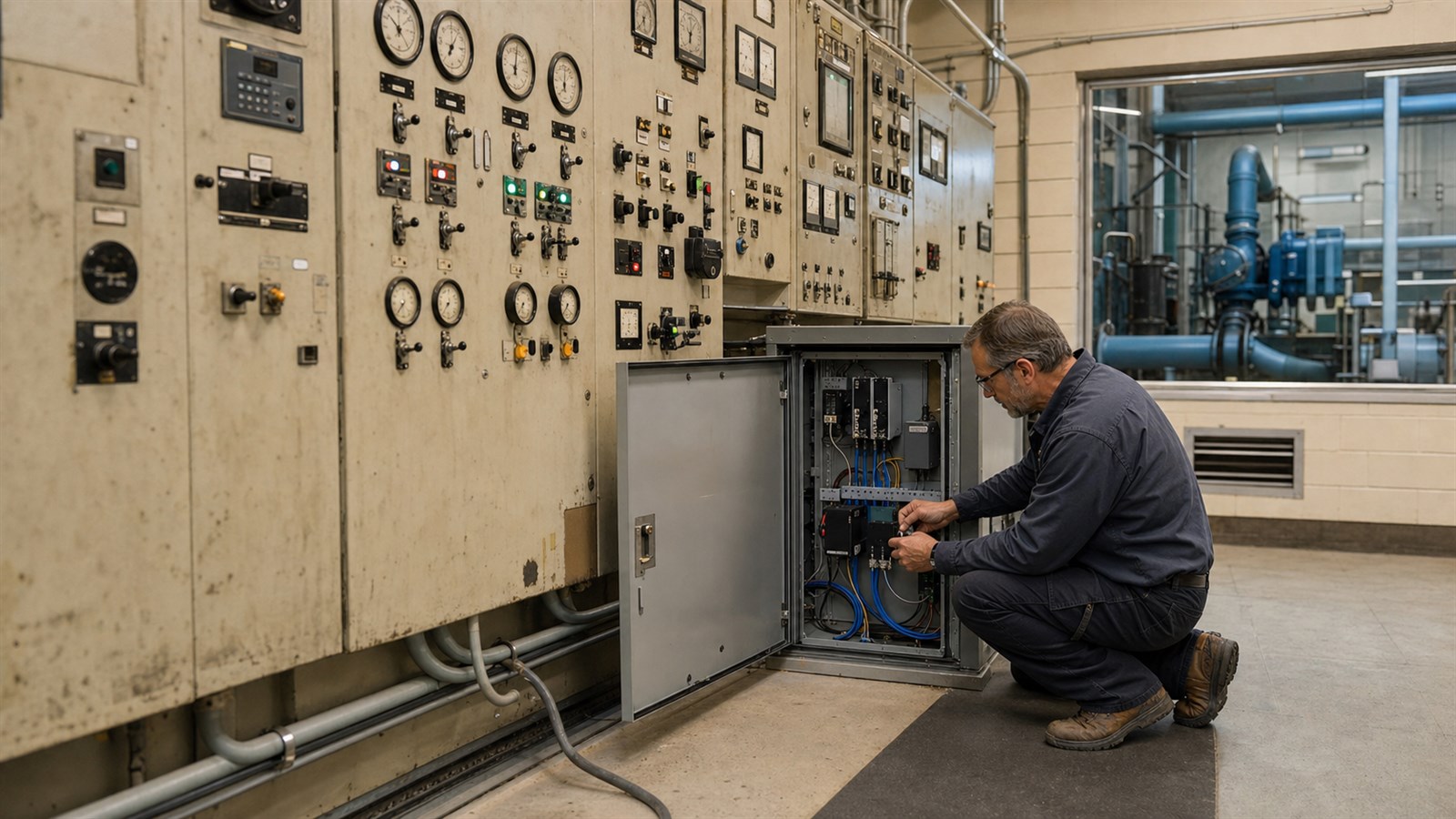
The Robustel EG5100 edge computing gateway fits phased SCADA modernization projects where existing controllers and operator systems must remain operational while a new data, protocol or remote-management layer is introduced. The gateway should support migration in controlled stages rather than forcing the plant into a one-day replacement of proven SCADA infrastructure.
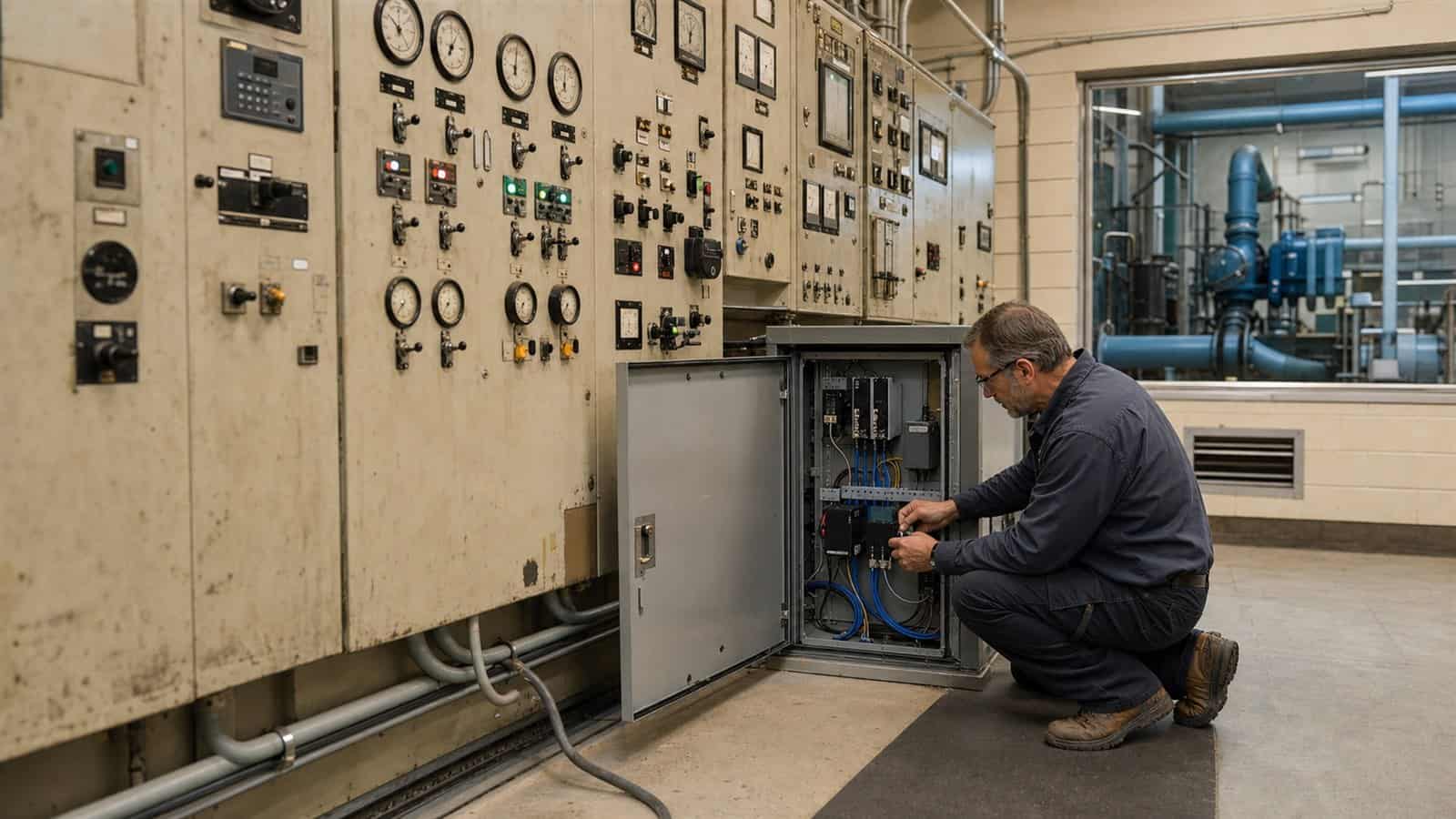
A mature water, energy or manufacturing site may have PLCs, RTUs and SCADA servers that have worked for many years. The modernization project may need better remote visibility, new protocols or cloud integration, but replacing everything simultaneously can create more operational risk than the new architecture is intended to remove. A safer selection process therefore begins with migration states.
Modernize SCADA as a Sequence of States, Not One Cutover
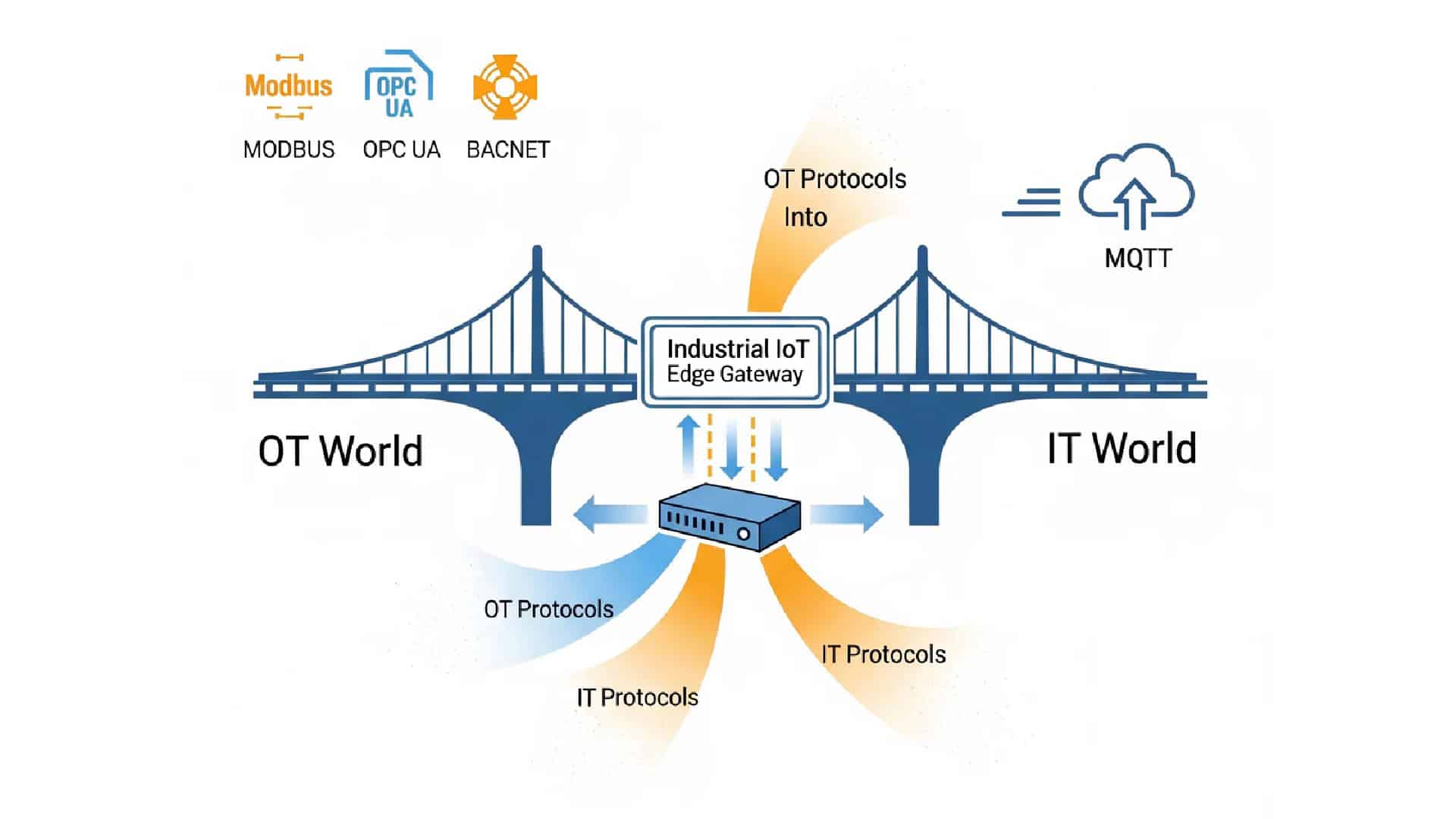
The Robustel Edge Computing Gateway portfolio supports protocol bridging, local applications and upstream connectivity across several hardware configurations. In a SCADA modernization project, those capabilities are most useful when they allow new functions to be introduced beside the existing system before responsibility is transferred.
A practical migration can move through six states:
| Migration state | Existing SCADA | Edge gateway | New platform |
|---|---|---|---|
| Baseline | Production | Not involved | Not involved |
| Shadow | Production | Reads approved data | Observe only |
| Parallel | Production | Normalizes/publishes | Receives data |
| Operational | Production | Buffers/connects | Used operationally |
| Partial cutover | Selected roles remain | Production role | Production role |
| Retirement | Project-specific | Stable | Stable |
The legacy platform does not have to disappear at the end. Retirement is an engineering decision, not a mandatory definition of modernization.
Stage 1: Add a Shadow Data Path Without Changing Control
The first useful edge-gateway role is often observational.
The gateway reads approved data from PLCs, RTUs or meters while the existing SCADA system continues operating exactly as before. No control responsibility moves to the new platform at this stage.
This is where the Robustel EG5100 edge computing gateway is particularly relevant. Its serial and Ethernet interfaces can connect to legacy equipment, while local applications can collect or normalize selected data without requiring the controller to become responsible for a new WAN path.
Robustel’s Connected CNC Machines Application Example illustrates the same migration principle in a machine environment. The existing CNC controller retains its core operational role, while an EG-series edge gateway can add a separate information and support path using industrial interfaces and protocols that are both exposed by the existing machine, PLC or control layer and supported by the gateway. This does not imply native support for proprietary CNC controller protocols. The example is not a specific SCADA migration deployment; its relevance here is the coexistence of an established control system with a separate upstream connectivity layer.
Shadow operation is useful for more than proving that the gateway can read the PLC. The established SCADA system is often the quickest reference for what operators already consider normal. If the new path reports 9.8 bar while the existing screen shows 10.0 bar, the team needs to understand whether the difference comes from scaling, polling time, register choice, timestamping or the source itself before anyone starts debating which platform is more accurate.
This is one reason the legacy system should remain authoritative during the early migration stage. The objective is not to prove that the new architecture can display data; it is to prove that the data carries the same operational meaning that engineers and operators have relied on for years.
Stage 2: Validate the New Northbound Interface in Parallel
Once acquisition is stable, selected information can be sent to the new SCADA, historian, MQTT broker or API path.
The existing production display remains available while engineers check naming, scaling, timestamps and quality states in the new system.
The RobustOS Pro edge computing operating system becomes important at this stage because it provides a Debian environment for protocol connectors, local applications and data-normalization logic.
Robustel’s “Where Is Edge Computing Actually Used in Industrial IoT” video fits naturally at this transition. The gateway begins adding more than connectivity when it becomes responsible for preparing, buffering or interpreting industrial data before the new platform receives it.
The parallel stage is successful only when the new information path produces the same operational meaning as the established one.
Stage 3: Introduce Buffering, WAN Security and Remote Operations
After the new data path is trusted, the project can begin testing responsibilities that were not part of the legacy architecture. A remote SCADA site may now use cellular backhaul, VPN connectivity or local buffering during WAN interruptions. These functions should be introduced deliberately rather than being assumed because the gateway supports them.
The Robustel Remote Monitoring and Control for Power Distribution Assets Application Example illustrates the operational requirement in distributed utility infrastructure. The published example uses an R3000 router rather than an EG5100, so it is not evidence of an EG5100 deployment. Its relevance is the migration pattern: existing FTUs, reclosers and other field controllers gain a managed communications path to SCADA operations without requiring wholesale replacement of the installed assets.
For an edge-gateway modernization, local buffering can add another layer of resilience, but the project must define what is retained, how long it is retained and how data is reconciled after the upstream system returns.
How the Robustel EG5100 Edge Computing Gateway Fits a Phased SCADA Migration
The Robustel EG5100 edge computing gateway combines dual-SIM 4G, Ethernet, configurable serial interfaces, DI/DO and RobustOS Pro. Robustel currently positions it specifically for retrofit and protocol-bridge workloads, including local normalization, buffering and secure delivery to SCADA or cloud systems.
That makes it a proportionate fit where modernization needs local software and industrial interfaces but does not require the heavier compute profile of an AI-oriented gateway. A typical phased architecture could therefore evolve from an initial read-only integration into local normalization and then into a controlled northbound path.
The EG5100 does not determine how quickly the project should cut over. That decision belongs to the SCADA owner and should depend on validation evidence, operator acceptance and failure testing.
Cut Over Only Functions That Have Passed Operational Acceptance
A successful parallel data path is not the same as a successful SCADA migration. Before transferring production responsibility, test the new architecture under conditions such as controller restart, WAN loss, gateway reboot, stale data and upstream-service outage.
The project should also define rollback at the functional level. If the new historian fails, can the existing historian remain authoritative? If a new visualization is unavailable, can operators still use the established SCADA screen? If remote connectivity is interrupted, does local control remain unaffected? These questions keep the migration reversible while confidence is still developing.
For a Robustel edge deployment, modernization is complete only when the new functions have demonstrated the same operational discipline expected from the legacy system they are augmenting or replacing.
The most difficult cutover decisions are often partial rather than total. A new historian may be trusted before a new control interface. Remote diagnostics may move first while local operator screens remain untouched. One subsystem may retain the existing SCADA path because its controller documentation is incomplete or because the next maintenance shutdown is six months away. Treating those exceptions as controlled migration states is usually more useful than forcing the entire site to reach the same architectural endpoint on the same date.
よくある質問
Q1. Does SCADA modernization require replacing the existing SCADA system?
No. Modernization can add new data acquisition, remote connectivity, analytics or integration while parts of the existing SCADA system remain in service. Replacement should follow validated operational requirements rather than being assumed.
Q2. When does the Robustel EG5100 edge computing gateway fit SCADA modernization?
The Robustel EG5100 edge computing gateway fits projects requiring serial or Ethernet integration, local protocol applications, buffering and secure upstream connectivity without demanding high-end edge AI resources.
Q3. What is a shadow data path?
A shadow path collects approved data in parallel with the existing production system without becoming operationally authoritative. It allows engineers to validate mappings, timing and data quality before users depend on the new architecture.
Q4. Why is local buffering useful in SCADA modernization?
Buffering can protect selected data during temporary WAN outages. It should be sized and tested explicitly because local storage is finite and reconciliation behavior depends on the application.
Q5. Should control commands move to the new platform during the pilot?
Usually the safer first step is read-only or observational integration. Moving control responsibility should occur only after the new architecture, security model and operational procedures have been validated.
結論
Selecting an edge gateway for SCADA modernization is less about replacing legacy systems and more about creating a safe migration path. The Robustel EG5100 edge computing gateway supports the interfaces, local applications, buffering and secure connectivity needed to introduce new SCADA functions beside existing infrastructure.
Use shadow acquisition first, validate the new northbound path in parallel and transfer production responsibilities only after failure behavior has been proven. The most successful modernization is often the one that gives the project several controlled opportunities to stop, verify and recover before the old architecture is retired.
Related Reading on Edge Computing in Industrial IoT:


著者について
Robert Liao | Technical Support Engineer
Robert is an IoT Technical Support Engineer at Robustel, specializing in industrial networking and edge connectivity. A certified Networking Engineer, Robert focuses on the deployment and troubleshooting of large-scale IIoT infrastructures. His work centers on architecting reliable, scalable system performance for complex industrial applications, bridging the gap between field hardware and cloud-side data management.