
How to Choose the Best-Fit 5G Router Antenna for Indoor, Vehicle and Remote Sites
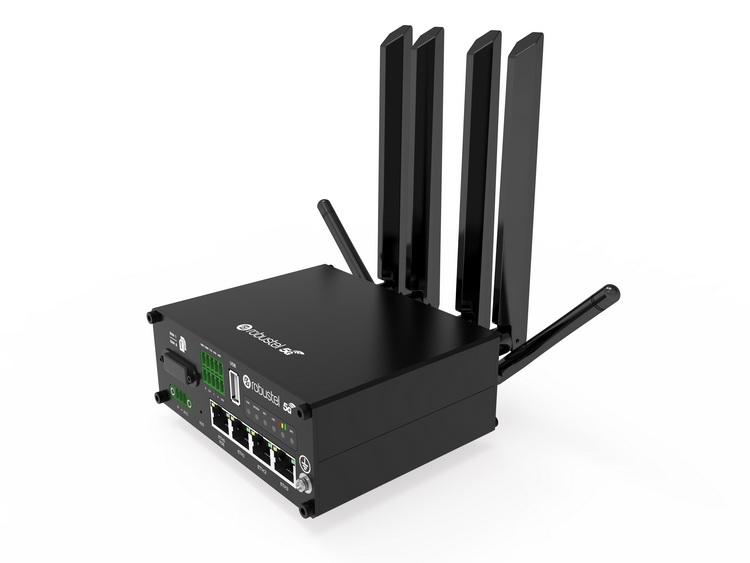
The Robustel R5020 Industrial 5G Router uses four cellular antenna connections and is suitable for fixed and selected vehicle deployments, but antenna performance is determined by the complete RF path rather than the router or antenna specification alone. The best-fit 5G antenna is the one whose frequency coverage, MIMO arrangement, cable loss and mounting method work at the final site.
A capable 5G router can still perform badly inside a metal cabinet. A high-gain antenna can also disappoint if three metres of unsuitable coaxial cable remove much of the benefit before the signal reaches the modem.
That is why antenna selection should start with the installation rather than the gain number printed on the accessory page.
Treat the Antenna as One Part of the RF Path
The complete cellular path includes the operator band, radio conditions around the site, antenna frequency coverage, antenna position and orientation, MIMO elements, coaxial cables, connectors and the router modem.
A weakness at any stage can dominate the result. The Robustel R5020 Industrial 5G Router provides four cellular antenna ports for its 5G/LTE architecture. Those ports do not mean that any four antennas mounted anywhere around the cabinet will perform equally well. The antenna system still has to match the regional router variant and the bands actually used by the operator.
Before purchasing the antenna, record the exact router SKU, cellular bands, connector type, number of MIMO paths, cable distance, mounting surface and environmental conditions.
The wider Robustel accessories portfolio shows why “5G antenna” is too broad a purchasing description. Plug-on, magnetic and weather-resistant antennas have different frequency ranges, cable lengths and mounting assumptions.
The RF design starts with the required network and site geometry, then selects the accessory.
Preserve MIMO Before Chasing Gain
A router with four cellular ports should be treated as a multi-path radio system rather than as one “main” antenna plus optional extras.
MIMO can improve capacity and diversity when the network and RF environment support it, but four antenna ports do not guarantee four times the throughput. Equally, connecting only one path or installing the elements incorrectly can stop the modem from using the radio architecture as intended.
A multi-element antenna housing can be easier to install than four separate antennas, but the project still needs to confirm frequency coverage, connector mapping and the manufacturer’s installation guidance.
Gain also needs context. The Robustel 5G Cellular Rubber Antenna E000330174, for example, is a compact wideband cellular antenna covering multiple LTE and sub-6 GHz 5G ranges. It is useful as an example of why coverage across the required bands matters more than selecting one impressive peak-gain number.
A high-gain antenna with the wrong radiation pattern or frequency response can be a worse fit than a lower-gain antenna installed correctly.
Cable Loss Can Reverse a Good Placement Decision
Moving an antenna away from a metal cabinet can improve the radio environment, but the longer coaxial cable required to reach that position also introduces attenuation.
This trade-off becomes more important at higher frequencies. An installer can move the antenna to a window or rooftop position, measure better signal in free space and then give back part of that improvement through a long, lossy cable run.
That is why the cable should be specified as part of the RF system. Record cable type, length, published loss at the relevant frequencies, connector count and any adapters.
Two architectures are worth comparing in difficult fixed sites:
- Keep the router beside the existing network equipment and run coaxial cables to the improved antenna position.
- Move the cellular router closer to the antenna and use Ethernet for the longer distance back to the firewall or switch.
The second option can reduce RF cable loss, but it transfers the problem to power, physical security, environmental protection and Ethernet design. Neither approach is automatically better.
Robustel’s R5010 Quick Pitch video is useful background for this specific architectural trade-off because the R5010 is designed as a focused 5G WAN unit that can be positioned separately from an existing firewall. The same RF principle applies more broadly: sometimes moving the cellular device is cleaner than extending every antenna path.
Indoor, Vehicle and Remote Sites Need Different Antenna Decisions
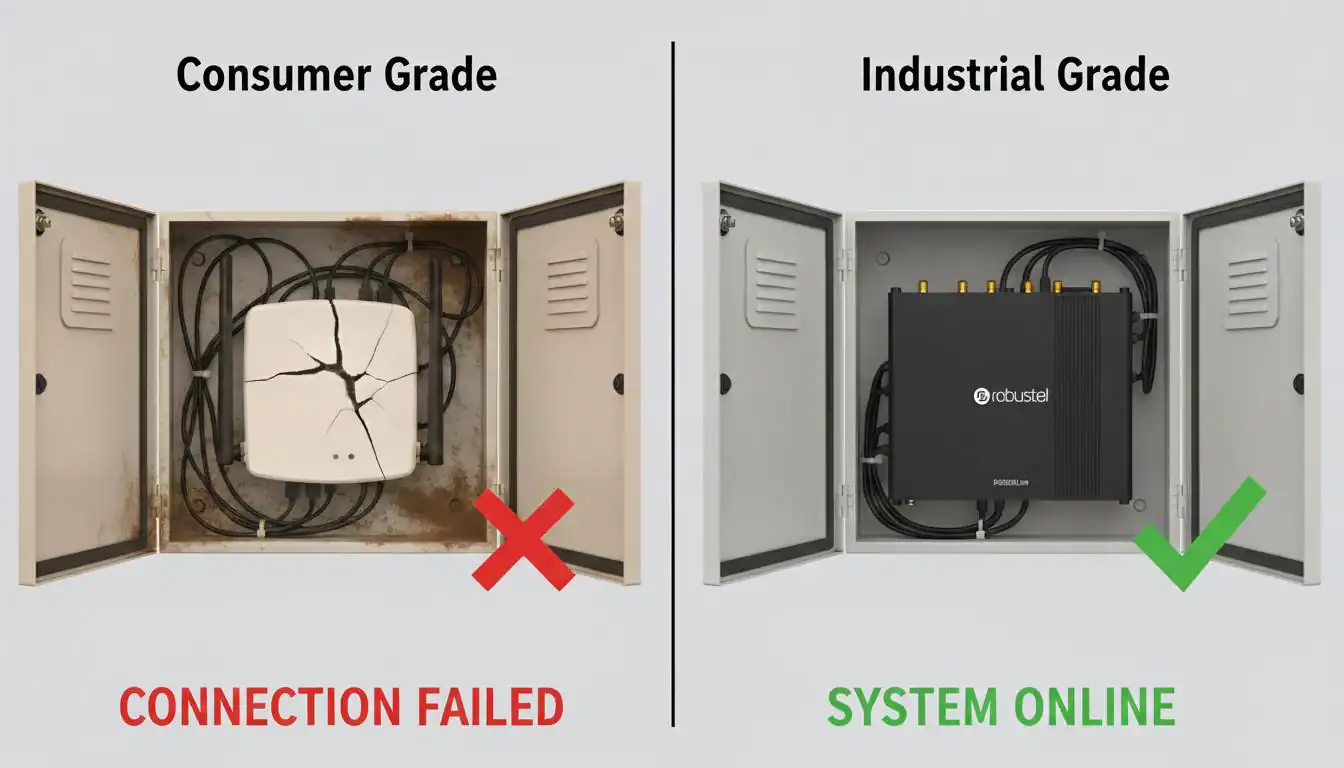
An indoor branch often places networking equipment in exactly the wrong location for cellular reception. Firewalls and switches belong in a secure communications room, but that room may be below ground, surrounded by concrete or located inside a metal plant area.
The Jones Technology retail resilience Case Study by Robustel provides real evidence of this problem. Jones Technology encountered RF-hostile retail locations and used external placement strategies so the cellular equipment could reach stronger signal while the existing branch architecture remained inside. The engineering lesson is not that every branch needs an outdoor installation; it is that cabinet convenience should not dictate RF placement.
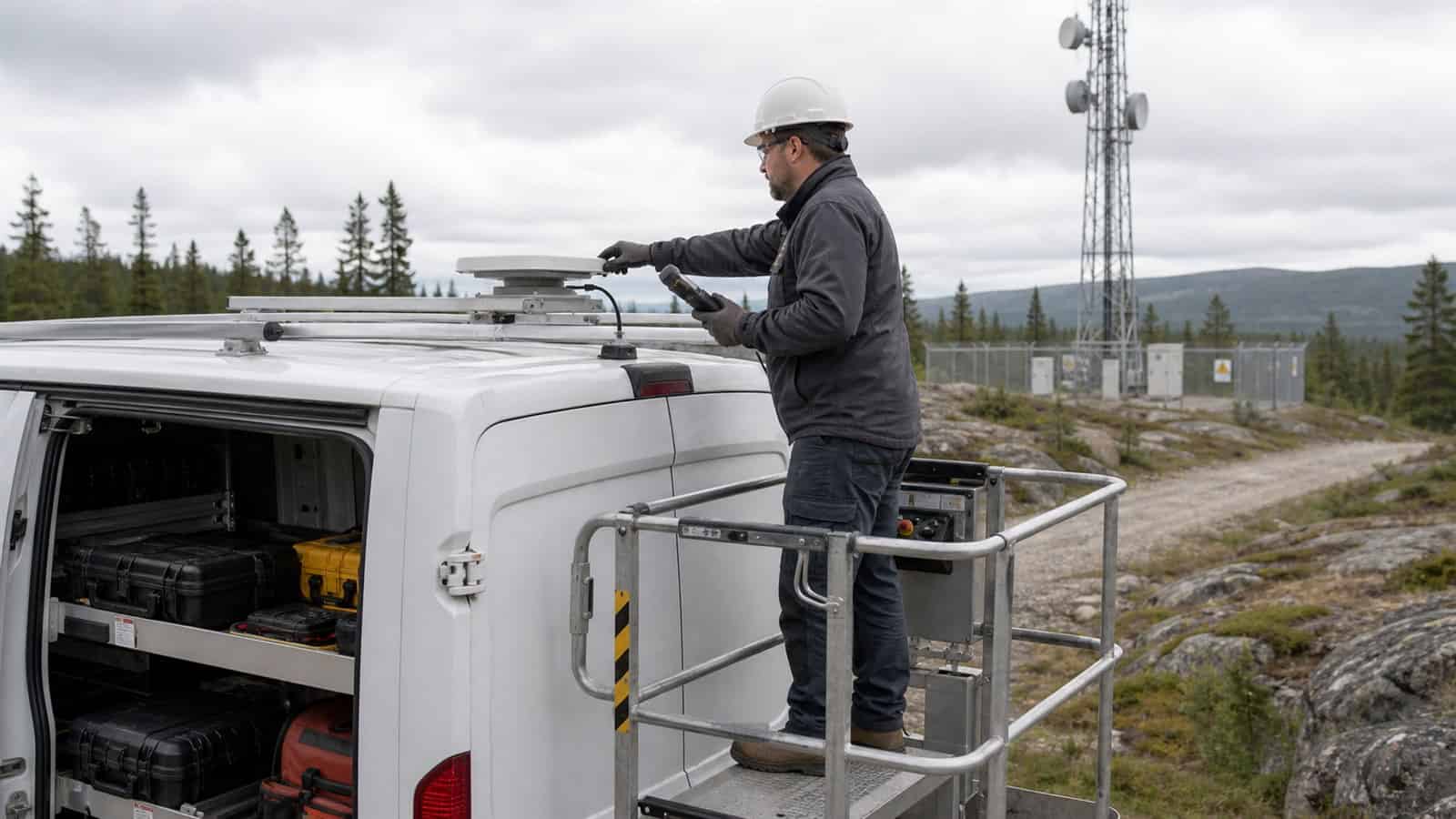
Vehicle installations create a different problem. Orientation changes continuously, coverage moves between cells and cables pass through a body exposed to vibration and weather. Roof mounting can provide a clearer path than hiding antennas under a dashboard, but permanent installations also need mechanical retention, sealing and route-based validation.
Robustel’s Managed Vehicle Wi-Fi over 4G/LTE and 5G Application Example reinforces that route conditions, operator availability and remote fleet support matter more than a depot speed test.
Remote cabinets introduce yet another set of constraints. An external antenna may need weather protection, UV resistance, cable-gland sealing, grounding, surge protection and safe maintenance access. A radio test with the cabinet door open is not representative if the production installation will operate with the router and cables fully enclosed.
The site type changes the mechanical design as much as the RF design.
Use the Robustel R5020 5G Router as the Vehicle and Multi-Interface Reference
The Robustel R5020 industrial 5G router is a better reference for vehicle antenna discussions than a branch-focused R5010 because current R5020 variants include vehicle-oriented options with E-Mark, GNSS and Ignition-sense support. The exact variant still needs to be verified before procurement because GNSS and vehicle features are model dependent.
The R5020 also supports fixed-site deployments, four cellular antennas and multiple local Ethernet/serial interfaces, making it useful for remote cabinets that need both cellular backhaul and direct connection to industrial equipment.
This does not mean the same antenna should be used in a vehicle and a remote cabinet.
A vehicle may need a low-profile mechanically secure roof solution, while a cabinet may favor separately mounted wideband antennas or a protected external enclosure. The router model defines the ports and supported bands; the installation defines the correct antenna arrangement.
For a fixed branch where the primary requirement is a focused 5G handoff to an existing firewall, the R5010 can still be the cleaner architecture. Product selection and antenna selection should reinforce each other rather than being made independently.
Diagnose the RF Path Before Replacing Hardware
Poor performance is not automatically an antenna fault.
A router that rarely connects to 5G may be outside usable 5G coverage or use a regional band set that does not match the operator. A site can show stronger signal after an antenna change while throughput remains low because the cell is congested. A VPN can remain offline even when RF metrics look good because the failure sits in DNS, APN, routing or the remote endpoint.
The following troubleshooting map keeps the diagnosis tied to evidence:
| Observed symptom | What to verify first |
|---|---|
| Router rarely reaches 5G | Regional SKU, operator bands, antenna range and final position |
| Frequent 5G-to-LTE fallback | Time-based RF measurements, coverage and network load |
| Signal improves but throughput does not | Congestion, subscription limits and application path |
| External antenna adds little benefit | Cable loss, frequency match, connectors and mounting |
| Performance changes with cabinet door open | Metal shielding and external placement |
| Vehicle varies sharply by route | Route logs, operator selection and roof installation |
| Good RF values but application is offline | APN, DNS, VPN, routing and application state |
| Remote site degrades in bad weather | Water ingress, cable damage and sealing |
For supported Robustel fleets, RCMS can help compare device and cellular status across sites, but no management platform can see every physical cable fault or poor antenna mount remotely.
The useful pilot is therefore not the test that produces the highest speed. It is the test that produces repeatable application performance from the permanent installation.
よくある質問
Q1. Does a higher-gain 5G antenna always improve performance?
No. Frequency compatibility, radiation pattern, MIMO arrangement, placement and cable loss can matter as much as gain. Network congestion and operator limitations are not fixed by changing the antenna.
Q2. Does a 4×4 MIMO 5G router need four antennas?
It should normally use the antenna arrangement specified by the manufacturer. That may be four separate antennas or a multi-element housing. Using fewer paths can reduce the intended diversity or MIMO capability.
Q3. Is it better to use a long antenna cable or move the router?
Moving the router closer to the antenna can reduce coaxial loss, but the new position still needs suitable power, Ethernet, environmental protection and security. Compare the complete installation rather than cable length alone.
Q4. Why is the Robustel R5020 Industrial 5G Router relevant to vehicle antenna design?
Selected R5020 variants support vehicle-focused features including E-Mark, GNSS and ignition-sense options, while the router uses four cellular antenna ports. The exact regional and vehicle variant should still be confirmed before installation.
Q5. What should be tested after installing a new 5G antenna?
Test 5G/LTE registration, signal quality, latency, packet loss and sustained application traffic using the intended SIM and final mounting position. For vehicles, test the real route; for remote sites, test with the enclosure closed and the permanent cable arrangement installed.
結論
The Robustel R5020 Industrial 5G Router provides a strong reference platform for fixed and selected vehicle deployments, but antenna performance still belongs to the complete RF system.
Match the antenna to the regional bands and required MIMO paths, control cable loss, and choose a mounting method that fits the mechanical and environmental conditions of the site.
Do not approve an antenna from a gain figure or a single speed test. Approve the permanent RF path after it has been tested with the intended router, SIM, cables, route or enclosure and the real application traffic.
Explore more articles about Robustel industrial 5G routers:


著者について
Robert Liao | Technical Support Engineer
Robert is an IoT Technical Support Engineer at Robustel, specializing in industrial networking and edge connectivity. A certified Networking Engineer, Robert focuses on the deployment and troubleshooting of large-scale IIoT infrastructures. His work centers on architecting reliable, scalable system performance for complex industrial applications, bridging the gap between field hardware and cloud-side data management.