
Cellular Backhaul LoRaWAN Gateway: SIM, Failover and Data Plan Checklist
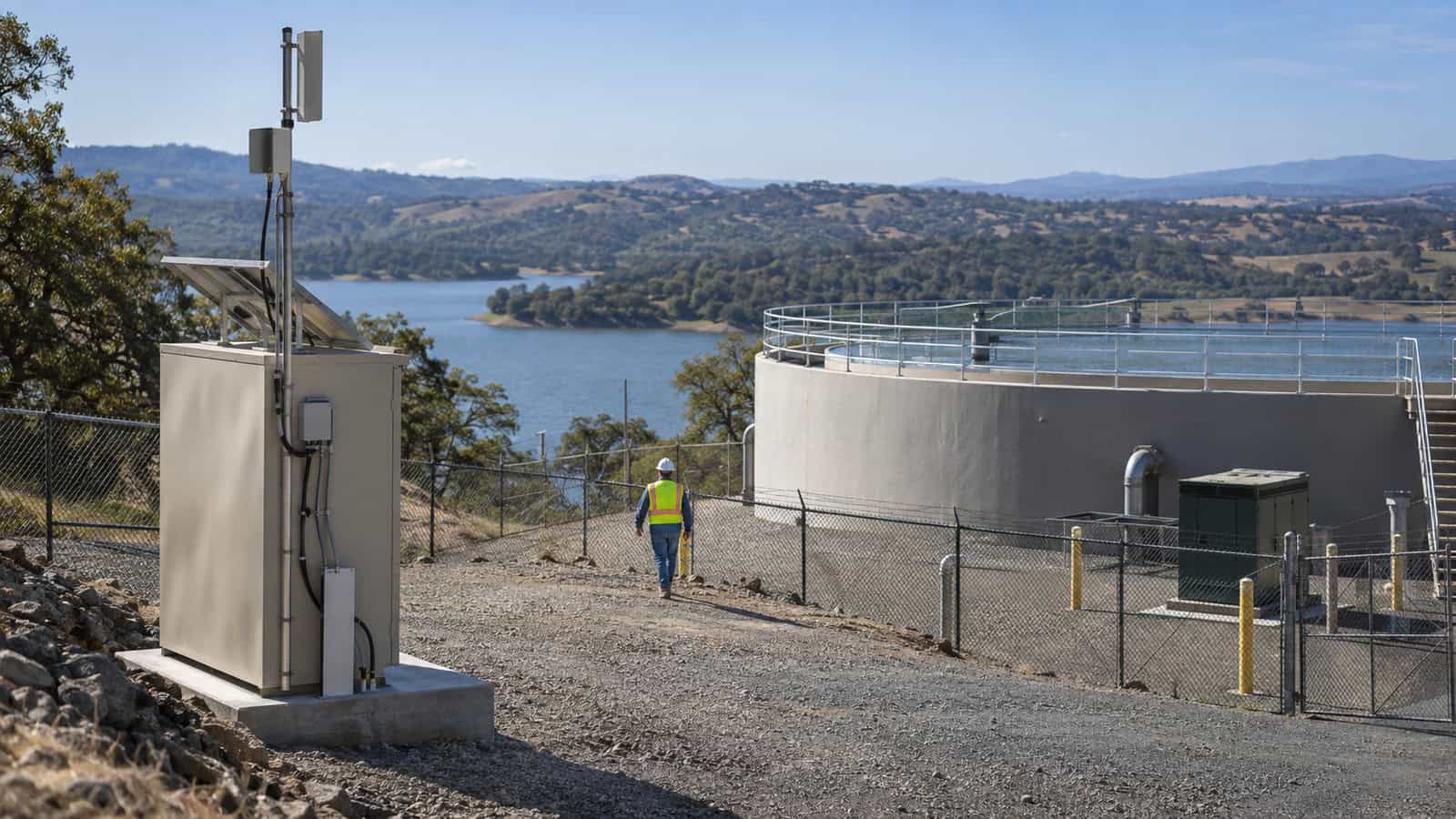
The Robustel R1520LG LoRaWAN Gateway combines LoRaWAN reception with dual-SIM cellular, Ethernet and Wi-Fi backhaul, giving operators several ways to move sensor data beyond the site. The choice is not simply “add a SIM.” Backhaul affects alarm delivery, data replay, remote maintenance and monthly cost, so it needs the same ownership discipline as the sensor network.
For an estate of gateways, I separate three decisions: the normal path, the degraded path and the commercial policy that applies during both. Most unexpected bills and slow incidents come from leaving one of those undefined.
SIM Checklist: Buy a Service, Not a Piece of Plastic
- Confirm the exact regional modem variant and supported bands.
- Confirm that the operator accepts the device and intended tariff.
- Record APN, authentication, roaming policy and carrier-grade NAT behaviour.
- Decide whether remote access uses an outbound VPN, private APN or another approved method.
- For two SIMs, document the underlying networks and whether they are genuinely diverse.
- Name the team that owns suspension, renewal, pooling and usage alerts.
A roaming SIM can improve reach, but it does not guarantee that the modem will always select the best usable network. Define what “failed” means: loss of registration, failed IP probes, failed application acknowledgement or sustained poor service. Then test that condition.
Failover Checklist: Include Shared Failure Domains
Dual SIM protects only part of the chain. Both subscriptions share the gateway, antennas, power supply, installation and usually the same local radio environment. If the cabinet loses power or an antenna is damaged, changing SIM does nothing.
| Failure | Expected evidence | Required response |
|---|---|---|
| preferred carrier unavailable | registration and health-check events | switch under the approved timer policy |
| gateway registered but cloud unreachable | multiple independent service probes | distinguish operator path from application outage |
| local LNS or application stopped | gateway/application health state | restart or escalate without needless carrier switching |
| power interrupted | loss-of-contact plus site power alarm where available | restore supply; verify data and time after restart |
| backlog replay overloads link | queue depth and publish acknowledgements | rate replay while current alarms remain timely |
Robustel’s Koolzone case study is exact-model deployment evidence for R1520-LG gateways in a cold-chain monitoring service. It shows why cellular behaviour and remote fleet visibility matter when alerts and records are operationally important. It does not establish universal coverage or the best SIM arrangement for every region.
Data-Plan Checklist: Calculate Messages and Operations Separately
LoRaWAN payloads are often small, but total traffic includes protocol overhead, VPNs, DNS, time synchronisation, management, firmware and diagnostic sessions. A local application may also publish transformed records that are larger than the original radio payload.
Estimate monthly application data from: devices × messages per day × delivered record size × days, then add downlinks, retries and headroom.
Add a separate allowance for operations. Firmware distribution and remote support can dominate a normally quiet month. If data is pooled across an estate, set per-device anomaly alerts so one misconfigured gateway does not consume the group’s allowance unnoticed.
Robustel’s Voytech Systems case study provides exact-series evidence for R1520-LG in distributed building-monitoring deployments. It is relevant because the gateway estate, cellular path and remote service all have to be operated after installation. It does not define a universal allowance: the project still needs to measure its own payloads, retries, diagnostics and update traffic before choosing a tariff.
LNS Placement Changes Backhaul Behaviour
When a gateway forwards packets to an external LNS, backhaul is part of the LoRaWAN service path. An embedded LNS can keep defined network-server functions local, but upstream application delivery may still depend on WAN availability. State exactly what works during an outage rather than calling either design “offline capable.”
The Robustel R1520LG documents external UDP, LoRa Basics Station and LORIOT options, plus an embedded ChirpStack option. Choose the architecture that the operations team can monitor and maintain. An embedded server reduces one remote dependency but also puts application state and storage at the site.
How the Robustel R1520LG LoRaWAN Gateway Supports Managed Cellular Backhaul
The Robustel R1520LG LoRaWAN Gateway provides dual physical SIM slots, 4G/LTE, two Fast Ethernet ports, Wi-Fi, optional PoE-PD, RS-232 and RS-485, with RCMS support and a Debian-based environment. Those interfaces allow the same gateway to use cellular as primary backhaul, retain Ethernet where available or connect to local building and plant equipment.
Keep the model boundary clear: Robustel R1320LGe is a compact packet-forwarding choice with physical SIM plus eSIM and PoE-PD. LG3120e is the current E2C Field-compatible model and adds a different compute, interface and software profile.
Robustel RCMS platform can show gateway and network information and support configuration operations. Use that evidence alongside LNS and application monitoring. A gateway shown online does not prove that every sensor is reporting or that an alarm reached its final recipient.
Acceptance Tests for the Backhaul Contract
Run normal traffic for long enough to establish a baseline. Remove the preferred SIM’s service, observe transition and confirm that the application recovers. Restore it and check the return policy. Repeat during a firmware download and during backlog replay.
Reconcile router counters, operator billing and application records. They measure different things, and a large discrepancy can reveal retries, overhead or an unplanned workload. Record the evidence in the handover pack with the SIM owner and renewal date.
The Robustel R1520LG product overview video gives a useful orientation to the platform. The selected variant, SIM contract and tested failover policy remain the approval basis.
よくある質問
Q1. What is cellular backhaul?
It is the use of a mobile network to carry traffic from a local site or access network to an upstream server, cloud or enterprise system. In LoRaWAN, it connects the gateway or local LNS to the wider service architecture.
Q2. Does LoRaWAN need a gateway?
Yes. End devices communicate through one or more LoRaWAN gateways, which pass their radio traffic into the network-server architecture.
Q3. Is LoRaWAN better than Wi-Fi?
Neither is universally better. LoRaWAN suits low-power devices sending small messages over wider areas, while Wi-Fi supports higher-rate local networking under a different power and coverage model.
Q4. Is LoRaWAN cellular?
No. LoRaWAN defines a low-power wide-area radio and network protocol. A gateway may use cellular as its backhaul, but the end-device radio and the backhaul are separate links.
Q5. When is the Robustel R1520LG LoRaWAN Gateway suitable for cellular backhaul?
It suits sites that need a LoRaWAN gateway with dual-SIM LTE, flexible LNS options and industrial local interfaces. Confirm frequency plan, operator bands, SIM policy, data budget and outage behaviour for the exact deployment.
結論
The Robustel R1520LG LoRaWAN Gateway is a strong cellular-backhaul platform when the project needs dual-SIM options, several LNS architectures and local building or plant interfaces. Its value depends on a service policy that explains when to switch, what to retain and who responds.
Treat SIMs, failover and data plans as one operating design. If the team can reconcile usage, distinguish radio from application faults and recover a queued data stream without losing current alarms, the backhaul is ready to support the sensor service rather than merely connect it.
At fleet scale, assign a named owner to each layer: subscription and roaming policy, gateway configuration, LNS health and application delivery. That division may feel administrative during a pilot, but it is what prevents a failed alarm from spending hours between a carrier, an installer and a software team with no agreed first diagnostic step.
Explore More Articles About Robustel LoRaWAN Gateways
著者について
Robert Liao | Technical Support Engineer
Robert is an IoT Technical Support Engineer at Robustel, specializing in industrial networking and edge connectivity. A certified Networking Engineer, Robert focuses on the deployment and troubleshooting of large-scale IIoT infrastructures. His work centers on architecting reliable, scalable system performance for complex industrial applications, bridging the gap between field hardware and cloud-side data management.