
Best 5G Router with SIM Card Slot for Industrial Sites: 2026 Selection Guide

The Robustel R5020 Industrial 5G Router combines dual physical SIM support with multiple Ethernet and industrial interfaces, but SIM count alone does not determine the best router for an industrial site. A more defensible selection process identifies what carrier failure, coverage problem or operational requirement the additional SIM is expected to address.
In this guide, “best” means best fit for the application rather than a market ranking. Two SIM slots can improve subscription flexibility without protecting the site from router failure, poor antenna placement or loss of local power.
Define What the Second SIM Is Supposed to Protect Against
The first SIM is straightforward when cellular is the site’s normal WAN. The second needs a clearer engineering reason.
One project may want two operators because a remote installation is poorly served by a single network. A vehicle fleet may move between areas where operator performance changes along the route. Another organization may want an alternative subscription to simplify maintenance or regional deployment.
Those are legitimate objectives, but they protect different failure conditions.
Dual-SIM Failure Analysis for Robustel Industrial Routers
| Failure condition | Can a second SIM help? | What still has to work? | Engineering conclusion |
|---|---|---|---|
| Primary operator unavailable | Potentially | Router, antenna, power and second operator coverage | Dual SIM can support carrier diversity |
| Weak RF inside the cabinet | Not necessarily | Antenna installation and usable alternative coverage | A second SIM cannot repair poor RF design |
| Router hardware failure | いいえ | Another router or architecture is required | Dual SIM is not hardware redundancy |
| Site power failure | いいえ | Independent or backup power is required | Both subscriptions depend on the same powered device |
| VPN session drops during switching | It may restore WAN access | VPN and application recovery must still occur | Network recovery and application recovery are separate |
| Both operators perform poorly at the site | Possibly not | Different RF or installation strategy | Subscription count does not guarantee network diversity |
The practical result is that “dual-SIM redundancy” is too broad a description unless the project also states the failure that the second subscription is designed to survive.
Antenna Placement Can Be More Important Than SIM Count
A cellular router tested on an open desk has not yet been tested as an industrial installation. Metal cabinets, machinery, reinforced structures and long coaxial cable runs can significantly change the radio environment.
Vehicles create an additional problem because the installation moves. Robustel’s Emergency Services and Public Safety Vehicles Application Example illustrates an architecture where cellular connectivity must operate across varying coverage conditions while supporting onboard applications.
This Application Example should not be interpreted as proof that every vehicle will achieve identical carrier switching or session continuity. Its relevance is the design problem: carrier strategy, antenna installation and application recovery all need to be evaluated under mobile conditions rather than treated as independent product specifications.
A SIM Slot Does Not Define the Cellular Performance Tier
Dual physical SIM support appears on routers designed for very different workloads.
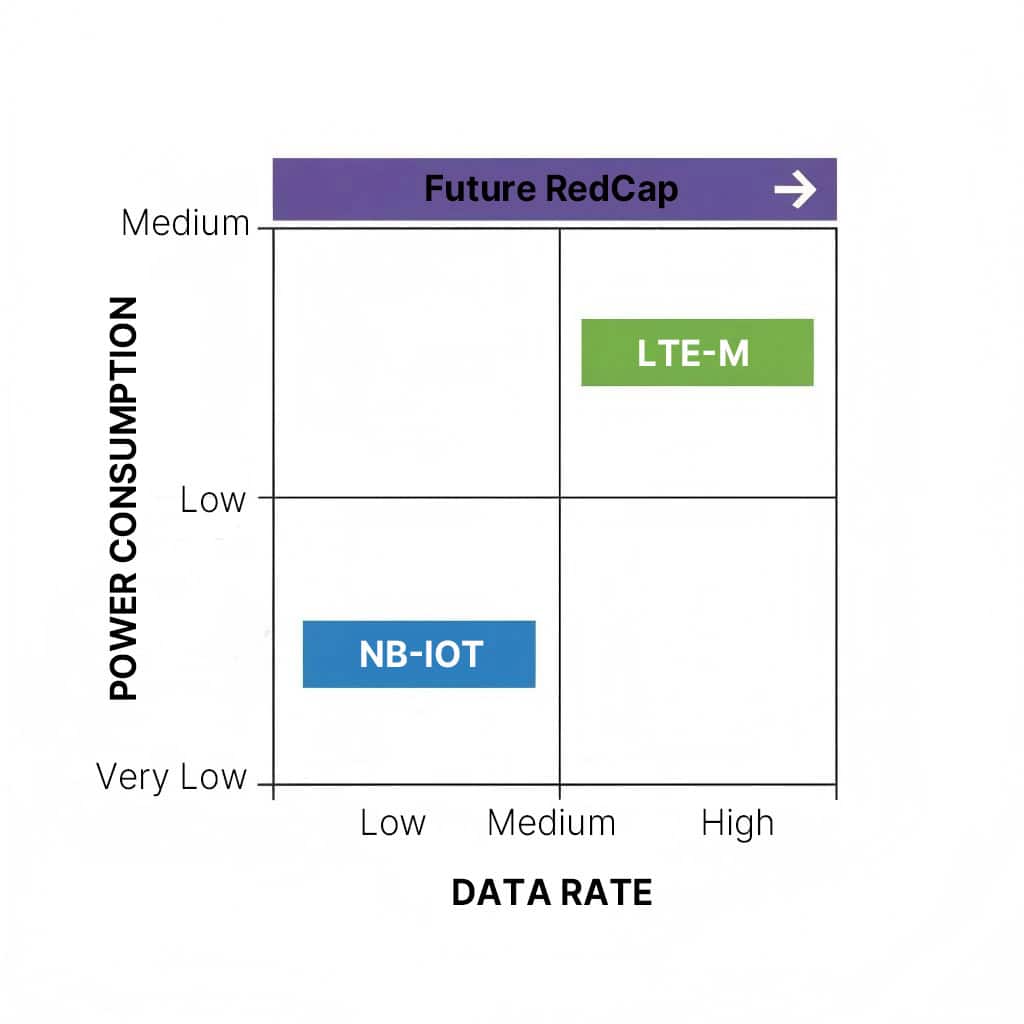
The R5020 uses dual Mini SIMs on a full-5G platform. The Robustel R2110 5G RedCap Router also provides two Mini SIMs but belongs to the RedCap category and combines that cellular architecture with four Gigabit Ethernet ports, separate RS-232 and RS-485, Wi-Fi and GNSS.
The Robustel R3000-Lite 5G RedCap Router also provides dual Mini SIM support, but its local architecture is much more compact: one Fast Ethernet port, separate RS-232 and RS-485 and a USB host interface.
The number of SIM slots therefore answers only one part of the procurement question.
What Common Router Specifications Actually Tell You
| 仕様 | What it establishes | What it does not establish |
|---|---|---|
| Dual SIM on a Robustel router | Two mobile subscriptions can be accommodated | Complete site redundancy |
| Full 5G | A higher-capability cellular platform | That every application needs full 5G |
| 5G RedCap | A reduced-capability 5G cellular tier | That the router necessarily has fewer local interfaces |
| Four or five Ethernet ports | More local IP equipment can connect directly | Higher cellular performance |
| Separate RS-232 and RS-485 | Both serial interface types are physically available | Compatibility with every industrial device or protocol |
| GNSS | Location information can be available on the supported product/variant | That the application automatically provides fleet tracking |
This distinction prevents a common selection mistake: using one visible specification as a shortcut for the complete system requirement.
How the Robustel R5020 Industrial 5G Router Supports Multi-Interface Cellular Sites
The Robustel R5020 Industrial 5G Router provides four Gigabit Ethernet ports, separate RS-232 and RS-485 interfaces, DI/DO and dual Mini SIM support. Wi-Fi 5 and model-dependent GNSS add further options where those functions belong in the site architecture.
Its Ethernet ports can be used as four LAN interfaces or configured as one WAN and three LAN interfaces. This makes the R5020 relevant where the cellular router also needs to connect several local IP devices rather than merely present a modem connection to one external firewall.
The separate serial interfaces are an important distinction. A project that genuinely needs both RS-232 and RS-485 at the same site has a different requirement from one that needs only a single configurable serial connection.
The “5G Router, 5G RedCap, or 4G: How to Choose for Industrial IoT?” video explains how full 5G, 5G RedCap and 4G fit different industrial connectivity requirements. The important purchasing question remains whether the application actually needs the additional capability of 5G, or whether the existing LTE architecture still meets its bandwidth, latency and operational requirements.
Carrier Diversity Has to Be Proved at the Real Site
Robustel’s Jones Technology case study demonstrates why cellular quality becomes a site-specific issue. The deployment had to account for RF conditions that varied between locations rather than assuming that national mobile coverage translated directly into identical branch performance.
This is where a dual-SIM procurement strategy becomes an engineering exercise. Two operator contracts are useful only if both provide an acceptable path where the router will actually be installed.
A representative commissioning test should therefore evaluate each intended subscription in the final antenna position. If one carrier is expected to protect against loss of another, the failure should be deliberately simulated and the test should continue until the required application has recovered.
Use Fleet Data to Find SIM and Carrier Problems After Deployment
The Robustel RCMS platform provides centralized information about deployed Robustel routers, including carrier, signal, connection state, data usage, firmware and alerts.
This becomes more valuable after the initial rollout. A site repeatedly operating on an unexpected carrier may indicate a coverage or configuration problem. A router with unusually high data use may reflect a changed application rather than a cellular fault. A device that is online but on an old firmware baseline represents a different operational exception again.
Fleet visibility helps operations distinguish these conditions. It does not change the physical failure boundary: both SIMs remain inside the same device.
Test the Failure You Actually Expect the Second SIM to Survive
For an unattended site, remove or disable the intended primary service under controlled conditions. Measure how the router identifies the loss, when the alternative subscription becomes usable and when the actual application resumes operation.
A vehicle should be tested along representative routes, not only at the depot. A fixed industrial cabinet should be tested with doors closed and antennas in their permanent position.
Power-cycle recovery is also worth checking because it exposes a different path through cellular registration and application startup than a simple operator switch.
よくある質問
Q1. What is a dual-SIM 5G router?
A dual-SIM 5G router can accommodate two mobile subscriptions. This may support alternative operators, roaming strategies or cellular failover, depending on the product configuration and network design.
Q2. Can two SIM cards in a router use different networks?
Yes, they can use different operator subscriptions where the product, local networks and commercial arrangements support the intended design. Both operators should still be tested at the actual site because coverage maps do not establish performance inside a specific cabinet, building or vehicle.
Q3. Is dual SIM the same as automatic failover?
No. Dual SIM provides the physical ability to use two subscriptions. Failure detection, switching policy, network registration and application recovery are separate behaviours that need to be configured and tested.
Q4. Does the Robustel R5020 have two SIM slots?
Yes. The Robustel R5020 Industrial 5G Router provides two Mini SIM slots together with four Gigabit Ethernet ports, separate RS-232 and RS-485 interfaces and additional industrial networking capabilities.
Q5. What should I look for in a 5G router with a SIM card slot?
Check the cellular tier, regional bands, SIM architecture, Ethernet and serial requirements, RF installation, power, management and expected recovery behaviour. The presence of a SIM slot proves mobile-network access is possible; it does not establish whether the complete router fits the site.
結論
The Robustel R5020 Industrial 5G Router is a strong fit where an industrial project needs dual physical SIM support together with multiple Gigabit Ethernet ports and separate industrial serial interfaces. Its two SIM slots should be treated as part of a carrier strategy rather than shorthand for complete redundancy.
The best selection process identifies what the second subscription is expected to protect against, qualifies both networks at the real installation and measures recovery through to the application. SIM count is easy to compare on a datasheet; actual diversity must be established in the deployment.
Explore more articles about Robustel’s 5G routers in industrial IoT:


著者について
Robert Liao | Technical Support Engineer
Robert is an IoT Technical Support Engineer at Robustel, specializing in industrial networking and edge connectivity. A certified Networking Engineer, Robert focuses on the deployment and troubleshooting of large-scale IIoT infrastructures. His work centers on architecting reliable, scalable system performance for complex industrial applications, bridging the gap between field hardware and cloud-side data management.