
5G SA vs NSA Router: 2026 Deployment Readiness Checklist
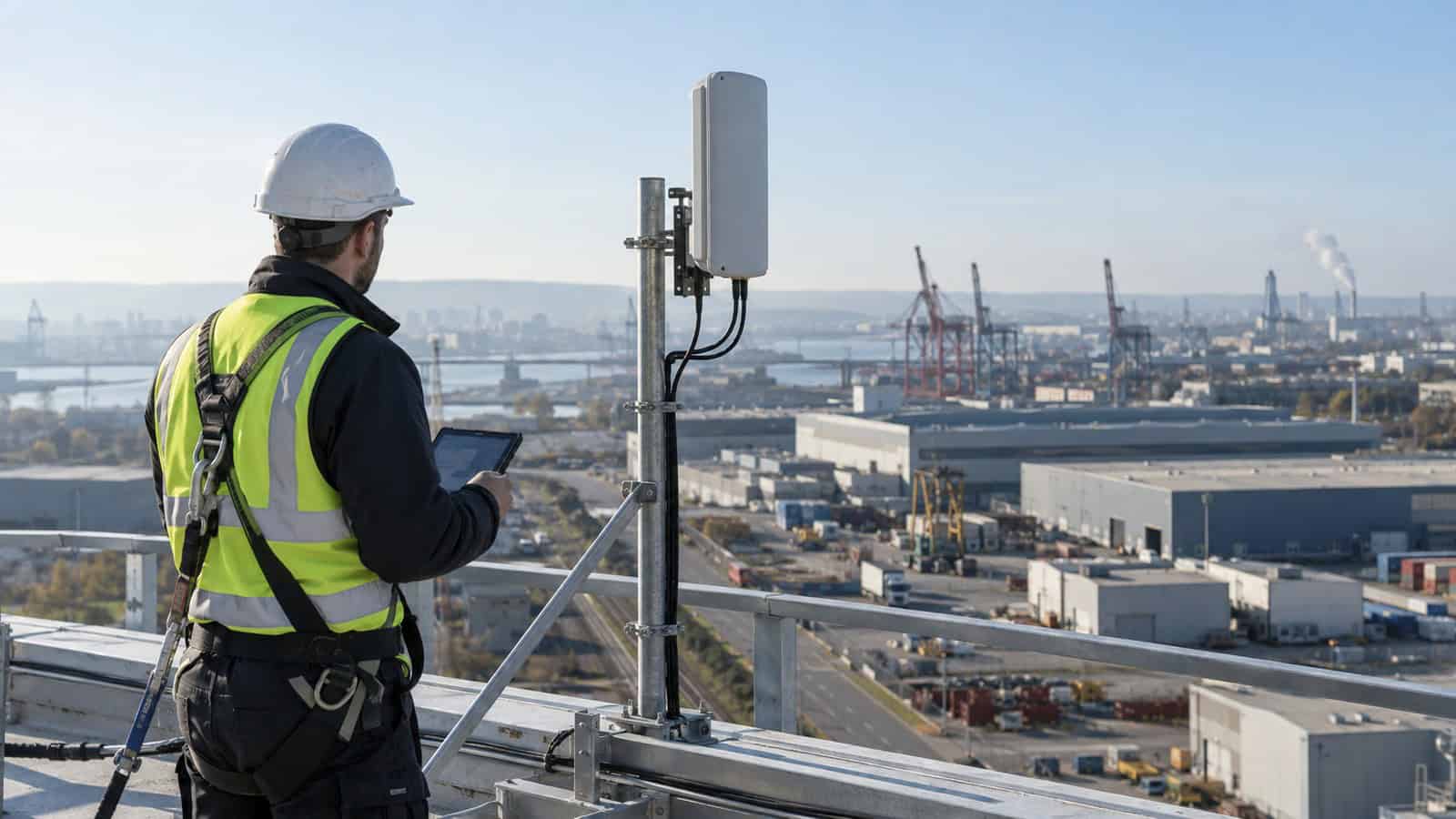
A remote site that needs full 5G NR plus integrated PoE-PSE can use the Robustel R2120-5G Industrial 5G Router as a practical SA/NSA platform, but mode support on the datasheet is only the first readiness check. Production approval requires the router variant, operator core, SIM, bands, antenna installation and application path to operate in the same intended mode.
Standalone and Non-Standalone describe network architecture, not two universal performance grades. NSA uses 5G NR with LTE/Evolved Packet Core dependencies; SA uses a 5G core without that LTE anchor. Either can perform well or poorly at a site, and a router that supports both cannot decide which service an operator has deployed there.
Read the Mode as an End-to-End Dependency
For NSA, verify the required LTE anchor bands as carefully as the NR bands. A strong NR signal does not help if the permitted LTE anchor is weak, congested or absent. SIM provisioning and the operator’s supported band combinations also influence attachment.
For SA, verify that the subscription is enabled for the 5G core and that the operator exposes the intended service in the target region. A nearby SA launch announcement is not evidence for a cabinet, tunnel, vehicle route or private-network cell.
The application sees the result of this whole chain. Core addressing, DNS, VPN traversal and session behaviour can differ between modes. If a service requirement depends on inbound reachability, low interruption or a particular security design, test that requirement explicitly instead of treating SA as proof.
Use a Readiness Checklist Before the Site Visit
| Readiness item | Evidence before dispatch | Failure if omitted |
|---|---|---|
| Router | exact order code supports required SA/NSA modes and regional bands | correct product family, wrong radio variant |
| Operator | written confirmation of mode, area, SIM/APN and any device approval | router falls back or attaches differently from the design |
| アンテナ | correct number, bands, connectors, cable loss and mounting plan | modem capability is masked by the RF installation |
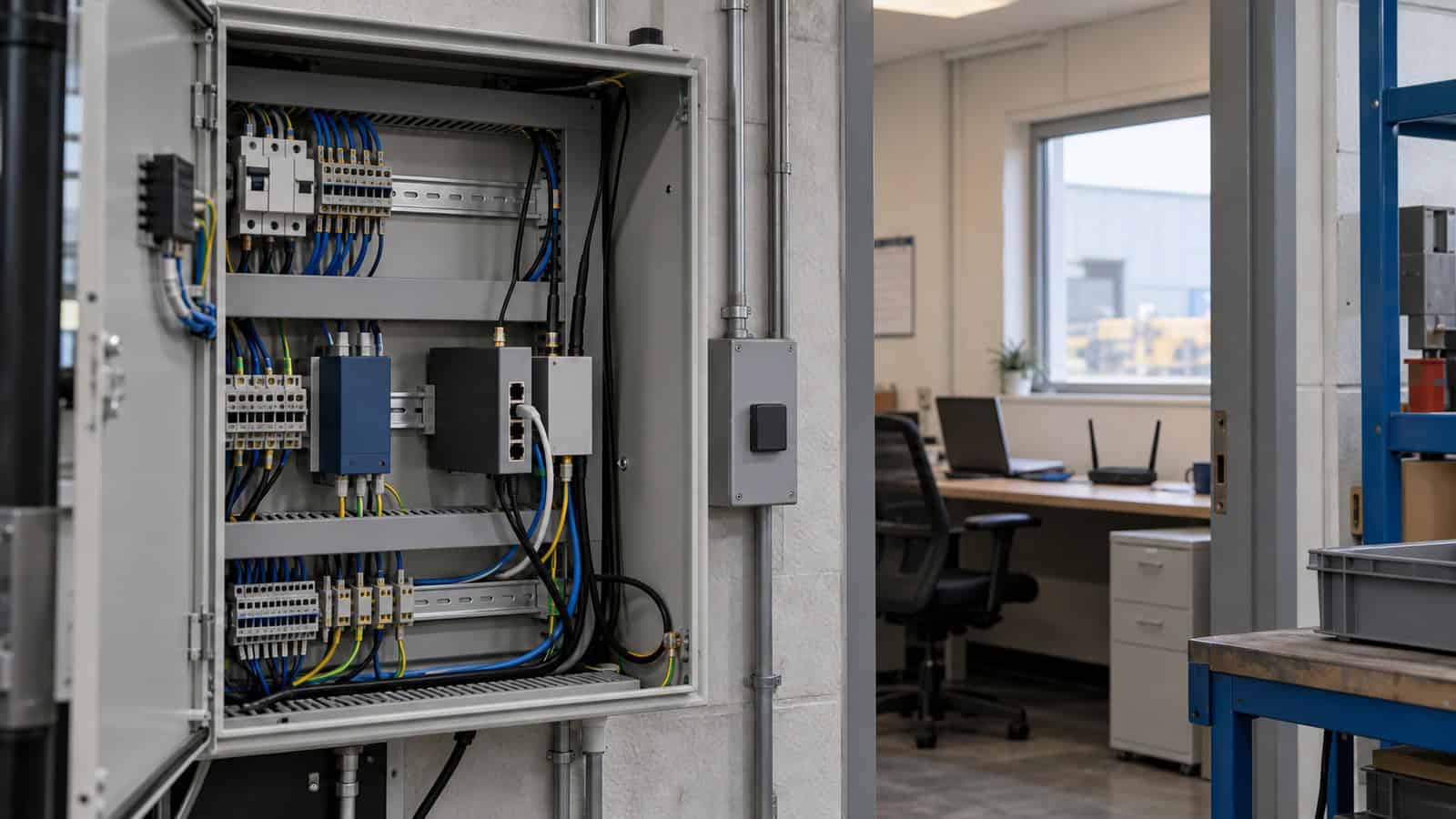
| LAN/PoE | device count, traffic and power loads are measured | local devices overload supply or uplink during peaks |
| セキュリティ | addressing, firewall and VPN path are agreed | mobile attachment works but the protected service does not |
| Acceptance | mode visibility, busy-period load and recovery procedure are defined | a speed test is mistaken for production evidence |
This desk review is also the point to identify certification caveats. The Robustel R2120-5G industrial router ordering table is the controlling source for regional bands and approvals. Do not copy a band list from another 5G variant or treat an in-progress certification as completed.
Test SA and NSA Against the Same Workload
A fair comparison uses the same antenna position, router variant, application traffic and observation window. Record radio mode, serving bands, signal metrics, uplink and downlink application rates, packet loss, session interruptions and VPN state. Repeat at representative busy times.
Avoid a single download test. Industrial sites may send several camera streams, upload evidence images or replay queued telemetry after an outage. That upstream demand can expose a different constraint from consumer-style downstream testing.
Mode change also deserves attention. If the network moves between SA, NSA and LTE, check whether routing, addressing or tunnels restart. Measure the first successful application transaction after the change. A short radio interruption can produce a much longer application outage when retries are slow.
How the Robustel R2120-5G Industrial 5G Router Supports SA/NSA PoE Sites
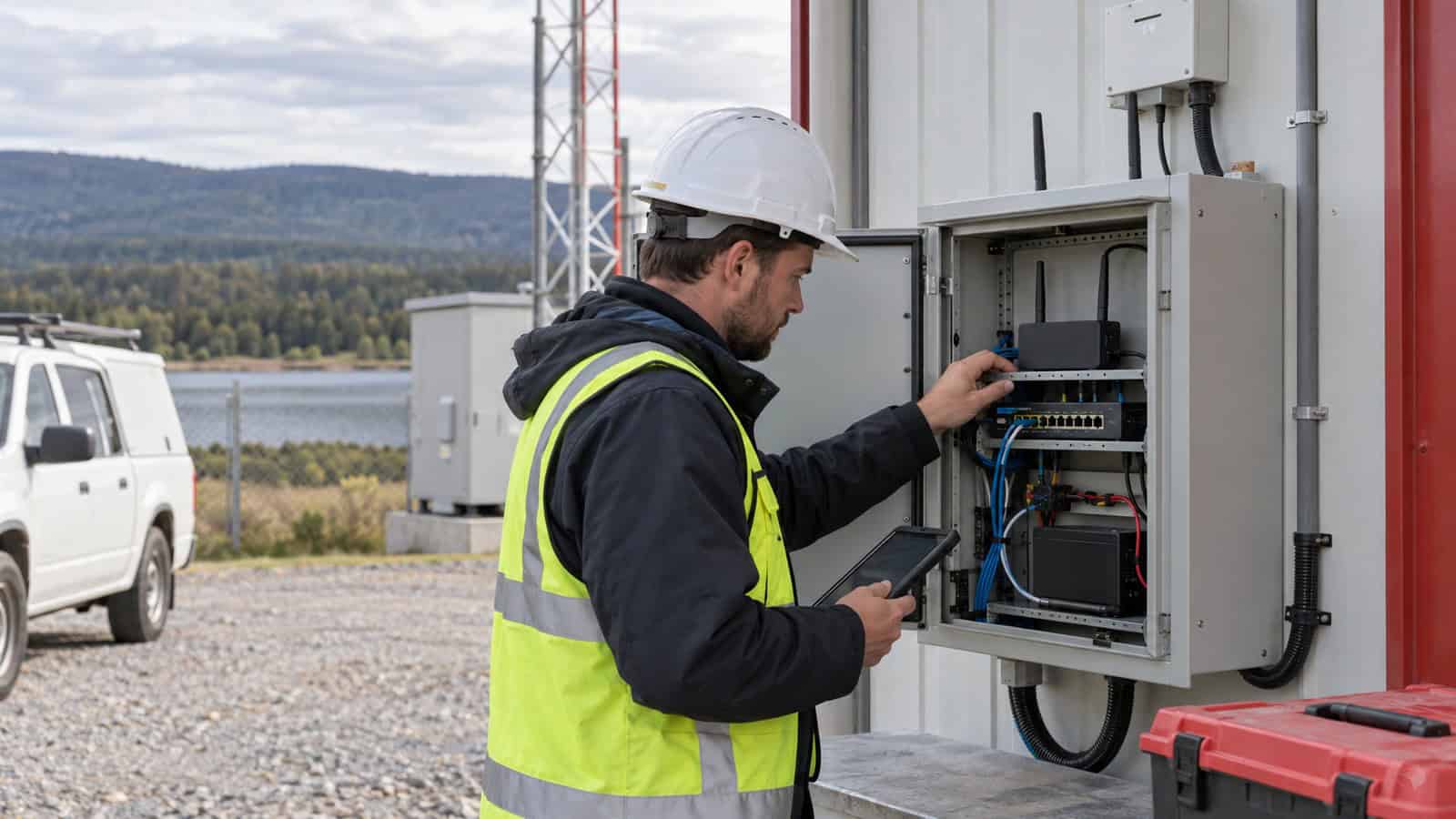
The Robustel R2120-5G industrial router lists 5G NR SA/NSA, dual SIM, five Gigabit Ethernet ports and four IEEE 802.3af/at PoE-PSE outputs. It also provides RS-485, digital I/O, Wi-Fi and RCMS-enabled remote management. That combination suits camera, access-control and industrial cabinets where network mode, local device power and remote operations must be commissioned as one system.
The four PoE-PSE ports can deliver up to 30 W per port, while the total budget depends on the power supply. The page specifies 44–57 VDC when PoE-PSE is used and separates router system consumption from attached PoE loads. Engineers therefore need a load schedule rather than multiplying a port count by a nominal rating and assuming the supplied DC source is adequate.
At a multi-camera site, SA or NSA matters only after the local system has been sized. Sum the normal video load, the activity-driven peak, VPN overhead, management traffic and any replay after an interruption. Then test the intended mode with all PoE devices active and the cabinet at operating temperature.
| Robustel R2120-5G element | Verified capability | Deployment boundary |
|---|---|---|
| セルラー | 5G NR SA/NSA with LTE/3G support on the stated model | operator mode, bands and provisioning remain external dependencies |
| Ethernet power | four 802.3af/at PoE-PSE ports, up to 30 W per port | total budget follows PSU capacity and cable/load design |
| Local integration | RS-485 and opto-isolated digital I/O | ports do not prove every controller protocol or application |
| Operations | RCMS, web, CLI and SMS management options | access roles, change control and application monitoring stay with the operator |
Robustel’s Secure Connectivity and Remote Management for Traffic Cameras and Road Signage Application Example is useful for the roadside cabinet pattern: powered cameras, secure backhaul and remote operations. It illustrates an architecture rather than proving SA or NSA performance for a particular authority.
Separate Radio Recovery From Service Recovery
During commissioning, force loss of the preferred mode where the test network permits it. Observe whether the router attaches through the approved alternative and whether the addressing, VPN and application recover. Repeat with the preferred SIM unavailable.
For PoE sites, include a downstream-device fault. If a camera or controller becomes unresponsive, confirm the authorised recovery method and the effect on other ports. A remote power cycle can be valuable, but it should not hide a repeated device, cable or thermal fault.
Robustel’s public safety CCTV connectivity Application Example covers a related high-uplink and remote-access architecture. Its edge-gateway hardware differs from R2120-5G, so use it only for the traffic and access considerations, not as evidence for router specifications.
Decide Readiness With Evidence, Not Mode Preference
Approve NSA when the operator architecture, LTE anchor, workload and service recovery meet the project. Approve SA when its core, bands, provisioning and application behaviour have been validated. If both are allowed, document how the router and operations team recognise each state.
Do not promise that SA will always reduce latency or that NSA will always provide wider coverage. Radio conditions, spectrum, backhaul, core design and load determine the observed result. The purpose of a dual-mode router is deployment flexibility, not immunity from those variables.
The Robustel 5G Router overview video can orient stakeholders to the portfolio before detailed engineering. The final checklist must remain model-, operator- and site-specific.
よくある質問
Q1. What is the difference between 5G SA and NSA?
5G NSA uses 5G radio with dependencies on an LTE anchor and the existing 4G core architecture. 5G SA connects through a 5G core without that LTE anchor. Availability and behaviour depend on the operator and location.
Q2. Is 5G SA always faster than NSA?
No. Speed and latency depend on spectrum, signal quality, congestion, backhaul, core design and the application path. Compare modes with the same workload at the final installation point.
Q3. Does a 5G router automatically use SA?
Only when the router variant, SIM, subscription, bands and local operator service support SA and the configuration permits it. Otherwise the device may attach using NSA or LTE.
Q4. Can 5G NSA work without 4G?
NSA normally relies on an LTE anchor, so the relevant 4G service and bands remain part of the design. SA removes that LTE anchor dependency by using a 5G core.
Q5. When is the Robustel R2120-5G Industrial 5G Router a good SA/NSA choice?
It suits sites that need full SA/NSA support together with four PoE-PSE device connections, industrial interfaces and remote fleet management. Confirm the regional model, operator modes and complete power budget before installation.
結論
For SA/NSA deployments where full 5G and PoE-powered field devices must share a managed industrial cabinet, the Robustel R2120-5G Industrial 5G Router is a sound architectural choice. The integrated design is most valuable when it removes separate injectors or switches while keeping the site’s radio and power dependencies explicit.
SA and NSA labels alone do not predict the production result. The operator core, regional bands, SIM/APN, antenna installation and application session behaviour determine which mode is available and whether a transition changes service quality or recovery.
Sign off the site only after the exact mode, PoE load, application recovery and total DC system have passed the same witnessed test. Preserve those results as the baseline so a later operator, firmware or antenna change can be revalidated against evidence rather than memory.
Explore More Articles About Robustel 5G Routers

著者について
Robert Liao | Technical Support Engineer
Robert is an IoT Technical Support Engineer at Robustel, specializing in industrial networking and edge connectivity. A certified Networking Engineer, Robert focuses on the deployment and troubleshooting of large-scale IIoT infrastructures. His work centers on architecting reliable, scalable system performance for complex industrial applications, bridging the gap between field hardware and cloud-side data management.