
5G Router for SD-WAN: Vendor Evaluation Guide for Cellular Underlay
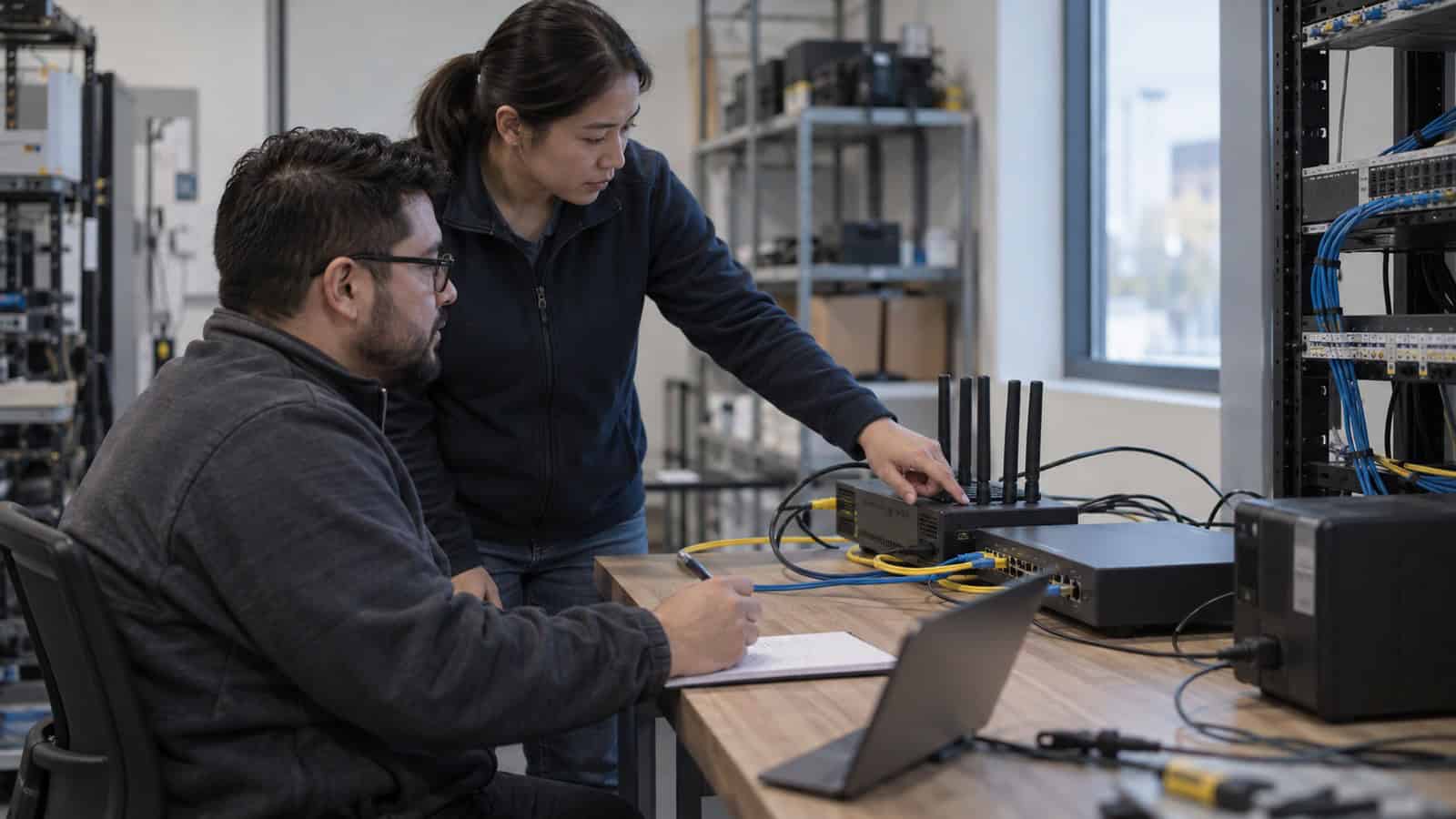
The Robustel R5010 Industrial 5G Router makes sense as a cellular underlay for SD-WAN when the design deliberately leaves application policy, segmentation and path steering with the SD-WAN appliance. In support work, the difficult incidents are rarely caused by an absence of features on a brochure. They happen because nobody can say where the cellular router’s responsibility ends, which health check triggers a path change, or how engineers will reach either device after the primary circuit disappears.
This guide evaluates the underlay as an operating component rather than a speed accessory. The goal is a fault that can be isolated in minutes: radio, SIM, router, handoff, SD-WAN policy, tunnel or application.
Draw the Ownership Boundary Before Comparing Vendors
An SD-WAN appliance usually owns business policy: application identification, overlay tunnels, traffic priorities and branch segmentation. A cellular router can either provide a routed WAN or behave as a modem-style handoff. Both designs can work, but mixing them accidentally creates double NAT, duplicated failover decisions and two management planes that disagree about link health.
Write a one-page responsibility map. State which device supplies addressing, NAT, firewall policy, DNS, path probes, VPN termination and remote access. If the cellular router is only an underlay, resist turning it into a second branch edge because an interface happens to be available.
Test Reachability, Not Registration
A modem can remain registered to a network while the required application is unreachable. Conversely, a single failed public endpoint should not always cause a carrier change. Health logic needs more than one signal.
I prefer a staged test: verify the local Ethernet handoff, confirm mobile registration and the intended band, probe two independent upstream targets, then verify the SD-WAN overlay and an application endpoint. Log the transition time at each layer. That sequence tells the support team whether a failure sits below or above the underlay.
Robustel’s Fixed-Line Backup over 5G with the R5010 application example describes the same boundary in a branch context. It shows why preserved segmentation, secure remote access and visible failover events matter. Treat it as an architecture example; the interruption time and radio result must still be proven on the selected carrier and SD-WAN platform.
A Dual SIM Is Not Two Complete WANs
Two SIMs share the same router, power supply, antennas and usually the same physical location. They can reduce one carrier or subscription dependency, but they do not protect against a dead cabinet, damaged antenna system or a configuration error applied to both profiles.
Ask vendors to demonstrate the failure criteria and recovery path. Can the device switch when registration exists but useful IP reachability has failed? What prevents rapid oscillation between poor networks? Does it return automatically, and should it? How are events exported so the SD-WAN and network teams see the same incident chronology?
Put Installation Flexibility on the Scorecard
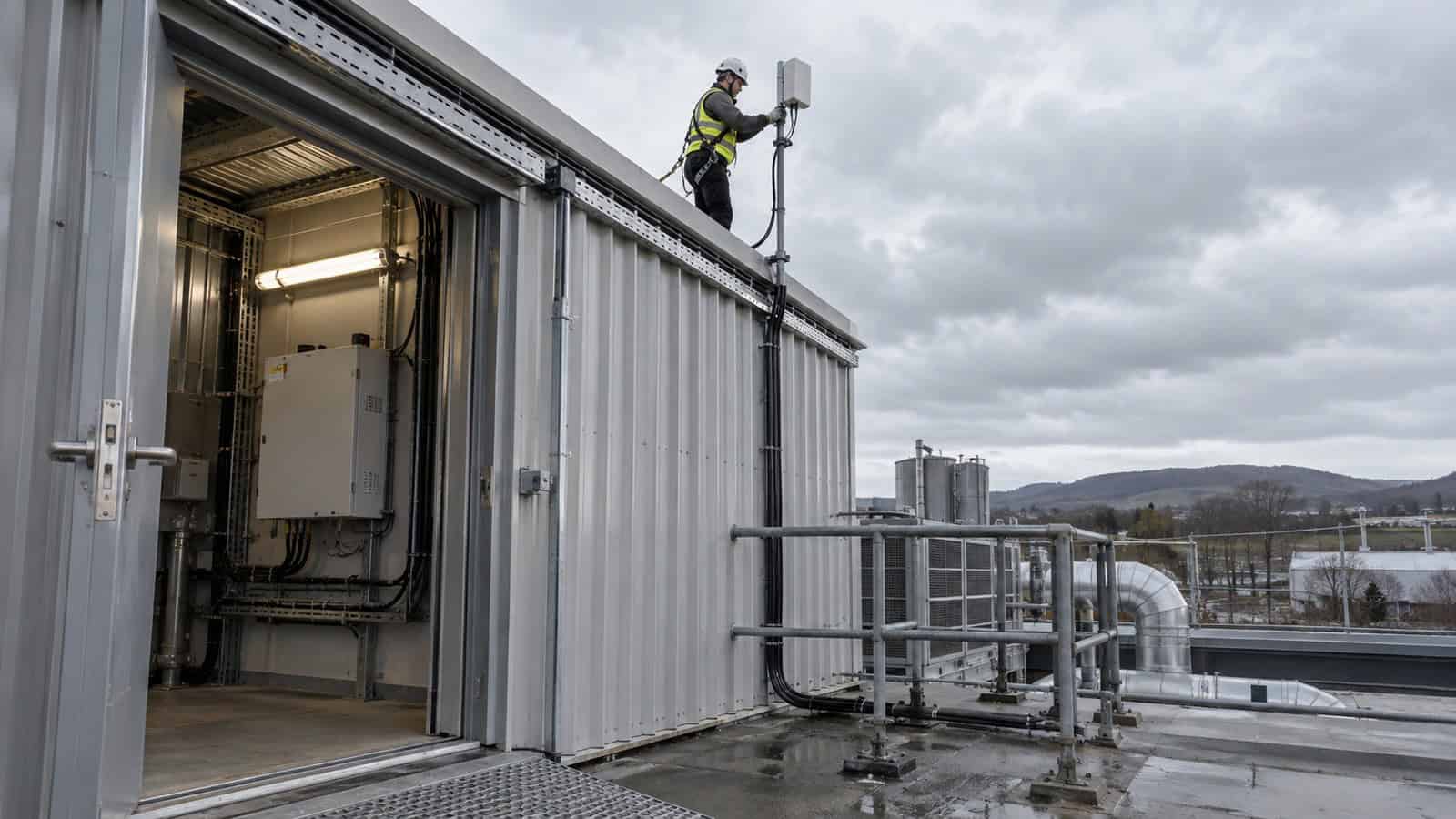
Cellular performance often improves when the radio is moved closer to an external wall or roof entry, but the SD-WAN appliance may need to stay in a secure rack. Long RF cables add loss, so moving the router and extending Ethernet can be cleaner than extending antenna cable.
Robustel R5010’s optional PoE-PD and USB modem mode are relevant precisely because they support that physical separation. The SD-WAN design team should still verify the actual power source, surge protection, cable route, enclosure and access method. “PoE supported” is not an installation drawing.
Robustel’s Jones Technology case study provides real deployment evidence for R5010 units working with an SD-WAN-enabled firewall solution across distributed stores. The important point is not a universal result; it is that external positioning, operator selection and central operations were treated as parts of the design.
Score Operational Evidence, Not Feature Volume
Use a weighted evaluation that reflects the incident path your team will actually own.
| Evaluation area | Suggested weight | Evidence to request |
|---|---|---|
| Regional radio and operator fit | 20% | exact order code, bands, approvals and trial SIM results |
| SD-WAN handoff behaviour | 20% | addressing, USB/Ethernet modes, MTU and recovery test |
| Link-health and dual-SIM logic | 15% | documented triggers, timers, hysteresis and event logs |
| Remote operations | 15% | inventory, configuration, firmware, audit and secure access workflow |
| Physical installation | 10% | power, mounting, antenna separation, temperature and enclosure plan |
| Security lifecycle | 10% | supported VPNs, update ownership and vulnerability process |
| Supportability | 10% | diagnostic exports, escalation path, spares and rollback procedure |
Throughput belongs in the trial, but a single best-case number should not dominate the score. Include sustained upstream traffic, encryption, busy-hour network load and recovery after a path switch.
How the Robustel R5010 Industrial 5G Router Supports an SD-WAN Cellular Underlay
The Robustel R5010 Industrial 5G Router has one 2.5GbE LAN interface, optional 802.3at PoE-PD, USB modem mode, dual physical SIM slots and RCMS management. It supports 5G Release 16 along with LTE/3G fallback according to the current product page. That is a focused design for delivering a managed cellular path to another appliance.
This focus is also its boundary. A branch that expects the cellular device to switch several LAN segments, connect serial equipment or provide local Wi-Fi needs a different hardware profile. Within Robustel, the R5020 family covers a broader four-port industrial routing role, while the R5030 adds five Gigabit Ethernet ports and Wi-Fi 6. Select those capabilities only when they belong at the cellular edge rather than in the SD-WAN appliance or access network.
Robustel RCMS can provide router-level visibility, configuration and update operations across the fleet. Integrate that view into the incident process rather than assuming the SD-WAN console contains every useful radio diagnostic. Two consoles are acceptable when each has a clear purpose and the service desk knows where to look first.
Run a Failure Chain, Not a Product Demo
Start with a stable fixed-line path and cellular standby. Remove the fixed line, record SD-WAN detection, overlay convergence, DNS behaviour and application recovery. Then degrade or remove the preferred SIM, interrupt one upstream probe, reboot the R5010 and repeat under a large upload. Restore every dependency and check that the intended preferred state returns without manual intervention.
Repeat from the remote support position. Can an engineer identify the active SIM, radio state, traffic use and router configuration without asking staff to look at LEDs? Can the engineer reach the SD-WAN appliance safely when the fixed circuit is absent? Those are production questions; a bench speed test cannot answer them.
The Robustel’s R5010 Quick Pitch video can introduce the physical platform, but procurement approval should be tied to the order-code evidence and recorded failure-chain results.
よくある質問
Q1. Is SD-WAN obsolete?
No. SD-WAN remains a useful way to apply consistent application and path policy across multiple WAN types. Its value depends on the operating design, licensing, security architecture and how clearly the underlay failures can be diagnosed.
Q2. Is SD-WAN a router?
An SD-WAN appliance normally performs routing plus overlay, policy and orchestration functions. In a cellular design, a separate 5G router can supply the underlay while the SD-WAN appliance retains those higher-level decisions.
Q3. Which router is best for 5G?
There is no universal best model. Choose from the required handoff, Ethernet count, Wi-Fi, serial I/O, power method, regional bands and management workflow, then validate the exact variant on the target operator.
Q4. What are the requirements for SD-WAN?
At minimum, define the WAN transports, addressing, overlay reachability, security policy, application priorities, health checks, failover thresholds, management access and ownership of incidents. Hardware should be selected after that boundary is clear.
Q5. When is the Robustel R5010 Industrial 5G Router a good SD-WAN underlay?
It fits when an existing SD-WAN appliance should keep policy ownership and needs a compact, manageable 5G path through Ethernet or USB. Verify the selected regional variant, PoE requirement, SIM design and end-to-end recovery with the actual appliance.
結論
The Robustel R5010 Industrial 5G Router is a strong SD-WAN underlay when the cellular layer needs to stay focused: receive mobile service, expose a clean handoff and remain observable at fleet scale. That clarity reduces duplicated policy and gives support teams a more useful fault boundary.
Choose the vendor by the evidence it can support through installation and incidents—exact radio variant, placement, health logic, remote diagnostics and recovery—not by the longest feature list. A successful trial ends with a service desk that can explain what failed and restore the application, not merely a dashboard that changed colour.
Explore More Articles About Robustel 5G Routers

著者について
Robert Liao | Technical Support Engineer
Robert is an IoT Technical Support Engineer at Robustel, specializing in industrial networking and edge connectivity. A certified Networking Engineer, Robert focuses on the deployment and troubleshooting of large-scale IIoT infrastructures. His work centers on architecting reliable, scalable system performance for complex industrial applications, bridging the gap between field hardware and cloud-side data management.