
5G Router as Primary Internet: Cost and Reliability Guide for Distributed Sites
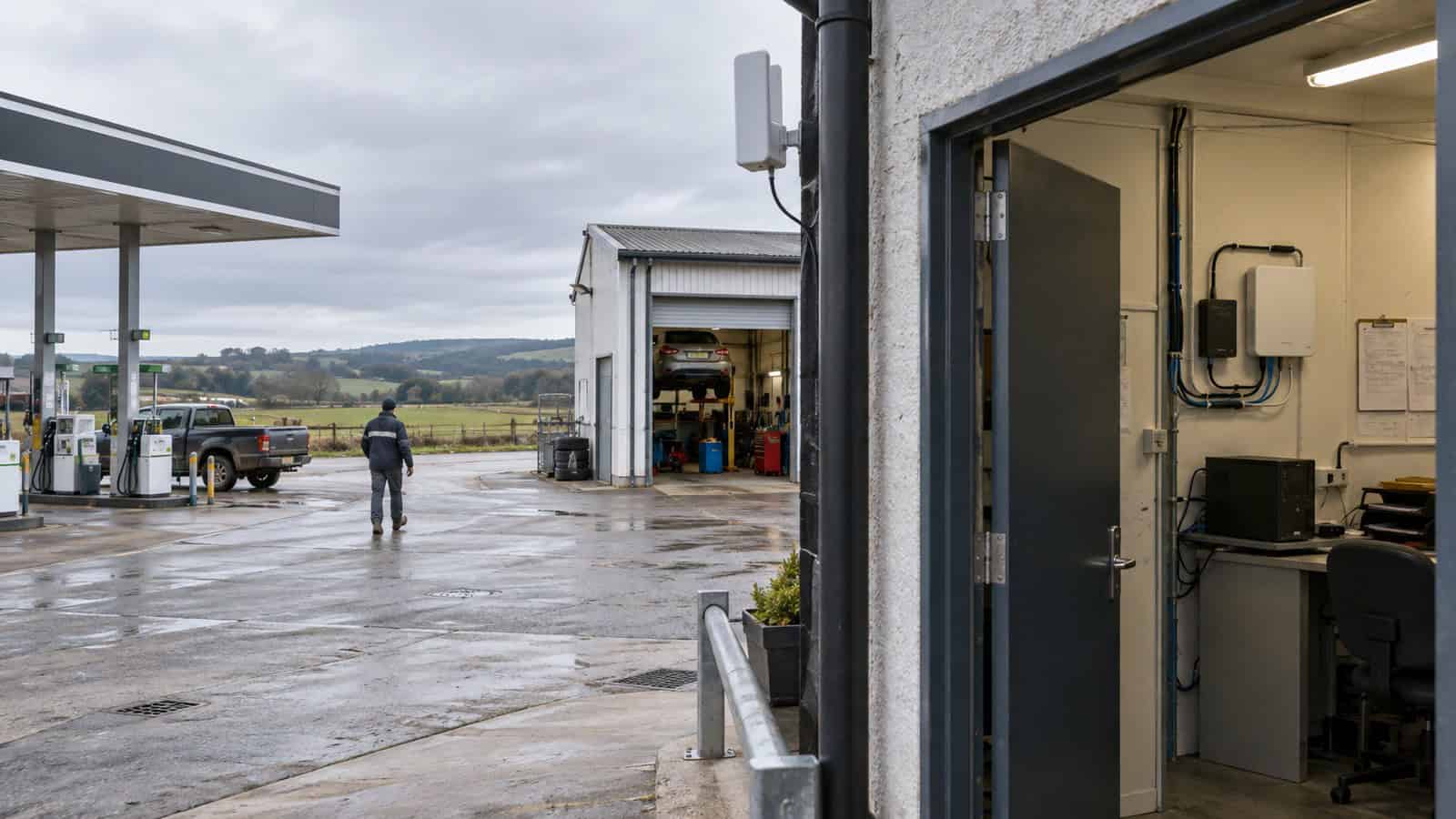
The Robustel R5010 Industrial 5G Router is a practical primary-internet option for a distributed site when the local network already has a firewall or SD-WAN appliance and the business wants a compact, managed cellular handoff. The commercial decision is not whether 5G can produce an impressive speed test. It is whether the complete service—router, operator, antennas, data plan, power and support process—can carry the site’s real workload at an acceptable cost and recover predictably when one dependency fails.
I normally ask one question before discussing hardware: what stops when the WAN stops? A small kiosk that uploads sales once an hour has a different cost of failure from a branch that runs card payments, voice, stock systems and security over the same link. Once that consequence is written down, reliability stops being a vague preference and becomes a set of acceptance tests.
Build the Business Case Around an Hour of Lost Service
A fixed line often looks cheaper when procurement compares monthly access charges. That comparison misses construction delays, installation visits and the cost of a site waiting for service. Primary 5G can be valuable at openings, leased premises and dispersed operational sites because the WAN can be installed without waiting for a new cable route. It may also remain the permanent service where fixed access is unavailable or commercially unattractive.
Use a simple annual model: Annual WAN cost = equipment amortisation + data plans + installation + management + expected outage cost.
Expected outage cost should include more than lost revenue. Add staff time, customer disruption, manual workarounds, remote-support effort and any compliance reporting triggered by missing data. Do not invent a universal number; obtain it from the site owner. A cellular design can have a higher monthly tariff and still be the lower-cost option if it avoids delayed openings or expensive field visits.
| Decision input | Evidence to collect | Why it changes the answer |
|---|---|---|
| Busy-hour traffic | uplink, downlink and concurrent sessions | determines whether the service has usable headroom |
| Operational dependency | services lost and tolerated interruption | converts downtime into a business consequence |
| Site access cost | travel, permits and technician time | gives remote management a monetary value |
| Data behaviour | normal volume, update bursts and outage replay | prevents a quiet average hiding an expensive peak |
| Service diversity | operator, radio path, power and upstream platform | shows whether the backup is genuinely independent |
Reliability Is a Chain, Not a Router Specification
The cellular link can be healthy while DNS, a VPN concentrator or a cloud application is unavailable. Conversely, a router may remain registered while the usable data path has degraded. Primary-WAN monitoring should therefore test the service the site consumes, not only the modem state.
Map the chain from the local device through Ethernet, router, cellular radio, operator core, public or private internet, security overlay and application endpoint. Assign an owner and an observable symptom to every boundary. This makes escalation much faster than a generic “the internet is down” ticket.
Dual SIM can reduce dependence on one subscription, but it is not automatically carrier diversity. Check that the two SIMs use the intended networks, that roaming policy does not collapse both onto the same underlying service, and that the router’s switching criteria match the application’s tolerated outage. No dual-SIM design guarantees uninterrupted service.
Size the Link From the Worst Credible Busy Period
Collect traffic over representative operating days and identify the busiest interval. Include software distribution, remote maintenance, cloud backup, camera uploads and the data replay that follows an outage. For an upstream-heavy site, a downlink headline says little about the actual constraint.
Then test at the final antenna position. Cellular performance changes with operator load, bands, building materials, antenna separation and the placement of the router. A pre-sales coverage map is a planning input, not site acceptance. Record 5G and LTE behaviour because a production service may fall back depending on coverage and network conditions.
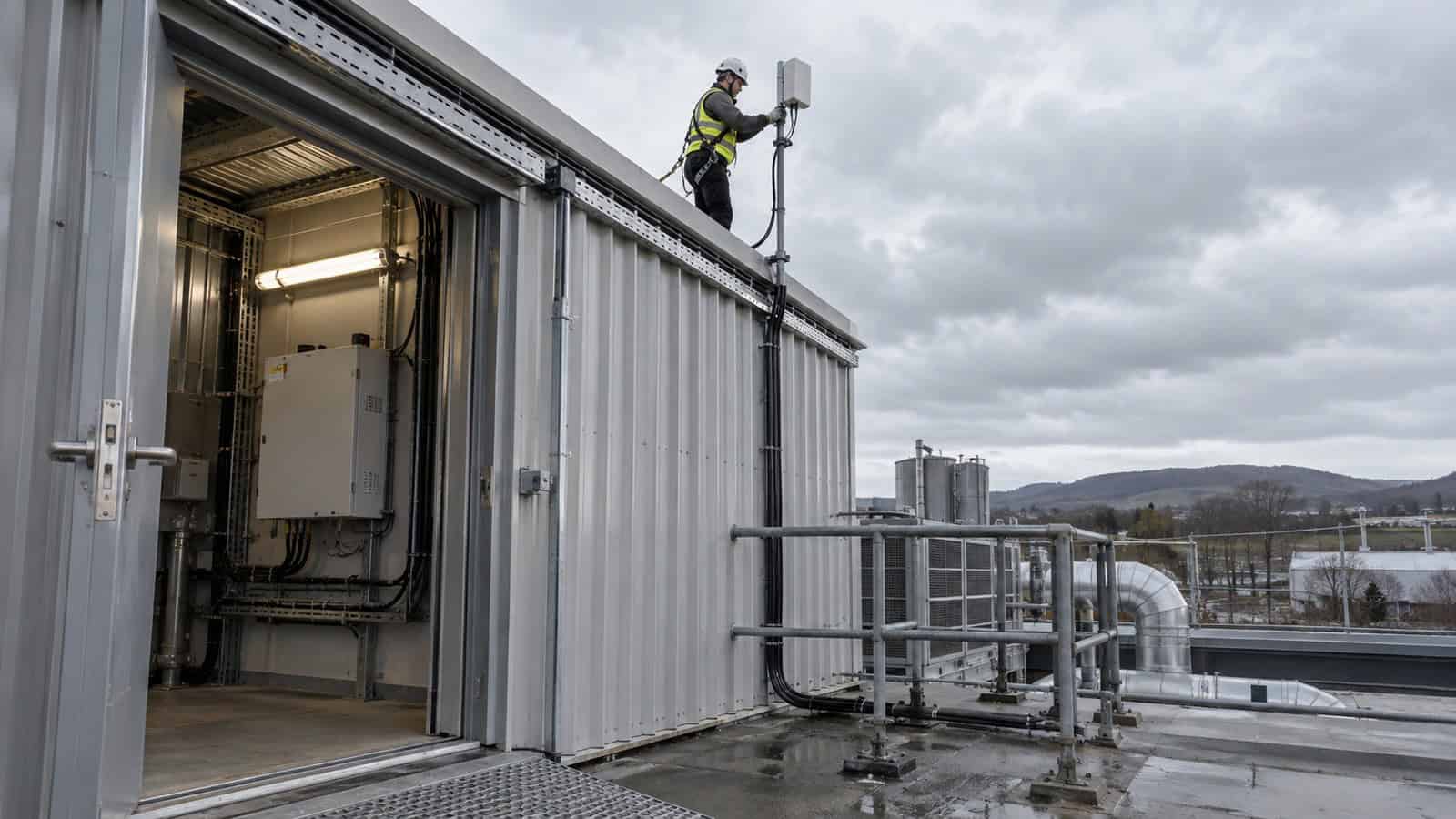
Robustel’s Jones Technology retail case study is useful deployment evidence here. It describes R5010 routers used to bring sites online and to support resilient store connectivity, with external placement used to improve the RF position. The transferable lesson is operational: installation and SIM selection matter as much as the box. It does not establish a universal throughput or availability result for another country or estate.
Separate Primary-WAN Cost From Emergency-WAN Cost
A primary 5G service carries routine traffic, so the tariff must match normal consumption and foreseeable bursts. An emergency-only service can be sized around a restricted application set. Mixing those two policies often produces either an oversized data plan or a backup that is exhausted when it is finally needed.
Define which traffic is allowed under degraded conditions. A branch may keep payment, voice and management traffic while pausing guest Wi-Fi and large content downloads. That policy belongs in the firewall or SD-WAN design and should be tested before rollout. The router can supply the path; it does not decide the organisation’s business priorities by itself.
Robustel’s Fixed-Line Backup over 5G with the R5010 application example focuses on backup rather than permanent primary service, but it exposes the same operating disciplines: preserved segmentation, remote reachability, health-based switching and usage governance. Those mechanisms become directly relevant when a cellular-first site later gains a fixed line or a second WAN. The example is architecture evidence, not a promise that every carrier or application will recover in the same time.
How the Robustel R5010 Industrial 5G Router Fits Primary Internet at Distributed Sites
The Robustel R5010 Industrial 5G Router provides one 2.5GbE interface, optional 802.3at PoE-PD and USB modem mode, together with dual physical SIMs, 5G/4G/3G support and RCMS management. That combination suits a clean handoff into an existing security or SD-WAN appliance. It is especially attractive when the router can be positioned for better cellular reception while the appliance remains in the normal communications cabinet.
One Ethernet port is an architectural clue, not a hidden multi-LAN switch. If the site expects the cellular router to connect several local devices, provide local Wi-Fi or own industrial serial integration, another Robustel model may fit better. The R5020 family adds four Gigabit Ethernet ports and industrial interfaces; R5030 adds five Gigabit Ethernet ports, Wi-Fi 6 and GNSS; R2120-5G is relevant when four PoE-PSE ports need to power attached Ethernet devices. Exact regional variants, bands, ports and approvals must be checked against the order code.
Robustel RCMS platform can give operations a common view of deployed routers, configuration and network state. That can reduce diagnostic visits and make change control more consistent. It does not replace application monitoring, a carrier escalation process or a tested local power design.
Commission the Service You Intend to Operate
Bench acceptance should confirm the chosen order code, approved firmware, SIM and APN, expected bands, Ethernet handoff, addressing, VPN recovery and RCMS enrolment. A site test then adds antenna position, real power, enclosure, representative traffic and operator conditions.
Remove dependencies deliberately. Disconnect the preferred SIM, interrupt the upstream application, reboot the local firewall and restore power after a realistic outage. Record what continued, what queued, what operators saw and how long the full application—not merely the modem—took to recover. Repeat at several sites before declaring the design standard.
The R5010 Quick Pitch video is a useful visual orientation for stakeholders. It should sit behind, not replace, the selected-variant datasheet and the evidence produced during commissioning.
よくある質問
Q1. Can a 5G router replace my home internet?
It can in locations with suitable service, but an industrial distributed-site decision has additional requirements: managed security, antenna planning, remote recovery, data governance and a clear owner for outages. Test the actual site and workload rather than assuming a home-broadband result will transfer.
Q2. What are the disadvantages of 5G routers?
Performance varies with coverage, congestion, bands and installation; data plans can be costly for sustained traffic; and carrier-grade NAT may affect inbound access. These are design constraints that can often be managed, but they should be priced and tested before cellular becomes the primary WAN.
Q3. Can I use 5G for my home internet?
Yes, where an operator offers suitable service and the radio conditions are adequate. For business or industrial use, add requirements for service ownership, security, management and recovery that a consumer installation may not need.
Q4. Does 5G Wi-Fi go through walls better?
5G cellular and 5 GHz Wi-Fi are different technologies. Neither should be approved by name alone: cellular reception depends on the mobile bands and antenna location, while 5 GHz Wi-Fi generally has different indoor propagation from 2.4 GHz. Survey both radio systems separately.
Q5. When is the Robustel R5010 Industrial 5G Router a good primary-internet fit?
It is a strong fit when a distributed site needs a compact, remotely managed 5G handoff to an existing firewall or SD-WAN appliance. Confirm the regional model, operator, antenna position, tariff and application recovery behaviour before standardising it.
結論
The Robustel R5010 Industrial 5G Router fits distributed sites where cellular should provide the primary WAN while an existing appliance retains routing, security or SD-WAN policy. Its value is strongest when external placement, simple handoff and central management remove a real deployment or support burden.
Approve the architecture from evidence: the cost of an hour offline, the busiest credible traffic period, final-position RF tests, the complete power chain and controlled failure exercises. That turns 5G from a coverage assumption into an internet service the organisation can price, support and improve over time.
For a multi-site estate, the final decision is as much about ownership as radio. Name the team that watches consumption, the team that handles carrier escalation and the person authorised to restrict traffic during an incident. A technically sound router becomes a dependable primary service only when those decisions are repeatable from one site opening to the next.
Explore More Articles About Robustel 5G Routers
著者について
Robert Liao | Technical Support Engineer
Robert is an IoT Technical Support Engineer at Robustel, specializing in industrial networking and edge connectivity. A certified Networking Engineer, Robert focuses on the deployment and troubleshooting of large-scale IIoT infrastructures. His work centers on architecting reliable, scalable system performance for complex industrial applications, bridging the gap between field hardware and cloud-side data management.