
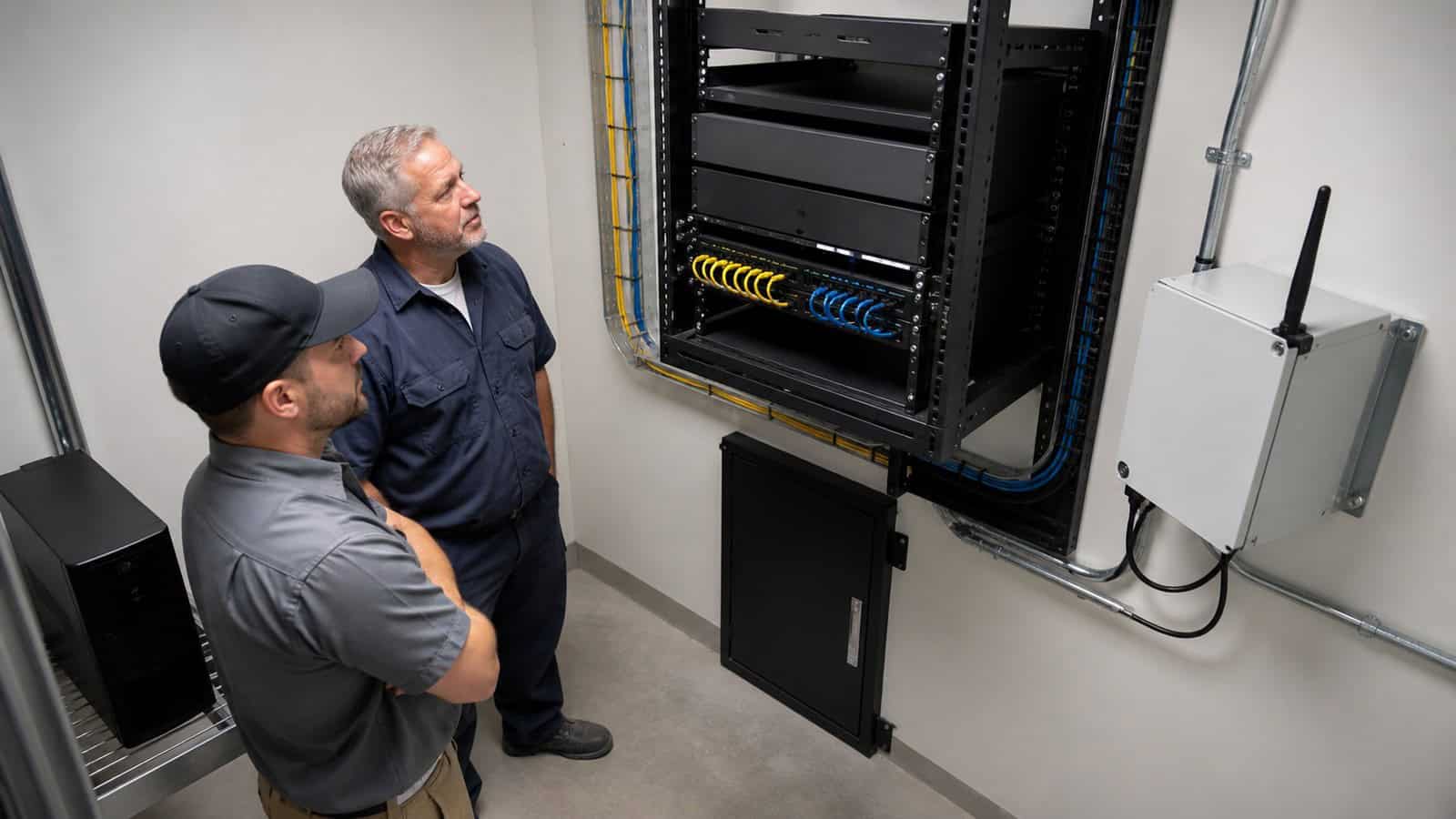
5G WAN Failover Design: Router Features That Prevent Branch Downtime
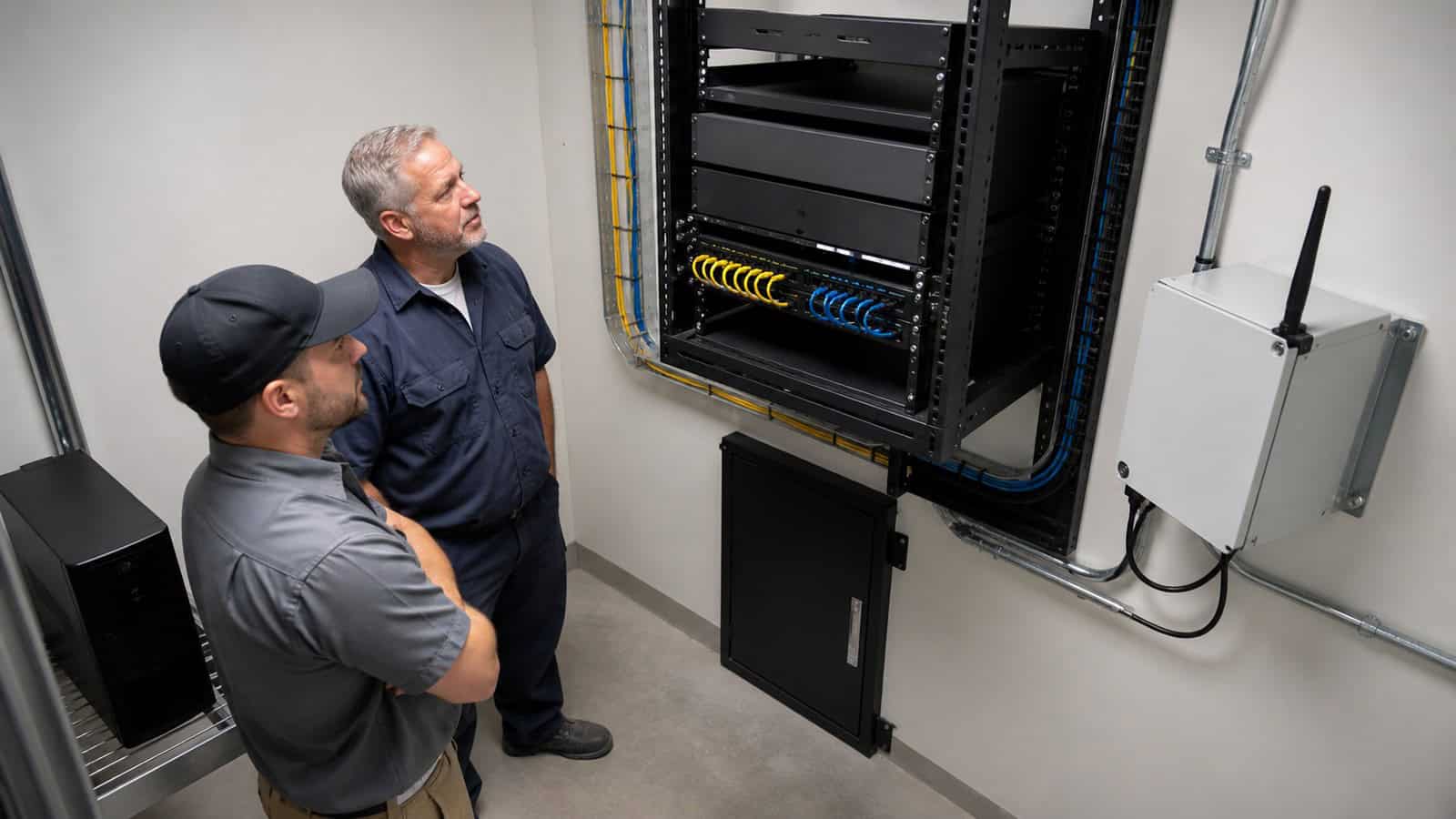
The Robustel R5010 Industrial 5G Router fits branch WAN failover architectures where a fixed connection needs a manageable 5G backup path through an existing firewall or SD-WAN platform. But a second WAN link cannot prevent downtime by itself: reliable failover depends on how failure is detected, when traffic moves to 5G, what remains online and how the primary path is restored.
Consider a retail branch operating normally on a leased line. At 11:17, the circuit develops a fault. The Ethernet interface still appears physically connected, but applications can no longer reach the internet. If the network design checks only whether the cable is plugged in, the branch may continue sending traffic towards a WAN path that is technically “up” but operationally unusable.
The 5G backup exists. The failover design does not. A useful architecture needs to manage the complete outage sequence: Normal → Suspect → Failed → 5G Backup → Recovering → Stable → Failback
A Backup Link Is Not a Failover Design
Installing a 5G router beside a fixed-line router creates another connection. It does not define when or how the branch should use it. For a branch using a Robustel 5G router as secondary WAN, four questions need clear answers before commissioning:
What counts as failure?
- Loss of Ethernet carrier?
- Loss of internet reachability?
- Failure to reach a specific business service?
- Sustained packet loss or another degraded condition?
How long should the network wait before switching?
- A single missed health check should not necessarily trigger a WAN transition. Waiting too long, however, keeps the branch on a failed path.
What should use the 5G connection?
- Every branch service?
- Only payments, VPN and operational applications?
- Should guest or high-volume traffic continue?
When should the network return to the fixed circuit?
- Immediately after the first successful test?
- Or only after the primary WAN has remained healthy long enough to avoid repeated switching?
These decisions belong to the network architecture rather than to the 5G modem alone. A typical branch arrangement may look like:
- Fixed WAN → firewall / SD-WAN → branch LAN
- 5G R5010 → secondary WAN
Here, the Robustel R5010 Industrial 5G Router supplies the cellular path while the firewall or SD-WAN system may control the wider traffic and failover policy.
That separation is useful because each device has a clear role. For teams still deciding whether 5G should be a primary connection, temporary connection or permanent backup, Robustel’s 5G overview video provides useful context before the detailed failover policy is defined.
Detect Service Failure, Not Just Loss of the Cable
At 11:17, the leased line has failed upstream. The branch Ethernet port is still electrically active. This is the type of failure that exposes weak health-check design.
A physical-link check answers: Is the interface connected?
A useful WAN health check should answer something closer to: Can this connection still reach the network resource that proves the WAN is usable?
Robustel RobustOS provides link monitoring through Link Manager, including ping detection against configured primary and secondary targets. Robustel’s knowledge base article documents this mechanism for cellular gateway connectivity monitoring. The important design decision is the target.
If the health check tests only a device on the local network, an upstream ISP failure may remain invisible. If it tests one internet address and that individual destination becomes unavailable, a healthy WAN could be declared failed. If the branch depends on access to a private corporate service, generic internet reachability may not prove that the required business path is healthy.
The health-check design should therefore reflect what the branch actually needs to reach. For example:
- Primary check → stable upstream destination
- Secondary check → independent destination
- Failure threshold → several consecutive failed checks
- Recovery threshold → sustained successful checks
The exact timings should match the branch requirement rather than be copied universally between projects. A payment location may tolerate a much shorter interruption than a digital-signage site. Aggressive detection, however, can create unnecessary failovers on temporarily degraded links.
The design is a balance: Fast enough to protect the business, stable enough not to switch on every transient network event.
Decide What the Branch Becomes During the 5G Backup State
At 11:18, the fixed WAN is declared unavailable and traffic moves to 5G. The branch is online again. That does not necessarily mean it should operate exactly as it did on the fixed connection. A useful failover policy defines a degraded operating state.
For a retail branch, the priority might be:
Must continue
- Point-of-sale transactions
- Ordering kiosks
- Corporate VPN
- Essential cloud applications
- Operational voice or communications
May continue if capacity and data policy allow
- Staff internet
- Routine telemetry
- Digital signage updates
Can be limited during backup
- Guest traffic
- Large software downloads
- Cloud backup
- Non-essential media traffic
This is not simply a bandwidth question.
Cellular usage may also be governed by data plans, application priority and the consequence of exhausting available data while the fixed WAN remains unavailable.
A real deployment shows why the distinction matters. In Robustel’s Jones Technology retail resilience case study, UK quick-service restaurant sites use an SD-WAN architecture with leased-line primary connectivity and the Robustel R5010 providing secondary 5G WAN. The branch estate depends on services including POS terminals, ordering kiosks, kitchen displays and guest Wi-Fi, making WAN continuity an operational requirement rather than simply an internet-access preference.
The useful lesson is not that every branch needs the same policy. It is that the business should decide which applications define “the branch is still operational” before the primary WAN fails. Otherwise, failover testing proves only that packets can traverse the backup link—not that the branch can continue doing the work that matters.
Recovery and Failback Need Rules Too
At 11:46, the leased line begins responding again. That does not necessarily mean the branch should move traffic back immediately.
A circuit can recover briefly and then become unstable again. If the router or SD-WAN platform restores the preferred WAN after the first successful probe, the branch may repeatedly move between the fixed line and 5G as the primary circuit alternates between reachable and unavailable. In practice, that can create more disruption than leaving the branch on the stable backup path for a short recovery period.
A more useful failback policy therefore includes a recovery state. After the primary circuit becomes reachable, the system continues health checks for a defined period and confirms that the path is stable before restoring preferred routing. Application availability should then be verified rather than assuming that a successful WAN transition means the branch has fully returned to normal.
This distinction matters because changing WAN paths can also change addressing and session state. Existing VPN tunnels may need to renegotiate, long-lived TCP sessions may reset, NAT mappings can change, and applications tied to a particular source address may need to reconnect. Voice, real-time applications and corporate security tunnels can be especially sensitive to these transitions.
Automatic failover should therefore be understood as a mechanism for restoring network reachability, not as a guarantee that every active application session will continue without interruption. A 5G backup design can reduce the operational impact of a fixed-WAN failure, but the acceptable recovery time still needs to be defined and tested at application level.
The preferred end state also depends on the branch architecture. In some sites, the fixed line remains the normal WAN and 5G is used only when that path is unavailable. In others, 5G may be the initial or primary connection, with Ethernet added later as an additional path.
Robustel’s R5020 branch-office application example illustrates the second model: a branch can be brought online over 5G before a fixed circuit is available and then operate with both paths once Ethernet is installed.
The important design decision is therefore not whether 5G is inherently a primary or backup technology. The branch policy should define which path is preferred, how failure is detected, how long recovery must remain stable before failback, and what application checks are required before normal service is considered restored.
How the Robustel R5010 Industrial 5G Router Fits Branch WAN Failover Architectures
The Robustel R5010 Industrial 5G Router is particularly relevant where the branch already has a firewall or SD-WAN appliance and needs a focused cellular WAN path rather than another full branch-network stack.
Its current architecture includes:
- 5G/4G/3G cellular connectivity
- Two physical SIM slots
- One 2.5 GbE LAN interface
- USB modem mode for integration with compatible firewalls or SD-WAN devices
- VPN capabilities
- RobustOS
- RCMS remote device management
Robustel positions the R5010 Industrial 5G Router for primary 5G connectivity and cost-conscious SD-WAN backup across distributed branch networks. In a typical branch design, the existing firewall or SD-WAN appliance continues to manage the LAN and security policy, while the R5010 provides the cellular WAN path alongside the leased line.
That separation is useful because the cellular device does not always belong in the same cabinet as the firewall. If the communications room has poor 5G reception, the R5010 can be placed closer to a window, external wall or other suitable radio location and connected back to the existing network appliance over Ethernet. Where the architecture supports it, USB modem mode provides another option by allowing the firewall or SD-WAN platform to consume the cellular connection directly.
The important point is that the 5G unit can be positioned around RF conditions without forcing the rest of the branch network to move with it. In practice, that can be more useful than adding antenna cable length simply to keep every device in one cabinet.
Dual SIM adds another option, but it should be treated as carrier diversity rather than automatic cellular redundancy. Two subscriptions still depend on the same router, local power and antenna installation, and both operators may perform poorly at the same location. Switching between SIMs also takes time, and application or VPN sessions may need to recover after the cellular path changes.
For that reason, a second SIM should be introduced against a defined failure case. If its purpose is to protect the branch when one mobile operator becomes unavailable, the two subscriptions should be tested at the final installation position and the switching behaviour should be measured under that specific outage. If the failure is loss of router power, damaged antennas or a local equipment fault, the second SIM provides no protection.
Robustel R5010 therefore gives the branch several ways to add 5G to an existing WAN architecture, but resilience still depends on how the fixed line, cellular path, SIM strategy and application recovery are designed and tested together.
Monitor the Backup State as an Incident
At 11:20, the branch is operating normally from the customer’s point of view.
- Payments work.
- Orders are flowing.
- Staff can access required systems.
But the network is no longer in its normal state. If operations teams see only whether the branch is “online,” they may not notice that it has been running on cellular backup for six hours.
This matters because the backup path may have:
- Different capacity
- Different data costs
- Different public addressing
- Reduced application scope
- A separate carrier dependency
- A failure mode that now has no further backup
A branch running successfully on secondary WAN should therefore remain an active operational condition until the primary problem is resolved.
The Robustel RCMS remote device management platform provides centralized fleet visibility for Robustel devices, including status, signal, data usage and remote management functions that are useful when 5G routers are distributed across many branches.
For a multi-site team, useful questions include:
- Which branches are currently using cellular?
- Has signal quality changed?
- Is one mobile operator showing problems across several sites?
- How much cellular data is being used during the outage?
- Is the R5010 operating with the expected configuration?
- Has the fixed WAN recovered, or is the site still degraded?
This turns failover from a hidden router event into an operations workflow.
The objective is not merely switch automatically. It is: Switch, remain observable, restore the preferred path and confirm that normal service has genuinely returned.
Test the Entire Outage Timeline Before Handover
A branch failover test should not end when the backup WAN becomes reachable. Test the whole sequence.
| Failover state | What to test | Successful result |
|---|---|---|
| Normal | Primary WAN operating | Branch uses intended preferred path |
| Suspect | Introduce degraded/failed primary | Health checks identify problem correctly |
| Failed | Maintain primary outage | Failure threshold is reached without excessive delay |
| 5G Backup | Operate business applications | Required services work over cellular |
| Extended Backup | Maintain outage | Data usage, VPN and monitoring remain acceptable |
| Recovering | Restore primary path | Recovery is detected without immediate unstable switching |
| Stable | Keep primary healthy | Recovery condition is satisfied |
| Failback | Restore preferred WAN | Routing and required sessions recover as designed |
| Normal Again | Monitor after restoration | Branch and operations systems show expected state |
Do not test only by unplugging an Ethernet cable. That proves physical-link failure. Also consider representative upstream failures where the physical interface remains active but the service behind it is unavailable.
For the Robustel R5010, the acceptance process should also test the cellular side before it is needed:
- SIM activation
- APN configuration
- Signal at the final installation position
- Required VPN/application reachability
- Cellular data policy
- Remote visibility
- Behaviour after primary-WAN recovery
A backup connection first exercised during a real outage is an untested connection. The best time to discover that a SIM has expired, the antenna position is poor or an application does not tolerate the backup IP path is while the commissioning team is still in control of the test.
Foire aux questions
Q1. What is 5G WAN failover?
5G WAN failover uses a cellular connection as an alternate path when the preferred WAN becomes unavailable or fails defined health checks. A complete design includes failure detection, switching logic, traffic policy, monitoring, recovery and failback—not simply a second internet connection.
Q2. Can the Robustel R5010 Industrial 5G Router be used as an SD-WAN backup?
Yes. The Robustel R5010 Industrial 5G Router is positioned for 5G primary connectivity and SD-WAN backup deployments. It can provide cellular connectivity through its Ethernet interface or USB modem mode, depending on the surrounding network architecture and compatible equipment.
Q3. Does dual SIM guarantee WAN redundancy?
No. Dual SIM provides additional carrier options but does not remove router hardware, power, antenna or site-level failure risks. Both subscriptions may also experience common coverage or infrastructure issues. Carrier diversity should be selected and tested against the specific failure the second SIM is intended to address.
Q4. How quickly should a branch switch from wired WAN to 5G?
There is no universal failover time. Detection should be fast enough to protect critical applications but stable enough to avoid switching during short transient network events. The appropriate health-check interval, failure threshold and recovery behaviour depend on the business impact of an outage.
Q5. Should all branch traffic continue over 5G during a WAN outage?
Not necessarily. Critical applications such as payments, corporate VPN or essential cloud services may deserve priority, while guest traffic, large downloads or backups can be limited during the cellular state. The policy should reflect available capacity, data costs and business requirements.
Conclusion
A 5G WAN failover design should be evaluated as a sequence of operating states rather than a router feature.
The Robustel R5010 Industrial 5G Router can provide the cellular WAN path required for branch and SD-WAN backup architectures, but the surrounding system still needs to decide when the fixed WAN has actually failed, which applications move to 5G, how the degraded state is monitored and when it is safe to return.
Design the complete timeline: Normal → Detect → Failover → Operate on 5G → Recover → Failback → Verify
Then test each transition before the branch is handed over. A reliable backup link is not one that exists beside the primary WAN. It is one that has been proven to take over the required business traffic, remain observable during the outage and return the branch cleanly to its preferred network after recovery.
Explore more articles about Robustel industrial 5G routers:


À propos de l'auteur
Robert Liao | Technical Support Engineer
Robert is an IoT Technical Support Engineer at Robustel, specializing in industrial networking and edge connectivity. A certified Networking Engineer, Robert focuses on the deployment and troubleshooting of large-scale IIoT infrastructures. His work centers on architecting reliable, scalable system performance for complex industrial applications, bridging the gap between field hardware and cloud-side data management.