
IoT Edge Computing in Industrial Environments: Where Edge Gateways Fit
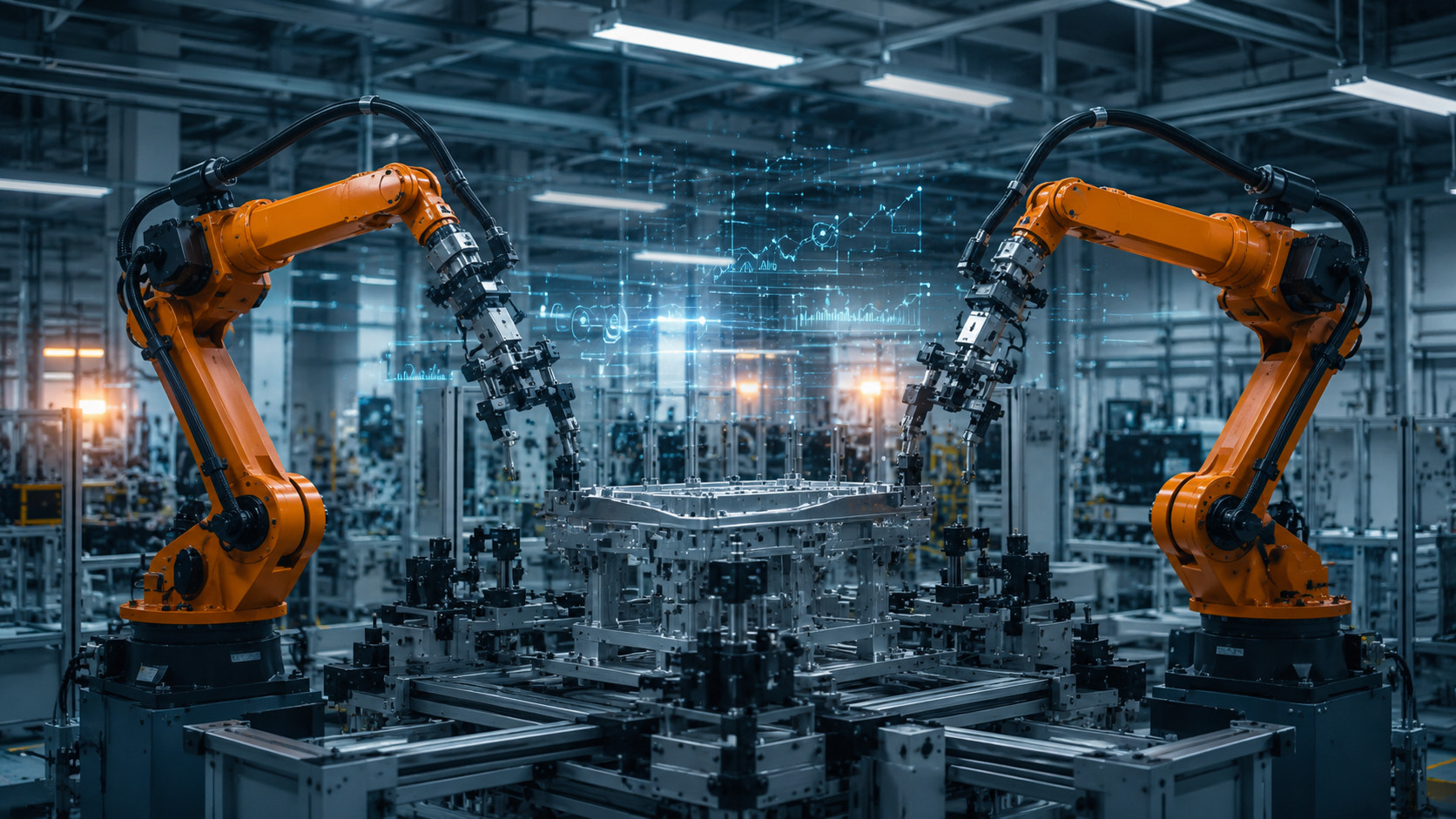
Industrial IoT infrastructure rarely develops as a single, unified system. In many operational environments, organizations gradually introduce connectivity, monitoring, and automation technologies over time. As a result, industrial deployments often consist of a mixture of legacy equipment, modern cloud platforms, serial-connected devices, Ethernet-based infrastructure, and remote assets operating simultaneously across different locations.
While cloud platforms continue to play an important role in centralized visibility and long-term analytics, many industrial environments also require certain operational tasks to be handled closer to where data is generated.
This is one reason edge computing has become increasingly relevant across industrial IoT infrastructure.
In practice, however, industrial edge computing is not only about reducing latency or introducing more local processing. In many deployments, the more immediate challenge is enabling operational data to move reliably across different systems, protocols, and infrastructure conditions without overcomplicating the environment itself.
This is where edge gateways often become an important part of industrial IoT architecture.
Industrial IoT Infrastructure Rarely Operates as a Single System
Industrial infrastructure typically evolves in layers.
Older operational technology may continue running for years alongside newer cloud-connected platforms, remote monitoring systems, and modern networking infrastructure. In many cases, organizations are not replacing entire operational environments at once. Instead, they are gradually integrating newer capabilities into existing systems.
This creates environments where multiple communication methods and infrastructure layers coexist simultaneously.
Legacy Equipment and Modern Platforms Often Coexist
Industrial environments still commonly rely on:
- PLC systems
- Serial-connected equipment
- Modbus RTU devices
- Ethernet-based controllers
- Cloud monitoring platforms
- Cellular-connected remote assets
These systems may all operate within the same deployment while using different communication methods and operational requirements.
As industrial infrastructure becomes more connected, organizations often need practical ways to move operational data between these environments without completely redesigning existing systems.
In many deployments, edge gateways help bridge this gap by supporting protocol conversion, secure data forwarding, and communication between OT environments and modern IP-based infrastructure.
Connectivity Conditions Can Vary Across Locations
Industrial connectivity conditions are not always consistent across every deployment.
Some operational sites may operate with stable wired infrastructure, while others depend on LTE, 5G, or wireless backhaul connectivity across remote locations.
This becomes increasingly relevant in environments such as:
- Utility infrastructure
- Transportation systems
- Remote monitoring stations
- Distributed manufacturing assets
- Environmental monitoring deployments
In these situations, operational architectures often need to account for varying infrastructure conditions across sites rather than assuming uniform network performance everywhere.
For a sector-specific discussion of how these distributed infrastructure challenges appear in urban environments, see our related article on Edge Computing in Smart City Deployments, which looks at traffic systems, distributed surveillance, utility monitoring, and remote management across smart city infrastructure.
The Role of Edge Gateways in Moving Operational Data Across Systems
In industrial IoT environments, edge gateways often act as operational connection points between different infrastructure layers.
Rather than functioning purely as networking devices, industrial gateways may also support tasks such as:
- Protocol conversion
- Secure remote connectivity
- Local logic execution
- Selective data forwarding
- Remote device management
- OT and IT system integration
This becomes particularly important in environments where operational data must move between older industrial equipment and modern cloud-connected platforms.
Bridging Industrial Protocols and Cloud Platforms
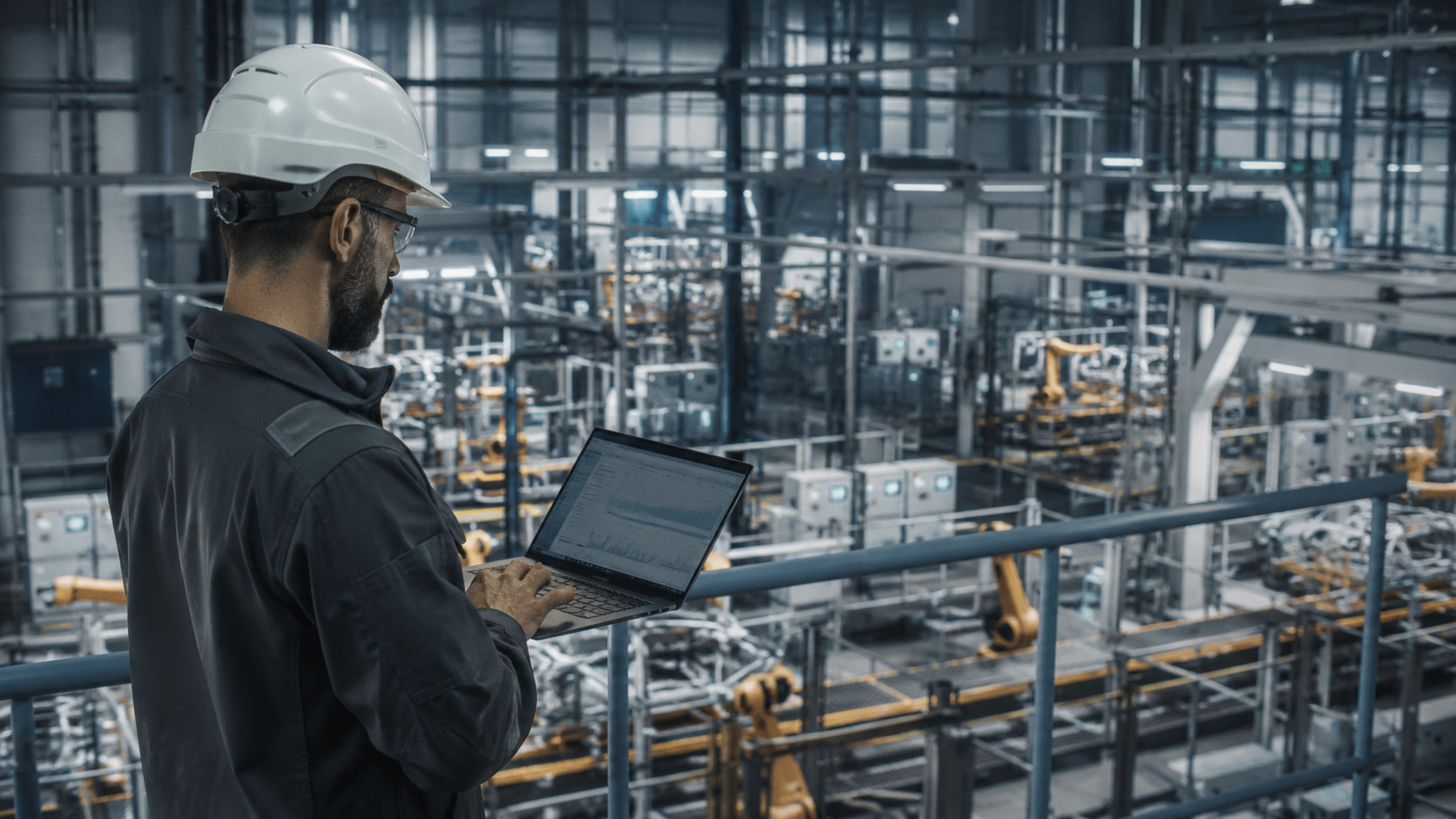
Industrial systems frequently operate with communication protocols that were not originally designed for modern cloud infrastructure.
For example, operational environments may still rely heavily on serial communication and protocols such as Modbus RTU, while cloud platforms often expect IP-based or MQTT-based data structures.
In these situations, edge gateways can help bridge communication between industrial field devices and centralized platforms without requiring existing operational systems to be replaced entirely.
This type of protocol interoperability is often one of the more practical aspects of industrial edge computing, particularly across long-life infrastructure environments where equipment replacement cycles may span many years.
Supporting Local Logic Without Fully Centralizing Every Workload
Not every operational task necessarily requires continuous centralized processing.
In some industrial environments, organizations may choose to handle selected operational logic closer to the field layer before forwarding summarized or prioritized information upstream.
This may include:
- Threshold-based monitoring
- Local alarm handling
- Event prioritization
- Temporary buffering during connectivity interruptions
- Selective telemetry forwarding
In practice, this approach often helps reduce unnecessary upstream transmission while supporting operational responsiveness across distributed infrastructure.
For industrial teams evaluating how this type of local processing and secure data forwarding can be implemented in the field, edge computing gateways are often one of the infrastructure layers to consider.
For readers who want a quick product-level overview of how an industrial edge gateway brings connectivity, local processing, and remote management capabilities together, this short EG series video may be a useful reference.
Watch the EG Series Quick Pitch
Different Industrial Deployments Often Require Different Edge Architectures
Industrial IoT deployments rarely follow a single architectural model.
Operational requirements can vary significantly depending on infrastructure type, environmental conditions, connectivity availability, and the operational role of the deployment itself.
For example, a remote environmental monitoring station may prioritize low-power telemetry transmission and remote management simplicity, while a manufacturing environment may place greater emphasis on protocol interoperability, operational responsiveness, and integration with existing OT systems.
Similarly, transportation infrastructure may involve distributed roadside assets operating under different connectivity conditions than utility infrastructure or indoor industrial environments.
As a result, edge architecture decisions are often closely tied to operational context rather than to a universal “best practice” model.
In many industrial environments, edge gateways are selected less for raw compute performance alone and more for their ability to support operational manageability across distributed infrastructure.
Managing Data Flow Across Distributed Industrial Environments
As industrial infrastructure scales, managing operational data flow often becomes as important as collecting the data itself.
Distributed deployments may generate large volumes of telemetry, monitoring traffic, operational alerts, and device status information across multiple sites simultaneously.
Without some level of filtering, prioritization, or local handling, centralized systems can become increasingly difficult to manage efficiently.
In practice, industrial edge computing often involves balancing several operational objectives at the same time:
| Industrial Requirement | Common Gateway Function |
| Connecting serial equipment to IP networks | Protocol conversion |
| Monitoring remote infrastructure | Cellular connectivity and VPN |
| Integrating OT and cloud platforms | Secure data forwarding |
| Reducing unnecessary upstream traffic | Local filtering and event handling |
| Managing distributed assets | Remote device management |
Industrial gateways may therefore play a broader role than simple connectivity alone. In many deployments, they help organizations coordinate how operational data moves across distributed industrial infrastructure while maintaining compatibility with existing systems and operational workflows.
Edge Computing in Industrial IoT Often Depends on Operational Context
Industrial edge computing can look very different depending on the environment in which it is deployed.
Some organizations may prioritize centralized visibility and long-term analytics. Others may focus more heavily on remote operational responsiveness, infrastructure resilience, or integration between legacy and modern systems.
For this reason, edge gateways are rarely deployed simply because “edge computing” has become a popular concept. In most industrial environments, they are introduced to solve specific operational requirements related to connectivity, interoperability, data handling, or distributed infrastructure management.
As industrial IoT environments continue to evolve, the role of edge gateways will likely remain closely connected to how organizations balance operational visibility, infrastructure complexity, and practical deployment requirements across real-world industrial systems.
Häufig gestellte Fragen
Q1: What is the role of an edge gateway in industrial IoT?
A1: In industrial IoT environments, an edge gateway often acts as a connection point between field equipment, industrial networks, and centralized platforms. Its role may include protocol conversion, secure data forwarding, local filtering, remote connectivity, and device management, depending on the deployment requirements.
Q2: Is an edge gateway the same as an IoT router?
A2: Not always. A router mainly focuses on network connectivity and traffic routing. An edge gateway may also support additional industrial functions such as protocol conversion, local logic, data preprocessing, secure remote access, and integration between OT systems and cloud platforms.
Q3: Why do industrial IoT systems need local processing?
A3: Local processing can help reduce unnecessary upstream data transmission, prioritize operational events, and support basic logic closer to field devices. This is especially useful in distributed environments where bandwidth, latency, connectivity stability, or remote maintenance are practical concerns.
Q4: Does industrial IoT edge computing replace cloud platforms?
A4: In most industrial deployments, edge computing and cloud platforms are used together. Edge infrastructure can support local responsiveness and selective data handling, while cloud platforms remain important for long-term analytics, centralized visibility, reporting, and cross-site coordination.
Q5: What should teams consider when choosing an industrial edge gateway?
A5: Common considerations include supported industrial protocols, cellular connectivity options, VPN and security features, remote management capability, local application support, environmental durability, and how well the gateway can integrate with existing OT and IT systems.
Über den Autor
Robert Liao | Technical Support Engineer
Robert is an IoT Technical Support Engineer at Robustel, specializing in industrial networking and edge connectivity. A certified Networking Engineer, Robert focuses on the deployment and troubleshooting of large-scale IIoT infrastructures. His work centers on architecting reliable, scalable system performance for complex industrial applications, bridging the gap between field hardware and cloud-side data management.