
What Is an eSIM Router? eUICC, Remote SIM Provisioning, and Industrial IoT Connectivity Explained
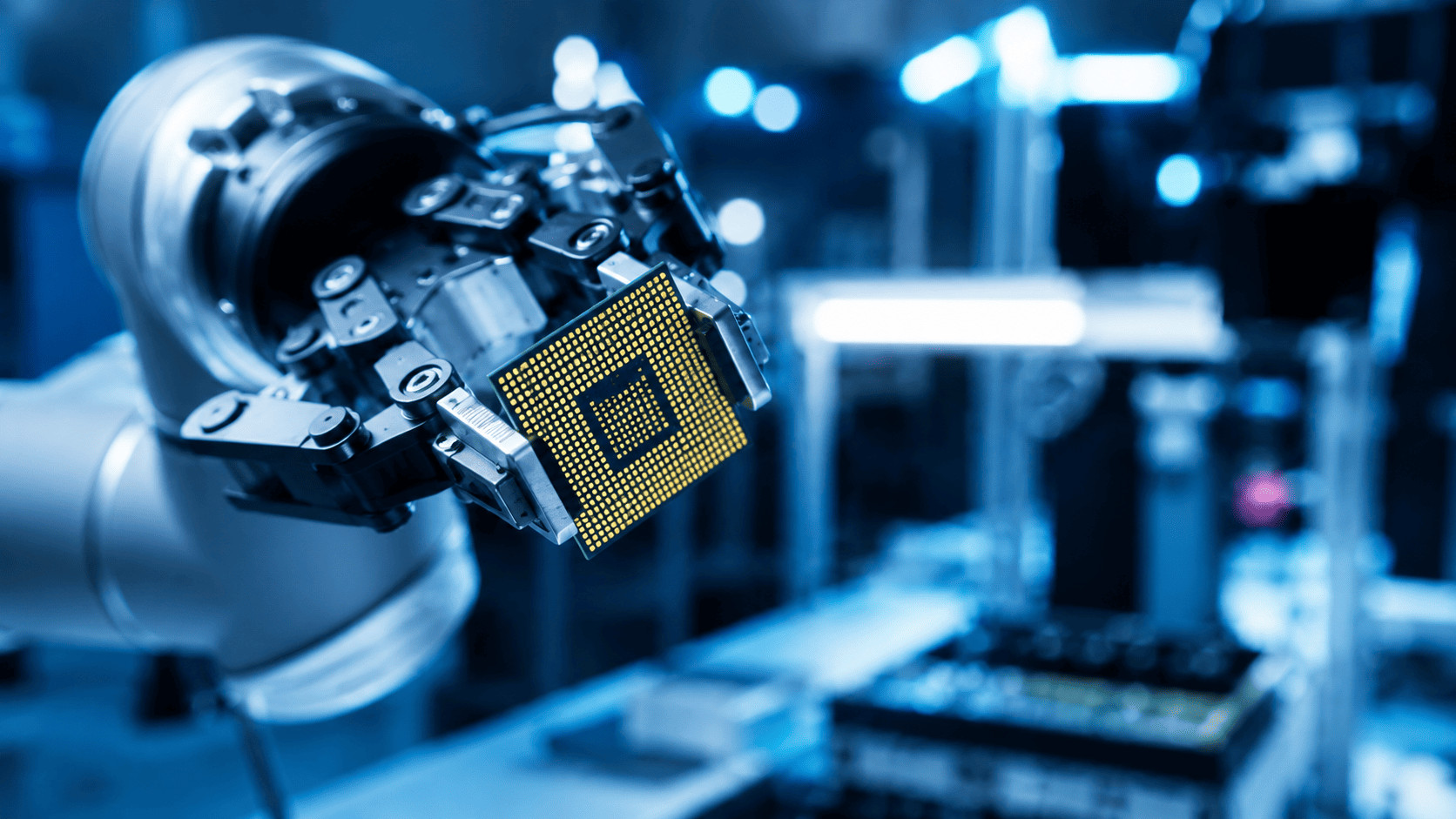
An eSIM/eUICC router lets industrial IoT teams download, activate, switch, or retire cellular operator profiles remotely instead of relying only on physical SIM replacement. Robustel R1520e Global addresses this deployment problem with a hybrid design combining 1× eSIM/eUICC and 1× 2FF physical SIM. With support for up to 8 eSIM profiles, industrial interfaces, RCMS remote management, and an optional globally certified SKU, it fits OEM and distributed IoT projects that need greater operator flexibility.
Remote SIM provisioning moves 4 subscription tasks—profile download, activation, switching, and removal—into a managed software workflow. Project teams can therefore adjust selected connectivity profiles without turning every operator change into a field-service visit.
An eSIM router does not remove the need for network planning. Coverage, local carrier support, antenna placement, security policy, tariffs, and lifecycle ownership still determine whether the complete industrial connectivity architecture is reliable.
What an eSIM Router Changes in Industrial IoT
An eSIM router is a cellular router that uses eUICC capability to support remotely managed mobile network profiles. Depending on the model, it may provide 4G LTE or 5G backhaul while allowing profiles to be downloaded, activated, switched, disabled, or removed over the air.
The important difference is operational. A conventional physical SIM usually fixes the subscription choice to a removable card, while an eSIM/eUICC router can move selected subscription changes into a remote management process.
This matters because industrial equipment may remain deployed for 10–15 years. During that period, operator contracts, tariffs, roaming policies, coverage conditions, and destination markets may change several times.
Robustel R1520e Global is designed around this lifecycle problem. Its combination of embedded eSIM/eUICC and a physical SIM slot lets project teams retain a familiar SIM option while adding remote profile flexibility for future deployment changes.
eSIM vs eUICC vs physical SIM: related but not identical
A physical SIM is usually a removable card in a format such as 2FF, 3FF, or 4FF. A traditional UICC commonly stores one operator profile and normally requires physical handling when the subscription must be replaced.
An eUICC is the capability that enables multiple operator profiles and remote profile lifecycle management. It can be implemented in a removable format or as an embedded MFF2 component installed on the router’s circuit board.
eSIM is the market-facing term commonly used for eUICC-enabled connectivity. Buyers should therefore check more than whether “eSIM” appears on the product page. They should confirm eUICC support, profile capacity, provisioning workflow, platform compatibility, and fallback behavior.
| Term | What it means | Industrial relevance |
| Physical SIM | Removable SIM card, commonly 2FF/3FF/4FF | Simple to deploy, but replacement may require physical access |
| UICC | Traditional SIM capability | Usually associated with one fixed operator profile |
| eUICC | Multi-profile, remotely manageable SIM capability | Enables profile download, activation, switching, or removal |
| eSIM | Common term for eUICC-enabled connectivity | Useful when remote profile management is supported |
| RSP | Remote SIM Provisioning | Provides the workflow for managing profiles over the air |
The SIM strategy affects more than the initial connection. It influences installation logistics, future operator changes, remote maintenance, security control, and device decommissioning.
How Remote SIM Provisioning Manages the Connectivity Lifecycle
Remote SIM provisioning allows operator profiles to be managed on an eUICC without manually replacing a SIM card. In industrial IoT, this changes cellular connectivity from a one-time installation task into a managed lifecycle process.
A simplified industrial workflow has 5 stages:
| Stage | What happens |
| 1. Bootstrap | An initial profile or connection method brings the router online |
| 2. Install | The router is commissioned at the field location |
| 3. Assign | A profile is selected for the country, operator, customer, or project |
| 4. Activate | The selected profile becomes the active cellular subscription |
| 5. Change or retire | Profiles are switched, disabled, removed, or replaced later |
This lifecycle is especially relevant when routers are installed in locked cabinets, unmanned sites, roadside infrastructure, industrial machines, utility assets, or equipment exported to different countries.
The router is only one part of the provisioning workflow
Remote profile management normally depends on at least 5 aligned elements:
- The router and its firmware
- The eUICC inside the router
- The remote SIM provisioning service
- The mobile network operator or profile provider
- The router or fleet management platform
An eSIM-capable router cannot deliver every provisioning workflow independently. Profile availability, operator agreements, regional rules, platform integration, and commercial arrangements remain part of the deployment.
With Robustel R1520e Global router, the embedded eSIM/eUICC provides the profile-management foundation, while RCMS contributes the remote gateway management layer. The exact provisioning process must still be confirmed against the selected eSIM provider, operator, region, and project configuration.
Why Robustel R1520e Global Router Fits Remote IoT Projects
Global OEMs and distributed operators often face a specific problem: they want to standardise router hardware, but the final cellular operator may vary by destination country, customer, or deployment stage.
Robustel R1520e Global helps address this problem through a hybrid SIM architecture. The router combines 1× eSIM/eUICC with 1× 2FF physical SIM, allowing remote profile flexibility without removing the option to use a conventional local SIM.
Product capabilities linked to the deployment problem
| Deployment requirement | Robustel R1520e Global capability |
| Remote profile flexibility | 1× embedded eSIM/eUICC |
| Conventional SIM option | 1× 2FF physical SIM |
| Profile lifecycle planning | Support for up to 8 eSIM profiles |
| Multiple local Ethernet devices | 5× 10/100 Mbps Ethernet ports |
| Legacy field equipment | RS-232 and RS-485 |
| Basic field signals | 1× DI, 1× DO, and 1× analog input |
| Location-aware deployments | GNSS support |
| Local wireless access | Wi-Fi support |
| Peripheral or service connection | USB interface |
| Simplified selected installations | Optional PoE-PD on ETH0 |
| Remote gateway operations | RCMS management support |
| Multi-country rollout planning | Optional globally certified SKU for over 50 countries |
These specifications matter because an industrial eSIM router still has to connect real equipment. Profile flexibility alone is not enough if the router lacks the Ethernet, serial, I/O, management, or regional capabilities required by the site.
Robustel R1520e Global brings the SIM lifecycle and the industrial gateway layer into one product. It can connect local equipment, provide cellular backhaul, support remotely managed eSIM profiles, and remain visible through RCMS after deployment.
Hybrid SIM design reduces the need for an all-or-nothing decision
An eSIM router does not necessarily need to eliminate physical SIM use. In many industrial projects, the two options serve different roles.
The physical SIM may support commissioning, a customer-supplied subscription, a local operator requirement, or a fallback plan. The eSIM/eUICC can provide remotely managed profiles for rollout, service changes, or later operator adjustments.
This hybrid approach makes Robustel R1520e Global relevant to companies moving from conventional SIM logistics toward software-managed connectivity without forcing every project to adopt an eSIM-only operating model immediately.
Industrial Scenarios Where eSIM Flexibility Solves a Practical Problem
Industrial eSIM routers provide the most value when equipment is distributed, difficult to access, shipped internationally, or expected to remain operational for many years.
Remote monitoring sites
Utility cabinets, environmental monitoring stations, energy assets, roadside systems, and unmanned facilities may be expensive or inconvenient to visit.
Robustel R1520e Global can connect local devices through Ethernet, serial, or I/O while supporting remotely managed eSIM profiles for cellular backhaul. This helps keep subscription changes from becoming routine site-access tasks.
The benefit is not guaranteed network performance. It is the ability to change selected operator profiles without physically opening every remote enclosure.
Global OEM machinery
Industrial machines are often built in one country and deployed in many others. Fixing the operator subscription before the final destination is known can complicate manufacturing, inventory, and commissioning.
Robustel R1520e Global allows OEMs to use a more consistent router platform while retaining flexibility over the final SIM profile. Its optional globally certified SKU can also simplify hardware planning for deployments covering more than 50 countries.
Local band support, operator compatibility, tariffs, and country-specific requirements must still be checked before shipment.
Cross-border and mobile equipment
Routers installed in fleets, mobile equipment, or transportable industrial assets may operate across changing network environments.
An eUICC can support multiple operator profiles, while the physical SIM slot remains available where the project requires a removable local SIM or additional deployment flexibility.
Robustel R1520e Global therefore fits projects where the equipment lifecycle is more stable than the mobile subscription attached to it.
Distributed branches and infrastructure sites
Retail sites, branch offices, industrial facilities, and distributed infrastructure may use cellular connectivity for primary access, backup communication, or remote equipment monitoring.
In these projects, Robustel R1520e Global combines local Ethernet connectivity, VPN-capable industrial routing, hybrid SIM architecture, and RCMS management. The product can therefore support both the initial network connection and the longer-term management of the deployed router fleet.
What eSIM Improves—and What Still Requires Engineering
eSIM/eUICC improves how cellular profiles are managed. It does not remove the engineering work required to make an industrial network dependable.
eSIM can reduce SIM logistics
Physical SIM deployments may involve card purchasing, storage, regional allocation, shipping, installation, replacement, and inventory tracking.
Remote profile management can move some of these activities into a software-managed workflow. For distributed fleets, that can reduce manual SIM handling and avoid selected site visits associated only with subscription changes.
Robustel R1520e Global supports this operating model by combining remotely managed profiles with a physical SIM option and RCMS-based gateway management.
eSIM does not create cellular coverage
Coverage still depends on the available network, local frequency bands, antenna placement, installation environment, roaming policy, and operator service.
Switching profiles may provide another network option where suitable profiles are available, but it cannot create signal in a location with no usable cellular service.
eSIM does not replace cybersecurity controls
Profile lifecycle management is one part of connectivity security. Industrial routers still require:
- Controlled administrator access
- VPN and firewall policies
- Firmware management
- Secure credential handling
- Device monitoring
- Profile retirement procedures
- Clear ownership of remote changes
Robustel R1520e Global and RCMS can support the router-management layer, but the project team remains responsible for defining and enforcing the complete security policy.
Profile switching still needs failure planning
A remote profile change may fail because of network loss, profile availability, configuration, platform communication, or operator conditions.
Projects should define bootstrap connectivity, rollback behavior, change approval, audit responsibility, and the recovery procedure if a router does not reconnect after a profile operation.
The practical value of eSIM comes from managed flexibility, not from assuming that every profile change will be automatic or risk-free.
What Buyers Should Check Before Choosing an eSIM Router
An eSIM router should be evaluated as part of the complete connectivity architecture rather than as a standalone feature.
| Check area | What to confirm |
| eUICC capability | Whether multiple remotely provisioned profiles are supported |
| Profile capacity | How many profiles the router can store or manage |
| Physical SIM requirement | Whether the project needs hybrid eSIM + physical SIM operation |
| Cellular generation | Whether 4G LTE or 5G is appropriate |
| Regional support | Bands, certifications, operators, roaming rules, and tariffs |
| Local interfaces | Ethernet, serial, I/O, Wi-Fi, GNSS, USB, or PoE requirements |
| Management platform | How the router and profile lifecycle will be managed remotely |
| Failure behavior | What happens if profile download or switching fails |
| Security process | How profiles, credentials, VPNs, and access are controlled |
| Lifecycle ownership | Who approves profile changes and retires subscriptions |
Robustel R1520e Global fits buyers that need 4G/LTE connectivity, hybrid SIM architecture, multiple local interfaces, remote gateway management, and a more consistent hardware platform for international or distributed deployment.
It may not be the correct choice for every project. A 5G application, a compact single-interface site, or an eSIM-only deployment may require another model from the Robustel eSIM/eUICC router portfolio.
The best-fit decision depends on the equipment, bandwidth, country coverage, interface count, lifecycle, and operator strategy—not only on whether the product supports eSIM.
FAQs
Q1. What is an eSIM router?
An eSIM router is a cellular router with eUICC capability that allows supported mobile network profiles to be downloaded, activated, switched, or removed remotely. In industrial IoT, this can reduce reliance on physical SIM replacement after installation. The router still requires cellular coverage, operator support, a suitable provisioning service, correct antennas, and a management process. eSIM changes how subscriptions are managed; it does not replace the wider network architecture needed for reliable field connectivity.
Q2. What is the difference between eSIM and eUICC?
eSIM is the common market term, while eUICC is the technical capability that enables multiple operator profiles and remote profile management. An embedded SIM form factor alone does not confirm that remote provisioning is available. Buyers should verify whether the router supports eUICC, how many profiles it can manage, which provisioning workflow is used, and whether profile switching and failure recovery are supported in the intended region and operator ecosystem.
Q3. Does an eSIM router still need a physical SIM slot?
Not always, but a physical SIM slot can remain useful. Hybrid routers combine eSIM/eUICC flexibility with a removable SIM option for commissioning, customer-provided subscriptions, local operator requirements, or fallback planning. Robustel R1520e Global uses this approach with 1× eSIM/eUICC and 1× 2FF physical SIM. The correct architecture depends on whether the project needs eSIM-only simplicity, physical SIM familiarity, or both options.
Q4. How does Robustel R1520e Global support global IoT deployment?
Robustel R1520e Global combines remotely manageable eSIM/eUICC profiles with a physical SIM slot, industrial interfaces, GNSS, and RCMS remote management. It also offers an optional globally certified SKU intended to simplify deployment planning in more than 50 countries. Project teams must still confirm local frequency bands, operators, tariffs, roaming rules, profile availability, and regulatory requirements. The product helps standardise the gateway platform without assuming that one cellular profile fits every market.
Q5. Is Robustel R1520e Global suitable for remote monitoring?
Robustel R1520e Global can fit remote monitoring projects that need 4G/LTE backhaul, Ethernet or serial equipment access, hybrid SIM flexibility, and remote gateway management through RCMS. Its eSIM/eUICC capability can reduce selected SIM-handling visits when operator profiles need to change after deployment. Suitability still depends on field protocols, data requirements, signal conditions, antenna design, security policy, local operator support, and the remote monitoring platform used by the project.
Why Robustel R1520e Global Is a Practical eSIM Router Reference
An eSIM/eUICC router gives industrial IoT teams a more flexible way to manage cellular subscriptions after equipment has been deployed. It can reduce dependence on physical SIM replacement while supporting operator-profile changes across distributed, international, and long-lifecycle projects.
Robustel R1520e Global connects this eSIM capability to the wider industrial networking requirement. Its 1× eSIM/eUICC, 1× physical SIM, support for up to 8 profiles, 5× Ethernet ports, serial interfaces, I/O, GNSS, optional PoE-PD, and RCMS management make it relevant to global OEMs and remote asset operators.
The product does not remove the need to verify coverage, operators, bands, certifications, tariffs, security, or provisioning partners. It provides a stronger gateway foundation for projects where hardware standardisation and cellular-subscription flexibility need to work together.
For buyers asking “What is an eSIM router?”, the more useful project question is whether the router, eUICC, provisioning service, operator network, industrial interfaces, and management platform can support the required deployment model over its full lifecycle.
著者について
Robert Liao | Technical Support Engineer
Robert is an IoT Technical Support Engineer at Robustel, specializing in industrial networking and edge connectivity. A certified Networking Engineer, Robert focuses on the deployment and troubleshooting of large-scale IIoT infrastructures. His work centers on architecting reliable, scalable system performance for complex industrial applications, bridging the gap between field hardware and cloud-side data management.