
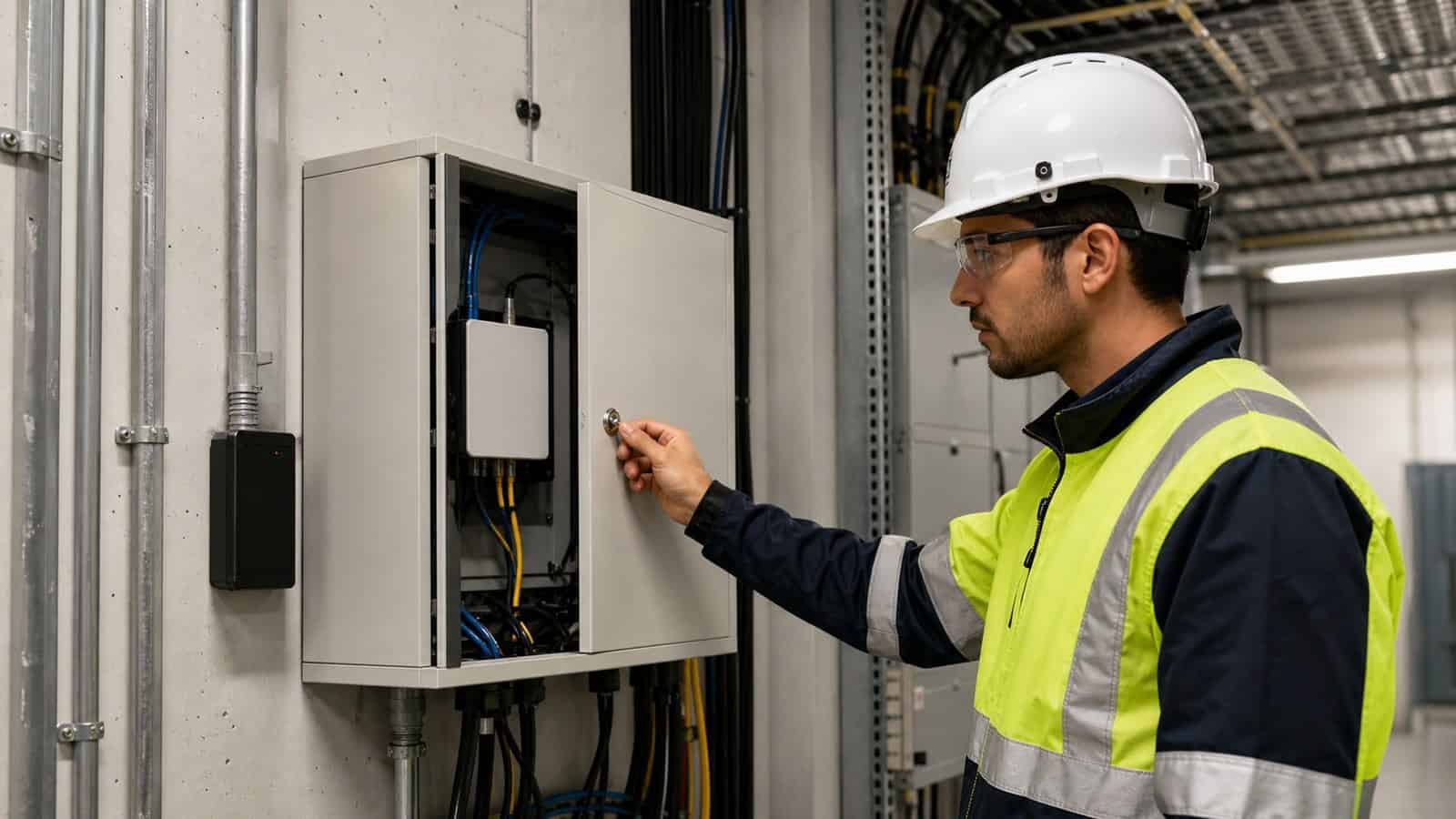
LoRaWAN Gateway Security Checklist for Enterprise Deployments
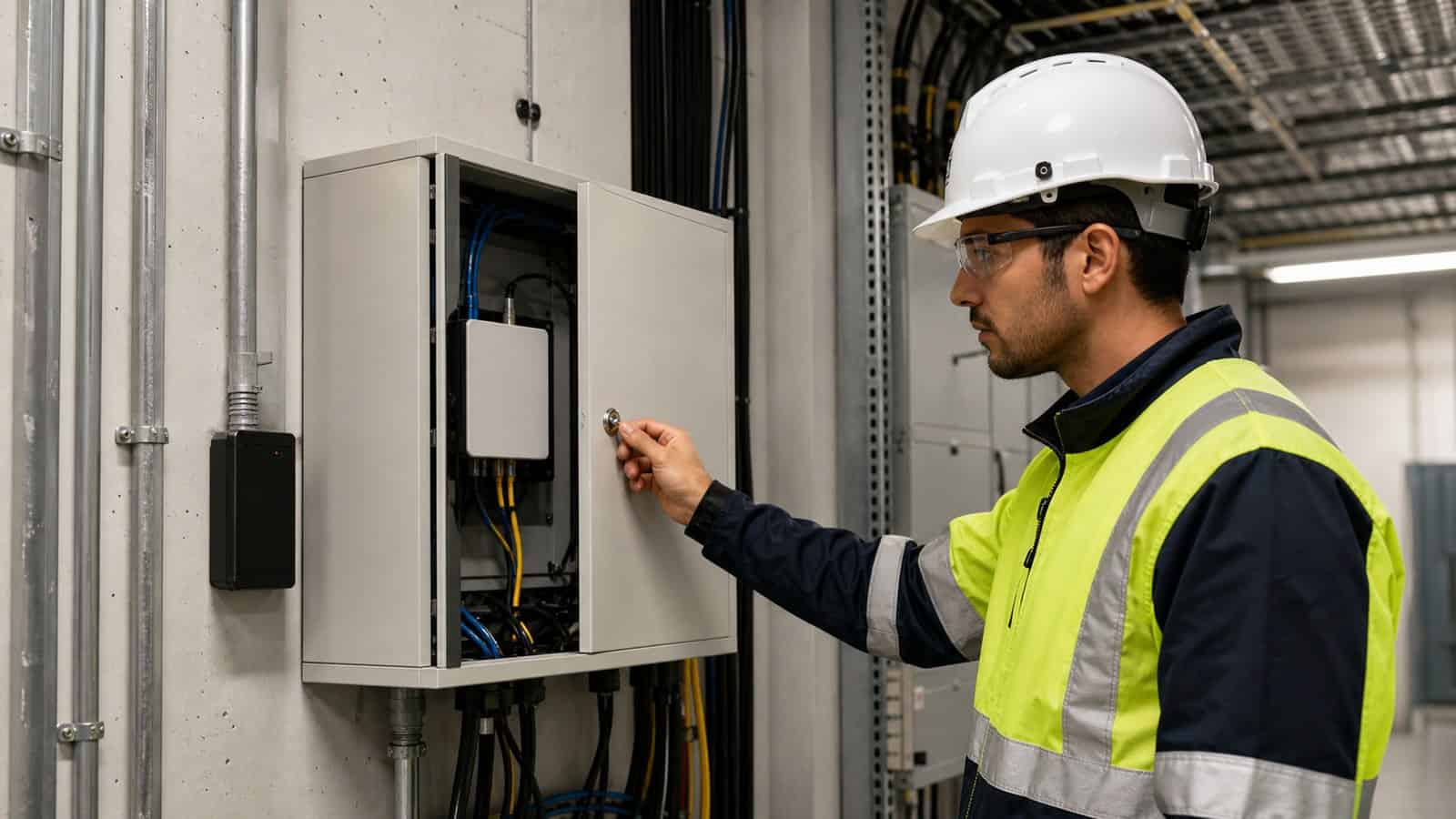
LoRaWAN encryption is only one layer of an enterprise gateway security design. A Robustel R1520LG LoRaWAN Gateway also connects to IP networks, an LNS, remote-management services and administrative interfaces, so security must cover the gateway and its operating lifecycle as well as the LoRaWAN radio protocol.
Consider a manufacturer rolling out LoRaWAN sensors across 40 factories. The sensor keys are correctly provisioned and LoRaWAN traffic is encrypted. The gateway, however, also has Ethernet or cellular backhaul, administrative credentials, LNS authentication data and a remote-support path. If any of those responsibilities remains undefined, “LoRaWAN is encrypted” is not an adequate security assessment.
The better question is: Who can reach the gateway, what can it communicate with, how are credentials and software maintained, and what happens when the device is replaced or retired?
LoRaWAN Encryption Does Not Secure the Entire Gateway
LoRaWAN itself provides cryptographic protection at the network and application layers. The LoRa Alliance describes separate network and application session keys and AES-based authentication, integrity and application-layer encryption. It also stresses that secure implementation and key management remain necessary around the protocol.
That distinction matters for a Robustel LoRaWAN gateway deployment because the gateway participates in systems outside the LoRaWAN radio link.
A simplified enterprise path looks like: LoRaWAN end device → LoRaWAN radio → gateway → Ethernet / Wi-Fi / cellular backhaul → LoRaWAN Network Server → application platform
Around the gateway there may also be: Administrator → local or remote management interface → gateway, and: Operations team → RCMS / VPN → gateway or downstream equipment
Encryption between the sensor and LoRaWAN infrastructure does not automatically define the security policy for these IP-facing interfaces.
A compromised administrative credential, unnecessarily exposed management service or poorly controlled remote-access route is a different problem from breaking LoRaWAN radio encryption.
For readers who want a short visual overview of why the gateway sits at this boundary, Robustel’s “Why Do You Need a LoRaWAN Gateway” video explains how the gateway bridges LoRaWAN devices with the wider IP-connected system. That architectural position is exactly why gateway security needs its own controls.
Map Every Trust Boundary Before Opening Network Access
Enterprise security reviews become easier when the team stops treating the gateway as one box and instead lists every path entering and leaving it.
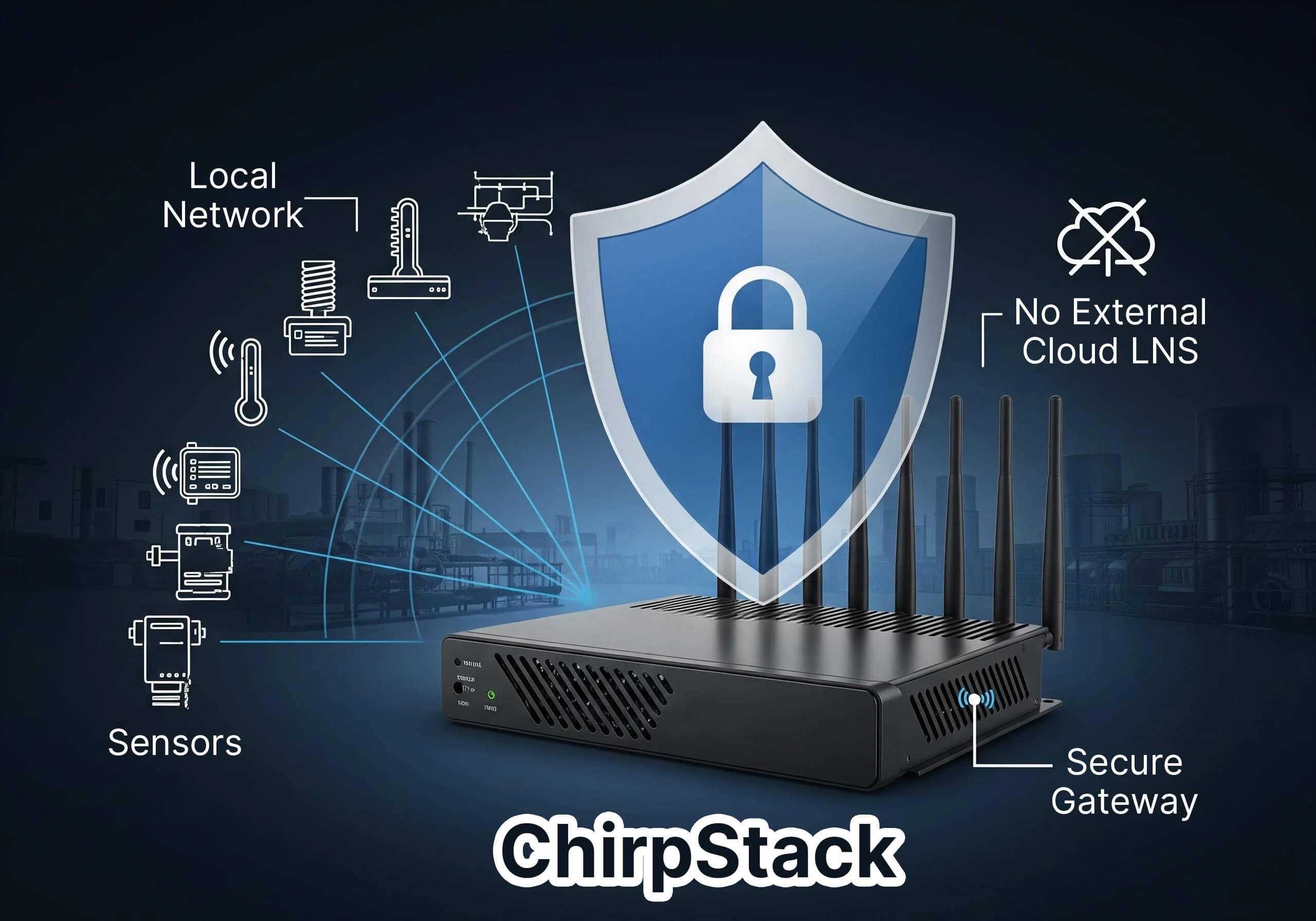
For a Robustel R1520LG LoRaWAN Gateway, those paths can include LoRaWAN radio traffic, Ethernet, cellular or Wi-Fi backhaul, LNS connectivity, administrative access, remote management and application traffic. The R1520LG can connect to an external LNS or operate with an embedded ChirpStack architecture, so the security boundary also changes according to where the Network Server is located.
A useful trust-boundary review is:
| Connection | Security question | Typical owner |
|---|---|---|
| LoRaWAN end device → network | How are device and session keys provisioned and protected? | IoT / OT team |
| Gateway → LNS | How is the gateway authenticated and how is traffic protected? | LoRaWAN operator |
| Gateway → enterprise LAN | Which destinations and services are actually required? | Network team |
| Gateway → cellular WAN | Which APN, addressing and upstream controls apply? | IoT / telecom team |
| Administrator → gateway | Who is permitted to administer the device? | OT / operations |
| Remote engineer → site | Is access restricted to approved users and required subnets? | Operations / security |
| Management platform → gateway | Who can change configuration or firmware? | Platform administrator |
| Gateway → application | Is the traffic flow necessary and documented? | Application owner |
NIST’s IoT cybersecurity guidance similarly treats logical interface access, software updates, configuration, data protection and cybersecurity-state awareness as separate capabilities that organisations need to assess rather than assuming one security feature covers the complete device.
For the 40-factory example, the useful output is not a statement such as: “Gateway uses VPN.”
It is something closer to: “The gateway may initiate only the approved LNS, management and application connections; administrative access is restricted to named operational roles; and unnecessary inbound services are not permitted.”
That is a policy that engineers can implement and test.
Credentials and Administrative Access Need Named Owners
Many security weaknesses begin with ownership rather than cryptography.
Who creates gateway accounts? Who removes a contractor after commissioning? Who owns the LNS token? Who knows when a certificate must be rotated? Who disables access when a support engineer changes role?
For a distributed Robustel gateway fleet, those responsibilities should be established before deployment.
The RCMS feature set includes user and role management, allowing administrators to invite or disable users and assign permissions. Its group-management functions also support assigning users to device groups, which is useful when access needs to follow operational responsibility rather than giving every engineer visibility of every site. This does not replace organisational access policy.
A sensible enterprise approach is to define:
- Named user accounts rather than widely shared operational credentials
- Roles based on actual job responsibilities
- Separation between routine monitoring and configuration privileges
- A process for removing former employees and contractors
- Ownership of LNS API tokens and certificates
- Credential rotation where required
- Records of which third parties can access which sites
- A controlled emergency-access procedure
LoRaWAN credentials require the same discipline. The LoRa Alliance specifically notes that LoRaWAN’s security properties still depend on safe key handling and appropriate implementation practices.
Where LoRa Basics Station is used, authentication should also be treated as part of the gateway-to-LNS security design. For example, Robustel’s documented R1520LG connection to The Things Network uses Basic Station with TLS and token-based authentication rather than treating packet forwarding as an unauthenticated generic IP connection.
The exact mechanism will depend on the selected LNS, but LNS credentials should have an owner and lifecycle just like gateway administrator credentials.
Backhaul Security and Remote Access Solve Different Problems
A remote gateway often needs two things:
- A protected path for operational traffic.
- A controlled method for authorised engineers to reach the site.
Those are related, but they are not the same control.
The Robustel R1520LG LoRaWAN Gateway runs RobustOS Pro, and Robustel documentation for that platform describes firewall configuration and VPN capabilities. Firewall rules should be used to restrict traffic to the communications the project actually requires rather than opening services simply because they are available.
For remote engineering, RobustVPN provides an OpenVPN-based private overlay managed through RCMS. Robustel describes gateways initiating outbound sessions, allowing remote access without requiring fixed-IP SIMs or direct port forwarding. Users and gateways are then assigned through VPN groups and policies.
The security benefit comes from controlling the path, not simply from having VPN functionality.
A deployment should still decide:
- Which users belong to each VPN group
- Which site subnets they can reach
- Whether downstream PLCs or other equipment should be accessible at all
- How temporary contractor access is removed
- Which firewall rules permit VPN-originated traffic
- How access is audited
- What happens if a user credential is compromised
Robustel real-world context: LoRaWAN monitoring for vaccines and labs with the R1520-LG
KoolZone operates R1520LG gateways across distributed laboratory and cold-chain environments. Robustel’s case study describes RCMS being used for central status, configuration and firmware management so operations teams can support the estate without routine site intervention.
The security lesson is not that remote management makes the system secure automatically. It is that a distributed gateway estate needs a defined management channel. Without one, teams may eventually create ad-hoc remote-access methods when a site needs urgent support.
Those emergency workarounds are exactly what an enterprise security design should try to avoid.
How the Robustel R1520LG LoRaWAN Gateway Fits an Enterprise Security Architecture
The Robustel R1520LG LoRaWAN Gateway can support an enterprise security architecture by providing a controlled gateway platform with LoRaWAN connectivity, multiple IP backhaul methods, RobustOS Pro, RCMS fleet management and RobustVPN remote access. These capabilities provide building blocks; they do not constitute a complete enterprise security policy by themselves.
A practical architecture might assign responsibilities as follows:
- LoRaWAN layer: Device credentials and network security managed by the LoRaWAN team
- Gateway layer: Configuration, firewall policy and firmware baseline managed by OT operations
- Backhaul layer: Ethernet, cellular, routing and network policy managed by the network team
- Remote-access layer: RobustVPN groups and authorised users controlled by operations/security
- Fleet-management layer: RCMS roles, configuration and firmware workflows managed centrally
- Application layer: LNS and application credentials owned by the relevant application team
RCMS supports batch configuration and firmware operations as well as user and role management. Robustel also documents firmware upgrades through RCMS for connected devices, including group-level updates.
That helps establish a repeatable maintenance process, but OTA capability should not be confused with the complete software-supply-chain requirement.
NIST recommends that IoT software-update mechanisms restrict changes to authorised entities and verify that software originates from a valid source.
Accordingly, an enterprise procurement review should verify the current vendor process for:
- Firmware authenticity
- Firmware distribution
- Version identification
- Update authorisation
- Rollback or recovery where required
- Vulnerability response
- Support lifecycle
Do not infer a signed-firmware or secure-boot capability merely because a device supports remote firmware updates. Those are separate claims and should be verified against the specific product version and current vendor documentation.
The same principle applies to firewall and VPN capabilities. They provide security controls only after the organisation defines appropriate rules and access policies.
Treat Patching, Replacement and Decommissioning as Security Events
Gateway security does not end after commissioning.
Suppose one gateway in a nationwide deployment fails after four years. The replacement device needs the correct regional radio variant, firmware, firewall policy, LNS credentials and management configuration. The failed gateway may still contain credentials or configuration information and therefore needs a defined retirement process.
This is where Robustel fleet management becomes part of lifecycle security rather than simply an operational convenience.
NIST’s current IoT guidance emphasises management throughout the device lifecycle, including trusted onboarding and maintenance of an appropriate security posture over time.
A production process should answer:
- How is the approved firmware baseline recorded?
- How quickly are relevant security updates evaluated?
- Who authorises deployment?
- Can configurations be backed up and restored?
- How is a replacement device enrolled?
- Which credentials must be revoked when hardware is removed?
- How are management-platform records updated?
- What happens to SIMs and VPN membership?
- How is retired hardware sanitised according to company policy?
A large-scale Robustel deployment makes the lifecycle issue concrete: nationwide LoRaWAN network backhaul over LTE450 for Cibicom.
Cibicom operates nationwide LoRaWAN infrastructure at locations including masts and third-party properties and monitors its installations through a 24/7 Network Operations Center. The original Robustel gateway used in the project was the R3000-LG, now a legacy product for which Robustel identifies the R1520LG as the current replacement.
The security relevance is operational rather than promotional. In a long-lived distributed network, equipment will eventually be updated, replaced or retired. Lifecycle control therefore needs to exist before the first failure occurs, particularly when physical access to a site is difficult.
Use a Security Acceptance Checklist Before Rollout
A useful gateway security review should finish with evidence rather than a list of available features.
| Security area | Acceptance question | Evidence to retain |
|---|---|---|
| LoRaWAN credentials | Are keys provisioned and owned correctly? | Device/LNS onboarding record |
| Gateway administration | Are only approved users able to administer the gateway? | Account and role review |
| Network exposure | Are unnecessary services and paths restricted? | Firewall/routing configuration |
| Gateway-to-LNS | Is the required authentication method configured? | LNS/Basic Station configuration |
| Remote access | Are users and reachable subnets explicitly controlled? | VPN group and access policy |
| ファームウェア | Is the approved version known and update ownership defined? | Firmware baseline and update record |
| Remote management | Are RCMS permissions appropriate to job roles? | Role/group assignment |
| Monitoring | Can operations identify unexpected device or connection state? | Alert/status workflow |
| Replacement | Can a failed gateway be rebuilt to the approved baseline? | Recovery test |
| Decommissioning | Are credentials, SIMs and management access revoked? | Retirement checklist |
The Robustel R1520LG LoRaWAN Gateway supplies several of the technical mechanisms needed to implement these controls, but the organisation remains responsible for assigning ownership and verifying the finished architecture.
A gateway should therefore pass security acceptance only when the team can answer both: What security capability exists? and: Who configures, verifies and maintains it? That second question is what turns a product feature into an enterprise control.
よくある質問
Q1. Is LoRaWAN secure enough for enterprise IoT?
LoRaWAN includes mandatory cryptographic security mechanisms, including network- and application-layer keying and AES-based protection. The protocol alone does not secure gateway administration, IP backhaul, remote access or application infrastructure. Enterprise deployments therefore need controls around credentials, network exposure, patching, monitoring and operational ownership in addition to LoRaWAN protocol security.
Q2. Does a LoRaWAN gateway need a VPN?
Not every deployment requires the same VPN architecture. A VPN may be appropriate when the gateway or downstream equipment needs controlled remote IP access or when network policy requires protected site-to-site connectivity. The Robustel R1520LG LoRaWAN Gateway can work with RobustVPN and RobustOS Pro networking capabilities, but the access scope and policy still need to be defined by the organisation.
Q3. How can the Robustel R1520LG be managed securely across many sites?
The Robustel R1520LG LoRaWAN Gateway can be managed through RCMS, which supports device groups, users and roles as well as remote configuration and firmware workflows. RobustVPN can provide controlled private remote access where required. These capabilities should be combined with least-privilege user policies, documented responsibilities and regular access reviews rather than relying on platform access alone.
Q4. Does OTA firmware updating mean the gateway uses signed firmware?
No. Remote update capability and cryptographic verification of firmware authenticity are separate security properties. RCMS supports remote firmware deployment to compatible Robustel devices, while a buyer requiring signed firmware or a specific secure-update mechanism should verify that requirement against the current R1520LG documentation and vendor security information before procurement.
Q5. Should a LoRaWAN gateway be directly exposed to the public internet?
Direct exposure should not be assumed necessary. The appropriate design depends on the required services and network architecture. Enterprise teams should restrict network communication to the paths that are operationally required. RobustVPN, for example, is designed to establish outbound connectivity from Robustel gateways and provide private remote access without requiring direct port forwarding or fixed public-IP SIMs.
結論
A LoRaWAN gateway security review should extend well beyond radio encryption. The Robustel R1520LG LoRaWAN Gateway can contribute firewall, LNS connectivity, remote management, firmware-management and private remote-access capabilities to an enterprise architecture. None of these controls is sufficient in isolation, and Robustel hardware should not be treated as a substitute for organisational security policy.
Start by mapping every trust boundary around the gateway. Assign owners to credentials and administrative access. Restrict unnecessary network paths. Define how firmware is evaluated and deployed. Then test replacement and decommissioning before the fleet becomes difficult to change.
The strongest enterprise design is not the gateway with the longest security feature list. It is the deployment in which every credential, connection, update and remote-access path has a defined owner, policy and lifecycle.
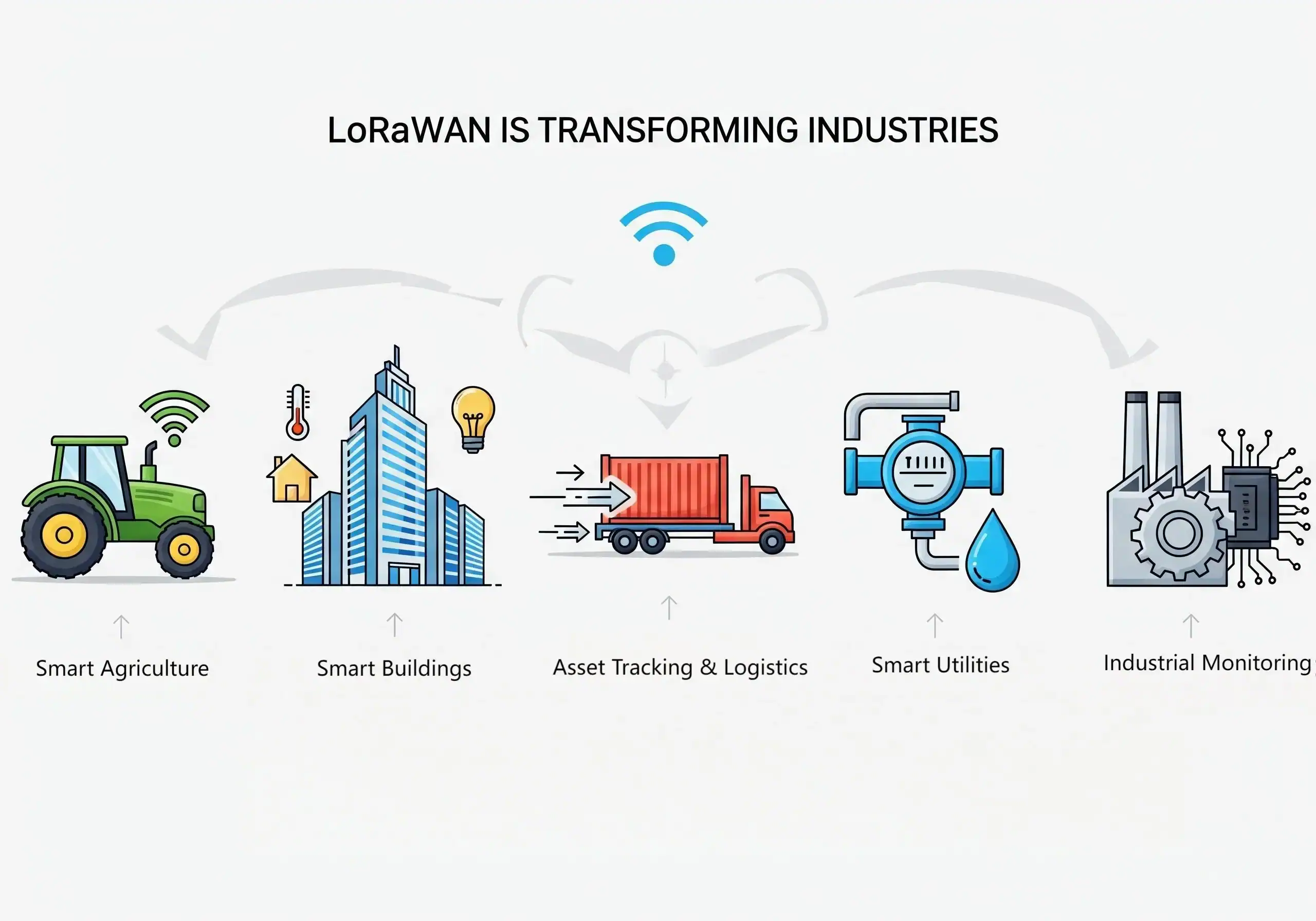
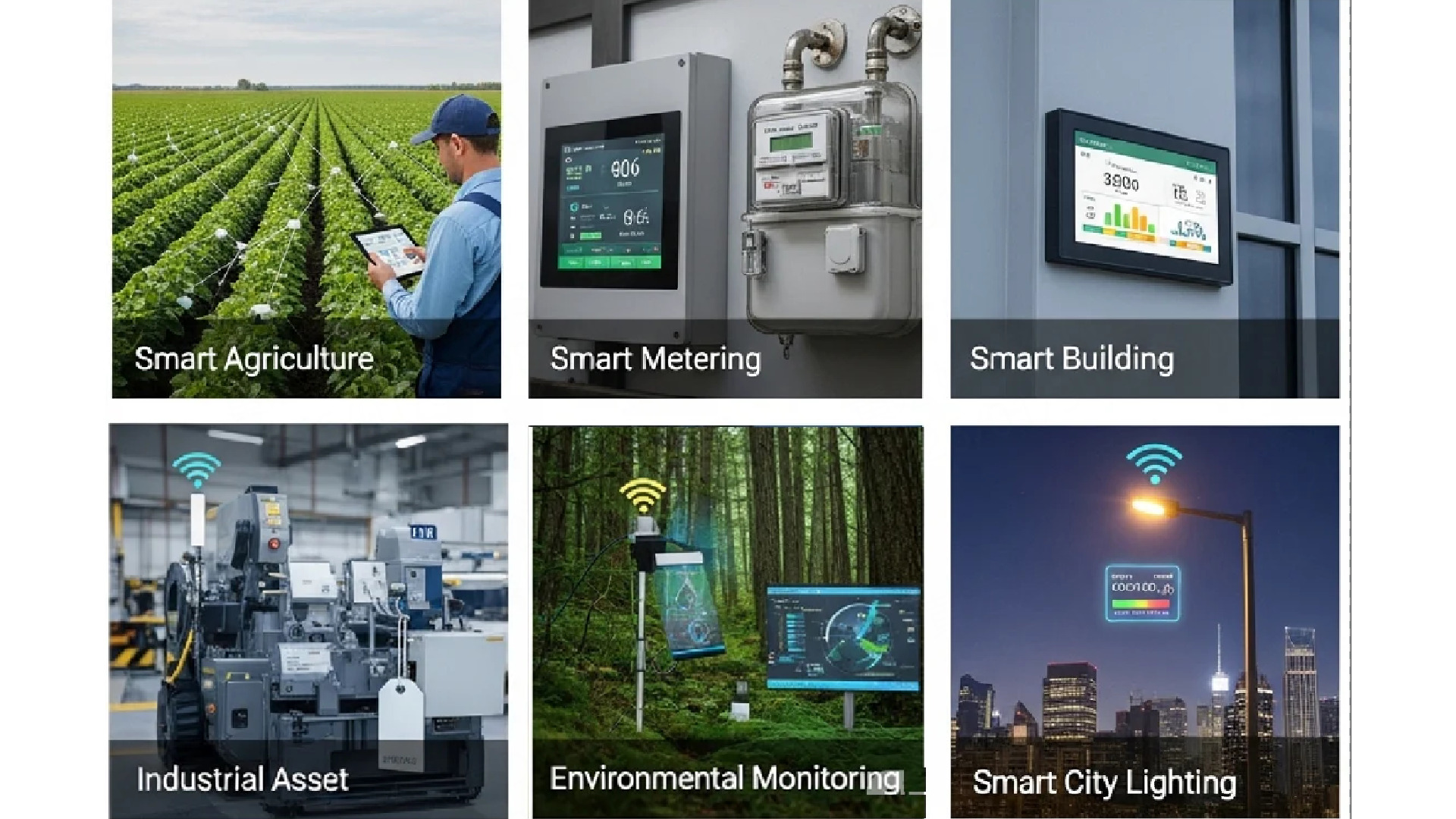
Explore more articles about Robustel’s LoRaWAN gateway in industrial IoT:


著者について
Robert Liao | Technical Support Engineer
Robert is an IoT Technical Support Engineer at Robustel, specializing in industrial networking and edge connectivity. A certified Networking Engineer, Robert focuses on the deployment and troubleshooting of large-scale IIoT infrastructures. His work centers on architecting reliable, scalable system performance for complex industrial applications, bridging the gap between field hardware and cloud-side data management.