
How Industrial Edge Gateways Support BESS Remote Monitoring
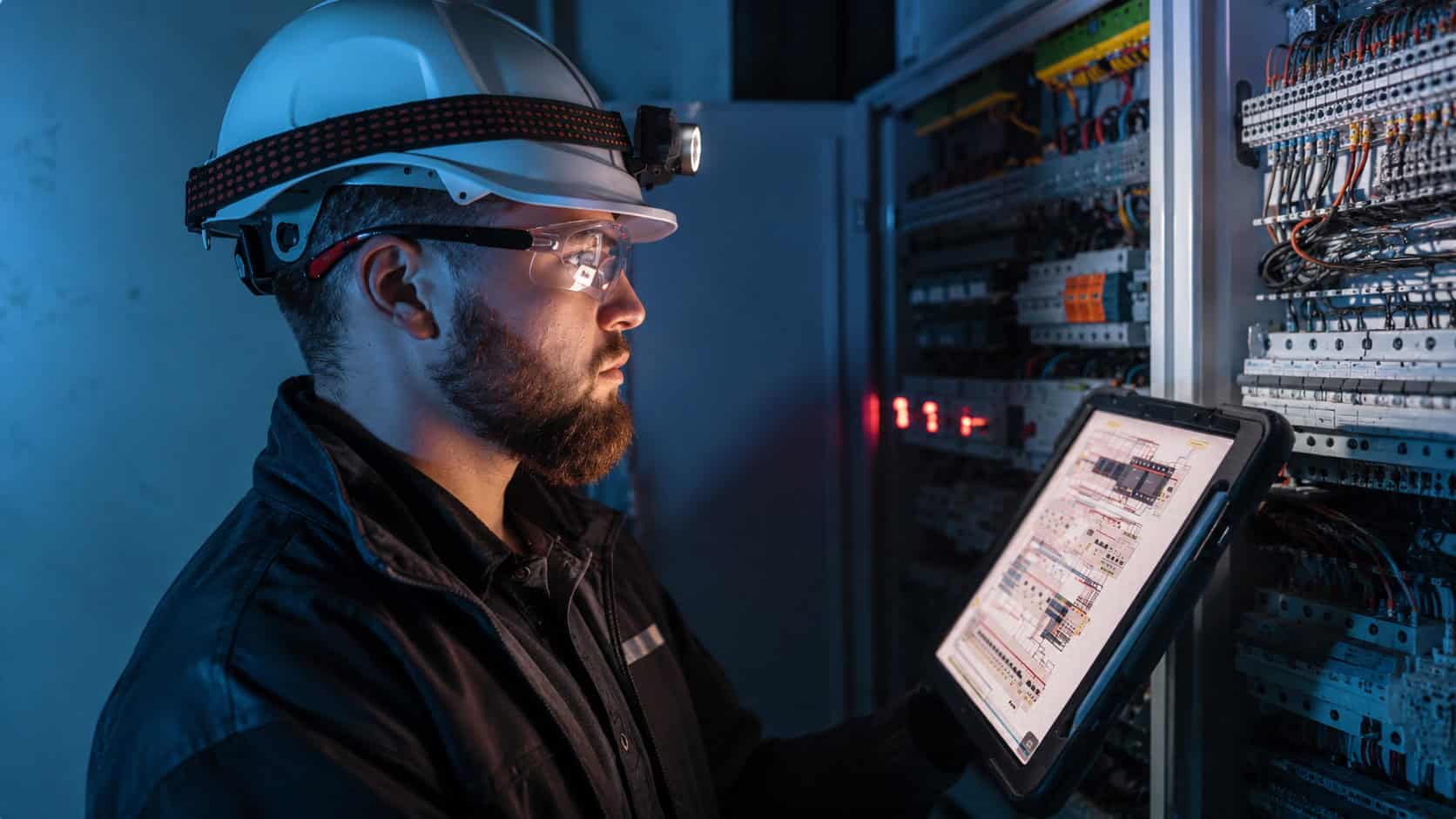
Battery energy storage systems are becoming an important part of renewable energy sites, microgrids, commercial facilities, utility projects, and distributed energy portfolios. But a BESS site is not a single device that can be monitored with one simple status signal.
A BESS usually includes multiple systems: battery racks or cabinets, BMS, PCS, EMS, energy meters, thermal management equipment, protection devices, environmental sensors, and communication equipment. Each of these systems may provide different data, operate on different interfaces, and serve different roles in the overall energy storage architecture.
This is why BESS remote monitoring needs more than a basic network connection. Project teams need to understand which data comes from the BMS, which data comes from the PCS or EMS, which data is useful for maintenance and operations, and how selected information should move from the site to a SCADA, EMS, cloud, or asset management platform.
An industrial edge gateway can support this data path by connecting selected BESS-side systems, preparing useful data locally, maintaining remote connectivity, and providing a controlled communication layer for monitoring platforms. A gateway such as Robustel EG5200 can be used as a practical reference for this site-level layer in BESS remote monitoring projects, especially where selected battery storage data needs to be collected, organized, and forwarded to upper-layer systems. It does not replace the BMS, PCS, EMS, protection system, or cloud platform. Its role is to help make selected BESS site data available for remote visibility and operational decision-making.
BESS Monitoring Starts with the Battery System, Not the Cloud
Many remote monitoring discussions begin with cloud platforms, dashboards, or connectivity. For BESS projects, that is not the best starting point.
The better starting point is the battery energy storage system itself.
A BESS site has several layers of equipment. The BMS monitors and manages battery-related status and safety-related conditions. The PCS handles power conversion between the battery system and the grid or site load. The EMS may coordinate site-level operating strategy, dispatch logic, or energy flow. Meters provide electrical measurements. Thermal systems help maintain suitable operating conditions. Protection and fire-related systems may provide warning or trip signals. Environmental sensors may monitor cabinet temperature, humidity, door status, or leakage conditions.
Remote monitoring becomes useful only when these different data points are understood in the right context. For example, a BMS alarm, PCS fault, high cabinet temperature, communication loss, or unexpected charge/discharge behavior may all point to different operational issues.
That is why BESS remote monitoring is not simply about sending data upstream. It is about building a practical monitoring architecture around the BESS equipment, the available data, and the operating requirements of the site.
BESS Data Sources: BMS, PCS, EMS, Meters, and Site Equipment
A BESS monitoring system usually depends on several data sources. Some are directly related to the battery system. Others come from power conversion equipment, site control systems, meters, or auxiliary equipment.
| BESS Data Source | Typical Data | Monitoring Value |
| BMS | SOC, SOH, rack status, cell or module voltage where available, temperature, battery alarms | Battery condition visibility and maintenance review |
| PCS | Charge/discharge status, power conversion status, operating mode, fault code, active/reactive power where available | Power conversion monitoring and site operation visibility |
| EMS | Site operating mode, dispatch strategy, energy flow coordination, schedule-related data | System-level operation context |
| Energy meter | Import/export power, accumulated energy, grid-side readings | Energy accounting and performance review |
| Thermal management system | HVAC status, fan status, cabinet or container temperature | Thermal condition monitoring |
| Protection or fire-related system | Trip status, warning signal, abnormal event signal | Site safety event awareness |
| Environmental sensors | Humidity, door status, water leakage, cabinet condition | Cabinet and site environment monitoring |
| PLC or site controller | Interlocks, site sequence, auxiliary equipment status | Local coordination and monitoring context |
| Network and gateway equipment | Link status, VPN status, signal strength, data usage | Connectivity health and remote operations monitoring |
Not every BESS site exposes the same data. Available data depends on the BMS, PCS, EMS, meter type, device interfaces, supported protocols, site controller design, access permissions, and project configuration.
A safe monitoring design should therefore avoid assuming that all battery data is automatically available. Instead, teams should first identify which data is needed, where it is available, and which system is allowed to access it.
The Data That Matters for Remote BESS Monitoring
BESS monitoring data should be selected based on its operational value. Collecting every available value may create unnecessary bandwidth use, storage complexity, and integration work. Collecting too little data may leave operators without enough context to understand alarms, performance changes, or maintenance needs.
Common monitoring data categories include:
| Data Category | Examples | Why It Matters |
| Battery status data | SOC, SOH, rack status, battery operating state | Helps operators understand the current condition of the battery system |
| Alarm and fault data | BMS alarms, PCS faults, protection events | Supports remote troubleshooting and maintenance response |
| Charge/discharge data | Charge state, discharge state, power flow, operating mode | Helps review how the BESS is operating in the site energy strategy |
| Temperature and thermal data | Battery temperature, cabinet temperature, HVAC status, fan status | Supports thermal condition monitoring and maintenance planning |
| Metering data | Import/export power, energy throughput, grid-side readings | Supports reporting, billing, and energy performance review |
| Environmental data | Humidity, door status, leakage, cabinet condition | Helps detect site conditions that may affect equipment reliability |
| Communication data | Signal strength, VPN status, link status, data usage | Helps determine whether remote visibility is reliable |
For many BESS projects, remote monitoring starts with visibility rather than prediction. Operators first need to know whether the system is online, whether alarms are active, whether SOC and operating mode are reasonable, whether the PCS is functioning as expected, and whether environmental conditions are within the expected range.
Predictive maintenance should be discussed carefully. BESS data can support maintenance analysis, but prediction does not come from the gateway alone. It depends on the availability of useful condition indicators, consistent data collection, maintenance history, domain knowledge, and the analytics process used by the operator.
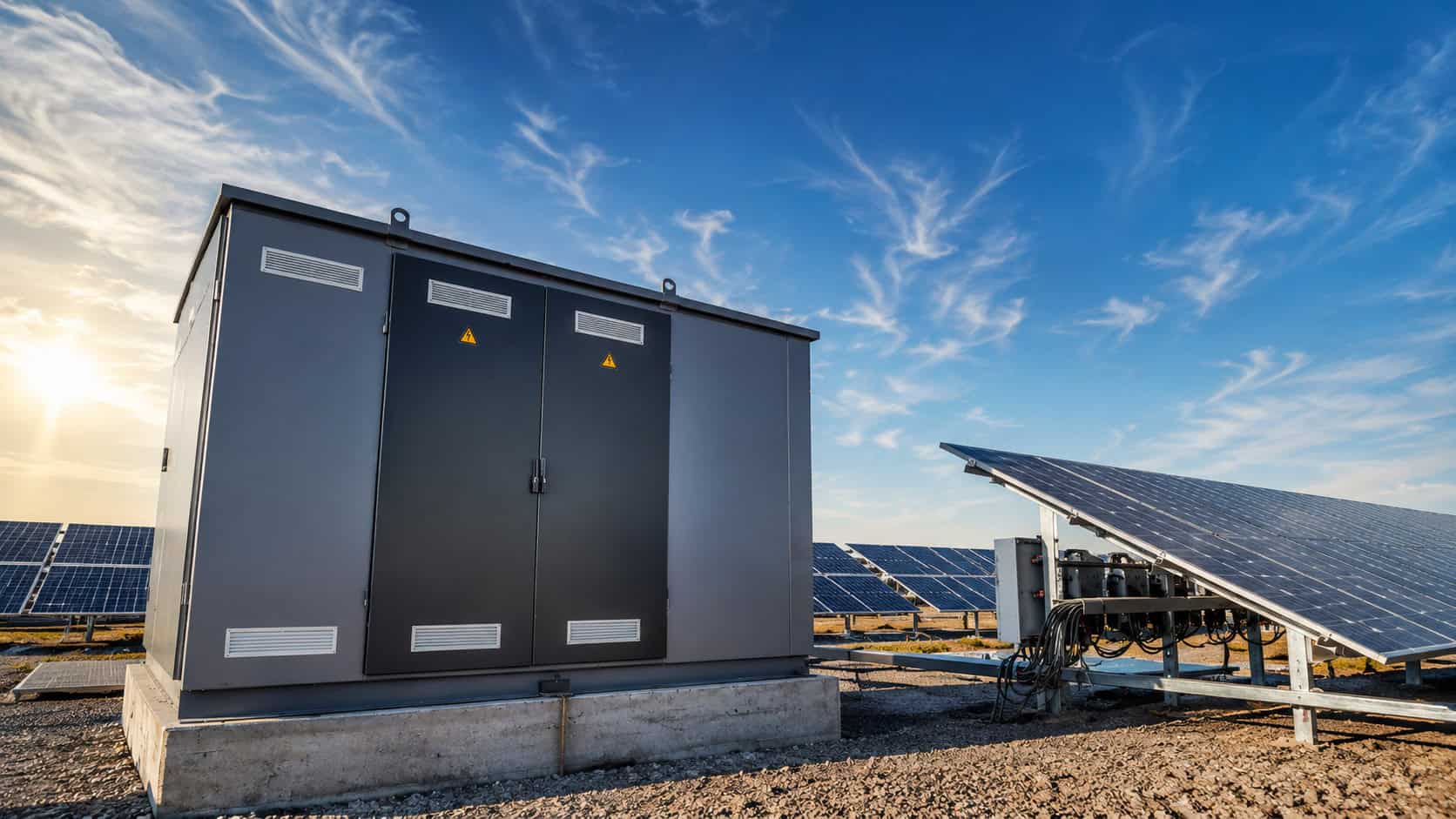
Where the Edge Gateway Fits Between BESS Equipment and Monitoring Platforms
A BESS remote monitoring architecture usually includes several layers. Each layer has a different responsibility.
The BMS, PCS, EMS, meters, protection devices, and sensors remain responsible for their own equipment-level functions. These systems should continue to handle battery monitoring, power conversion, site operation, measurement, protection, and local control functions according to the project design.
The edge gateway fits between the site-side equipment and upper-layer monitoring systems. It can help collect selected data from supported interfaces, run configured data-handling applications, maintain remote communication, and forward useful information to SCADA, EMS, cloud, or asset management platforms.
The monitoring platform then uses that selected data for dashboards, alarm history, trend review, site comparison, maintenance planning, or operational reporting.
A practical way to describe the architecture is:
| Layer | Typical Responsibility | Monitoring Relevance |
| BESS equipment layer | BMS, PCS, EMS, meters, sensors, protection devices | Generates battery, power conversion, meter, alarm, and site condition data |
| Edge gateway layer | Data collection, local preparation, secure communication, remote connectivity | Provides the data path between BESS equipment and monitoring systems |
| Monitoring platform layer | SCADA, EMS, cloud, asset management, maintenance dashboard | Uses selected data for visibility, analysis, reporting, and maintenance review |
This separation matters. The edge gateway supports the monitoring data path. It should not be treated as the system that controls battery safety, manages PCS operation, replaces EMS dispatch logic, or performs protection functions.
Edge Gateway Tasks in BESS Remote Monitoring
In BESS projects, the value of an edge gateway is not limited to connectivity. Connectivity is important, especially for remote or distributed sites, but BESS monitoring also requires data handling.
An industrial edge gateway may support several practical tasks.
| Edge Gateway Task | Meaning in BESS Remote Monitoring |
| Data collection | Collect selected data from BMS, PCS, meters, PLC-side systems, sensors, or site equipment where supported |
| Data normalization | Organize values from different devices into a more usable structure for monitoring platforms |
| Alarm forwarding | Forward selected alarms or events to upper-layer systems based on project configuration |
| Local buffering | Store selected data temporarily when network connectivity is unstable |
| Data frequency control | Treat SOC, alarms, meter readings, temperature, and connectivity health differently based on monitoring needs |
| Secure forwarding | Send selected data through controlled communication paths such as VPN or other secured network designs |
| Remote access support | Provide a managed communication path for troubleshooting or gateway maintenance, where allowed by policy |
| Gateway health monitoring | Help operators understand whether the site communication layer is operating normally |
The word “selected” is important. A BESS remote monitoring gateway should not be expected to collect all available battery values at all times. Project teams should define what data is needed, how often it is needed, what should remain local, and what should be forwarded upstream.
For example, an active alarm may require faster transmission than routine temperature readings. Metering data may be useful at regular intervals. Detailed diagnostic values may be needed only during troubleshooting. Communication status may need to be monitored separately to understand whether a data gap is caused by equipment status or network failure.
If you would like to step back from the BESS-specific details for a moment, this short video gives a broader view of where edge computing is used in industrial IoT. It may be useful if you are comparing different remote-site scenarios and want to see how local data handling, connectivity, and edge gateways fit into wider industrial operations.
Watch video: Where is edge computing actually used in industrial IoT?
Deployment Factors for Distributed Energy Storage Sites
BESS remote monitoring projects often involve distributed locations, outdoor cabinets, remote sites, containerized systems, or mixed renewable-plus-storage installations. A gateway may be technically capable, but deployment quality still depends on site conditions, network design, security policy, and maintenance practices.
Site Connectivity and Backhaul
Some BESS sites have wired network access. Others may rely on cellular connectivity as the primary or backup communication path. Cellular backhaul can be useful for distributed or remote energy storage assets, but it should not be treated as automatic.
Signal strength, antenna placement, SIM card, carrier coverage, APN settings, data plan, cabinet layout, and local interference can all affect connectivity. For critical remote monitoring projects, teams should also plan how the gateway can be accessed if the primary connection fails.
Data Frequency and Bandwidth
BESS systems can produce many types of data. Some values may be needed quickly, while others can be collected periodically.
A practical monitoring design should define:
- Which alarms or events require faster forwarding
- Which values should be sent at fixed intervals
- Which data should be buffered during network interruptions
- Which high-frequency data should remain local
- Which data is only required for diagnostics or troubleshooting
- How much bandwidth is available at each site
This helps avoid sending large volumes of low-value data upstream while still preserving the information needed for monitoring and maintenance.
Security Boundaries Around BMS, PCS, and EMS
BESS monitoring connects OT equipment with remote systems. This requires careful access control.
BMS, PCS, EMS, protection systems, and PLC-side equipment should not be exposed directly to public networks. Remote access should be managed through a controlled architecture, using security measures such as VPN, firewall rules, access control, network segmentation, and user permission management where required.
The edge gateway can support secure communication paths, but it is only one part of the security design. A secure BESS monitoring architecture also depends on configuration, credential management, network policy, update practices, and the operator’s cybersecurity requirements.
Long-Term Maintenance Across Sites
A single BESS monitoring site may be manageable with manual configuration. A distributed storage portfolio requires more structure.
As deployments scale, teams need to monitor gateway health, connectivity status, firmware versions, configuration changes, data usage, signal quality, and application status. They also need procedures for credential management, configuration backup, troubleshooting, and software updates.
Remote monitoring should therefore include a plan for maintaining the communication layer itself. If the gateway is offline, misconfigured, or unmanaged, the monitoring system may lose visibility even when the BESS equipment is still operating.
Robustel EG5200 as a Site-Level Edge Gateway for BESS Remote Monitoring
For BESS remote monitoring projects, an industrial edge gateway such as Robustel EG5200 can serve as a site-level platform for connecting selected BESS-side systems, running configured edge-side applications, supporting remote connectivity, securing communication paths, and managing gateway deployments.
Robustel EG5200 is best understood as an industrial edge computing gateway within the BESS monitoring data path. It should not be described as a BESS controller, a universal BMS gateway, a PCS controller, an EMS replacement, or an automatic predictive maintenance system.
Its role depends on the BMS, PCS, EMS, meters, sensors, available interfaces, supported protocols, access permissions, network architecture, and application configuration.
| BESS Monitoring Requirement | Robustel EG5200 Capability | How It Supports the Scenario |
| Connecting multiple site-side systems | 5 x Gigabit Ethernet ports configurable as LAN or WAN | Useful where BMS, PCS, EMS, meters, HMIs, or site controllers are network-connected, depending on site design |
| Connecting serial-side or legacy equipment | 2 x software-configurable RS-232/422/485 serial ports | Supports serial-connected meters, PLC-side equipment, or field devices where interfaces and protocols match |
| Capturing selected event or status signals | 2 x DI and 2 x relay outputs | Can support selected status or event workflows, but not safety-critical BESS control |
| Running edge-side applications | RobustOS Pro, Debian-based system, Docker support, SDK support | Supports configured applications for data handling, filtering, buffering, or protocol bridging |
| Supporting remote connectivity | 5G/4G/3G/2G cellular support, dual SIM, and Ethernet connectivity | Supports upstream communication where coverage, SIM, APN, antenna, and network design are correct |
| Securing communication paths | VPN options, firewall functions, access control, and port mapping | Helps create controlled communication paths between BESS sites and upper-layer systems |
| Managing deployed gateways | RCMS, Web, CLI, and SMS remote management | Supports gateway monitoring, configuration, and maintenance across deployed sites |
| Industrial installation | Metal housing, wide DC power input, DIN rail or wall mounting, and industrial temperature range | Supports deployment in industrial cabinets, containers, or site equipment rooms where environmental conditions are suitable |
For BESS sites with several networked systems and higher interface requirements, EG5200 provides a practical edge platform for the monitoring layer. For smaller distributed ESS assets or cabinet-level monitoring projects with fewer interface requirements, a compact edge gateway may also be considered depending on required data sources, edge workload, network design, and long-term maintenance needs.
For a quick product-level overview of Robustel’s EG5000 Series and how this type of industrial edge gateway supports industrial connectivity, local applications, and remote management, this short quick pitch video provides additional context.
Watch video: Robustel EG5000 Series Quick Pitch
BESS Monitoring Design Checklist: Data, Interfaces, and Access
Before deploying a BESS remote monitoring gateway, it is worth slowing down and mapping the site architecture first. In real projects, many integration issues do not come from the gateway itself, but from unclear data ownership, missing protocol details, or assumptions about what the BMS, PCS, EMS, and monitoring platform can actually expose.
The questions below are not meant to cover every possible BESS project. Some may be more relevant to your site than others. But as a practical starting point, they can help project teams clarify the data path, avoid late-stage integration gaps, and make better decisions before hardware is installed:
- What type of BESS site needs monitoring: containerized BESS, cabinet ESS, hybrid solar-storage site, microgrid, or distributed storage asset?
- Which systems provide the required data: BMS, PCS, EMS, meter, HVAC, protection device, PLC, or sensor?
- What data is required: SOC, SOH, charge/discharge state, temperature, PCS fault status, meter readings, cabinet conditions, or communication status?
- Which data is needed for operations, maintenance, reporting, compliance, or troubleshooting?
- Which data should remain local?
- Which selected data should be forwarded to SCADA, EMS, cloud, or asset management platforms?
- What physical interfaces are available: Ethernet, serial, digital input, or other paths?
- Which protocols are supported by the BMS, PCS, EMS, meters, or site controller?
- How frequently should different data types be collected?
- What happens when the network connection is interrupted?
- Is local buffering required?
- What cybersecurity and remote access requirements apply?
- Who will maintain gateway configuration, credentials, data mappings, and edge applications?
- How will the design scale across multiple BESS sites?
These questions help teams move from a broad goal such as “monitor BESS sites remotely” toward a practical architecture for BESS data collection, edge-side handling, secure connectivity, and remote visibility.
Closing Perspective
BESS remote monitoring is not only a connectivity project. It is a data architecture project built around the battery energy storage system.
The BMS, PCS, EMS, meters, thermal systems, protection devices, and sensors each provide different pieces of operational context. A remote monitoring gateway helps bring selected site data into a controlled path toward SCADA, EMS, cloud, or asset management systems.
Industrial edge gateways fit into this architecture by supporting data collection, local preparation, secure communication, remote connectivity, and gateway management. They do not replace the systems that control, protect, or optimize the BESS.
The most practical starting point is to identify which BESS data matters, where it is available, how often it should be collected, and which system should use it. From there, an industrial edge gateway such as Robustel EG5200 can be selected and configured to support the monitoring architecture without blurring the boundaries between local control, safety-related functions, and remote visibility.
よくある質問
Q1. How can BESS sites be monitored remotely?
BESS sites can be monitored remotely by collecting selected data from the BMS, PCS, EMS, meters, thermal systems, protection devices, sensors, or PLC-side systems, then forwarding useful information to a SCADA, EMS, cloud, or asset management platform. An industrial edge gateway can support this process by connecting site-side equipment where interfaces and protocols allow, preparing selected data locally, and maintaining a controlled communication path for remote monitoring. In this type of architecture, Robustel EG5200 can serve as a practical gateway reference for projects that need site-level BESS data access and remote monitoring support.
Q2. What data is important for BESS remote monitoring?
Important BESS monitoring data may include SOC, SOH, battery rack status, battery temperature, BMS alarms, PCS operating mode, charge/discharge status, PCS fault codes, meter readings, cabinet temperature, HVAC status, environmental conditions, and communication health. The exact data depends on the monitoring goal. Operations teams may focus on status and charge/discharge behavior, while maintenance teams may focus on alarms, temperature trends, runtime, and fault history.
Q3. What role does an edge gateway play in a BESS monitoring system?
An edge gateway usually acts as the site-level data collection, local preparation, connectivity, and secure forwarding layer. It can help collect selected BESS-side data, organize or filter values, buffer data during unstable connectivity, and send useful information to upper-layer monitoring systems. It should not be treated as the system that controls the battery, manages PCS operation, performs EMS dispatch, or handles safety protection.
Q4. What is the difference between BMS, PCS, EMS, and an edge gateway?
The BMS focuses on battery-related status and safety-related monitoring, such as SOC, SOH, temperature, rack status, and battery alarms. The PCS manages power conversion between the battery system and the grid or load. The EMS coordinates site-level operating strategy, dispatch, and energy flow. An edge gateway supports the monitoring data path by collecting and forwarding selected data. It does not replace BMS, PCS, or EMS functions.
Q5. Can BESS data be monitored without relying only on an OEM cloud platform?
In some projects, yes. If BMS, PCS, EMS, meters, or site controllers expose usable data through supported local interfaces, protocols, or APIs, selected data may be collected by a local gateway and forwarded to a chosen monitoring platform. However, feasibility depends on device access, protocol support, permissions, cybersecurity policy, data ownership, and integration design. Teams should verify data availability before assuming that all BESS data can be accessed locally
著者について
Robert Liao | Technical Support Engineer
Robert is an IoT Technical Support Engineer at Robustel, specializing in industrial networking and edge connectivity. A certified Networking Engineer, Robert focuses on the deployment and troubleshooting of large-scale IIoT infrastructures. His work centers on architecting reliable, scalable system performance for complex industrial applications, bridging the gap between field hardware and cloud-side data management.