Remote district heating data without site visits:
How Kredsløb uses the Robustel R1510 Lite and RCMS to connect Danfoss ECL controllers in Denmark
事例研究 – 概要
場所
Denmark
産業
Smart City, District heating
製品
- R1510
- RCMS
エンドカスタマー
Kredsløb – https://www.kredslob.dk/
Kredsløb supplies district heating to around 330,000 people in Aarhus and also processes waste from about 178,000 households. As part of rolling out its “Fjernvarme Plus” offering, Kredsløb wanted to connect customer-site Danfoss ECL controllers (installed within district heating units) to the Danfoss ECL Portal so their team could access operational data remotely and support customers more effectively.
導入パートナー
M2M Nordic (Denmark) – https://m2m.dk/
M2M Nordic is a Denmark-based provider of industrial communication products and solutions for the M2M and IoT market, with a particular focus on mobile networks. For this project, M2M Nordic worked closely with Kredsløb’s project team to adapt the solution to specific needs, support implementation, and ensure the internal team could use the solution effectively—especially where installation conditions required practical adjustments such as external antennas.
課題
Without an online connection to the ECL controller inside each customer’s district heating unit, Kredsløb could not access installation data directly and could not deliver the level of service they wanted. Optimising settings would also require a technician visit to each unit to connect locally—consuming significant time and increasing operating costs.
結果
With the router-based connectivity solution, Kredsløb improved its ability to service customers, maintain better operational oversight, and view the status of individual district heating units. The solution makes it possible to access relevant data from the Danfoss ECL controller via the ECL Portal directly from the office, giving their consultants stronger tools to deliver qualified customer support.
Bringing district heating performance data online—unit by unit
District heating networks are only as efficient as the performance of thousands of individual installations in the field. When operators can’t see what’s happening inside customer-site units, support becomes reactive and optimisation becomes slow. Kredsløb wanted to “bring the data home” from subscription customers’ installations so they could improve service quality and tune performance based on real operating conditions.
The practical requirement was straightforward: connect the Danfoss ECL controller installed in each district heating unit to the Danfoss ECL Portal in a way that works across real installation environments. That meant a mobile-first connectivity approach that could be deployed at scale, remain stable over time, and be managed centrally as the rollout expanded.
ビジネス上の課題
For subscription-based service models, customers expect support that is timely and informed. If the utility can’t access unit-level data remotely, the default response becomes a site visit—slow, costly, and difficult to scale. Kredsløb needed a consistent way to access controller data from each installation and to maintain that connectivity across many locations with varying signal conditions.
1. No direct access to unit-level operational data
Without the solution, Kredsløb would not have access to data directly from each district heating unit. That meant they couldn’t deliver the service experience they were aiming for, because troubleshooting and performance tuning would be constrained by the lack of visibility.
Operationally, this creates a gap between what customers expect and what the service team can deliver. When performance issues arise, teams spend time diagnosing without real data—or scheduling visits just to retrieve the information needed to act.
2. Optimisation required physical visits
Before remote connectivity, changing settings and optimising operation of subscription customers’ units would require travelling to each location and connecting directly to the Danfoss ECL controller.
Day-to-day, that increases cost-to-serve and slows response times. It also limits how quickly improvements can be rolled out consistently across many installations, especially when the goal is to optimise performance as conditions change over time.
3. Real installation conditions vary widely
Not every district heating unit is installed in a convenient RF environment. Kredsløb noted that some units are located where transmission and reception conditions are poor—such as in basements—making external antennas necessary in certain cases.
This reality matters at scale. A rollout model has to handle “messy” sites without becoming bespoke every time, and teams need a way to maintain visibility and control even when field conditions are imperfect.
ソリューション概要
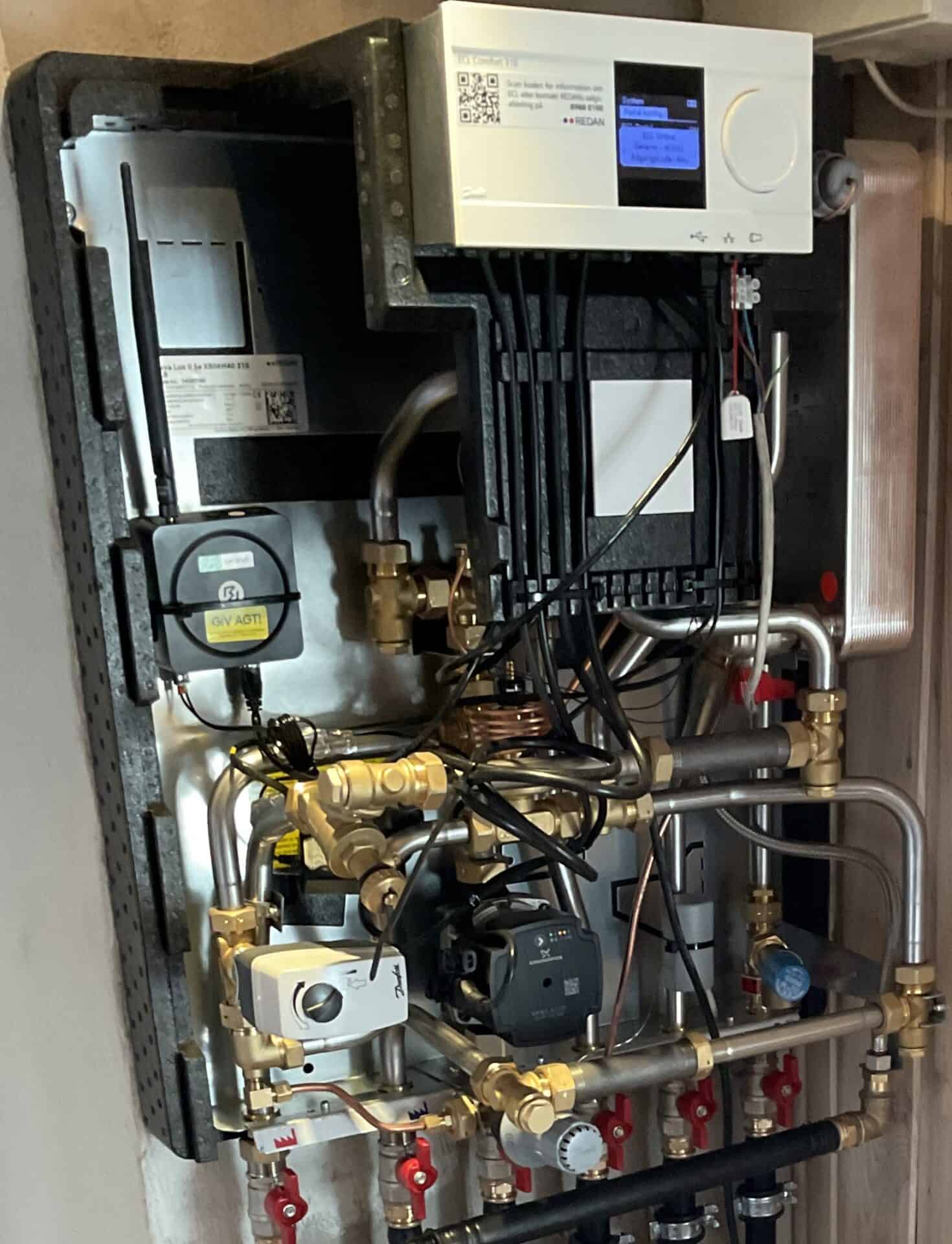
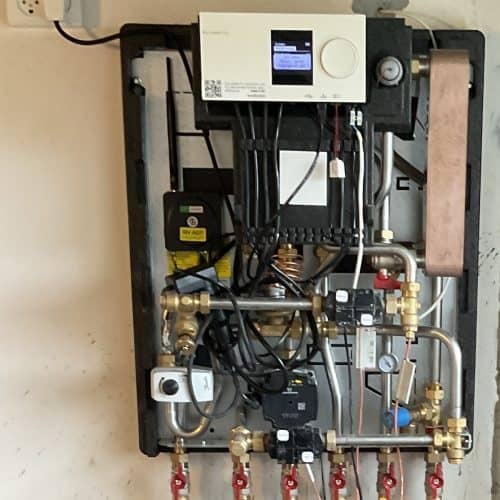
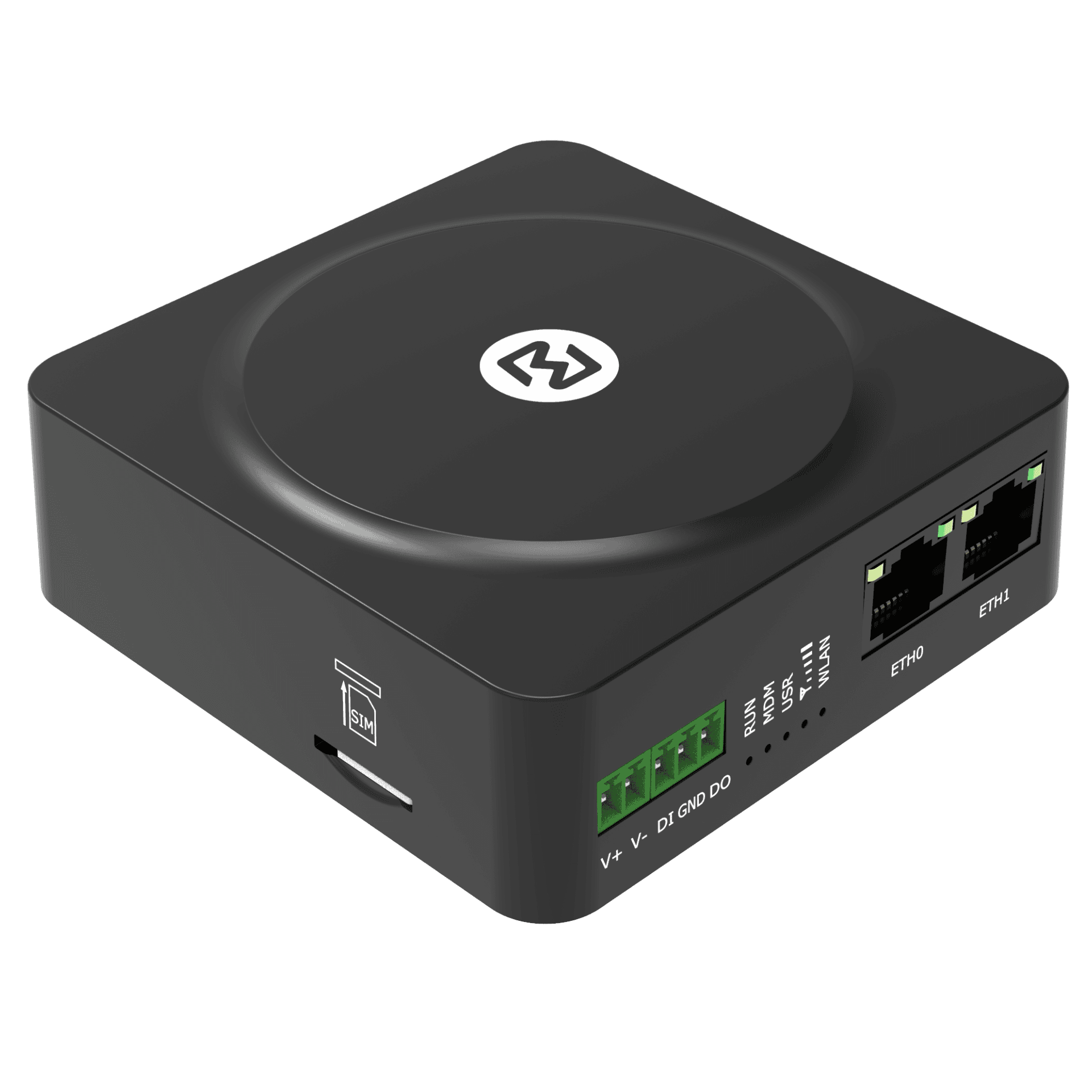
After evaluating different options, Kredsløb implemented a solution from M2M Nordic built around the Robustel R1510 4G/LTE router. Each router is fitted with a Wireless Logic SIM card that roams across major Danish operators, supporting coverage flexibility across varied locations. The router connects directly to the on-site Danfoss ECL controller via the LAN port using Ethernet, creating a stable link from the district heating unit to the Danfoss ECL Portal. Where installation environments require it, external antennas are used to ensure reliable connectivity, such as for units placed in basements.
As deployments scaled, Kredsløb also implemented RCMS (Robustel Cloud Manager Service) to maintain visibility and control across the router estate. This supports practical fleet operations: tracking device status, managing parameters, reporting, and maintaining consistency across many installations.
Why M2M Nordic Chose the Robustel R1510
- Industrial, cabinet-ready 4G connectivity: A simple, repeatable approach to connect each district heating unit to the ECL Portal without relying on fixed wired links.
- Network coverage flexibility: Wireless Logic SIM roaming across major Danish operators supports deployments across varied signal environments.
- Adaptable to real site conditions: External antennas can be applied where reception is poor (for example, basement installations).
- Central fleet management with RCMS: Enables access to device status, parameter management, and reporting across a large rollout.
主要な成果
Before implementation, delivering a higher-touch service model would have required frequent technician visits simply to access unit data or adjust controller settings. After implementation, Kredsløb could access relevant ECL controller data from the office through the Danfoss ECL Portal, giving consultants stronger tools to support customers and enabling a clearer operational view across installations.
“We’ve been very happy to work with M2M Nordic — they’ve helped solve every challenge that has come up along the way. They’re always available, either online or by being physically present when we’ve needed them. They’ve also worked with our IT department to help secure the solution against, for example, hacking and misuse,” – Katrine Michelsen, Team Leader, Technical Customer Service at Kredsløb.
- Better customer service capability: Improved ability to support subscription customers with direct access to unit-level data.
- Reduced reliance on site visits: Optimisation and support no longer depends on physically attending each unit for routine changes.
- Stronger operational visibility: Improved overview and access to operating status across installed units.
- Scalable fleet operations: Centralised management helps maintain oversight of firmware versions, installation details, and device access across many routers.
- Improved security posture support: The project included collaboration around securing the solution against misuse and attack scenarios.
“This is a good example of how M2M Nordic works with customers to find the right solutions to the specific challenges they face. We don’t just want to deliver components — we strongly prefer to deliver valuable solutions in collaboration with our customers and their other partners,” – John Skovby, Partner at M2M Nordic.
おすすめ商品
Robustel R1510 Router
RCMSデバイス管理プラットフォーム