
R5020による5G高速支社ルーティング
ロブステルアプリケーションの例
アプリケーション例 – 概要
産業
Enterprise IT, Retail & Payments, Financial Services
製品
R5020 5G Router, RCMS
課題
Branches need rapid, secure connectivity without waiting on fixed-line installs. Teams must standardize rollout, keep payment and corporate networks segmented, and maintain visibility for support and compliance—across dozens or thousands of sites.
期待される成果
Day-one turn-up on 5G with automatic failover, consistent security policies, clean remote access for IT, and clear health/usage insights. Rollouts become predictable, on-site work drops, and SLAs stabilize.
When branches can’t wait for circuits
A vending or self-service kiosk only earns when it is online. Card payments need a clean path to the processor. Telemetry needs to arrive on time so replenishment aOpening or refitting a branch should not hinge on carrier lead times. Many organizations now use 5G as the primary link, then add fixed line when it arrives; others keep 5G as a permanent secondary path to protect card payments, back-office apps, and voice. Either way, the branch needs a single, dependable edge that is quick to deploy and simple to operate.
The R5020 provides 5G New Radio backhaul with 4G fallback, dual-SIM resilience, and Gigabit Ethernet for LAN and WAN. Paired with cloud management and a clean VPN overlay, it gives IT teams day-one service, centralized control, and the guardrails they need for audit and uptime.
ビジネス上の課題
Modern branch networks face a mix of practical and governance pressures. Here’s what typically blocks speed and reliability—and why a 5G-first design helps.
- Circuit lead time: Fixed-line installs delay openings and refits; workarounds create one-off configurations that are hard to support.
- Uptime expectations: Payments, ticketing, and back-office systems must keep running through carrier outages and maintenance windows.
- Addressability for remote support: Branch devices often sit behind carrier-grade NAT; IT needs stable, secure access for diagnostics and changes.
- Consistent segmentation: Point-of-Sale (POS), guest Wi-Fi, cameras, and staff devices require clear separation to reduce risk and scope during audits.
- Operational overhead: Truck rolls for configuration and firmware updates consume budget and pull engineers off higher-value work.
- Performance variability: Radio conditions change by location and time; IT needs visibility and policy controls to keep user experience predictable.
ソリューション概要
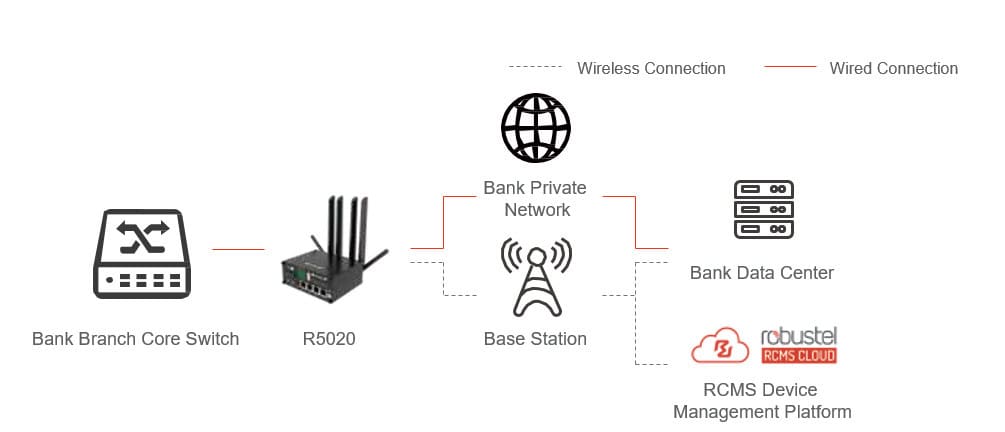
A standardized branch template is built around the R5020 as the edge router. Sites activate on 5G immediately and use dual-SIM for carrier diversity; Ethernet WAN is added when available. A VPN overlay provides fixed addressing and least-privilege access. Cloud management handles Zero-Touch onboarding, monitoring, and controlled updates—so IT operates the fleet as one system.
- 5G primary with dual-SIM resilience: R5020 brings the branch up on 5G on day one; two SIM profiles provide carrier diversity and automatic failover.
- Clean path for remote access: A VPN overlay (e.g., IPsec or OpenVPN) gives stable addressing and role-based access to branch assets for support tools and engineers.
- Segmentation that matches risk: VLANs and policy separate POS, corporate devices, cameras, and staff/guest Wi-Fi to contain faults and simplify compliance scope.
- Add fixed line when ready: Ethernet WAN is enabled when the circuit lands; policy defines which services prefer fixed line versus 5G, with failover in either direction.
- Zero-Touch onboarding: Devices ship pre-enrolled; on power-up they pull configuration and firmware from the cloud so local installers don’t need network expertise.
- Fleet visibility and control: Cloud dashboards surface uptime, signal, data usage, and change history; scheduled updates roll out in rings to reduce risk.
- Operational guardrails: Browser-based CLI for surgical fixes, activity logs for audit, and alerting so issues are handled before they disrupt the branch.
顧客が期待する成果
A successful deployment is judged by uptime, speed to open, and total effort over the lifecycle not just day-one throughput. The measure of success differs by role; here’s how it lands for each stakeholder.
What success looks like for the key stakeholders and the secondary stakeholders
- Head of IT / Network Operations: Predictable branch turn-ups, stable SLAs, and clear evidence of changes. One policy set governs many sites; fewer escalations and fewer emergency visits.
- Security & Compliance Lead: Segmented networks, encrypted management paths, and auditable access. Scope for assessments is contained and artifacts are easy to produce.
- Branch / Store Operations: Payment terminals, tills, and staff systems stay online during carrier or circuit incidents. Openings and refits proceed on schedule.
- Field Technicians / Managed Service Provider: Standard templates, Zero-Touch provisioning, and remote diagnostics reduce time on site and repeat visits.
- Finance / Procurement: Lower time-to-revenue for new sites, fewer unplanned costs, and the flexibility to mix 5G and fixed line without redesign.
おすすめ商品
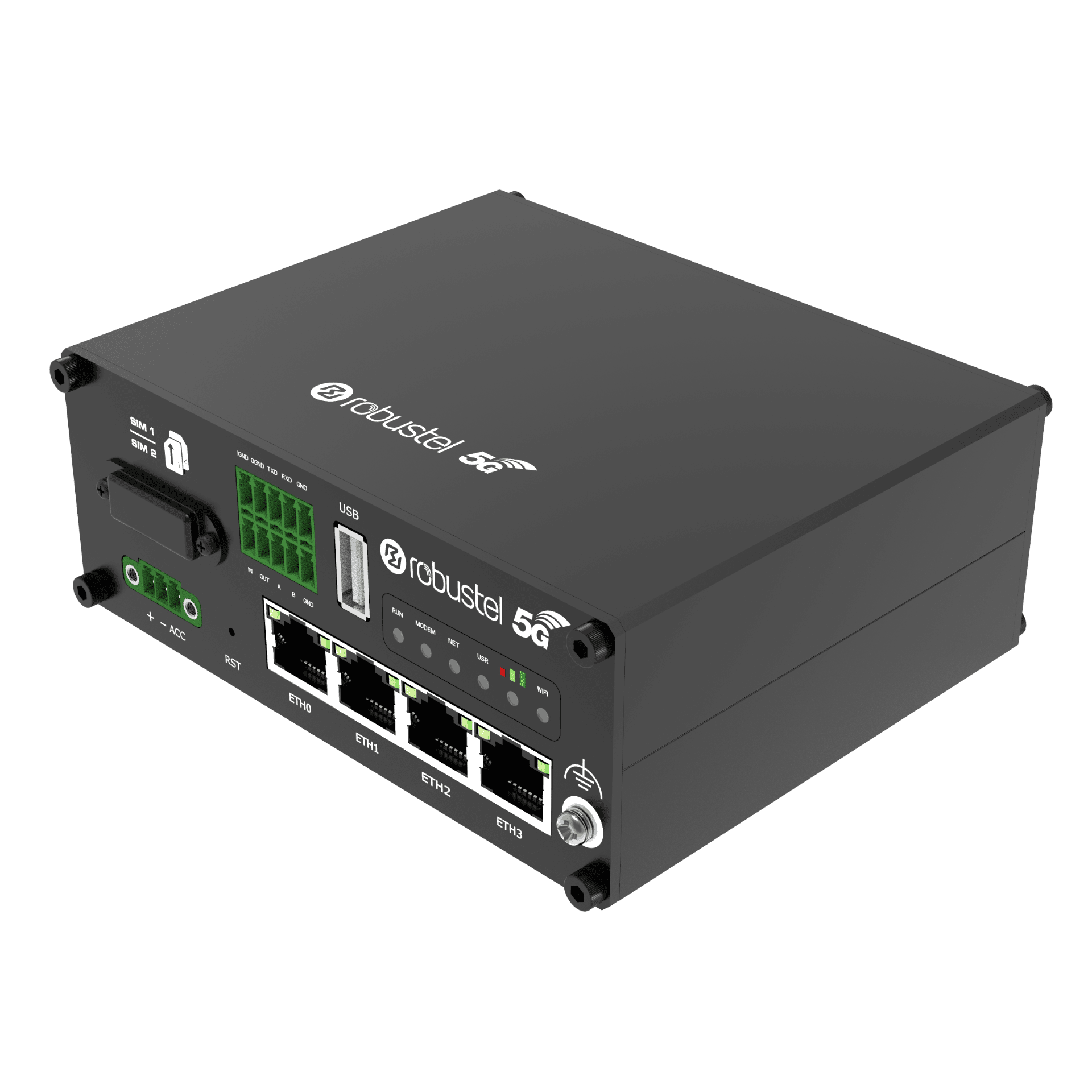
Robustel R5020 5G Router
RCMSクラウドデバイス管理

専門家に相談する
Design a branch template you can deploy repeatedly with day-one 5G, clean remote access, and policies that keep payments and corporate traffic safe. Speak to an expert and we’ll map the approach to your sites, tools, and rollout plan.