
Outdoor 5G Router vs Indoor Router: Installation and Enclosure Comparison
The Robustel R5010 Industrial 5G Router is an IP30 device intended for protected installation. It can be positioned near a stronger radio location and linked back to existing network equipment, but it should not be treated as a bare outdoor router.
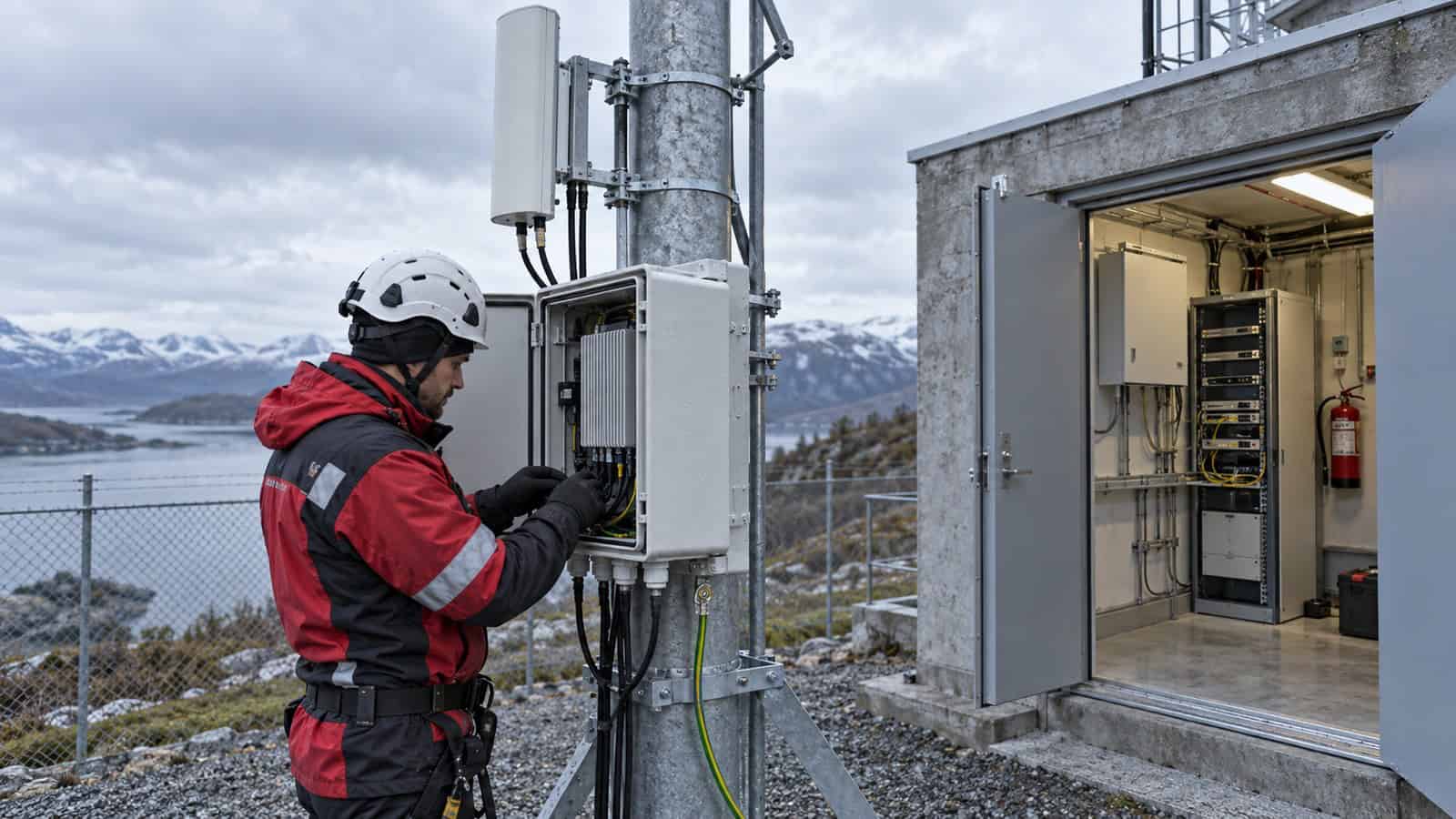
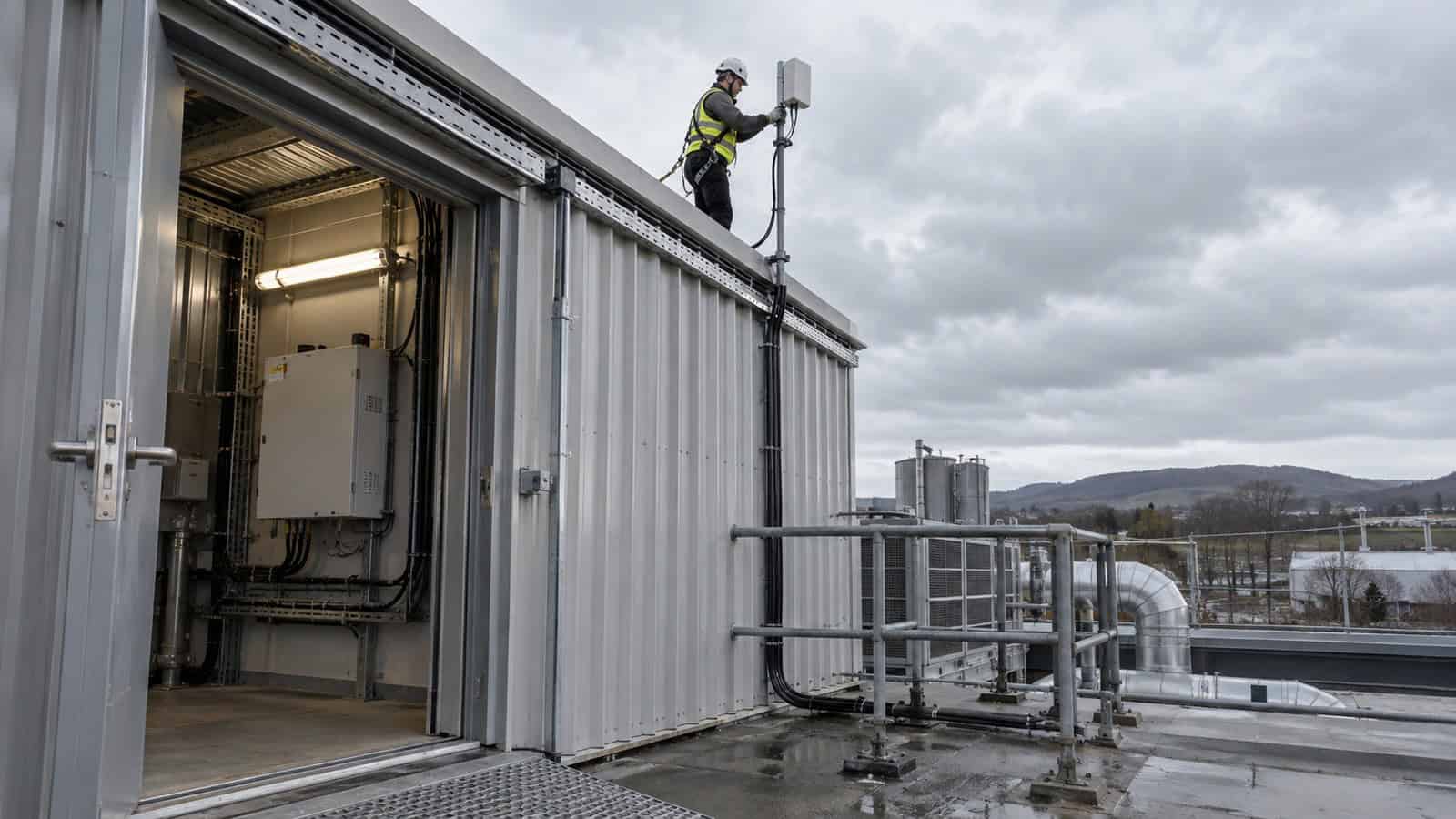
That distinction is more useful than an indoor-versus-outdoor label. A radio placed outside may shorten the antenna path and avoid building loss. It also acquires new dependencies: enclosure sealing, condensation control, surge protection, cable glands, power delivery, thermal behaviour and safe maintenance access.
Begin with the Radio Path, Not the Enclosure Catalogue
A communications room is convenient for power and service, yet it may sit behind reinforced concrete, metal cladding or low-emissivity glazing. Moving the cellular equipment closer to an outside wall or roof entry can improve the usable signal. Sometimes an external antenna with a short, properly selected feeder is enough; sometimes moving the router and carrying Ethernet back to the LAN is the cleaner design.
Robustel’s R5010 introduction video shows the compact one-port hardware and its handoff-oriented role. Optional PoE-PD can simplify power delivery in an appropriate installation. Use the video to understand the device; weather protection and the usable radio path still have to be proven by the enclosure design and site survey.
Measure at the proposed final position, using the intended operator and representative busy periods. Record more than signal bars. Stability, network registration, latency distribution and application behaviour all matter, but none should be promised from a short survey.
Outdoor Installation Moves the Failure Boundary
An enclosure needs a rating and design appropriate to the location. Rain is only one threat. Direct sun can raise internal temperature, cold surfaces can attract condensation, cable entries can compromise sealing, and long outdoor copper runs can introduce surge and grounding concerns.
| Design issue | Protected indoor position | Outdoor enclosure position |
|---|---|---|
| Radio path | May include substantial building loss | Often closer to antenna or clear path |
| Environmental control | Usually provided by room/cabinet | Must be designed into enclosure and siting |
| Puissance | Readily available | PoE or protected local supply may be required |
| Ethernet run | Short and accessible | Cable route, surge and grounding need review |
| SIM/service access | Convenient | May require safe external access or permit |
| Sécurité | Building provides a layer | Tamper and physical access need explicit control |
Avoid sealing a warm device in a small box and assuming the published ambient range resolves the thermal design. Test the complete assembly under sustained load and expected solar conditions. The enclosure changes heat dissipation, and nearby power equipment can add more heat than the router itself.
Serviceability Is Part of Availability
An ideal RF position can be a poor maintenance position. If a technician needs a lift, roof permit or road closure to reach the router, a simple SIM or cable fault becomes an expensive incident. Provide accessible isolation, label every cable, retain safe slack, and decide whether status information can be checked without opening the enclosure in bad weather.
Robustel’s Jones Technology case study records multi-site work in which RF conditions and installation choices varied from location to location. For this comparison, the useful lesson is operational: moving equipment toward a better radio position can improve the path while making access, power and weather protection harder. The site survey should therefore record both signal behaviour and the technician’s route to the equipment. The case supports site-specific placement; it does not select an outdoor enclosure for another estate.
Remote management can reduce unnecessary visits. Robustel RCMS helps teams inspect and manage the router estate, but it cannot reseat a damaged outdoor cable or drain water from a badly designed enclosure. Remote visibility complements physical engineering.
How the Robustel R5010 Industrial 5G Router Supports Protected Outdoor-Adjacent 5G Installations
The Robustel R5010 industrial 5G router’s single 2.5GbE port and USB modem mode suit installations where an existing firewall or router should retain responsibility for the LAN. The cellular unit can be located around the better RF path, while Ethernet carries the connection back to protected network equipment. Optional PoE-PD may reduce the need for a separate local power circuit.
This arrangement can shorten RF feeder length and keep the core network architecture intact. It also gives operations teams a clear responsibility boundary: the R5010 provides the cellular handoff; the external firewall owns security and site routing; the enclosure and cabling system provide environmental protection.
It remains an IP30 product. If it is placed outside, a suitable engineered enclosure is mandatory. Where several local devices must connect directly, or PoE-powered endpoints belong in the same cabinet, another model such as the Robustel R2120-5G Industrial 5G Router may fit the internal network role better—but it too requires protected installation.
Before releasing an R5010 enclosure design, assign these four boundaries explicitly:
- Cellular handoff: the R5010 owns registration and the 2.5GbE or USB handoff; the downstream appliance owns site routing and security policy.
- Environmental protection: the enclosure designer owns ingress protection, condensation control, heat dissipation and cable-gland selection.
- Power and cabling: the installer owns PoE or DC supply validation, surge protection, grounding and the outdoor Ethernet route.
- Ongoing service: operations owns SIM access, inspection intervals and the safe method for replacing the router without disturbing the weather seal.
That allocation prevents a familiar commissioning gap: every component can be individually suitable while nobody owns the assembled outdoor system.
Commission the Whole Assembly
Robustel’s Fixed-Line Backup over 5G with the R5010 Application Example illustrates the handoff between a cellular device and existing network infrastructure. It helps define the boundary for the enclosure test: the outdoor assembly must deliver stable power, antenna and Ethernet service to the indoor network owner, while that owner remains responsible for session recovery. Test moisture control and temperature first, then remove power, Ethernet and the preferred WAN in turn. The architecture is transferable; the environmental result is not.
Inspect again after the first severe weather cycle. Cable glands can settle, seals can be disturbed during service, and condensation evidence may appear only after repeated temperature changes. A maintenance interval based on the environment is more credible than assuming an enclosure is permanently “fit and forget.”
Foire aux questions
Q1. Is an outdoor 5G router better than an indoor router?
Not automatically. Outdoor placement can improve the radio path, while indoor placement usually simplifies protection and maintenance. Compare the complete installation, not only the modem location.
Q2. Does 5G work through walls?
It can, but attenuation depends on frequency, construction materials, glazing, geometry and the network outside. Survey the final installation position rather than relying on a general statement.
Q3. Where should a 5G router be installed?
Choose a protected location that provides a proven radio path, safe power, acceptable temperature, suitable cable routes and practical service access. The strongest spot found by a phone is not automatically the best engineered position.
Q4. Does an outdoor router need PoE?
No, but PoE can carry power and data over one Ethernet cable and may simplify some installations. Confirm voltage, power budget, cable length, surge protection and the exact device’s PoE role.
Q5. Can the Robustel R5010 Industrial 5G Router be installed outdoors?
The R5010 is rated IP30, so it requires a protected environment. It can support an outdoor-adjacent design when installed inside a suitable engineered enclosure, with the thermal, moisture, power and cable system validated for that location.
Conclusion
The Robustel R5010 Industrial 5G Router suits designs that move the cellular handoff toward a better RF position while an existing firewall continues to own the LAN. Once the router leaves the protected room, however, the enclosure, glands, power, grounding, antenna path and service access become part of the communications system.
Choose the outdoor position only when the measured radio improvement justifies that added field responsibility. Commission the complete assembly through weather, power and WAN recovery tests, then inspect it after real environmental cycles; an indoor label inside a suitable enclosure is still an engineered installation, not an outdoor guarantee.
Explore More Articles About Robustel 5G Routers
À propos de l'auteur
Robert Liao | Technical Support Engineer
Robert is an IoT Technical Support Engineer at Robustel, specializing in industrial networking and edge connectivity. A certified Networking Engineer, Robert focuses on the deployment and troubleshooting of large-scale IIoT infrastructures. His work centers on architecting reliable, scalable system performance for complex industrial applications, bridging the gap between field hardware and cloud-side data management.