
Managed 5G Router TCO Guide: Provisioning, Updates and Site Visits
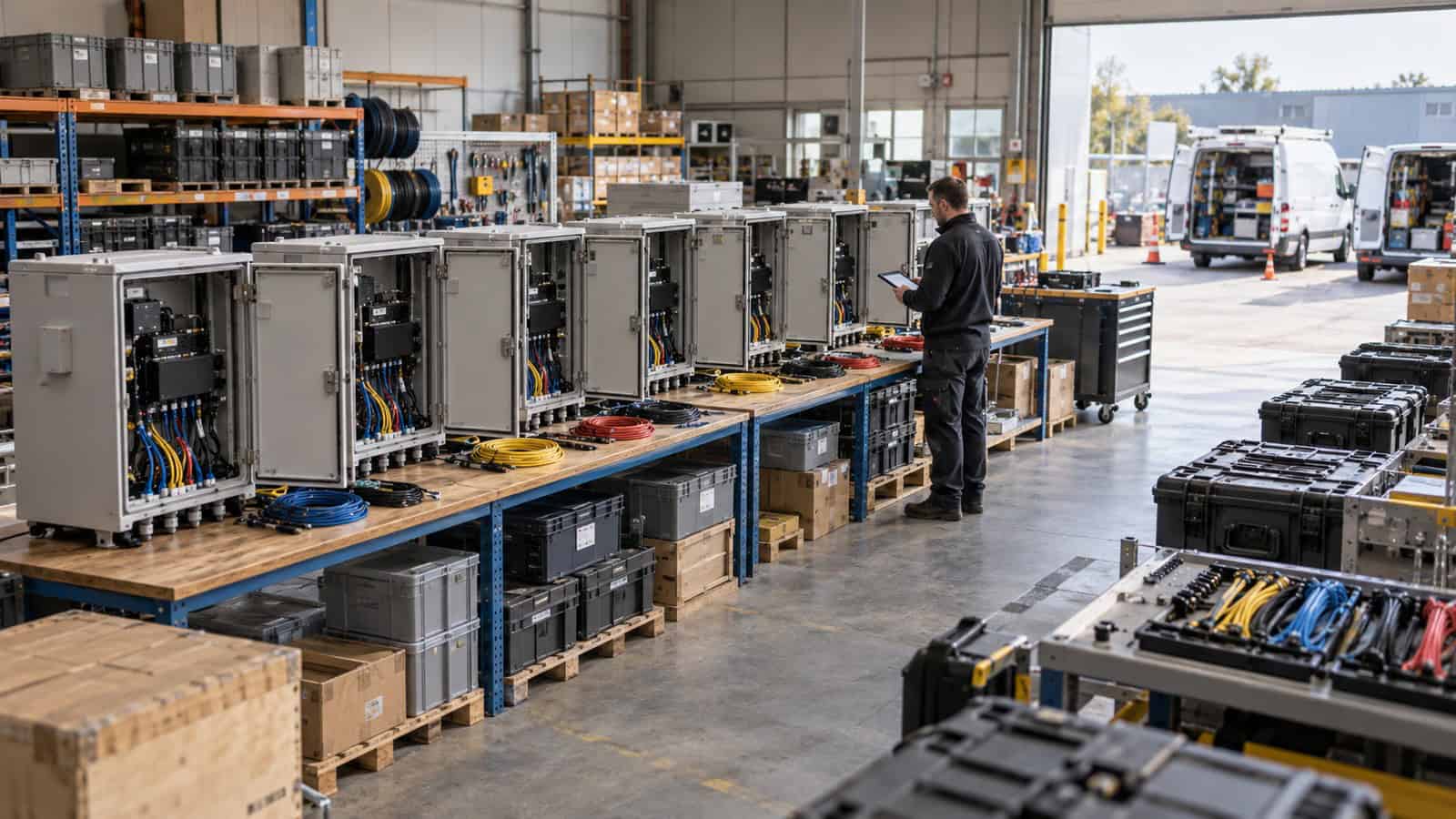
The Robustel R5010 Industrial 5G Router is a focused managed WAN option for distributed sites that already have a firewall or SD-WAN appliance, but its total cost is determined by the operating model around it: how the unit is provisioned, monitored, updated, recovered and eventually replaced. A low purchase price does not compensate for repeated site visits, inconsistent configurations or an update process that nobody owns.
Start with Work, Not the Router Invoice
A useful TCO model follows the tasks performed during the service life. Separate the first installation from planned work, incident work and commercial connectivity. That exposes costs that disappear in a simple hardware comparison: a second engineer for restricted access, travel to a remote cabinet, a change window outside trading hours, or the time needed to reconstruct an undocumented configuration.
Use one common calculation period and state every assumption. If labour rates or failure frequency are unknown, keep them as variables instead of inventing a five-year saving. The model is still valuable because it shows which unknowns can change the decision.
| TCO component | Practical input | Evidence to retain |
|---|---|---|
| Hardware and accessories | Router, antennas, PSU, enclosure, switch if required | Approved bill of materials |
| Connectivité | SIMs, tariffs, public/private APN, fixed WAN | Contract and usage profile |
| Deployment | Staging, installation, RF survey, acceptance | Per-site time and exception log |
| Planned operations | Monitoring, configuration, firmware and certificate work | Change history and labour |
| Incidents | Diagnosis, recovery, replacement and travel | Ticket categories and mean effort |
| Exit | Data removal, SIM closure, replacement and disposal | Decommissioning record |
Provisioning Cost Grows with Variation
One site can tolerate manual configuration. Fifty sites expose every naming inconsistency, local password, undocumented APN and one-off firewall rule. Before procurement, define the smallest reusable site profile: identity, regional order code, WAN role, SIM policy, management access, time source, alert thresholds and the configuration items that must remain site-specific.
Robustel’s Jones Technology retail case study records R5010 deployment across a distributed store estate where standardisation and central operations mattered alongside radio placement. Its useful lesson for TCO is straightforward: repeatable staging reduces local effort, while difficult RF and site-specific carrier choices still need individual acceptance.
Count exceptions rather than claiming “zero touch”. A unit that downloads a template still needs a known serial number, approved firmware, correct SIM and an installer who can recognise a failed first contact. A mature rollout measures how many sites complete the standard path and why the remainder need manual work.
Price Updates as Controlled Production Changes
Firmware and configuration maintenance are recurring work, not an optional future activity. Estimate effort for lab qualification, backup, phased deployment, observation and rollback. A fleet that receives one uncontrolled global change can turn an efficient remote tool into a widespread outage; the TCO model should therefore include canary groups and the time needed to review results.
Robustel’s Fixed-Line Backup over 5G with the R5010 application example shows a useful operating boundary: the cellular router supplies a managed alternative WAN while the existing security platform retains branch policy. That division reduces unnecessary change on the router, provided the two teams agree who tests failover, restores the preferred path and owns a failed update.
For each planned release, record:
- the devices and order codes in scope;
- the configuration and firmware versions before and after the change;
- the service checks that must pass on the primary and backup paths;
- the observation period and rollback trigger; and
- the person authorised to pause the rollout.
Put a Real Cost on a Site Visit
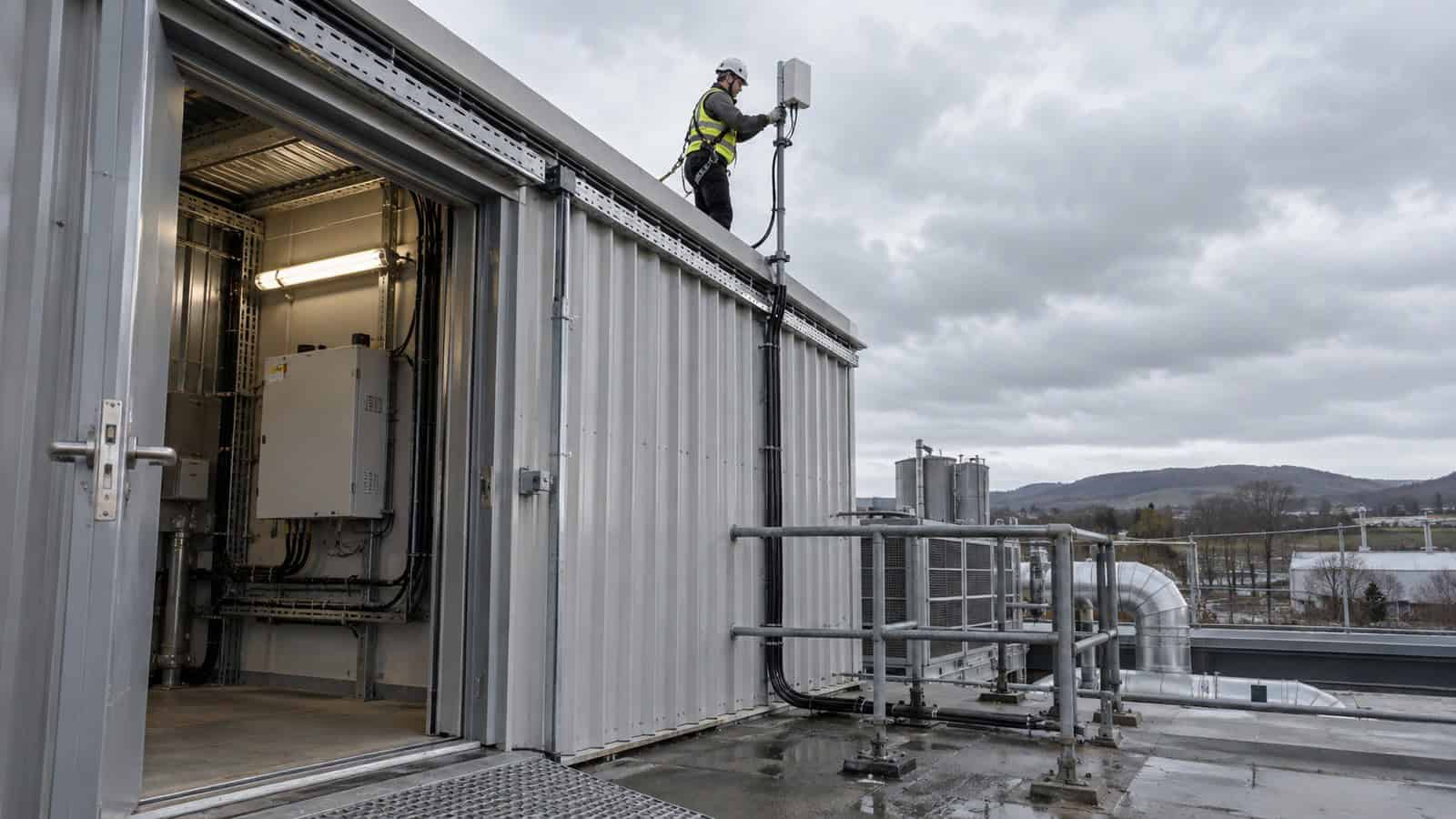
Travel cost is only the visible part. Add access permits, lift or traffic management, production escort, lost trading time and the delay between fault detection and attendance. Then classify which incidents can genuinely be resolved remotely: APN correction, configuration restoration and evidence collection are different from damaged antennas, failed power supplies or unsafe cabling.
Remote management earns its place when it shortens diagnosis before dispatch. A technician who arrives with the correct spare and a known fault is a different cost from a speculative visit with no logs. Conversely, repeated remote reboots that erase evidence or postpone a physical repair should not be counted as savings.
| Incident signal | Remote action first | When a visit remains likely |
|---|---|---|
| Router reachable, WAN down | Review registration, SIM/APN and route state | Antenna, cabling or local carrier issue |
| Router offline | Check power history and upstream monitoring | PSU, breaker, enclosure or hardware fault |
| Site application unreachable | Verify VPN, firewall and return route | Downstream device or LAN fault |
| Configuration drift | Compare with approved profile and restore safely | Unrecorded local dependency |
Match the Managed 5G Router to the Site Role
The smallest managed platform that satisfies the documented role is normally easier to operate. The Robustel R5010 industrial 5G router supplies one 2.5GbE handoff and optional PoE-PD, making it a natural external cellular WAN for an existing firewall. The Robustel R5020 family suits sites that need more local Ethernet and industrial interfaces. The Robustel R2120-5G is the more specific choice for powered camera or edge-device estates because it provides five Gigabit Ethernet ports, including four 802.3af/at PoE-PSE ports. The R5030 adds five Ethernet ports, dual-band Wi-Fi 6, GNSS and captive-portal capability for passenger or managed-access designs.
Do not turn this into a feature-count contest. A single-handoff branch pays for unused local ports; a camera cabinet pays for an extra switch when the router cannot power its devices. The model fit changes the bill of materials, failure domains and support skills.
The video of Robutsel’s “5G Router, 5G RedCap, or 4G: How to Choose for Industrial IoT” is useful before the TCO workshop because it frames radio selection around the workload and service life. Carrier availability, bands and order-code certification still need confirmation for every country and rollout.
How the Robustel R5010 Industrial 5G Router Supports Lower-Variation Fleet Operations
The Robustel R5010 industrial 5G router combines global 5G/4G/3G capability, dual Mini SIM, one 2.5GbE interface, USB modem mode, optional IEEE 802.3at PoE-PD, a 9–60 VDC input and RobustOS management functions. In a focused WAN architecture, that limited interface set can be an advantage: the router owns cellular access and the handoff, while the established firewall owns segmentation and application policy.
Robustel RCMS platform supports central visibility, configuration and update work across Robustel devices. Use it to make routine tasks repeatable and changes inspectable, then keep site-specific acceptance results with the asset record. Management tooling reduces avoidable labour; it cannot remove local RF surveys, carrier contracts or the need to replace failed physical components.
A fair TCO comparison should therefore use the same operating standard for every shortlisted Robustel model. If one option is costed with remote staging and another with manual visits, the spreadsheet is comparing processes rather than hardware.
Build the Business Case from a Pilot
Select pilot sites that include the easy, typical and difficult conditions expected in the estate. Record staging time, first-contact success, RF remediation, data usage, change effort, false alarms and every visit. A three-site pilot made only from nearby offices will understate the cost of a remote or access-controlled portfolio.
After the pilot, replace estimates with observed distributions rather than one average. The difficult ten per cent of sites often drives disproportionate support cost. Decide whether those locations need a different antenna, enclosure, WAN architecture or router model before scaling the standard.
The decision gate should answer three questions: can the chosen design be staged consistently; can support distinguish network, router and downstream faults remotely; and can a failed change be contained? If the evidence is incomplete, extend the pilot instead of converting optimism into a five-year number.
Foire aux questions
Q1. What is a managed router?
A managed router provides administrative visibility and controls for configuration, security, monitoring and maintenance. The useful distinction is not the label alone, but whether the organisation has a repeatable process and an owner for those functions.
Q2. What is the difference between managed and unmanaged network equipment?
Managed equipment exposes settings and operational information that authorised teams can control. Unmanaged equipment generally performs a fixed function with little central visibility. The additional control has value only when it is governed and maintained.
Q3. What does remote router management include?
It can include status monitoring, configuration work, firmware updates, alerts and diagnostic access, depending on the platform and deployment. It does not repair damaged antennas, power supplies or site cabling.
Q4. When is managed connectivity worth the cost?
It is most valuable when sites are numerous, distant, difficult to access or expected to follow a common configuration. Compare the cost of management with the labour, downtime and inconsistency it can realistically remove.
Q5. When is the Robustel R5010 Industrial 5G Router a good managed-WAN fit?
It fits sites that need a focused 5G handoff to an existing firewall, SD-WAN appliance or switch, especially when a 2.5GbE interface, dual SIM and central fleet operations match the design. Sites requiring several direct LAN devices or integrated Wi-Fi should assess another model in the Robustel range.
Conclusion
The Robustel R5010 Industrial 5G Router can make a distributed WAN estate easier to standardise when the router has a clear role and RCMS-backed operations are built into the service plan. Its value is not an abstract promise of lower TCO; it is the measurable reduction in repeated staging, uncertain diagnosis and avoidable travel.
Build the model from tasks, pilot the difficult sites and keep physical exceptions visible. A credible business case will show where remote work ends, who owns each change and which router architecture removes the most operational variation over the intended service life.
Explore More Articles About Robustel 5G Routers
À propos de l'auteur
Robustel Editorial Team
The Robustel Editorial Team publishes practical articles on industrial connectivity, edge computing, LoRaWAN and device management, focusing on deployment considerations, technical limitations and long-term operation.