
Edge Gateway Historian Integration: Architecture and Vendor Guide
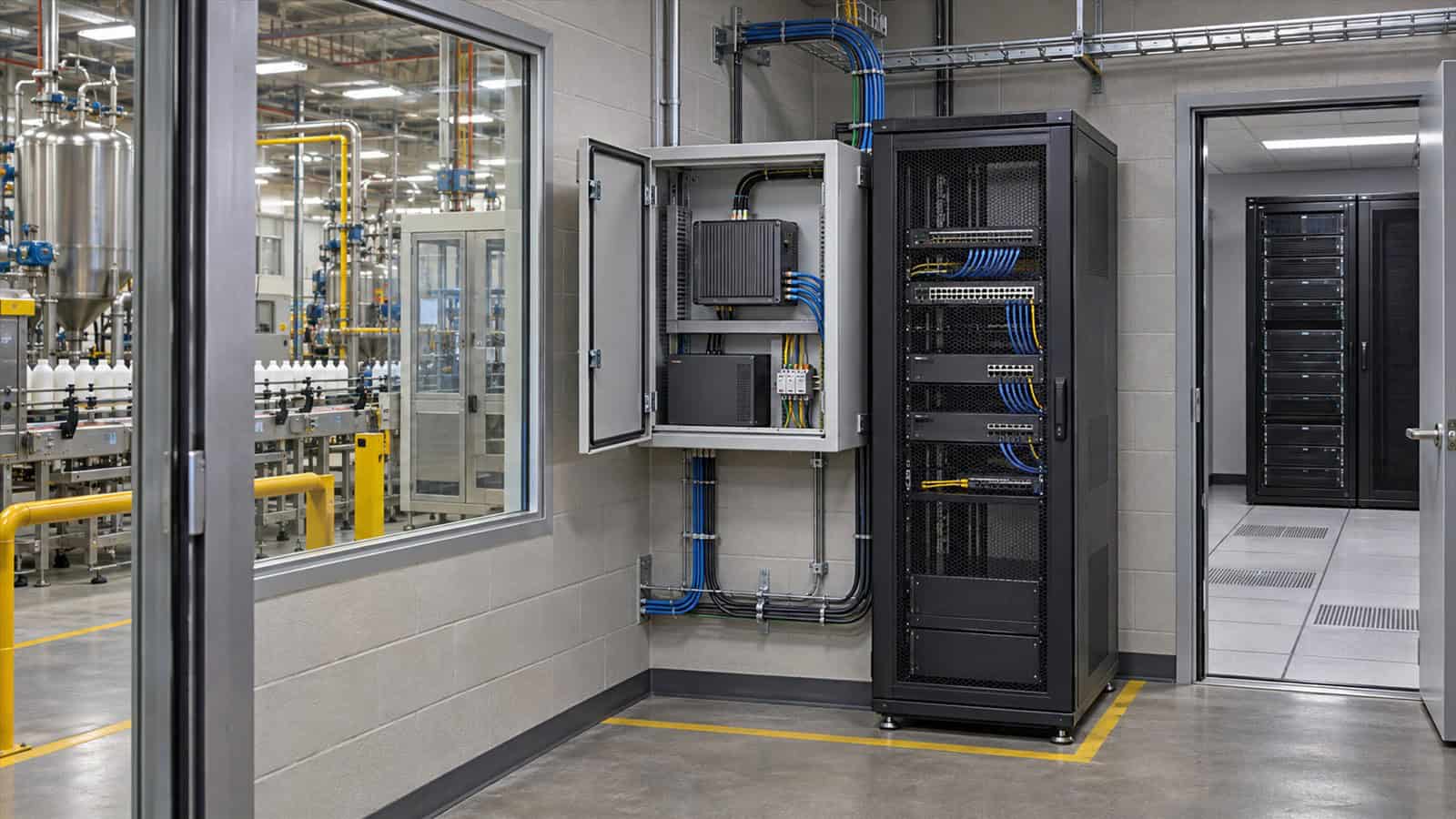
The Robustel EG3120e Edge Computing Gateway can acquire field data locally and deliver it northbound, but successful historian integration depends on more than getting values from the gateway into a database. Timestamps, quality states, tag identity, buffering behaviour and replay order all need to remain consistent when the WAN is slow, interrupted or restored.
For buyers and integration teams, the important question is therefore not simply whether an edge gateway “supports a historian.” The project should define the historian data contract, test the actual connector and its semantics, size local buffering for credible outages, and prove that delayed records can be reconciled after recovery. Robustel EG3120e provides the field-side acquisition and edge-computing layer, while Robustel E2C Factory can support a more managed data workflow where compatible.
Define the Historian Contract Before the Connector
List tag identity, unit, timestamp authority, quality mapping, update mode and expected rate. Decide whether the historian accepts late data and how it treats duplicate timestamps.
Separate read acquisition from any command or write path. A historian feed should not quietly create a route back into controllers.
| Contract field | Decision | Test |
|---|---|---|
| timestamp | source or edge | clock loss |
| quality | mapped states | bad/stale input |
| replay | original time | WAN outage |
| security | outbound identity | revoked credential |
Size Buffering from the Worst Credible Outage
Estimate records per second, bytes per record and outage duration, then add replay headroom. Storage capacity alone is not enough; replay must not starve current data.
Test a backlog under production rate and observe historian ingestion, duplicate handling and alarm timing. Document what is dropped when limits are reached.
- immutable original timestamp
- bounded queue and high-water alert
- replay rate control
- reconciliation counts
How the Robustel EG3120e Edge Computing Gateway and E2C Factory Support Historian Handoffs
| Historian pain | Verified Robustel EG3120e capability | Integration mechanism | Acceptance evidence |
|---|---|---|---|
| several field buses | up to four RS-485 plus RS-232, Ethernet and CAN | separate acquisition paths before normalization and historian delivery | isolate one bus and confirm the others continue |
| WAN interruption | 8 GB eMMC and local Debian compute | host qualified buffering/replay logic with original timestamps | create a backlog and reconcile counts after recovery |
| inconsistent mappings | compatible Robustel E2C Factory collection and forwarding | govern tag, quality and northbound mappings instead of scattered connectors | compare one bad/stale value at source, edge and historian |
Robustel EG3120e Edge Computing Gateway can bring serial, Ethernet, CAN and I/O sources into one local node. Its Debian-based environment provides a boundary for connector software that has been qualified by the project.
Robustel E2C Factory on compatible EG3120e can standardize collection, data forwarding and outage handling, reducing the operational burden of one-off integrations.
Verify the target historian connector, authentication and replay behaviour; platform flexibility is not proof of a named product integration.
Commission with Bad Data and Broken WAN
Inject an invalid value, time shift and network outage. Follow each record into the historian and confirm operators can distinguish current, delayed and bad data.
Retain the connector version, mapping and evidence with the change record so a later firmware or schema update can be compared.
Evidence from Related Deployments
Robustel’s machine-builder connectivity application example shows why governed field interfaces and a repeatable support path matter after equipment leaves the factory.
Robustel’s solar monitoring application example adds the remote-site lesson: timestamps, buffering and clear data ownership are as important as collecting a register.
The Robustel video “How to Collect PLC Data for SCADA, MES & Cloud with an Edge Gateway” is useful before acceptance because it follows the data path rather than treating connectivity as the outcome.
Foire aux questions
Q1. What is an edge historian?
It is local time-series storage near field sources, often used for resilience or preprocessing before central systems.
Q2. Why buffer data at the edge?
Buffering preserves observations during temporary upstream loss when capacity and replay are designed correctly.
Q3. How are historian duplicates handled?
Behaviour depends on the historian and connector; test timestamp and identity rules.
Q4. Should a historian write to PLCs?
Keep write paths separate and explicitly governed; collection alone should not imply control authority.
Q5. Can the Robustel EG3120e Edge Computing Gateway connect to a historian?
It can host acquisition and connector workloads, but the exact historian integration must be qualified.
Conclusion
The Robustel EG3120e Edge Computing Gateway provides the physical interfaces and local compute for this architecture, while acceptance depends on traceable data, bounded permissions and a recovery test.
Release the design only when a second engineer can follow one signal from the field source to its consumer and explain what happens when that path becomes stale, invalid or unavailable.
Explore More Articles About Robustel Edge Computing Gateways

À propos de l'auteur
Robustel Editorial Team
The Robustel Editorial Team publishes practical articles on industrial connectivity, edge computing, LoRaWAN and device management, focusing on deployment considerations, technical limitations and long-term operation.