
2.5GbE 5G Router: When Faster Ethernet Removes the Backhaul Bottleneck
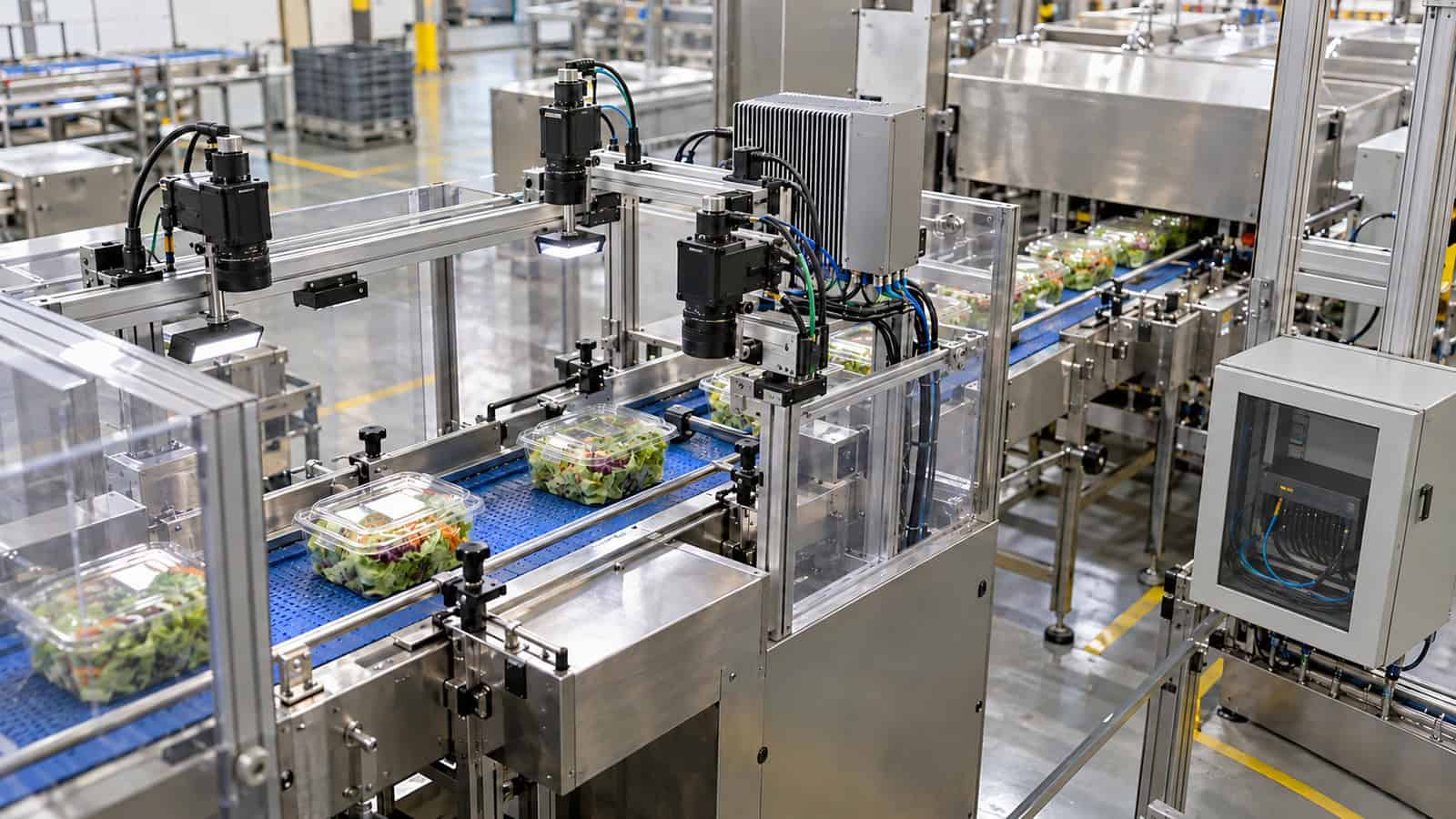
The Robustel R5010 Industrial 5G Router is the focused choice when a single 2.5GbE handoff must stop a Gigabit Ethernet link from becoming the obvious choke point between a 5G modem and an existing firewall, SD-WAN appliance or switch. It is not a promise of multi-gigabit application throughput: radio conditions, the mobile service, routing workload and every downstream link still shape the result.
Find the Queue Before Buying the Port
A useful bottleneck investigation starts with a flow diagram. Mark the cellular air interface, modem, router forwarding path, Ethernet negotiation, upstream appliance, switch, client and application server. Then measure the offered load and the delivered load on both sides of each boundary.
If the Ethernet link repeatedly approaches its practical ceiling while the cellular side and upstream appliance have headroom, 2.5GbE can remove that local constraint. If the radio link delivers 300 Mbps, the application server throttles at 200 Mbps or the firewall cannot process the required encrypted traffic, changing one Ethernet port will not improve the service.
The three traces worth keeping
- Link negotiation and interface counters before, during and after the busy period.
- Simultaneous WAN and LAN throughput rather than two separate speed tests.
- CPU, packet loss and latency on the upstream appliance while the intended VPN and policy set is active.
These traces turn a vague “the router feels slow” complaint into a location and an owner.
One 2.5GbE Port Defines a Handoff Architecture
The Robustel R5010 industrial 5G router has one 2.5GbE LAN port, not an internal multi-port switch. It works naturally as a cellular handoff to another device that owns segmentation, Wi-Fi, security policy or branch switching. Its USB 3.1 Type-C interface can also support its documented modem mode and power options, while optional IEEE 802.3at PoE-PD allows power through Ethernet.
That simplicity is valuable when responsibility is clear. The R5010 owns cellular access, dual-SIM policy and its managed handoff. The firewall or SD-WAN platform owns the branch zones and application policy. A buyer who needs several local Ethernet devices should specify a downstream switch or select a different Robustel model rather than treating the single fast port as several ports in disguise.
| Question | Evidence of a real Gigabit bottleneck | Reason not to upgrade yet |
|---|---|---|
| Is LAN saturated? | Sustained counters near link capacity | Short synthetic burst only |
| Can 5G feed more? | Repeated radio-side headroom | Coverage or plan is limiting |
| Can the next device accept 2.5GbE? | Negotiates 2.5GBASE-T end to end | Downstream WAN is 1GbE |
| Does policy keep up? | Tested with production VPN/firewall rules | CPU or crypto limit appears first |
Throughput Is a Service Measurement, Not a Datasheet Number
Test in both directions and over time. Large downloads can hide small-packet forwarding limits; a single client can hide contention; an unencrypted test can hide a VPN bottleneck. For video uploads, backups or data replication, capture the busy-hour mix and the reconnection burst after an outage.
Robustel’s fixed-line backup application example using the R5010 shows the intended handoff pattern: cellular underlay, policy-owned failover and remote operations. It gives the project team a useful architecture to test, with switchover time and usable throughput measured on the final carrier, firewall and application path.
How the Robustel R5010 Industrial 5G Router Fits a Multi-Gigabit Edge
The Robustel R5010 industrial 5G router combines 5G NR Release 16 capability, dual Mini SIM, one 2.5GbE port, optional 802.3at PoE-PD, USB modem mode, a 9–60 VDC input and a -40 to +70 °C operating range in an IP30 enclosure. It is designed for DIN-rail, wall or desktop mounting and supports RCMS, VPN and firewall functions through RobustOS.
Use that combination when the router can be placed for better RF while the existing security appliance remains in the network cabinet. Robustel RCMS platform can support fleet visibility, configuration and controlled updates; it does not measure application experience on behalf of the branch, so keep end-to-end probes in the acceptance plan.
Robustel’s Jones Technology retail case study records R5010-backed cellular connectivity across stores with difficult indoor RF. The most transferable lesson is operational: place the modem where radio conditions are usable and make remote support part of the store standard, then qualify performance at each address rather than carrying one site’s result across the estate.
Decide With a Before-and-After Test
Establish a baseline over the existing Gigabit handoff using the real SIM, antenna position, VPN, firewall policy and application mix. Replace only the constrained link, repeat the same test and compare sustained throughput, latency under load, loss, CPU and recovery after interruption.
If the result barely changes, the 2.5GbE port was not the governing limit. That finding is useful: it directs investment to RF, carrier capacity, the upstream appliance or application rather than leaving the team with a faster link indicator and the same user complaint.
The Robustel video about “5G Router, 5G RedCap, or 4G: How to Choose for Industrial IoT” is useful before the bandwidth workshop because it frames radio selection as a workload decision rather than an automatic upgrade. Final approval still belongs to the selected R5010 order code and the measured end-to-end traffic path.
Foire aux questions
Q1. Should I use the 2.5G port on my router?
Use it when both ends support 2.5GbE and a Gigabit link is a measured constraint. It offers no advantage when the mobile service, upstream device or application is slower.
Q2. Is 2.5GbE faster than Gigabit Ethernet?
Its nominal link rate is 2.5 times higher, but application throughput is lower and depends on the complete path. Treat the port rate as available transport capacity, not a guaranteed result.
Q3. Does 2.5GbE work with existing Ethernet cables?
Often it can over suitable installed cabling, but cable category, length, terminations and noise conditions matter. Verify link negotiation and error counters at the final site.
Q4. Can one slow Ethernet port bottleneck 5G?
Yes, if the cellular service and all other components can deliver more than that port carries. A simultaneous WAN/LAN measurement is the cleanest way to prove it.
Q5. What role does the Robustel R5010 Industrial 5G Router serve?
It provides a compact 5G-to-2.5GbE handoff for an existing firewall, SD-WAN device or switch, with dual SIM and central device management. It is not intended to replace a multi-port branch switch.
Conclusion
The Robustel R5010 Industrial 5G Router is compelling when a measured Gigabit handoff limits an otherwise capable cellular edge and the design needs one clean multi-gigabit connection. The correct purchase test is not “does it have 2.5GbE?” but “does moving this boundary remove the queue we can already see?”
Keep the baseline and post-change traces. They provide both technical proof and a defensible reason for choosing the faster interface.
Explore More Articles About Robustel 5G Routers
À propos de l'auteur
Robustel Editorial Team
The Robustel Editorial Team publishes practical articles on industrial connectivity, edge computing, LoRaWAN and device management, focusing on deployment considerations, technical limitations and long-term operation.