
Hard-to-Reach Industrial Sites: How eSIM Routers Reduce SIM Replacement and Maintenance
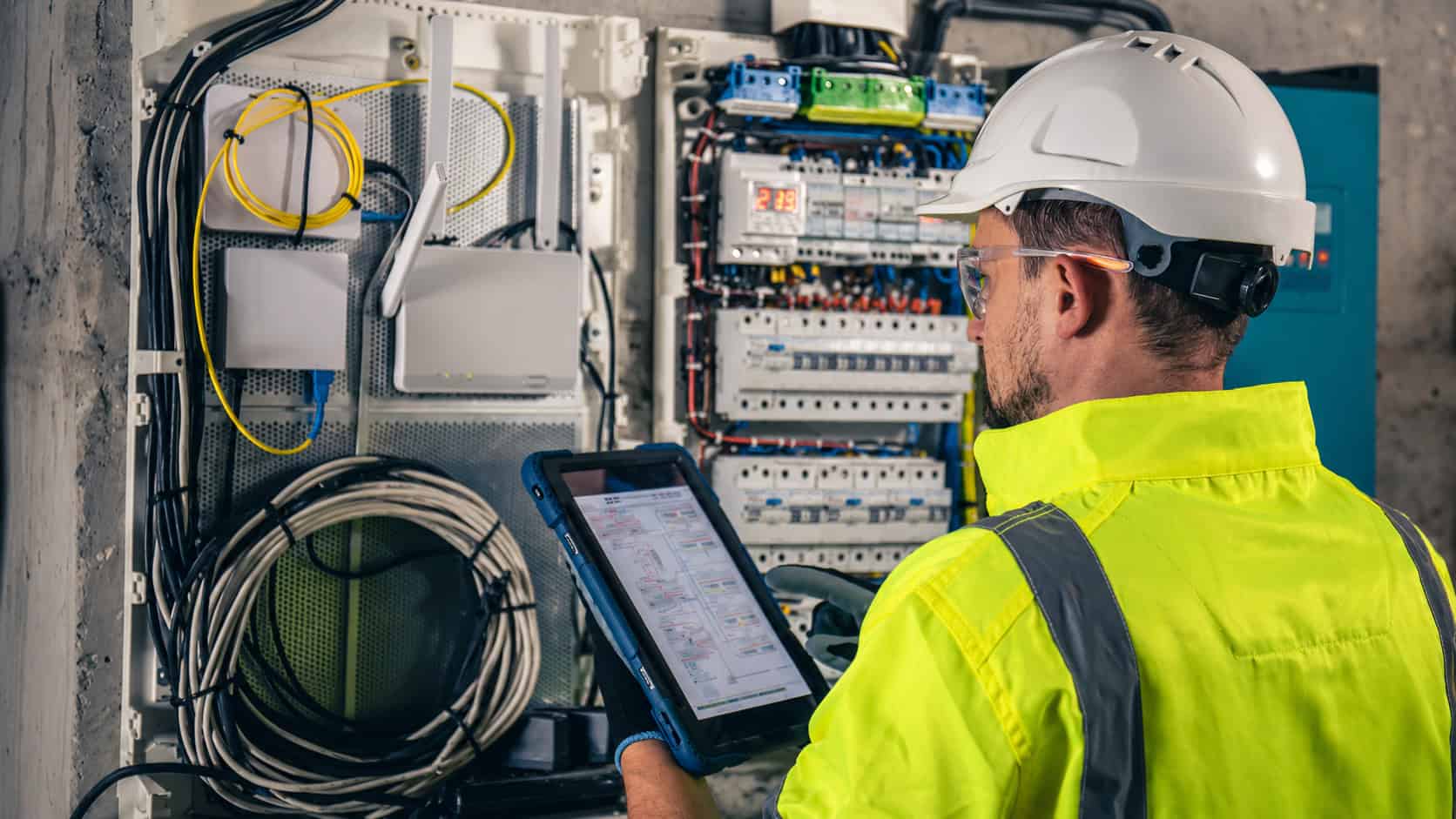
Robustel R2110e eSIM Router helps industrial teams manage cellular connectivity at hard-to-reach sites through a hybrid physical SIM and eSIM architecture, multiple local interfaces, and Robustel’s RCMS-based remote management. However, eSIM cannot replace reliable power, antenna design, environmental protection, or a tested recovery process when every remote access path is lost.
For substations, roadside cabinets, water infrastructure, mines, unmanned machinery, and remote energy assets, the real requirement is not simply installing an eSIM router. The site must be designed so that the router can start correctly, remain observable, recover from foreseeable connectivity failures, and provide enough diagnostic evidence before a technician is dispatched.
Why Hard-to-Reach Sites Need a Different Connectivity Design
A router installed in an office can often be inspected within minutes. A router inside a locked cabinet, remote pumping station, traffic enclosure, or industrial machine may require travel, access approval, safety procedures, specialist tools, and coordinated downtime.
This changes the cost of a connectivity mistake. An unsuitable operator profile, inaccessible antenna, undocumented power arrangement, or incomplete bootstrap workflow may turn a minor configuration issue into a full maintenance visit.
Hard-to-reach deployments should therefore be designed around four questions:
- How will the router obtain its first working connection?
- How will operators diagnose the site without local access?
- What alternative path exists if the primary profile stops working?
- Which failures must trigger physical intervention?
Robustel’s industrial eSIM router portfolio addresses the connectivity and remote-management parts of this problem. The router still sits inside a wider site design that includes power, enclosure protection, antenna placement, local equipment, operator service, and operational ownership.
Design the Site Before Selecting the SIM Workflow
An eSIM strategy becomes useful only after the physical installation can support dependable remote operation.
Power and Environmental Protection
The router needs a stable power source, suitable surge protection, and an enclosure appropriate for the installation environment. Outdoor exposure, condensation, heat, dust, vibration, and poor cabinet ventilation can cause failures that no remote profile change can correct.
The site design should document:
- Normal and maximum power demand
- Power-supply capacity and protection
- Backup power requirements
- Grounding and surge control
- Cabinet temperature and ventilation
- Cable entry and moisture protection
- Access procedures for emergency maintenance
Robustel R2110e eSIM Router uses a metal IP30 enclosure and supports a 9–36 VDC input, with optional PoE-PD on the WAN port. An exposed outdoor installation therefore still requires a correctly specified external enclosure rather than treating the router housing itself as outdoor protection.
Antenna Placement and Signal Margin
A strong connectivity plan begins with the radio installation. Antennas should be positioned according to the enclosure material, cable length, nearby structures, available operators, and expected environmental conditions.
A profile from another operator may provide a recovery option, but only when that network has usable coverage at the site. eSIM cannot compensate for a disconnected antenna, damaged connector, excessive cable loss, or a metal cabinet that blocks the radio signal.
Teams should record baseline signal and connection performance during commissioning. That evidence gives remote operators a reference when site conditions later deteriorate.
Local Interfaces and Equipment Count
Hard-to-reach sites often contain more than one device. Controllers, meters, cameras, environmental sensors, and local maintenance equipment may require Ethernet, RS-232, RS-485, Wi-Fi, or digital I/O.
Selecting the router before mapping these interfaces can lead to extra switches, protocol converters, power supplies, and cables inside an already constrained cabinet.
Robustel R2110e eSIM Router provides four Gigabit Ethernet ports, one RS-232 interface, one RS-485 interface, isolated DI/DO, and dual-band Wi-Fi 5. This makes it suitable for more complex remote sites where several local systems must share one managed cellular connection.
Establish Bootstrap Connectivity and Profile Ownership
Remote provisioning cannot begin until the router has a working path to the required provisioning or management service.
Define the First Connection
A hard-to-reach deployment should not rely on an installer improvising the bootstrap process at site. The project should decide in advance whether initial access will use:
- A prepared physical SIM
- A preloaded or previously installed eSIM profile
- Ethernet connectivity during staging
- Wi-Fi client access during commissioning
- A zero-touch provisioning workflow where supported
The bootstrap path should be tested before the cabinet is closed. Teams should also record the credentials, owner, tariff, expiry conditions, and recovery responsibilities associated with that initial connection.
Use Hybrid SIM Roles Deliberately
Robustel R2110e eSIM Router combines one embedded MFF2 eSIM/eUICC with one removable 2FF physical SIM. Its current SGP.22-based implementation supports remote profile operations and typically stores up to eight eSIM profiles.
This hybrid design allows the two SIM paths to serve different operational purposes. For example, the physical SIM may provide commissioning or locally contracted connectivity, while the eSIM supports remotely managed profiles for later operator changes.
Another project may use the eSIM as the normal connection and retain the physical slot as a separately managed recovery option.
The design must specify which path is primary, when switching is permitted, who approves changes, and what happens if the target profile cannot connect. Two SIM options do not create resilience unless their roles and dependencies are tested.
Robustel’s white paper to eSIM and eUICC for industrial IoT explains the SGP.22 provisioning architecture, profile lifecycle, operator responsibilities, and the bootstrap considerations behind industrial eSIM deployment.
Plan Recovery by Failure Layer
A useful recovery plan separates profile failures from router, site, and upstream-system failures.
| Failure State | Possible Remote Action | Physical Intervention Threshold |
| Active profile loses service | Review status, activate a compatible profile, or use the physical SIM path | No alternative operator or remote path is available |
| Network is registered but data does not pass | Check APN, routing, DNS, VPN, firewall, and actual IP reachability | Radio or hardware fault is suspected |
| Profile switch fails | Use supported rollback or return to the last working profile | Router cannot recover any connection |
| Cellular WAN is unavailable | Use wired WAN or another configured path where available | All configured WAN paths are unavailable |
| Router is online but local equipment is missing | Check Ethernet, serial, and I/O status remotely | Cabling, power, or field equipment requires inspection |
| Router does not respond | Check operator outage, RCMS status, SMS control, and power monitoring | Evidence suggests power, enclosure, antenna, or hardware failure |
This layered model prevents operations teams from treating every lost data point as a SIM failure.
Robustel Smart Roaming can complement eSIM where a compatible multi-network service is used. Smart Roaming evaluates actual network usability rather than relying only on signal strength, while Robustel’s RCMS gives teams central visibility and control over supported router fleets.
These capabilities remain separate. eSIM expands profile flexibility, Smart Roaming assists network selection, and RCMS supports fleet operations. None of them repairs physical site infrastructure.
Robustel’s article on how eSIM, Smart Roaming, and RCMS work together explains how profile access, connection-quality decisions, and centralised management support a more resilient industrial connectivity strategy.
How Robustel R2110e eSIM Router Supports Complex Remote Sites
Robustel R2110e eSIM Router is an industrial LTE Cat-4 router designed for deployments that need hybrid SIM flexibility and several local networking options in one device.
| Product Area | Robustel R2110e eSIM Router |
| SIM architecture | 1 × embedded eSIM/eUICC and 1 × 2FF physical SIM |
| eSIM implementation | GSMA SGP.22-based profile operations |
| Profile capacity | Typically up to 8 eSIM profiles |
| Ethernet | 4 × Gigabit Ethernet, configurable as 4 LAN or 1 WAN + 3 LAN |
| Serial interfaces | 1 × RS-232 and 1 × RS-485 |
| I/O | 1 × isolated DI and 1 × isolated DO |
| Wi-Fi | Dual-band Wi-Fi 5 in AP or client mode |
| GNSS | Optional |
| Remote management | RCMS, web interface, CLI, and SMS |
| Connectivity functions | VPN, link redundancy, load balancing, Smart Roaming, and eSIM management |
For a remote water site, the R2110e can connect Ethernet controllers, serial meters, and alarm signals while providing cellular backhaul and remote router visibility. In an intelligent traffic cabinet, it can connect controllers and signage equipment while supporting encrypted upstream communications.
Optional GNSS may add location context for mobile or relocatable assets, but it should not be treated as necessary for every fixed site.
RCMS allows supported Robustel R2110e eSIM Router fleets to be monitored, configured, diagnosed, and updated centrally. This helps an operations team determine whether a problem belongs to the profile, WAN connection, router configuration, or local equipment before arranging physical access.
The R2110e is most appropriate where the additional Ethernet, serial, Wi-Fi, or I/O capability is genuinely required. A smaller remote site with one Ethernet device may be better served by a more compact Robustel eSIM router.
Test Remote Commissioning Before the Site Is Closed
A successful commissioning test should prove more than basic internet access.
Connectivity Acceptance
Confirm the active profile, operator registration, signal condition, assigned IP address, DNS operation, and reachability of the required upstream endpoints.
The test should reflect the real application. A successful ping does not prove that VPN tunnels, telemetry protocols, or remote-management services operate correctly.
Profile and WAN Recovery
Test the approved profile-change or fallback process. Confirm that the router either connects through the intended alternative or returns safely to the previous working configuration.
Where wired WAN, Wi-Fi, or physical SIM connectivity is part of the recovery design, each path should be tested rather than assumed.
Reboot and Power Restoration
Restart the Robustel R2110e eSIM Router and verify that Ethernet, serial interfaces, VPNs, routing rules, and remote management return without manual intervention.
Where the site uses backup power, test the expected behaviour during power loss and restoration.
Remote Diagnostics and Records
Confirm that authorised teams can access RCMS, retrieve status information, review logs, and apply permitted configuration changes.
The acceptance record should include the active profiles, antennas, cable layout, local device addresses, escalation contacts, and conditions that justify a physical visit.
When a Site Visit Is Still the Correct Response
Robustel eSIM and RCMS capabilities can reduce avoidable intervention, but delaying a necessary visit can increase downtime or create safety risk.
Physical inspection remains appropriate when there is evidence of:
- Failed or unstable power
- Antenna or connector damage
- Water ingress or enclosure damage
- Loose or damaged field wiring
- Failed sensors, controllers, or local network equipment
- Repeated router hardware faults
- No remaining bootstrap or management path
- Mandatory safety or regulatory inspection
Remote management should improve the quality of the intervention. A technician who arrives with logs, likely fault location, replacement parts, and verified access instructions is more effective than one dispatched only because a dashboard shows “offline.”
FAQs
Q1. Why do hard-to-reach sites need a different eSIM strategy?
A minor connectivity mistake at a remote cabinet, mine, pumping station, or roadside asset can require travel, access approval, safety procedures, specialist tools, and planned downtime. The design must therefore establish bootstrap connectivity, remote diagnostics, profile recovery, and clear physical-intervention thresholds before installation. eSIM reduces some subscription-related work, but its value depends on reliable power, antennas, enclosures, local wiring, and operational ownership.
Q2. Can changing the eSIM profile solve weak signal at a remote site?
Only when another supported operator provides usable coverage and the radio installation is already sound. A profile change cannot repair a disconnected antenna, excessive cable loss, damaged connectors, poor placement, or shielding from a metal enclosure. Commissioning should record baseline signal and application performance for each intended path. Teams must test actual IP, VPN, and platform reachability rather than relying only on registration or signal level.
Q3. What recovery paths should be tested before closing a remote cabinet?
Test the primary profile, approved alternative profile, physical SIM role, wired WAN, Wi-Fi bootstrap, or other configured paths that form the recovery design. Restart the router and restore power to confirm that routes, VPNs, local interfaces, and management return automatically. The test should also prove rollback after a failed profile switch and document the exact condition that requires a technician to visit the site.
Q4. When is Robustel R2110e eSIM Router a strong fit for remote infrastructure?
Robustel R2110e eSIM Router fits hard-to-reach sites needing hybrid eSIM and physical-SIM flexibility, four Gigabit Ethernet ports, RS-232, RS-485, isolated I/O, Wi-Fi, and RCMS-based management. This makes it suitable for locations with several local controllers, meters, or networked assets. The external enclosure, power system, antenna installation, regional operator profiles, environmental protection, and recovery workflow must still be engineered and tested separately.
Q5. What can RCMS diagnose on a Robustel R2110e eSIM Router deployment?
With a Robustel R2110e eSIM Router, supported RCMS workflows can provide gateway status, connectivity information, configuration access, logs, diagnostics, and remote maintenance functions. This helps teams separate profile, WAN, and router problems before dispatching a technician. RCMS cannot repair failed power, damaged antennas, water ingress, loose wiring, or broken field equipment, and it does not replace site safety or mandatory inspection procedures.
Conclusion: Remote Site Connectivity Takeaway
Robustel R2110e eSIM Router is a practical fit for hard-to-reach industrial sites that need hybrid SIM flexibility, several Ethernet and serial connections, isolated I/O, Wi-Fi, and RCMS-based remote management. It gives operations teams more options for profile changes, network recovery, and diagnosis without treating every connectivity issue as an immediate field visit.
Its value depends on the wider engineering design. Reliable power, suitable enclosures, correctly installed antennas, an agreed bootstrap path, available operator profiles, and tested recovery procedures remain essential.
The strongest remote-site strategy defines what the router can recover, what RCMS can diagnose, and when physical intervention becomes unavoidable. When these boundaries are established before deployment, eSIM reduces unnecessary SIM replacement and maintenance without creating false confidence in a site that cannot recover from physical failure.
Explore more articles about eSIMe/UICC routers in industrial IoT:
About the Author
Robert Liao | Technical Support Engineer
Robert is an IoT Technical Support Engineer at Robustel, specializing in industrial networking and edge connectivity. A certified Networking Engineer, Robert focuses on the deployment and troubleshooting of large-scale IIoT infrastructures. His work centers on architecting reliable, scalable system performance for complex industrial applications, bridging the gap between field hardware and cloud-side data management.