
Edge Computing Gateway vs Industrial PC: Which Is the Better Fit?
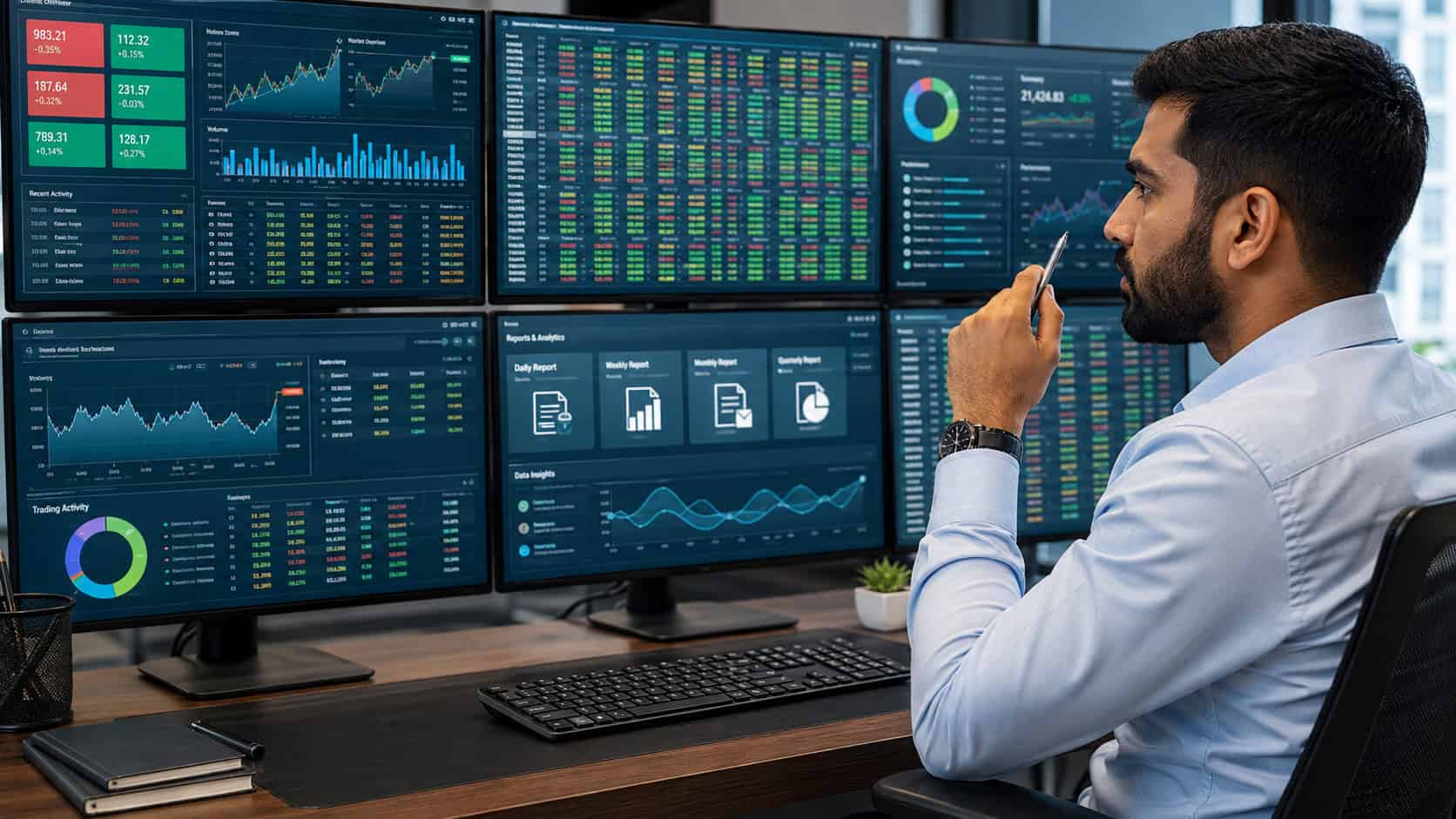
Robustel edge computing gateways are usually a better fit when an industrial site needs field interfaces, cellular or Ethernet backhaul, local data processing, and remote fleet management in one compact device. An industrial PC becomes more appropriate when the workload depends on heavier local software, extensive peripherals, displays, or workstation-class computing.
This distinction is important because the two device classes overlap without serving exactly the same role. A Robustel edge gateway can combine industrial connectivity and local application hosting, while an industrial PC may provide greater flexibility for compute-heavy software and peripheral expansion. The right choice should follow the actual job at the site.
Start with the Job the Device Must Do
Consider two very different industrial sites:
A remote wastewater station may contain an RS485 flow meter, a PLC, several digital status signals, and a cellular connection to a central monitoring system. The site has no local operator. What matters is reliable data collection, protocol handling, WAN recovery, secure remote access, and the ability to diagnose the gateway without sending an engineer to the station.
A factory inspection cell may have several cameras, a local display, specialist image-processing software, USB peripherals, and an engineer who occasionally works directly on the machine. That workload places far more emphasis on local computing, graphics, display support, and peripheral expansion.
Both projects use “edge computing”, but they should not automatically use the same hardware.
Robustel edge computing gateways are most relevant when the device needs to sit directly between industrial equipment and upstream systems. The gateway can combine serial or Ethernet connectivity, local applications, secure routing, and cellular backhaul, but that does not make it a substitute for every industrial computer.
The first selection questions should therefore be practical:
- What equipment connects locally?
- Which interfaces are required?
- How much processing must happen on site?
- Does the application require a display or specialised peripherals?
- Is cellular connectivity part of the device’s role?
- How will the device be monitored and updated after deployment?
- What must continue when the WAN or cloud is unavailable?
The answer begins to separate a gateway workload from an industrial PC workload.
For a quick overview of the gateway role, watch “What Is an Edge Gateway?” to see how an industrial edge gateway sits between field equipment, local processing and upstream networks before comparing it with an industrial PC.
Where an Edge Computing Gateway Is the More Proportionate Fit
A gateway tends to make more sense when the main problem is industrial integration rather than general-purpose computing.
Imagine a machine builder with equipment installed across dozens of customer sites. Each machine has a PLC and several serial or Ethernet devices. The company wants operating data sent to a remote platform and needs secure maintenance access, but it does not want to add a PC, separate cellular router, protocol converter, and remote-management tool to every cabinet.
A Robustel EG5100 edge computing gateway fits this kind of focused integration layer. It combines two configurable RS-232/RS-485 interfaces, Ethernet, dual-SIM 4G/LTE, DI/DO, a Debian-based RobustOS Pro environment, Docker support, and RCMS management. Its 1 GB RAM and 8 GB eMMC also establish a clear workload boundary: it is better suited to protocol bridging, buffering, and lightweight preprocessing than to large databases or demanding local applications.
The gateway approach can therefore reduce architectural fragmentation when the same device needs to handle:
- Modbus or serial equipment
- Ethernet PLCs or controllers
- Local filtering or normalisation
- Data buffering during WAN interruptions
- Secure VPN connectivity
- Cellular or Ethernet backhaul
- Remote configuration and diagnostics
The benefit is not simply that the gateway is “smaller than a PC”. The practical advantage is that industrial interfaces, networking, local applications, and fleet operations are brought into one device class. That advantage disappears if the actual application needs capabilities outside that scope.
Robustel Application example: connecting CNC machines for remote support
A Robustel application example shows this integration role in a CNC environment. The machine controller remains responsible for the machining process, while a Robustel Edge Computing Gateway connects to the controller through RS-232 or RS-485 and provides a managed cellular or Ethernet path for remote monitoring and support. With RCMS, service teams can review machine and network status before deciding whether an on-site visit is required. The important architectural point is that the gateway adds connectivity and visibility without taking over the CNC controller’s core logic.
Where an Industrial PC Is the Better Choice
Now consider a production cell running a large local application with several cameras, a high-resolution operator display, a sizeable local database, USB instruments, and vendor software that expects a conventional desktop Linux or Windows environment.
Trying to force that workload onto an edge gateway simply because the project has been labelled “edge computing” would create the wrong architecture.
An industrial PC is generally the more natural direction when the site requires:
- High local CPU or GPU performance
- Large local databases
- Workstation-class applications
- Multiple high-resolution displays
- Extensive USB or PCIe expansion
- Specialist commercial software
- Large amounts of local storage
- Direct operator interaction with the computing platform
Robustel edge computing gateways should not be positioned as replacements for this class of application. Even a higher-capacity model such as the Robustel EG5120 edge computing gateway remains an industrial gateway: its value lies in combining industrial I/O, networking, cellular connectivity, a Linux application environment, and local processing rather than reproducing a full industrial PC architecture.
This boundary is important because higher gateway specifications do not remove application dependencies. A software package may still require a particular operating system, driver, graphics stack, hardware accelerator, or peripheral that the selected gateway does not support.
The product decision should follow the software and hardware requirements, not the desire to minimise the number of device categories in the cabinet.
Robustel Application example: adding remote support without replacing the robot control stack
An industrial robot illustrates why the decision is not simply “gateway or computer”. In a Robustel application example, the robot already contains its controller, safety PLC, vision system and HMI. A Robustel EG5120 edge computing gateway is added to the cabinet as a controlled communications layer, providing access to relevant status and diagnostic information while supporting a cellular or scoped Ethernet uplink for remote service. The existing robot systems continue performing the specialised control, safety and vision tasks for which they were designed.
Compare the Two Against Real Project Constraints
A useful comparison avoids declaring a universal winner.
| Project requirement | Edge computing gateway direction | Industrial PC direction |
| RS232/RS485 field integration | Often available directly | May require additional interface hardware |
| Cellular WAN | Often integrated | Commonly added through another device or modem |
| VPN, routing and firewall | Part of the gateway role | Depends on system architecture |
| Docker/Linux edge applications | Available on suitable models | Common on compatible IPC platforms |
| Large local database | Limited by gateway resources | Usually more suitable |
| Multiple displays and peripherals | Model-dependent and limited | Usually more flexible |
| AI inference | Possible on compatible gateway hardware | Broader compute options depending on IPC |
| Remote fleet management | Integrated on supported platforms such as Robustel RCMS | Requires a suitable management stack |
| Cabinet footprint and integration | Usually compact | Depends heavily on IPC class |
| Deterministic machine control | Not the gateway’s role | Still not a replacement for PLC/safety control |
Robustel’s current edge computing portfolio illustrates why gateway sizing also matters inside the category. EG5100 focuses on lighter protocol and data-processing workloads; EG5120 provides more memory, storage, Gigabit Ethernet and a 2.3 TOPS NPU; EG5200 expands the site-integration side further with five Gigabit Ethernet ports, HDMI and additional peripheral connectivity.
That does not create a simple ladder where every project should move to the highest model. A remote meter cabinet can become harder to maintain if it is given unnecessary application complexity, while a multi-camera site can become constrained if its gateway is undersized.
Robustel Application example: use the gateway only where local processing adds value
Robustel’s smart-parking application example separates device roles rather than asking one platform to handle every workload. The Robustel EG5120 edge computing gateway hosts compatible partner ANPR inference or preprocessing applications, filtering and timestamping selected results before compact data is sent upstream. Separate Robustel routers provide camera connectivity and links for meters, gates and sensors. This architecture shows that a gateway can handle defined vision-related edge processing without implying that every camera workload should be moved from an industrial PC or dedicated vision platform onto the gateway.
Many Sites Need a Gateway and an Industrial PC
The decision is not always binary.
A brownfield factory may already have an industrial PC running a local historian or machine-vision application. At the same time, older meters and drives remain on RS485, the plant wants cellular backup for selected systems, and remote engineers need a managed way to reach the site.
Replacing the industrial PC would solve nothing. Adding another full PC simply to handle field integration may also be unnecessary.
A more practical architecture can be:
Field devices → Robustel edge computing gateway → Industrial PC / plant network → Cloud
The Robustel gateway can handle serial acquisition, selected protocol conversion, local buffering, secure routing, and WAN connectivity. The industrial PC can remain responsible for heavier local software, visualisation, databases, or specialist applications.
Another project may reverse the traffic pattern. Cameras can connect to an industrial PC for image processing, while PLCs, meters, and remote telemetry use the gateway. Both systems then publish approved results upstream.
This division keeps each device focused on the workload it handles well.
It also creates a cleaner failure boundary. A problem in the industrial PC application does not need to disable cellular routing, while a WAN outage should not interrupt the local process or specialist software that must continue operating at the site.
How Robustel EG5120 Edge Computing Gateway Fits the Gateway Side of the Decision
Robustel EG5120 edge computing gateway is a practical choice when a project has moved beyond simple protocol bridging but still needs an industrial gateway rather than a workstation-class computer.
Its current architecture includes a quad-core Cortex-A53 processor at 1.6 GHz, 2 GB or 4 GB LPDDR4, 64 GB eMMC, two Gigabit Ethernet ports, two software-configurable RS-232/RS-485 interfaces, DI/DO, and a 2.3 TOPS NPU. RobustOS Pro is based on Debian 11 and supports Docker containers and Debian packages.
That makes EG5120 relevant to projects such as:
- Multi-protocol industrial data collection
- Local filtering and normalisation
- Longer buffering requirements
- Containerised protocol connectors
- Local databases within validated resource limits
- Compatible anomaly-detection or vision inference
- Cellular-connected remote industrial sites
- Applications that need centralised deployment and diagnostics through RCMS
The NPU should not be treated as evidence that every AI workload will run successfully. Model architecture, runtime support, memory use, input resolution, inference frequency, and application dependencies still require validation.
Likewise, 64 GB of eMMC does not make the gateway a replacement for a large historian or database server.
Where the project needs five Gigabit Ethernet ports, HDMI, and more peripheral integration, Robustel EG5200 edge computing gateway may provide a better gateway topology. Where the workload is mainly serial bridging, buffering, and lightweight processing, Robustel EG5100 edge computing gateway may be more proportionate.
Validate the Architecture Before Standardising the Hardware
A successful pilot should reproduce the full site rather than prove that one application starts successfully.
- For an edge-gateway design, connect the real PLCs, meters, serial equipment, cloud endpoints, VPNs, and local applications. Test WAN interruption, buffer growth, router reboot, application restart, configuration recovery, and the highest expected data load.
- For an industrial PC, validate the actual software stack, peripherals, drivers, storage growth, display requirements, restart behaviour, and remote-support process.
- For a hybrid design, test what happens when one side fails. The project should know whether field collection continues when the PC application stops, whether the PC remains usable when the WAN fails, and how data is reconciled after recovery.
A product is the better fit when the whole architecture remains understandable and maintainable under these conditions—not when one device has the longest specification sheet.
FAQ
Q1. What is the main difference between an edge computing gateway and an industrial PC?
An edge computing gateway is usually centred on connecting industrial equipment, processing selected data locally, and providing secure upstream connectivity. An industrial PC is a more general computing platform for heavier applications, displays, databases, and peripherals. Their roles overlap, but neither category automatically replaces the other. The correct choice depends on interfaces, workload, software dependencies, WAN requirements, and how the device will be maintained after deployment.
Q2. When should a project choose an edge gateway instead of an industrial PC?
An edge gateway is often the better fit when the site needs serial or Ethernet device integration, protocol conversion, local filtering or buffering, cellular backhaul, VPN access, and remote fleet management in one compact platform. It is especially useful at distributed or unattended sites. An industrial PC becomes more appropriate when heavy local computing, large storage, specialised software, extensive peripherals, or direct operator interaction dominate the requirement.
Q3. Can an edge computing gateway replace an industrial PC?
Sometimes, but only when the industrial PC is performing a workload that fits within the gateway’s interfaces, operating environment, compute resources, and software compatibility. A gateway should not be selected as a replacement for workstation-class software, large databases, demanding graphics, or specialised peripheral requirements without testing. Many industrial architectures are better served by using a gateway and industrial PC together rather than forcing one device to perform both roles.
Q4. Can an industrial PC replace an edge gateway?
An industrial PC can run many data-processing applications, but it may not provide the same integrated serial interfaces, cellular WAN, routing, VPN, firewall, and fleet-management functions as an industrial edge gateway. Those capabilities may need additional hardware or software. The decision should therefore compare the complete site architecture rather than CPU performance alone. A separate Robustel gateway can remain useful even when an industrial PC already exists locally.
Q5. When is the Robustel EG5120 edge computing gateway a good fit?
Robustel EG5120 edge computing gateway is a practical fit when a project needs Gigabit Ethernet, serial integration, local Docker or Debian applications, substantial local storage, cellular connectivity, and centralised management in one industrial platform. Its 2.3 TOPS NPU can support compatible inference workloads, but it is not a workstation-class GPU or AI training platform. Application compatibility and combined resource use should always be validated before deployment.
Conclusion
Robustel EG5120 edge computing gateway is a strong fit when industrial integration, local applications, cellular connectivity, and remote fleet management need to coexist in one device. An industrial PC remains the better direction when the project depends on heavier software, greater peripheral expansion, large databases, displays, or workstation-class computing.
The decision should therefore start with the site rather than the hardware label. A remote pump station, machine-builder cabinet, vision cell, and production workstation may all use edge computing, but they create very different device requirements.
In many industrial projects, the most maintainable architecture will use both. The Robustel gateway handles field integration and managed connectivity while the industrial PC continues the specialist computing task it was selected to perform. Clear division of responsibility is more useful than trying to make either device category replace the other.
Related Reading on Edge Computing in Industrial IoT:
About the Author
Robert Liao | Technical Support Engineer
Robert is an IoT Technical Support Engineer at Robustel, specializing in industrial networking and edge connectivity. A certified Networking Engineer, Robert focuses on the deployment and troubleshooting of large-scale IIoT infrastructures. His work centers on architecting reliable, scalable system performance for complex industrial applications, bridging the gap between field hardware and cloud-side data management.