
5G Modem vs 5G Router vs 5G Gateway: What Should You Buy?
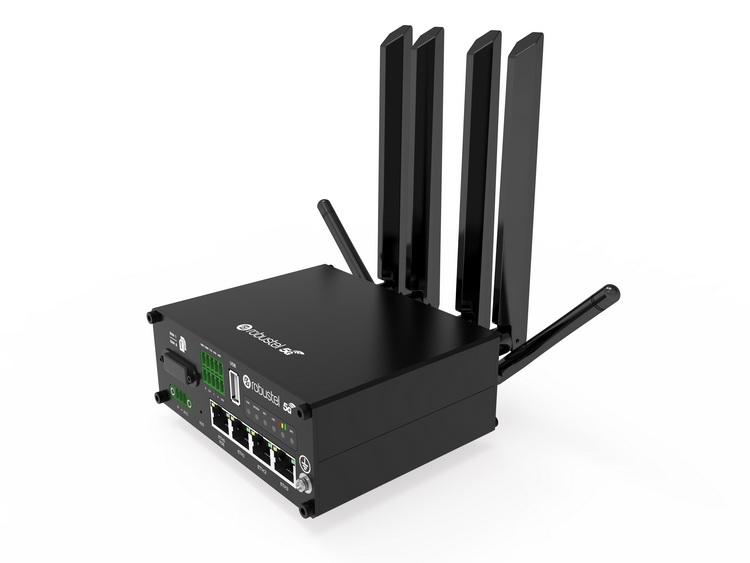
The Robustel R5010 Industrial 5G Router illustrates why a buyer should assign network responsibility before choosing between a 5G modem, router and gateway. It can operate as a focused 5G router or present cellular connectivity to another appliance through USB modem mode, but a site that also needs protocol conversion and local applications belongs to a different gateway architecture.
A modem, router and gateway can all sit near the cellular edge of a network. The mistake is assuming they own the same functions after the modem has registered on 5G.
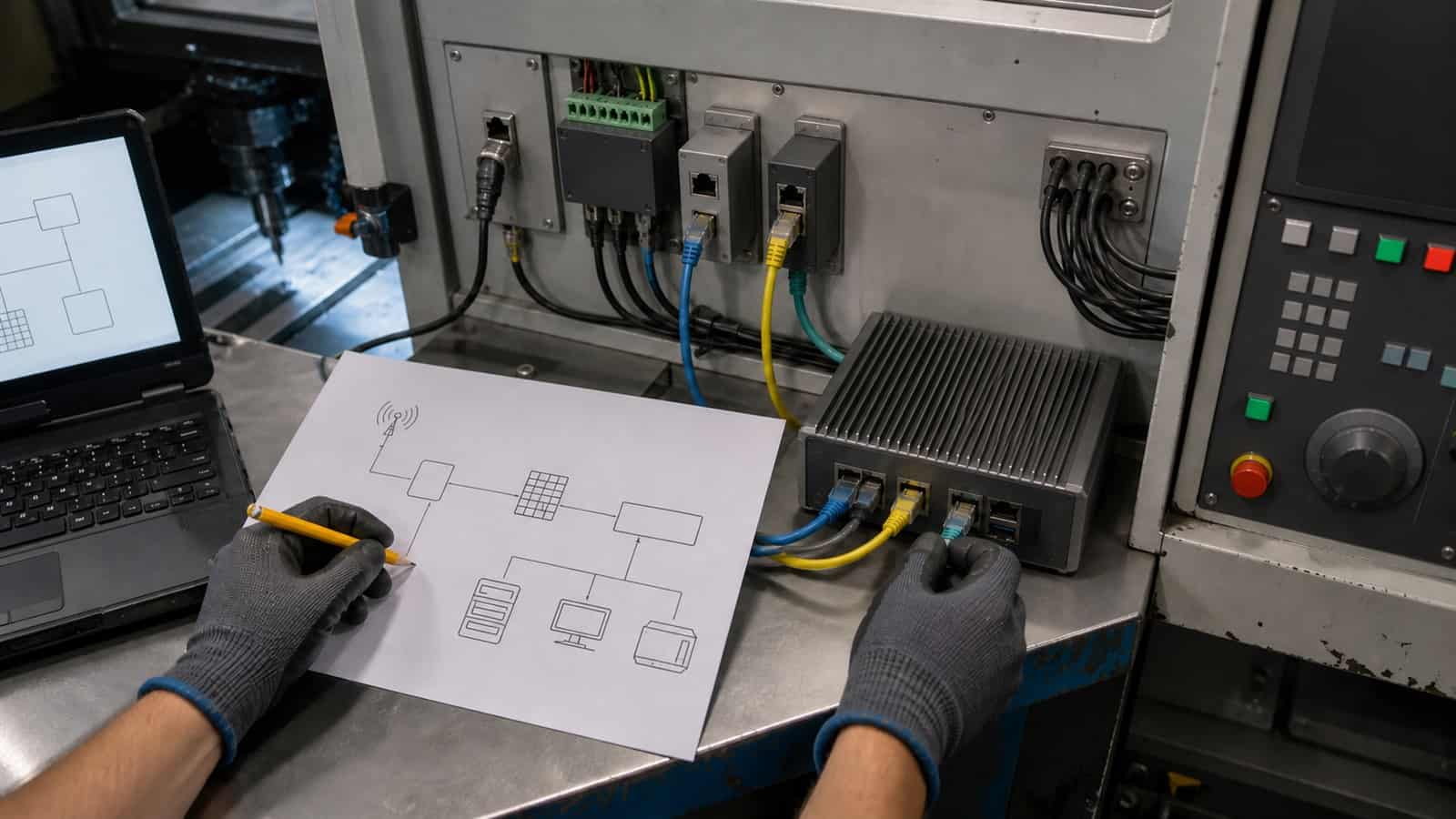
A useful purchase decision starts with one question: after cellular connectivity is established, which device is responsible for routing, security, local equipment and application processing?
Product Names Are Less Important Than Responsibility
The category names are useful, but the industry does not apply them perfectly consistently.
A 5G modem primarily provides cellular access to a host device. The firewall, SD-WAN appliance or industrial computer behind it normally owns routing, VPNs, policy and the LAN.
A 5G router takes responsibility for the WAN and local IP network. It commonly provides NAT, DHCP, firewall rules, VPNs, WAN failover and Ethernet connectivity.
An industrial 5G gateway can include those networking functions while also taking responsibility for field protocols, local data handling or edge applications.
That last distinction is especially important because “gateway” can mean anything from a small protocol bridge to a Debian-based edge-computing platform. Robustel’s What Is an Edge Gateway? video is useful at this point because it explains why the gateway category is defined by where field connectivity and local applications meet, not simply by the presence of a cellular modem.
The buyer should therefore map functions to devices before comparing specifications.
Use a Responsibility Map Before Looking at Ports
The following matrix describes the usual architectural role, not a guarantee that every product in a category includes every function.
| Responsibility | 5G modem | 5G router | Industrial 5G gateway |
|---|---|---|---|
| Establish cellular connection | Core role | Core role | Core role when cellular is included |
| Hand WAN to another appliance | Core use case | Possible on selected models | Possible but rarely the main reason to buy |
| NAT, DHCP and routing | Usually host-owned | Core role | Usually included |
| Firewall and VPN | Usually host-owned | Common | Common |
| Local Ethernet/Wi-Fi network | Limited/model dependent | Common | Common |
| Serial/industrial interfaces | Uncommon | Model dependent | Common |
| Protocol conversion | Usually no | Limited/model dependent | Typical gateway role |
| Local buffering/data logic | Usually no | Limited | Common on edge platforms |
| Containers/local applications | No | Not the primary role | Common on edge-computing gateways |
| Fleet management | Product dependent | Common on industrial models | Common on industrial models |
The key is ownership.
If an enterprise firewall already owns the public-facing policy, adding another router can create double NAT, duplicated firewall rules and a second place to troubleshoot failover. If there is no firewall or site router, buying a bare modem simply moves those missing responsibilities into another product that still needs to be specified.
The cleanest architecture assigns each function once.
Architecture One: Existing Firewall, Missing Cellular WAN
A branch with managed switching, Wi-Fi and SD-WAN may need only another way to reach the internet.
The cellular device should register on 5G, present a supported WAN handoff, expose enough diagnostics for support and be installed where the radio conditions are acceptable. The existing firewall continues to own segmentation, routing and VPN policy.
This is where the Robustel R5010 Industrial 5G Router is a useful example because its USB modem mode allows it to present 5G connectivity to a firewall or SD-WAN appliance. The same product can also operate as a router, but the architecture should choose one clear responsibility model rather than accidentally running two routers in series.
Robustel’s Fixed-Line Backup over 5G with the R5010 Application Example shows the operational reason for this role: a branch already has its normal network architecture and needs a managed 5G path that can take over when the preferred circuit fails.
A focused WAN handoff can be a better purchase than an edge gateway when local processing is not part of the requirement.
Architecture Two: The Cellular Device Must Run the Site Network
A kiosk, temporary office, remote cabinet or small branch may not have another routing appliance.
Now the cellular device needs to provide local addressing, firewall policy, VPN connectivity, Ethernet or Wi-Fi and a defined failover path. A 5G router is the natural category because the WAN device also owns the local network.
This architecture is where many buyers accidentally under-specify the modem. A device that merely passes cellular connectivity upstream does not solve the site network if there is no upstream router to receive it.
The real Jones Technology retail resilience Case Study by Robustel demonstrates how a 5G router can fit into a broader multi-site network design. Jones Technology used Robustel R5010 routers alongside SD-WAN to provide day-one cellular connectivity and backup service across a retail estate. The value came from assigning the 5G unit a clear WAN role inside an existing architecture rather than asking one device to perform every edge function.
This is the point where port count, WAN handoff and management become important. They should follow the network drawing rather than a generic “more is better” rule.
Architecture Three: The Site Must Understand Industrial Data
A gateway becomes relevant when the device is no longer responsible only for IP networking.
A production cell may need to read a serial controller, normalize data, buffer records during a WAN outage and publish a structured dataset to an upstream system. A roadside cabinet may combine cameras, sensors and local analytics. Once those functions move onto the same device as the cellular connection, the buyer is selecting an application platform as well as a router.
The Robustel EG5200 edge computing gateway is a useful contrast with the R5010. It combines five Gigabit Ethernet ports, industrial serial interfaces, USB and HDMI with a RobustOS Pro Debian environment that supports containers and native applications.
That does not make the EG5200 universally “better.” It means the product owns more of the local integration and processing layer.
Robustel’s Connected CNC Machines Application Example illustrates this responsibility shift. An EG-series gateway sits beside an existing CNC controller and adds a managed data and remote-support path without replacing the machine-control system. The application example is relevant because the gateway has to understand and expose operational information, not merely provide internet access.
A branch that only needs a secondary WAN would be paying for software and interfaces it has no operational reason to maintain.
How the Robustel R5010 and EG5200 Clarify the Boundary
The two Robustel products are useful because both can participate in cellular industrial networks while solving different problems.
| Requirement | Robustel R5010 Industrial 5G Router | Robustel EG5200 edge computing gateway |
|---|---|---|
| Primary role | Focused 5G WAN/router or modem-style handoff | Industrial networking plus local edge processing |
| Ethernet | One 2.5 GbE LAN port | Five Gigabit Ethernet ports |
| Modem-style handoff | USB modem mode | Not its primary role |
| Field serial interfaces | No dedicated field serial port | Configurable industrial serial interfaces |
| Operating environment | RobustOS | RobustOS Pro / Debian |
| Containers/local apps | Not the primary architecture | Supported |
| Protocol/data processing | Limited to router functions and supported apps | Designed for local edge applications |
| Fleet management | RCMS | RCMS |
The boundary becomes easier to see when the buyer asks what happens after 5G connects.
If the next device is an existing firewall, a focused R5010 architecture may be enough. If the next devices are PLCs, cameras and industrial data sources that need local software, an EG5200-class gateway starts to make sense.
The category decision is therefore a responsibility decision before it becomes a specification decision.
Check for Duplicated Functions Before Purchasing
More capable hardware can still create a worse architecture if it duplicates systems already in place.
An edge gateway should not repeat application processing already owned by an industrial PC without a reason. A router should not insert another NAT and firewall layer in front of an established SD-WAN appliance unless the design intentionally requires it. A modem should not be selected when no host device can supply the missing routing and security functions.
The same test should be applied to management. A router fleet mainly needs WAN, VPN, firmware and configuration control. An edge-gateway fleet also introduces application versions, local storage, dependencies and software recovery. That additional flexibility has an operating cost.
A four-question buying decision is usually enough to narrow the category:
- Is another appliance already responsible for routing, firewalling and VPN?
- Must the cellular device operate the local IP network?
- Must the device interpret or process operational data?
- Does the proposed product duplicate a function already owned elsewhere?
Only after those questions are answered should the team compare regional bands, ports, power, mounting, certifications and lifecycle.
FAQs
Q1. What is the main difference between a 5G modem and a 5G router?
A 5G modem mainly establishes cellular connectivity for another device. A 5G router usually adds routing, NAT, DHCP, firewall, VPN and local networking. Product boundaries vary, so responsibility should be verified rather than inferred from the category name.
Q2. Is a 5G gateway the same as a 5G router?
Not usually in an industrial edge-computing context. Both can provide cellular routing, but an edge gateway can also host local applications, process data and connect directly to industrial equipment.
Q3. Can the Robustel R5010 Industrial 5G Router be used like a modem?
Yes. The Robustel R5010 Industrial 5G Router supports USB modem mode for suitable firewall or SD-WAN architectures while retaining its broader router product role.
Q4. When does the Robustel EG5200 edge computing gateway make sense?
The EG5200 fits sites that need cellular or Ethernet networking together with multiple local interfaces and Debian-based edge applications. It is unnecessary when the site only needs another WAN connection.
Q5. Does an edge gateway replace cloud computing?
No. An edge gateway can handle selected local functions while cloud or data-centre systems continue providing long-term storage, fleet analytics and enterprise applications.
Conclusion
The Robustel R5010 Industrial 5G Router and Robustel EG5200 edge computing gateway illustrate why cellular product categories should be chosen by responsibility rather than by label.
Use a modem-style architecture when a capable host already owns routing and security. Use a router when the cellular device must operate the local IP network. Move to an edge gateway when field integration, protocol handling or local applications become part of the site responsibility.
The right product fills the missing architectural role without duplicating the systems already doing their job.
Explore more articles about Robustel industrial 5G routers:


About the Author
Robert Liao | Technical Support Engineer
Robert is an IoT Technical Support Engineer at Robustel, specializing in industrial networking and edge connectivity. A certified Networking Engineer, Robert focuses on the deployment and troubleshooting of large-scale IIoT infrastructures. His work centers on architecting reliable, scalable system performance for complex industrial applications, bridging the gap between field hardware and cloud-side data management.