
2026 Guide to Choose Local Data Processing Functions for an Industrial Edge Gateway
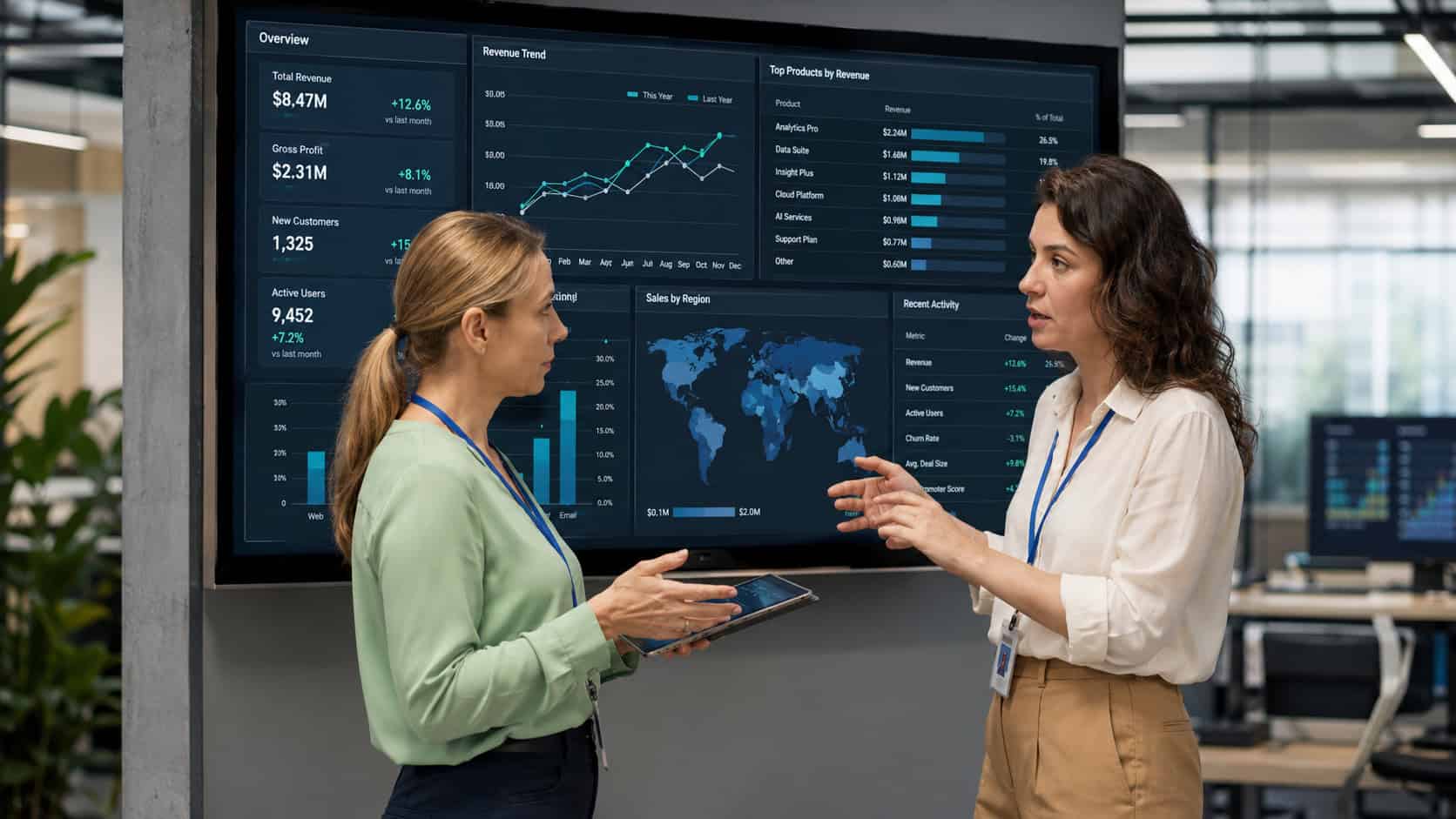
Robustel EG5120 edge computing gateway can run protocol connectors, data filters, buffers, local rules, and compatible inference workloads close to industrial equipment. The right design does not place every available function at the edge. It selects only the processing that solves a defined latency, bandwidth, outage, data-quality, or privacy constraint.
This keeps the gateway focused and maintainable. A local function should have a measurable purpose, a known owner, and a tested failure boundary before it becomes part of the production architecture.
Start with the Constraint, Not the Edge Feature
Local processing is justified when sending every raw input to a remote platform creates a practical problem.
A useful selection process begins with five questions:
- Must the result be available before a cloud round trip is acceptable?
- Is the raw data volume too large or repetitive for the planned WAN?
- Must data collection continue during a temporary connection loss?
- Do different devices produce inconsistent names, units, or timestamps?
- Is there a reason to keep selected data inside the site?
Each “yes” points toward a particular function. It does not justify moving the complete application stack onto the gateway.
For example, a WAN-outage requirement may justify local buffering but not local analytics. A bandwidth problem may justify filtering or aggregation without changing the cloud platform. The project should define the constraint first and then identify the smallest local function that resolves it.
Not every industrial workload needs to move fully to the edge, but relying entirely on the cloud can create practical limits around latency, bandwidth, connectivity loss, and raw-data handling. Watch Robustel’s “Why Do We Need Edge When We Have Cloud?” for a concise explanation of how edge and cloud responsibilities can be divided in industrial IoT.
Match the Local Function to the Problem
Filtering: Remove Repetition, Not Evidence
Filtering is useful when devices produce unchanged values, communication chatter, irrelevant frames, or more samples than the application needs.
A local application may:
- Publish only after a state change
- Suppress values inside an approved deadband
- Remove known invalid messages
- Retain only selected visual frames
- Exclude measurements outside the project scope
Filtering must preserve the evidence needed for diagnostics. Removing every normal sample may make it impossible to understand how a fault developed. The project should define which data is discarded, which is retained temporarily, and which events must always pass through.
Normalization: Make Different Sources Consistent
Normalization is appropriate when meters, PLCs, sensors, and controllers represent similar information differently.
The local application can apply:
- Data types
- Byte and word order
- Scaling
- Engineering units
- Stable asset names
- Timestamps
- Data-quality states
- Mapping versions
Robustel EG5120 edge computing gateway can host suitable Debian packages, Docker containers, or custom applications for these workflows. The project still owns the device mappings and must version them so that a changed register definition does not silently alter upstream data.
Normalization should make data consistent without hiding its origin. The cloud record should remain traceable to the original device, point definition, and processing version.
Aggregation: Replace Samples with Useful Intervals
Aggregation reduces data volume when trends matter more than every individual reading.
Common outputs include:
- Minimum and maximum
- Average
- Operating duration
- Event count
- Final interval value
- Valid and failed sample counts
The method must match the data type. Averaging temperature may be useful, while averaging a cumulative energy counter is normally misleading.
Critical alarms should also remain immediate instead of waiting for the next reporting interval. Routine measurements and urgent events may therefore need different processing paths.
Buffering: Protect Data During WAN Interruptions
Buffering is justified when local collection must continue while the cellular connection, Ethernet WAN, VPN, broker, or cloud endpoint is temporarily unavailable.
Reliable buffering requires more than available storage. The application must define:
- Retention time
- Data priority
- Original timestamps
- Queue limits
- Message expiry
- Acknowledgements
- Duplicate handling
- Replay order
- Storage-full behaviour
When connectivity returns, backlog transmission should not block current alarms or live telemetry. Buffering also cannot recover data that was never collected. If a sensor or PLC stops responding, the gateway should record the source failure rather than repeatedly store the last valid value as current data.
Event Logic: Combine Inputs into an Operational Condition
Local event logic is useful when operators need a condition rather than several independent data streams.
For example, a gateway application might combine:
- Pressure value
- Pump-running state
- Duration
It could then report: Low pressure while the pump remained active for five minutes.
This event is more useful than uploading each source value without context. Local rules can support monitoring and escalation, but they should not replace PLC sequencing, deterministic control, interlocks, emergency shutdowns, or certified safety functions. The project must define thresholds, timing, reset behaviour, and ownership for every rule.
Local Inference: Use It Only When a Validated Model Adds Value
Compatible local inference can be useful for image classification, anomaly scoring, or signal analysis when raw inputs are large and a result is needed close to the source.
The Robustel EG5120 edge computing gateway includes a 2.3 TOPS NPU intended for compatible inference workloads, alongside a quad-core Cortex-A53 processor.
An NPU does not make every model deployable. Teams must validate:
- Model architecture
- Runtime and operator support
- Input resolution or sample rate
- Memory use
- Inference frequency
- Accuracy
- Output value
- Failure behaviour
Model training normally remains outside the gateway. Local inference should only be selected when it provides a measurable advantage over simpler filtering or rule-based logic.
Keep Local and Cloud Responsibilities Separate
A good edge design does not recreate the complete cloud platform locally.
The gateway may be responsible for:
- Data acquisition
- Normalization
- Filtering
- Aggregation
- Buffering
- Selected event generation
- Compatible inference
The cloud may remain responsible for:
- Long-term history
- Cross-site analysis
- Enterprise integration
- Fleet-wide reporting
- Central application workflows
- Model governance
- Large-scale data storage
The boundary should be documented for every function. State what continues during WAN loss, what becomes unavailable, and how local and cloud records are reconciled after recovery.
This prevents “offline operation” from becoming an undefined promise. A local buffer may continue collecting data, for example, while remote dashboards, fleet-wide analysis, and cloud commands remain unavailable.
Size the Combined Workload
Gateway sizing must consider all local functions together rather than evaluating one application in isolation.
Review:
- Device polling and message rates
- Number and size of containers
- Memory used by databases and queues
- Retained data and log growth
- CPU and NPU concurrency
- Network traffic
- Temporary update space
- Restart and recovery time
A pilot that runs one connector successfully may fail after buffering, logging, security services, and a second application are added.
Test the highest expected workload rather than the average condition. The acceptance test should include:
- Normal collection and processing
- Maximum planned device count
- WAN interruption
- Buffer growth
- Gateway reboot
- Application restart
- WAN restoration
- Backlog replay while live data continues
The gateway should remain responsive, avoid uncontrolled storage growth, and recover applications in the expected order.
How Robustel EG5120 Edge Computing Gateway Supports Local Processing
Robustel EG5120 edge computing gateway combines a quad-core Cortex-A53 processor at 1.6 GHz, 2 GB or 4 GB LPDDR4, 64 GB eMMC, a 2.3 TOPS NPU, two Gigabit Ethernet ports, two configurable RS-232/RS-485 interfaces, and digital I/O.
RobustOS Pro is based on Debian 11 and supports Docker containers and Debian packages. This environment can host suitable applications for protocol conversion, normalization, filtering, buffering, event processing, and compatible inference.
The practical combination must still be sized against:
- Selected RAM configuration
- Application footprint
- Container dependencies
- Local storage retention
- Log volume
- Concurrent data traffic
- Update requirements
The Robustel EG5120 edge computing gateway product page provides the current compute, storage, interface, NPU, cellular, and RobustOS Pro specifications required for workload validation.
RCMS can monitor Robustel gateway fleets and distribute approved firmware, configurations, and applications. It also supports remote diagnostics, CLI access, templates, and fleet-level operations.
RCMS manages the gateway estate. It does not validate processing rules, database consistency, model accuracy, application dependencies, or recovery logic on behalf of the project.
Use a Local Processing Decision Matrix
Apply a simple evidence-based matrix before assigning a function to the gateway.
| Project Constraint | Candidate Local Function | Evidence Required |
| Repetitive upstream traffic | Filtering | Measured reduction without lost events |
| Inconsistent device formats | Normalization | Approved mapping and quality model |
| Excessive sample volume | Aggregation | Verified summary method |
| Temporary WAN interruption | Buffering | Retention and replay test |
| Prompt operational condition required | Event logic | Validated rule and timing |
| High-volume image or signal input | Compatible inference | Model and runtime benchmark |
A function belongs at the edge only when testing proves that it resolves the stated constraint and can be maintained throughout the deployment.
FAQs
Q1. What data processing should happen at the edge?
Place processing at the edge when it solves a clear local constraint, such as excessive traffic, inconsistent device formats, temporary WAN loss, or prompt event generation. Common functions include filtering, normalization, aggregation, buffering, and selected rule execution. Keep fleet-wide analytics, long-term history, and enterprise reporting in the cloud unless the project has a specific reason to move them.
Q2. Is local filtering the same as data aggregation?
No. Filtering removes values or messages that do not meet defined criteria, such as unchanged states or noise. Aggregation combines several valid samples into a summary such as minimum, maximum, average, count, or operating duration. Both reduce upstream traffic, but they affect evidence differently. Verify that neither method removes records required for alarms, diagnostics, compliance, or root-cause analysis.
Q3. Does local buffering guarantee that no industrial data will be lost?
No. Data can still be lost when storage fills, the gateway reboots without persistent queues, the application fails, or records are removed before acknowledgement. The design must define retention, priority, timestamps, queue limits, duplicate handling, and replay order. Test an outage longer than expected and confirm that live data remains available while the historical backlog is being transmitted.
Q4. Should industrial control logic run on an edge gateway?
Monitoring rules and non-safety event logic may run on an edge gateway when their timing and failure behaviour are validated. Deterministic control, interlocks, emergency shutdowns, and certified safety functions should remain in the appropriate PLC or safety controller. The gateway should not become a hidden single point of failure for machine operation merely because it can execute applications locally.
Q5. Which local processing functions can Robustel EG5120 support?
Robustel EG5120 edge computing gateway can host suitable applications for protocol conversion, filtering, normalization, aggregation, buffering, event generation, and compatible AI inference. RobustOS Pro supports Docker containers and Debian packages, while its CPU, NPU, memory, storage, and industrial interfaces provide the execution platform. Every workload still requires compatibility checks, resource sizing, security controls, recovery testing, and a named application owner.
Conclusion: Local Processing Function Takeaway
Robustel EG5120 edge computing gateway is a practical platform for industrial projects that need selected processing close to devices, but its value comes from choosing those functions deliberately.
Filtering, normalization, aggregation, buffering, event logic, and compatible inference solve different problems. A function should run locally only when it addresses a measurable constraint, fits the combined gateway workload, and has a maintained failure and recovery plan.
The strongest edge architecture is not the one with the most local features. It is the one with the clearest responsibility boundary between the Robustel gateway, field controllers, local applications, and cloud systems.
Related Reading on Edge Computing in Industrial IoT:


About the Author
Robert Liao | Technical Support Engineer
Robert is an IoT Technical Support Engineer at Robustel, specializing in industrial networking and edge connectivity. A certified Networking Engineer, Robert focuses on the deployment and troubleshooting of large-scale IIoT infrastructures. His work centers on architecting reliable, scalable system performance for complex industrial applications, bridging the gap between field hardware and cloud-side data management.