
Solar Powered LoRaWAN Gateway: Off-Grid Power and Backhaul Buying Guide
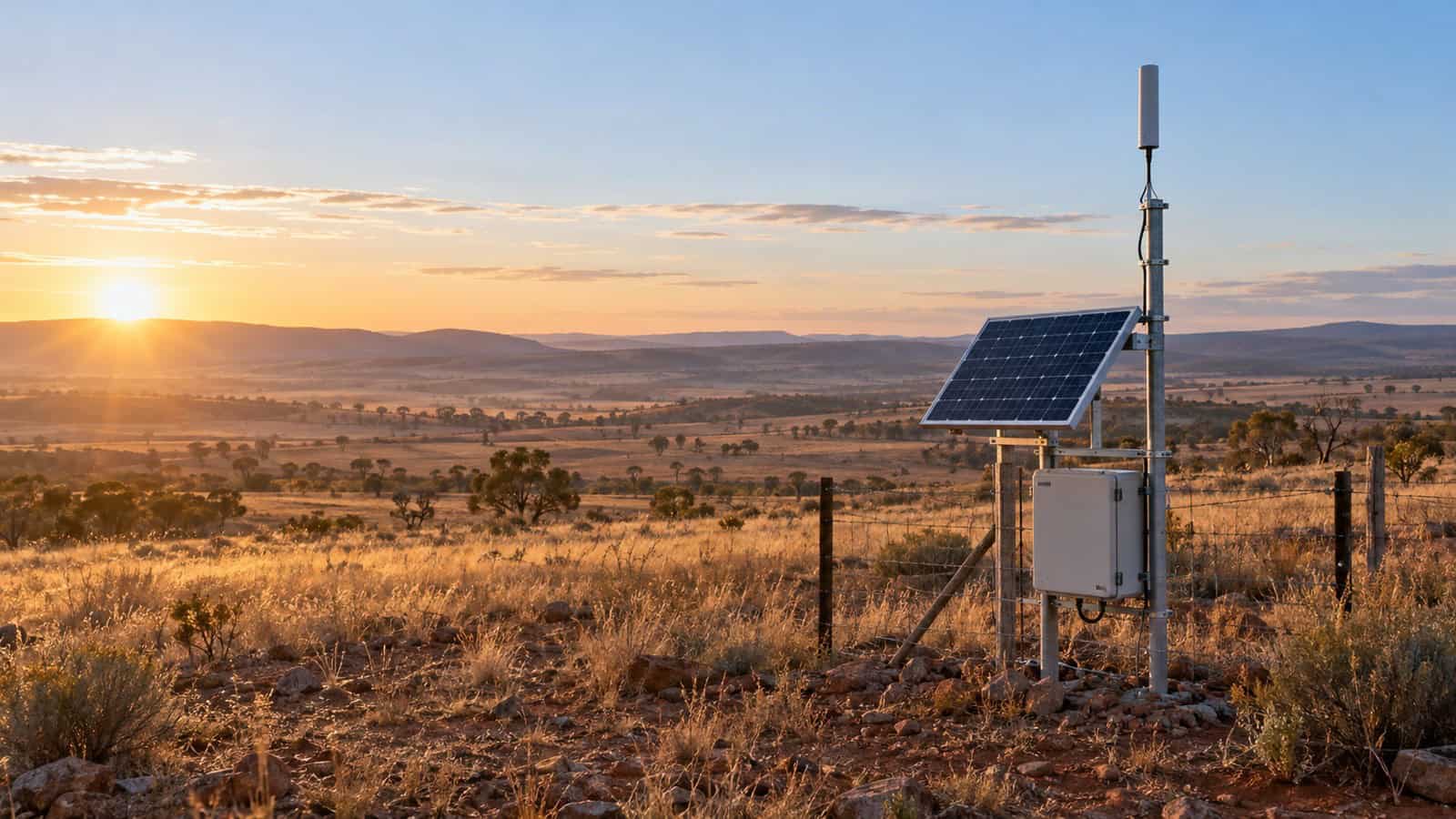
The Robustel R1320LGe LoRaWAN Gateway is a useful off-grid building block when a site needs an eight-channel LoRaWAN packet forwarder, cellular backhaul and a low, measurable DC load, but the solar system must still be engineered around local irradiance, battery autonomy, modem peaks and winter recovery. “Solar powered” describes the site power architecture, not a built-in feature of the gateway.
Build the Daily Energy Budget From Measurements
The Robustel R1320LGe LoRaWAN gateway datasheet lists 1.5 W idle and 7.5 W maximum at 12 V. Neither value alone is a daily energy budget. Measure the intended firmware, radio plan, Ethernet use and cellular traffic over a representative 24-hour profile, then add conversion losses, battery charge efficiency, controller consumption and a design margin.
Use watt-hours rather than amp-hours until the battery voltage and allowable depth of discharge are fixed. A field design also needs the worst relevant solar period, not the annual average. Several bright commissioning days can hide an array that never fully replaces the previous night’s energy during winter cloud.
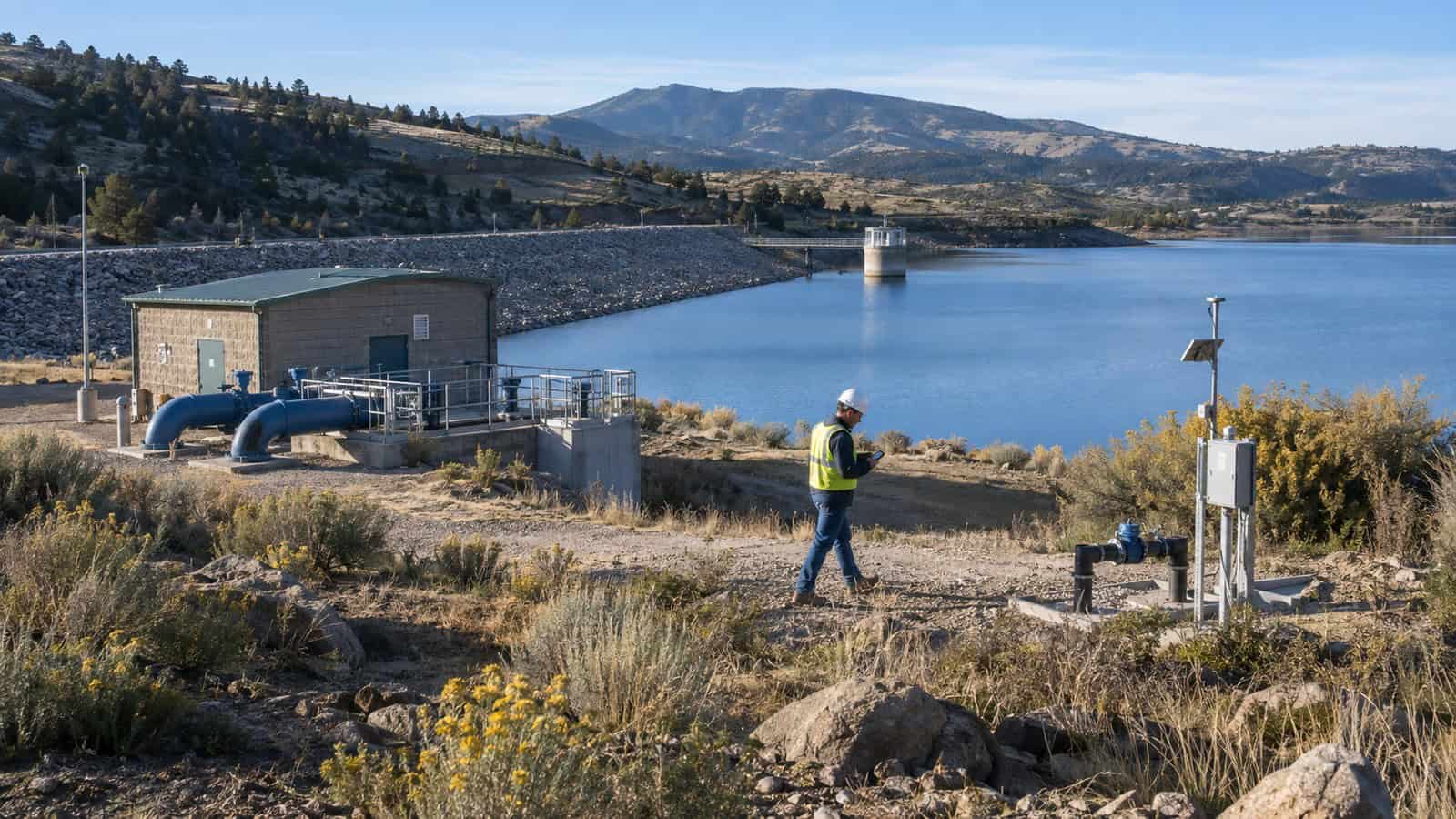
Robustel’s solar and battery-storage LoRaWAN application example shows the wider data path at distributed energy sites, where the gateway, backhaul and maintenance visit all consume operational attention. The example uses the LG5100; for an R1320LGe design, its useful lesson is to budget energy and recovery around the complete remote service, then calculate the hardware demand from the R1320LGe measurements and the actual solar system.
| Entrée | What to use | What not to use |
|---|---|---|
| Gateway demand | Logged average and peak at the selected voltage | Idle power multiplied by 24 |
| Solar yield | Worst-month site data with orientation losses | Panel nameplate × daylight hours |
| Battery autonomy | Usable energy at temperature and ageing margin | Nominal Ah alone |
| Backhaul | Measured registration and upload pattern | Assumed constant modem load |
Decide What Must Survive a Dark Period
Define autonomy in operational terms: gateway forwarding, local logging, cellular backhaul and remote management may have different priorities. If energy becomes scarce, the system may reduce non-essential uploads while preserving health messages, but that behaviour belongs in the application and power-controller design; it is not automatically provided by the gateway.
Specify the low-voltage disconnect, restart threshold and recovery sequence. A poor sequence can repeatedly boot the modem at dawn, collapse the battery voltage and restart again. Prove a controlled cold start after the designed dark period and check that time, packet-forwarder configuration and upstream registration recover without manual intervention.
Backhaul Often Dominates the Incident
Survey cellular service at the final antenna height and enclosure. Record the exact regional R1320LGe variant, bands, SIM plan and data path to the external LoRaWAN Network Server. The model provides a compact forwarding architecture; it does not include the same embedded-LNS role as the Robustel R1520LG.
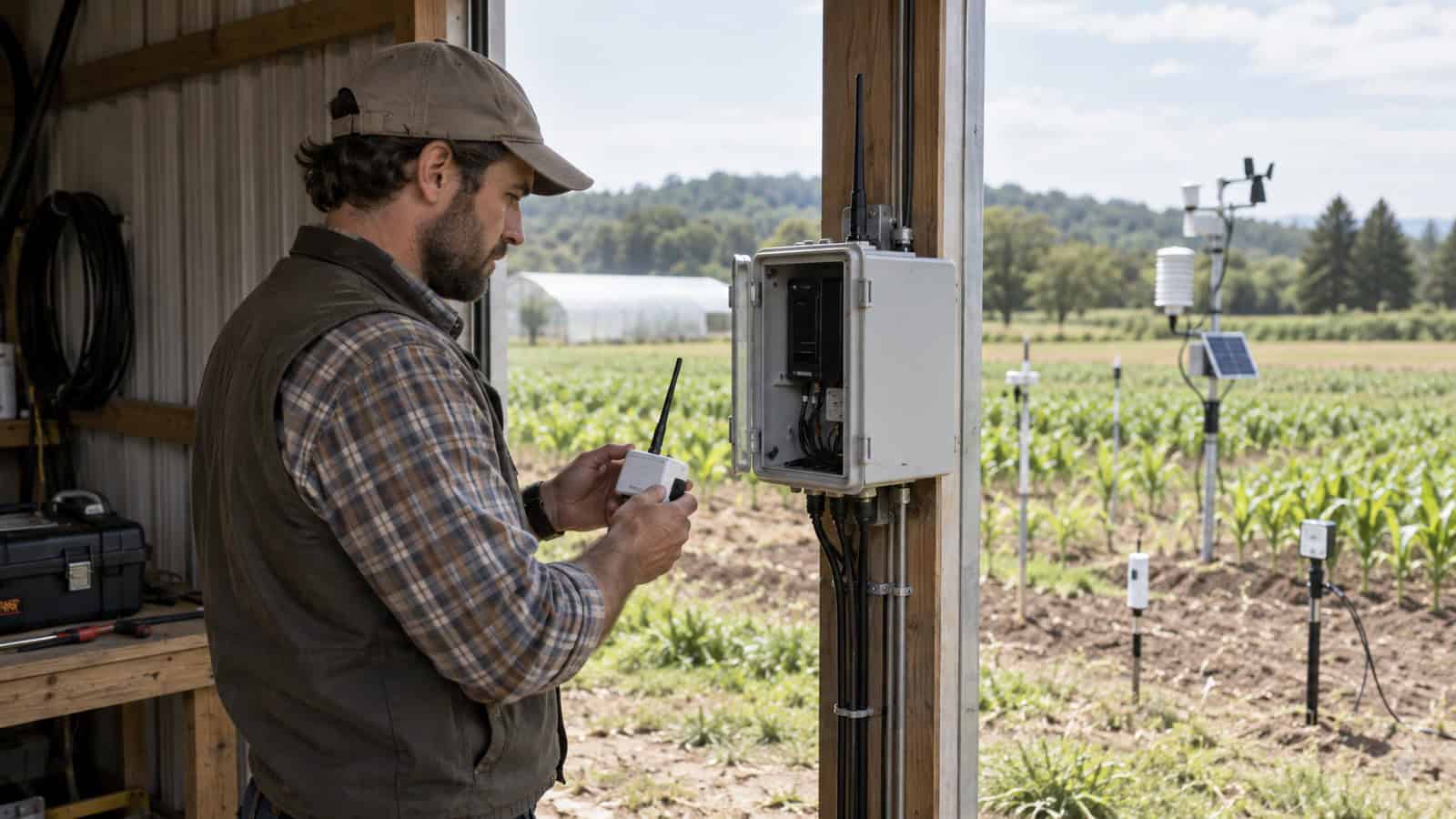
Our private smart-farm application example captures the off-grid operating problem well: remote sensors, scarce local infrastructure, antenna placement and cellular or fixed backhaul. It uses another gateway, so a Robustel R1320LGe project can borrow the site-planning logic while calculating power, LNS ownership and interfaces from the R1320LGe configuration being purchased.
During the pilot, log modem registration attempts and upload bursts against battery voltage. A marginal mobile path can keep the radio active long enough to look like a solar-sizing problem, while a low-voltage reset can look like carrier instability. Correlating those two traces tells the field team whether to change the antenna, data schedule, energy storage or all three.
Weatherproof the System, Not Just the Electronics
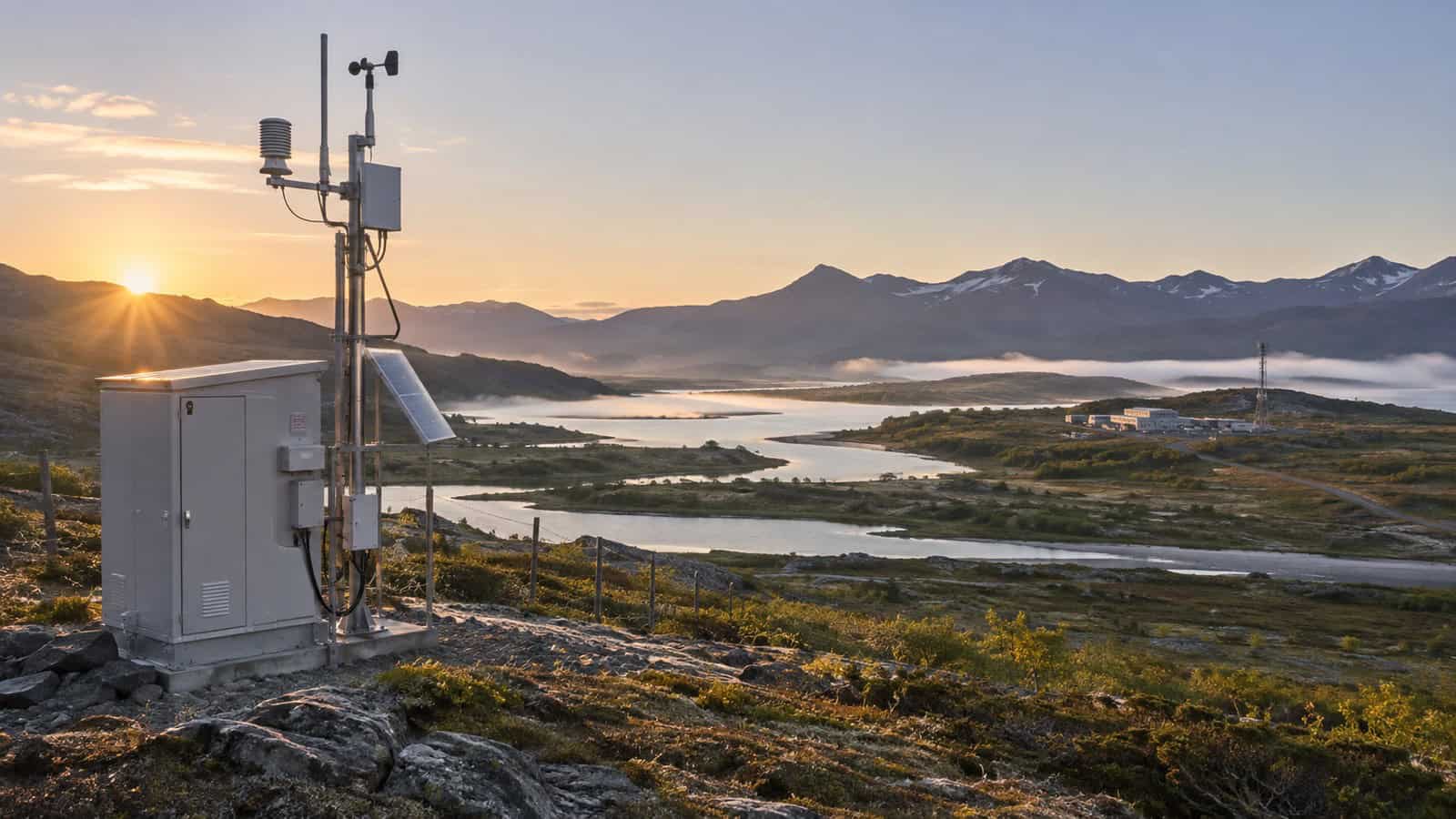
The Robustel R1320LGe LoRaWAN gateway is IP30 and requires a suitable external enclosure for outdoor duty. Size that enclosure for heat, condensation control, battery requirements, glands, cable bend radius and service access. Solar batteries may have narrower charging limits than the gateway’s -20 to +70 °C operating range, so the battery and charge controller often set the real environmental boundary.
Mount the LoRa antenna and cellular antennas with separation from the solar regulator, DC cabling and metal surfaces. Keep a photograph and cable record. If a technician cannot identify the antenna path and isolation point in poor weather, the installation is not ready for remote ownership.
How the Robustel R1320LGe LoRaWAN Gateway Fits Low-Power Off-Grid Sites
The Robustel R1320LGe LoRaWAN gateway combines an eight-channel LoRa receiver, LTE Cat 4 backhaul, one physical Mini SIM plus an SGP.22 eSIM, two Fast Ethernet ports and optional 802.3at PoE-PD on ETH0. It accepts 9–36 VDC and can be DIN-rail, wall or desktop mounted. Its role is to forward LoRaWAN traffic to a compatible external LNS while Robustel RCMS platform provides supported fleet-management visibility.
That is a good fit when the project values a focused forwarding gateway and already owns the LNS. Choose the R1520LG instead when the documented embedded ChirpStack option or its wider local interface set is part of the requirement. Do not make the choice on radio range alone; terrain, antenna system, endpoint behaviour and regional frequency plan govern the usable result.
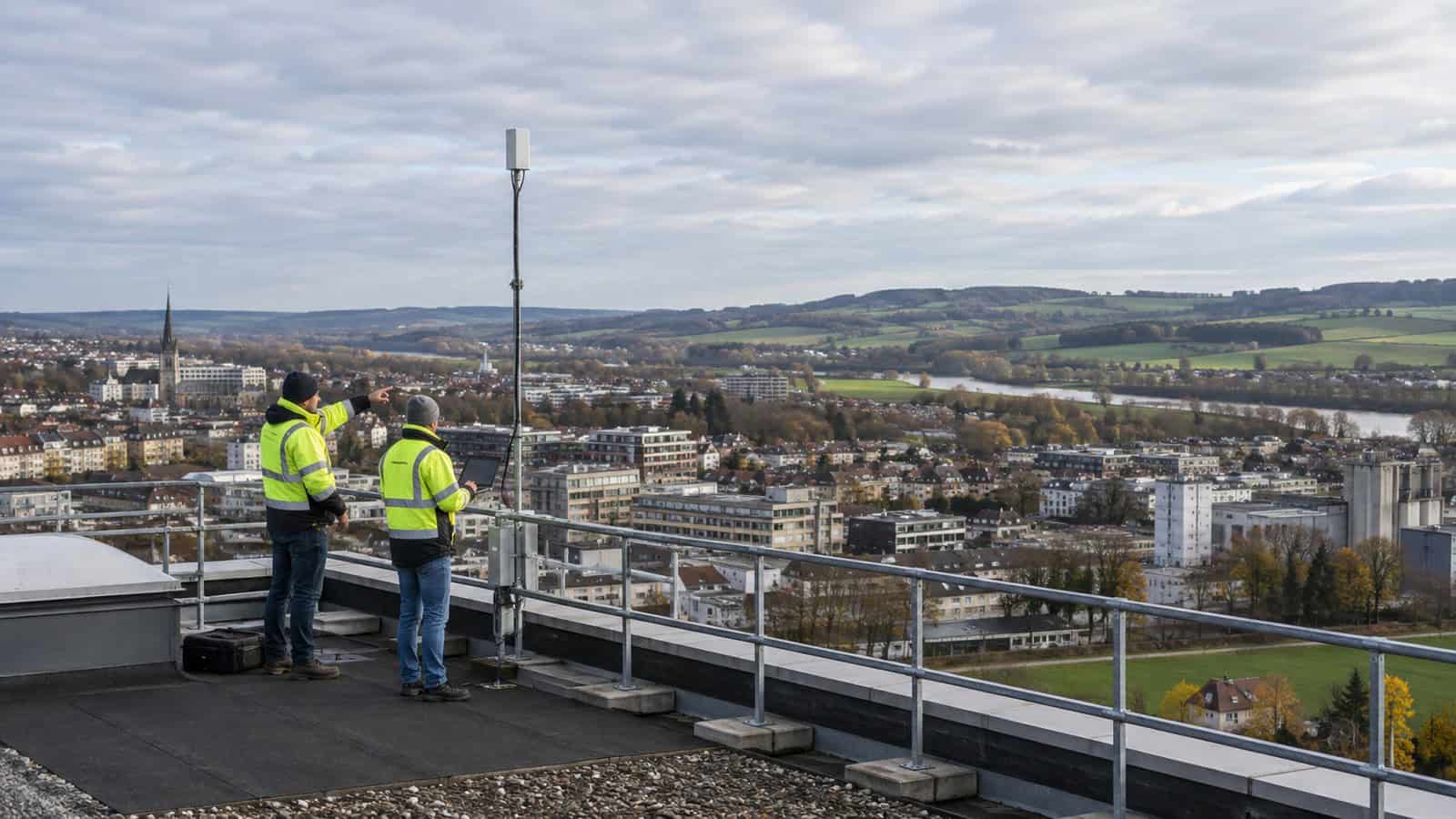
The Robustel video “LoRaWAN Gateway Applications” is a useful starting point for discussing remote sensing and gateway placement before the team builds the R1320LGe-specific energy budget and external-LNS design.
Commission for the Worst Week
Log battery voltage, charge current, gateway power, cellular registration, packet-forwarder status and last successful upstream contact. Simulate the designed low-energy state, remove backhaul, then restore both in the expected order. Confirm that alarms arrive before the battery reaches disconnect and that the site does not enter a reboot loop.
Leave the owner a threshold table and a service trigger: for example, declining midday recovery, repeated modem registration or missed uplinks while local power remains healthy. These trends support maintenance before the site goes dark.
Foire aux questions
Q1. Can a LoRaWAN gateway run on solar power?
Yes, if the panel, battery and controller are sized from measured energy demand and the site’s worst relevant solar conditions. The outdoor enclosure and charging-temperature limits must also be included.
Q2. How much power does a LoRaWAN gateway use?
It varies with the hardware, backhaul, processing and traffic pattern. Use the selected model’s limits for design, then measure the production configuration over time rather than relying on an idle figure.
Q3. Does a LoRaWAN gateway need internet access?
It needs a path to its network server unless that server runs locally on suitable equipment. A forwarding gateway at a remote site therefore needs cellular, Ethernet or another planned IP backhaul.
Q4. How long should an off-grid battery last without sun?
The autonomy period follows the site’s risk, access time and weather profile. Calculate usable battery energy at the expected temperature and age, then prove recovery after that dark period.
Q5. When is the Robustel R1320LGe LoRaWAN Gateway a good off-grid fit?
It suits a low-power forwarding architecture with an external LNS, LTE backhaul and a professionally designed DC and enclosure system. Projects needing a local embedded LNS should select a different architecture.
Conclusion
The Robustel R1320LGe LoRaWAN Gateway can anchor a lean solar-powered site when its measured load, external-LNS role and cellular path are designed as parts of one energy system. The credible specification is not panel wattage; it is how the installation behaves after several poor solar days and how it returns to service.
Make the power log, restart sequence and antenna record part of handover. They give remote operations a chance to intervene before a weak battery or marginal backhaul becomes a silent data gap.
Explore More Articles About Robustel LoRaWAN Gateways
À propos de l'auteur
Robustel Editorial Team
The Robustel Editorial Team publishes practical articles on industrial connectivity, edge computing, LoRaWAN and device management, focusing on deployment considerations, technical limitations and long-term operation.