
Raspberry Pi LoRaWAN Gateway vs Industrial Gateway: When to Move Beyond a Prototype
A Raspberry Pi LoRaWAN gateway can be an effective way to prove a radio architecture, test sensors and develop application software. Moving to an industrial gateway is justified only when the deployment introduces requirements that the prototype no longer manages efficiently. The Robustel R1520LG LoRaWAN Gateway provides a useful production reference because hardware, power, storage, networking and fleet-management functions are delivered as one documented platform.
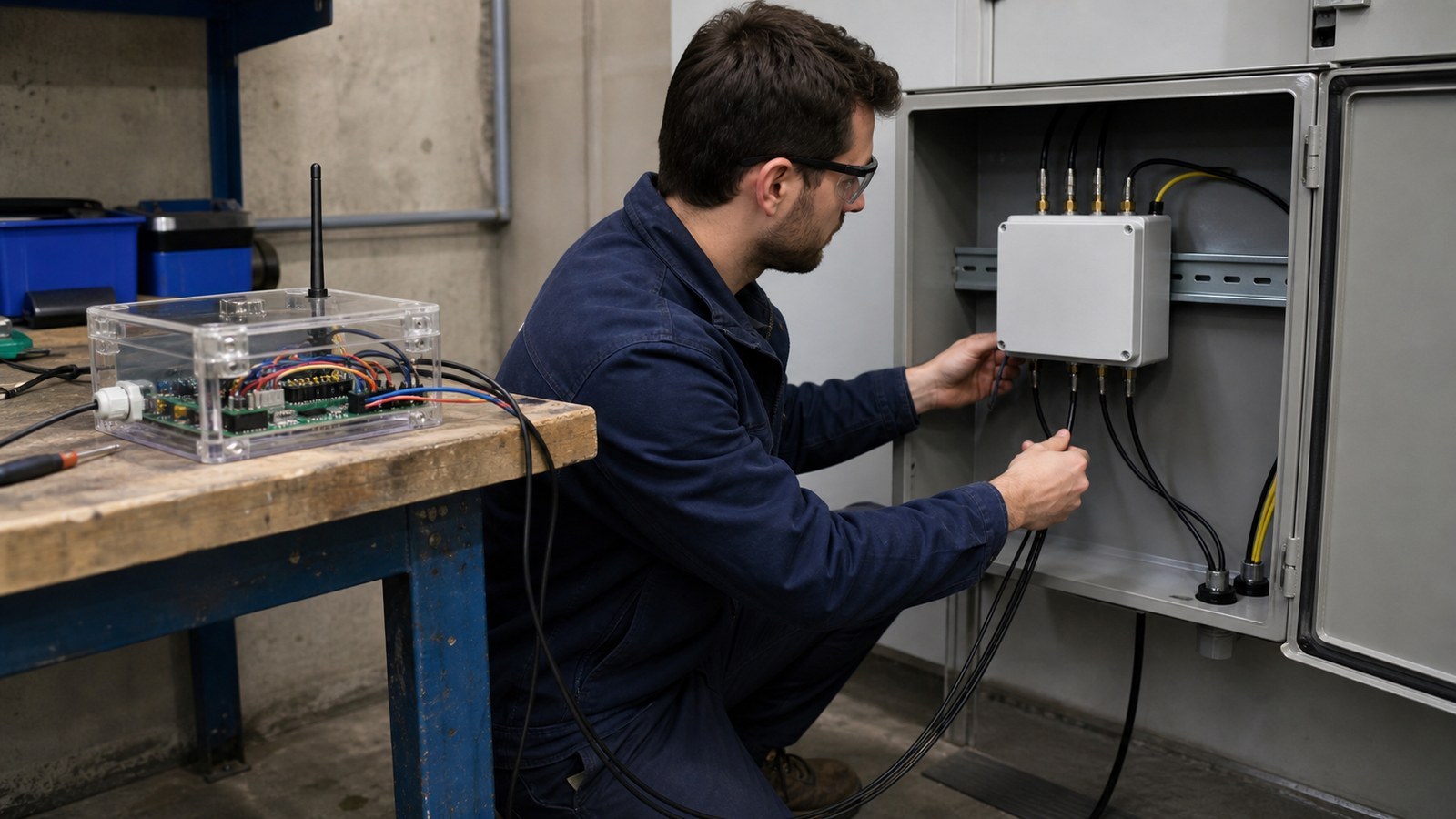
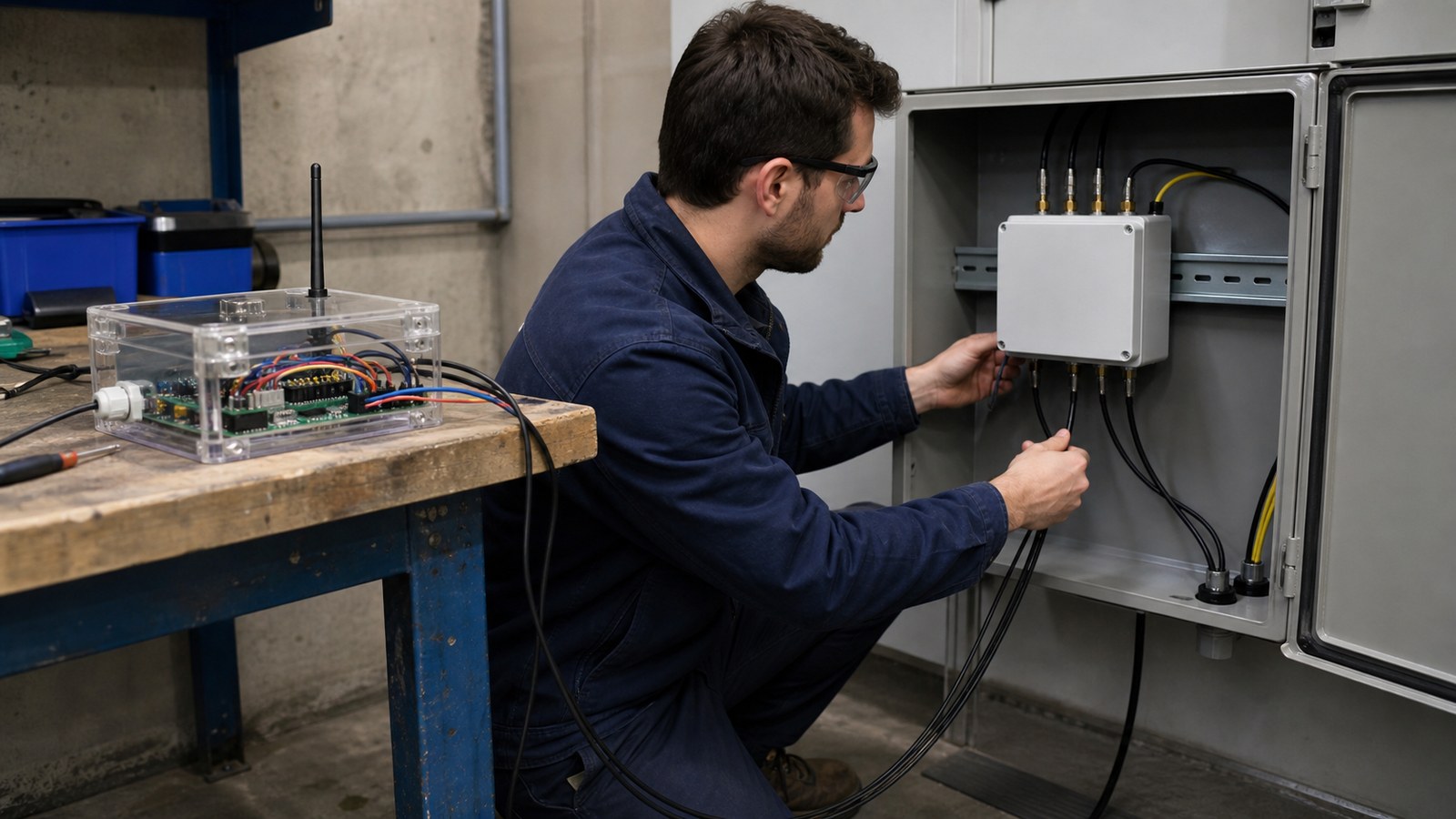
Consider an engineering team building a warehouse monitoring pilot. A Raspberry Pi, LoRa concentrator and packet-forwarding software connect ten sensors to a test Network Server. An engineer is nearby, the equipment sits safely on a desk, and changing an SD card or reimaging the operating system takes little time.
The pilot succeeds. The business now wants the same design in 50 warehouses across several countries. The LoRaWAN radio requirement has barely changed. The operational problem has.
A Prototype and a Production Gateway Solve Different Problems
During development, flexibility is often more valuable than integration. Engineers want shell access, interchangeable hardware, a familiar Linux environment and the freedom to change software quickly. Raspberry Pi is well suited to this kind of work.
It would be inaccurate to describe Raspberry Pi itself as unsuitable for industrial use. Raspberry Pi explicitly supports industrial customers, while its Compute Module family is intended primarily for embedded and industrial applications. Production designs based on Raspberry Pi can be entirely valid when the surrounding power, storage, carrier board, enclosure, thermal design and lifecycle processes are engineered accordingly.
The distinction is therefore not:
Raspberry Pi = hobby
Industrial gateway = production
A more useful distinction is:
Prototype platform = the project team assembles and owns more of the system engineering
Integrated industrial gateway = more of that engineering is supplied, documented and supported as one product
For a Raspberry Pi LoRaWAN gateway, the project may separately select and maintain the computing board, LoRa concentrator, boot storage, enclosure, power supply, antenna interface, operating-system image and LoRaWAN software.
With a Robustel industrial LoRaWAN gateway, those elements are delivered within a defined hardware and software platform. The R1520LG, for example, combines LoRaWAN radio functions with two Ethernet ports, cellular and Wi-Fi connectivity, 8 GB eMMC storage, 9–60 VDC input or IEEE 802.3at PoE-PD on ETH0, RobustOS Pro and remote management through RCMS.
That integration is useful only when the project needs it. A controlled test bench with one gateway may not.
For readers who want to separate the radio gateway, packet forwarding, backhaul and Network Server roles before making this comparison, Robustel’s What Is a LoRaWAN Gateway? video provides a short architectural overview. The hardware decision becomes clearer once the responsibility assigned to the gateway itself is defined.
Keep Raspberry Pi When Flexibility Still Matters
Moving away from Raspberry Pi simply because a project has reached a pilot stage can add cost without solving a real problem.
A Raspberry Pi-based LoRaWAN gateway remains a reasonable choice where:
- Engineers need frequent software changes
- Hardware interfaces are still being evaluated
- The gateway remains in a controlled environment
- Only a small number of units will be maintained
- On-site access is straightforward
- The team is comfortable maintaining the Linux image
- Formal productisation is not yet required
- The objective is development rather than repeatable rollout
Raspberry Pi OS itself provides a mature Debian-based software environment, and Raspberry Pi documents microSD, SSD and other boot-media options depending on model and design. Compute Modules also provide a route into more integrated embedded products rather than forcing every production design to use a standard SBC and removable microSD card.
This matters because some common Raspberry Pi versus industrial-gateway comparisons are too simplistic.
For example, it is not accurate to say that every Raspberry Pi gateway “uses an unreliable SD card.” Storage is a design choice. Raspberry Pi supports other storage architectures, and Compute Module variants are intended specifically for embedded integration.
Likewise, an industrial gateway does not automatically have better LoRaWAN radio coverage. If two products use comparable radio architectures, actual RF performance still depends on frequency plan, antenna system, installation, propagation conditions and configuration.
The Robustel R1520LG LoRaWAN Gateway should therefore be considered when its integrated industrial characteristics solve requirements the prototype team would otherwise need to engineer and maintain itself—not because a Raspberry Pi stops being technically capable at an arbitrary project size.
The Upgrade Point Appears When Operations Become Repeatable
The strongest signal that a prototype needs to change is usually not CPU load or radio range. It is the amount of engineering required to make every site behave the same way. Suppose the warehouse project grows from one Raspberry Pi gateway to 50.
The operations team now asks:
- Which OS image is installed at each site?
- How are gateway configurations backed up?
- Who applies security updates?
- What happens after an unexpected power interruption?
- How is storage health managed?
- Which enclosure is approved for installation?
- What temperature range has the assembled system been qualified for?
- How is a failed unit replaced without an engineer rebuilding it manually?
- Which regional radio configuration is installed?
- What compliance documentation applies to the complete assembled product?
- How can support staff diagnose a remote gateway?
These are production questions rather than LoRaWAN questions.
A comparison is more useful when it measures the complete deployed system:
| Production requirement | Raspberry Pi-based design | Integrated industrial gateway |
|---|---|---|
| LoRaWAN radio | Add suitable concentrator and software | Integrated and documented |
| Enclosure | Selected or engineered by project team | Defined product enclosure |
| Storage | Project selects and qualifies media | Defined internal storage architecture |
| Power input | Requires appropriate supply/design | Published input and protection specifications |
| Temperature | Must be qualified as assembled system | Published product operating range |
| OS and applications | High engineering flexibility | Controlled vendor platform plus supported customisation |
| Updates | Project defines update process | Vendor fleet-management workflow may be available |
| Configuration consistency | Project-owned automation | Central device-management options |
| Conformité | Must assess complete assembled product | Product-specific approvals documented by vendor |
| Replacement | May require image and hardware reconstruction | Standard replacement model can simplify procedure |
| Technical support | Project team owns system integration | Product vendor supports the integrated gateway |
The table does not make the industrial gateway automatically better.
A skilled engineering organisation may deliberately build its own production appliance around Raspberry Pi Compute Module hardware and create the required carrier board, storage, power, enclosure, certification and software-management processes. Raspberry Pi actively supports this kind of industrial use.
The real comparison is buy versus engineer and own.
For a team deploying the Robustel R1520LG, some of those decisions already have published boundaries. The current product specifies 8 GB eMMC storage, a 9–60 VDC input range, IEEE 802.3at PoE-PD support on ETH0, IP30 ingress protection and an operating range of −20°C to +60°C. Its regional variants also carry model-specific approvals rather than assuming one radio configuration is valid globally.
Those limits do not make it suitable for every environment. They make the qualification boundary easier to identify.
What Changes When One Gateway Becomes Fifty
At one site, maintenance can be informal. An engineer may remember which configuration file was changed, which package version is installed and which power supply is attached. At 50 sites, relying on individual memory becomes an operational risk.
This is where the difference between a working prototype and a managed fleet becomes clearer.
The Robustel RCMS remote device management platform supports fleet monitoring, configuration management, firmware and application updates, and remote-management workflows for Robustel devices. For the R1520LG, RCMS is part of the supported management model rather than a separate system that the customer has to build around the gateway.
A Raspberry Pi deployment can also be centrally managed. Linux configuration-management tools, custom OTA mechanisms or an organisation’s existing IT platform may provide an effective workflow. The important distinction is ownership: the project team needs to design, validate and support that mechanism.
The cost of this responsibility increases when sites are difficult to visit.
Robustel’s work with KoolZone on LoRaWAN monitoring for vaccines and laboratories illustrates the shift from individual devices to fleet operations. R1520-LG gateways are deployed across laboratories, hospitals and other monitoring locations, connecting LoRaWAN sensors to cloud services over cellular backhaul. RCMS gives engineering teams central visibility into gateway status, configuration and firmware, reducing the need for routine on-site intervention.
The lesson is not that Raspberry Pi could not perform the radio function. It is that once gateways become part of a geographically distributed service, how the devices are monitored, updated and recovered becomes part of the product requirement.
Production readiness should therefore include a replacement test: A gateway fails at a remote site. Can a technician install the replacement and return the service to the approved configuration without recreating the original engineer’s development process?
If the answer is no, the prototype may still work technically while remaining difficult to operate at scale.
Industrial Hardware Changes the Qualification Baseline
When a project moves to an integrated product such as the Robustel R1520LG LoRaWAN Gateway, the engineering work does not disappear. It moves.
Instead of qualifying a collection of boards, storage media, power components and software images, the project qualifies the gateway as one known platform and then focuses on the remaining site-level design.
For the R1520LG, those remaining decisions still include:
- Correct regional LoRaWAN model
- Antenna selection and placement
- IP30 installation protection
- Site temperature
- DC or PoE power architecture
- Ethernet, Wi-Fi or cellular backhaul
- External versus embedded LNS
- Application integration
- SIM and operator strategy
- Remote-management policy
The gateway currently supports external LNS connectivity through UDP, Basic Station and Loriot, or an internal ChirpStack LNS. It also combines Ethernet, Wi-Fi and dual-SIM cellular connectivity on the same platform.
That consolidated architecture is particularly relevant where the LoRaWAN gateway must operate unattended.
Robustel’s Cibicom LoRaWAN backhaul case study provides a useful example at the other end of the scale from a laboratory prototype. Cibicom operates LoRaWAN infrastructure at locations including masts and third-party properties across Denmark, with LTE450 used for gateway backhaul and a Network Operations Center supporting ongoing operations. The original deployment used the legacy Robustel R3000-LG, which has been identified by Robustel that the R1520LG as its current replacement model.
What matters here is the operating environment. When gateway sites are geographically dispersed and access is controlled or expensive, a restart, replacement or configuration problem is no longer a five-minute bench task.
An industrial gateway does not eliminate failure. It provides a more controlled starting point for defining what happens when failure occurs.
Certification also needs similar restraint. Raspberry Pi offers production-ready and certified boards for industrial use, but certification of a base board does not automatically answer every compliance question for a finished LoRaWAN appliance built around it. The radio concentrator, carrier design, enclosure, antennas, power system and target market may all affect the final assessment.
An integrated gateway can simplify that process by providing approvals against specific product variants. The R1520LG, for example, lists CE for current EU models, RCM for Australian variants and FCC/IC for North American variants. The exact order code and current certification status should still be verified before procurement.
Use a Production Readiness Gate Before Migration
The decision to move beyond a Raspberry Pi LoRaWAN gateway should be triggered by measurable production requirements rather than the word “industrial.”
Before changing architecture, ask whether the current prototype can satisfy the following gate.
Stay with the Raspberry Pi-based design when:
- The deployment remains small and controlled
- Engineers need hardware and software flexibility
- The team is prepared to own system integration
- Storage, power and enclosure have been deliberately engineered
- Remote update and recovery processes are already satisfactory
- Required compliance has been addressed for the finished product
- Maintaining the custom platform is an accepted lifecycle responsibility
Evaluate an integrated industrial gateway when:
- Units will be deployed repeatedly across many sites
- Environmental limits need to be documented
- Power and storage architecture should be standardised
- Remote firmware and configuration management are required
- Cellular backhaul must be integrated into the gateway
- Replacement needs to follow a repeatable procedure
- Regional approvals influence procurement
- Long-term product support needs one accountable vendor
For a project considering the Robustel R1520LG, this gate should be applied before a large rollout rather than after prototype hardware has already been copied across dozens of sites.
A useful migration plan does not need to replace everything at once. The project can retain Raspberry Pi systems for laboratory development while standardising field deployments on an integrated gateway. The Network Server and application architecture may also remain unchanged if both gateway types support the required packet-forwarding method.
The aim is not to remove engineering flexibility. It is to place that flexibility where it still creates value.
Foire aux questions
Q1. Can Raspberry Pi be used as a LoRaWAN gateway?
Yes. A Raspberry Pi combined with a compatible LoRa concentrator and appropriate software can form a useful LoRaWAN gateway for development, testing and potentially production. Raspberry Pi is also widely used in industrial products. Production suitability depends on how the complete system addresses power, storage, enclosure, environmental qualification, updates, compliance and long-term maintenance.
Q2. Is a Raspberry Pi LoRaWAN gateway less reliable than an industrial gateway?
Not automatically. Reliability depends on the complete design rather than the processor board name. A well-engineered Raspberry Pi-based appliance may be suitable for production. An integrated industrial gateway provides predefined hardware, environmental and management characteristics, which can reduce the amount of qualification and lifecycle engineering required from the customer.
Q3. When should I replace a Raspberry Pi gateway with the Robustel R1520LG?
The Robustel R1520LG LoRaWAN Gateway becomes relevant when the project needs repeatable industrial hardware, integrated cellular/Ethernet/Wi-Fi backhaul, defined power and environmental specifications, built-in or external LNS options and RCMS-based fleet management. The migration should be driven by those requirements rather than gateway count alone.
Q4. Does an industrial LoRaWAN gateway provide better radio range?
Not necessarily. Radio range depends on frequency, transmitter and receiver characteristics, antennas, cable loss, installation position, terrain, building materials and end-device configuration. Industrial hardware may provide a controlled and documented RF platform, but it does not remove the need for site-specific coverage testing.
Q5. Can Raspberry Pi still be used for development after production moves to an industrial gateway?
Yes. Keeping Raspberry Pi-based systems for laboratory development can be useful because engineers retain an open and flexible environment for software experiments and integration testing. Field hardware can then use a more standardised production platform. The important requirement is to validate that software and LoRaWAN interfaces behave consistently across the development and production environments.
Conclusion
A Raspberry Pi LoRaWAN gateway does not become unsuitable simply because a project is successful. Raspberry Pi and its Compute Module family can support serious industrial designs when the engineering team is prepared to own the surrounding hardware, software and lifecycle responsibilities.
The point to move beyond a prototype appears when repeatability, environmental qualification, regional approvals, remote management and recovery become more important than continued hardware flexibility.
The Robustel R1520LG LoRaWAN Gateway represents a different operating model: LoRaWAN, cellular and IP backhaul, internal storage, power options, LNS flexibility and RCMS integration are supplied as one documented platform. That can reduce integration and fleet-management work, but only when those capabilities match the production requirement.
The useful migration question is therefore not “Is Raspberry Pi industrial enough?”
It is “Which parts of this gateway platform does our engineering team still need to design and own once the prototype becomes a fleet?”
Explore more articles about Robustel’s LoRaWAN gateway in industrial IoT:


À propos de l'auteur
Robert Liao | Technical Support Engineer
Robert is an IoT Technical Support Engineer at Robustel, specializing in industrial networking and edge connectivity. A certified Networking Engineer, Robert focuses on the deployment and troubleshooting of large-scale IIoT infrastructures. His work centers on architecting reliable, scalable system performance for complex industrial applications, bridging the gap between field hardware and cloud-side data management.