
Private LoRaWAN Network vs Public Network: Which Model Fits Your Business?
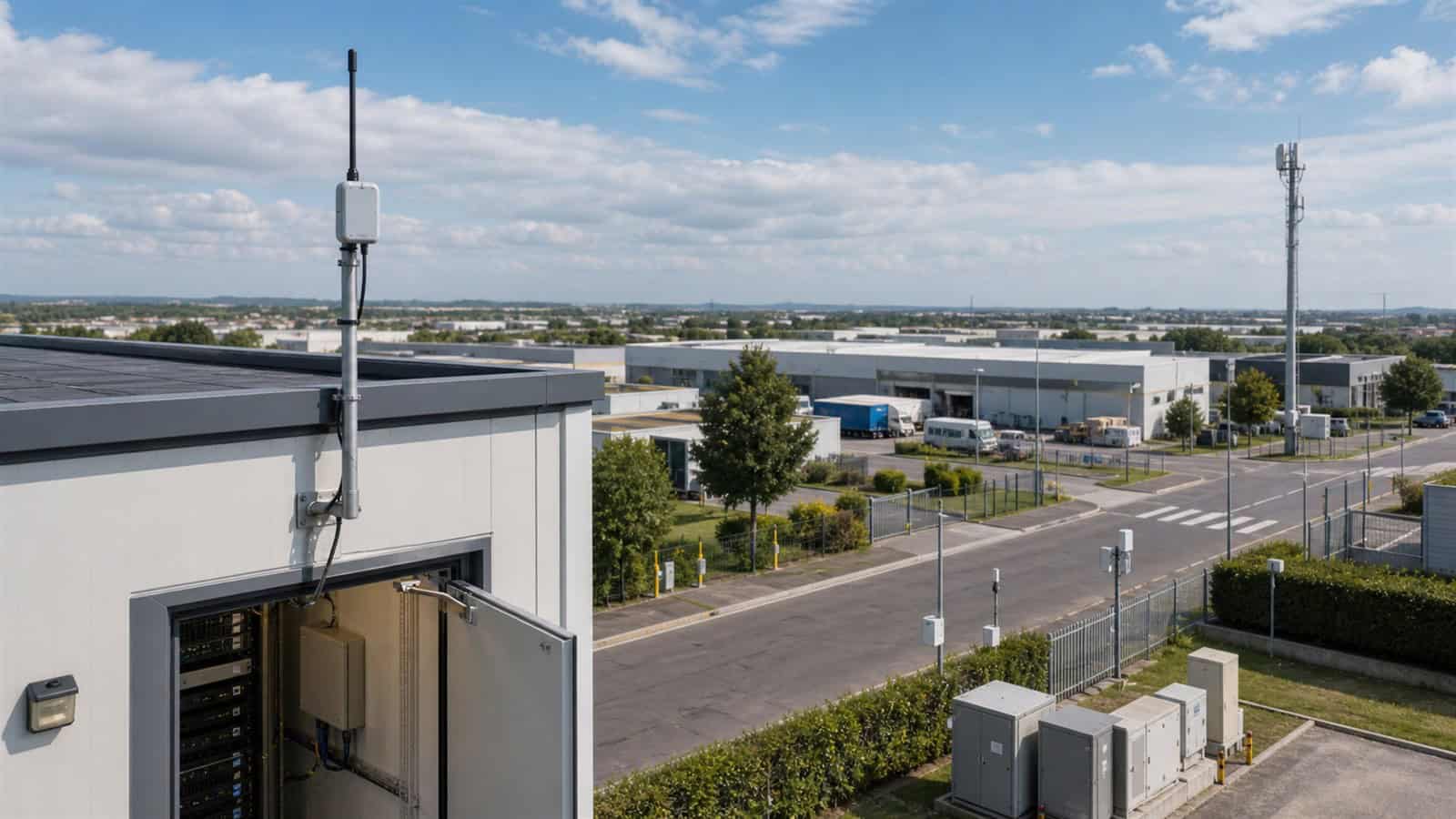
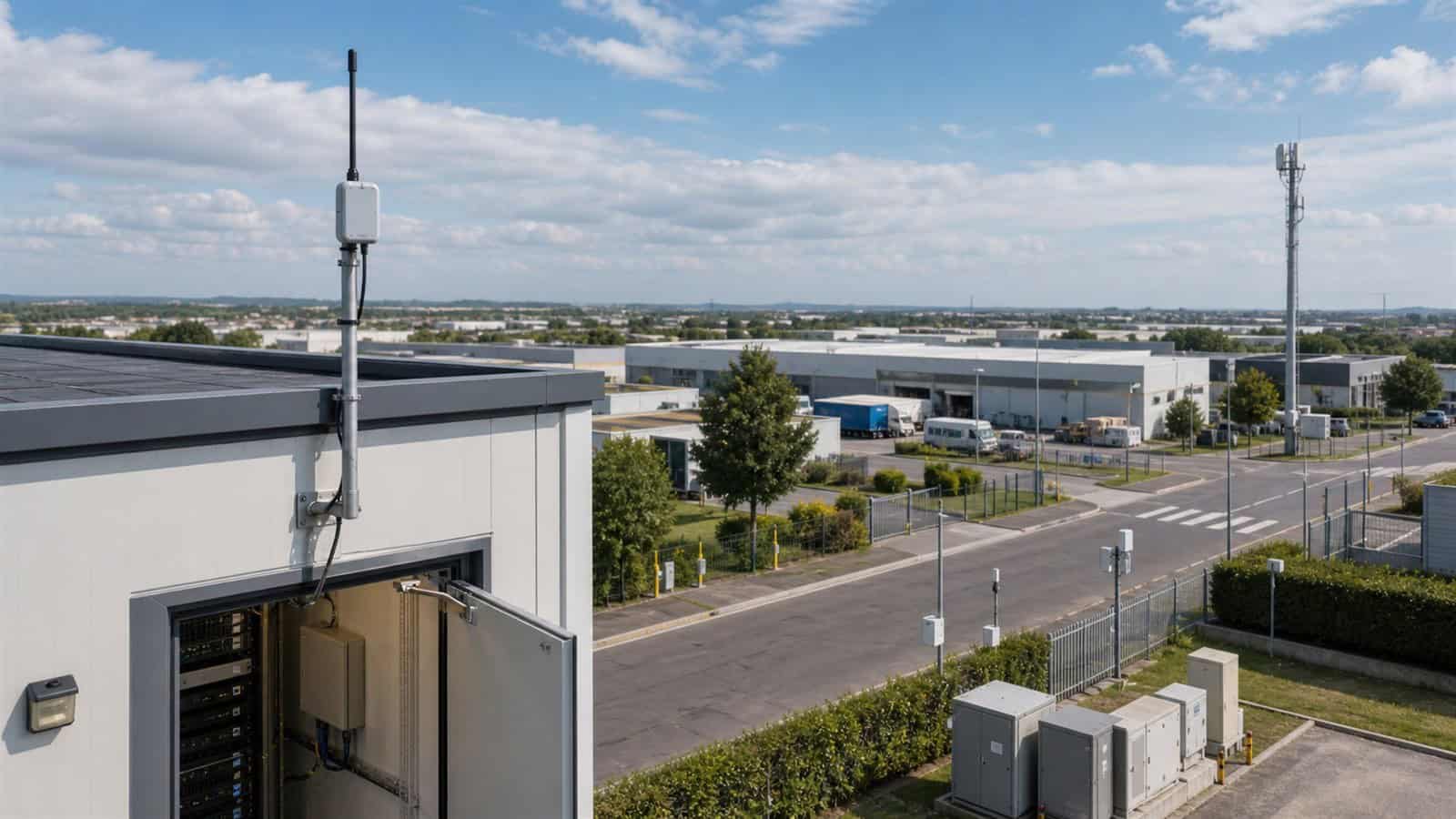
The Robustel R1520LG LoRaWAN Gateway can fit both private LoRaWAN deployments and architectures using an external Network Server, but the better network model depends less on gateway hardware than on how much coverage, infrastructure and operational responsibility the business wants to own.
Consider a logistics company with two very different requirements. Inside a large distribution centre, thousands of square metres of warehouse space sit under the company’s own IT and facilities teams. Installing and maintaining several gateways is practical.
The same company also wants LoRaWAN data from smaller assets distributed across multiple cities. Building and operating gateway coverage everywhere may create more infrastructure responsibility than the application justifies. The sensors may be similar. The ownership decision is not.
The First Decision Is What You Want to Own
A private LoRaWAN network and a public or externally managed LoRaWAN network can deliver similar application data while assigning very different responsibilities. For a Robustel LoRaWAN deployment, those responsibilities can be separated into several layers:
- End devices
- → radio coverage
- → gateways
- → backhaul
- → LoRaWAN Network Server
- → device onboarding
- → application integration
- → monitoring and support
A private network can place most or all of these layers under the organisation’s control. An externally managed network may move gateway coverage, Network Server operation or both to a service provider.
That distinction is more useful than starting with the assumption that one model is inherently more secure, cheaper or scalable. A business that wants direct control of a factory network may accept the operational workload of running the infrastructure. A company tracking geographically dispersed assets may value existing external coverage more than ownership of the gateways.
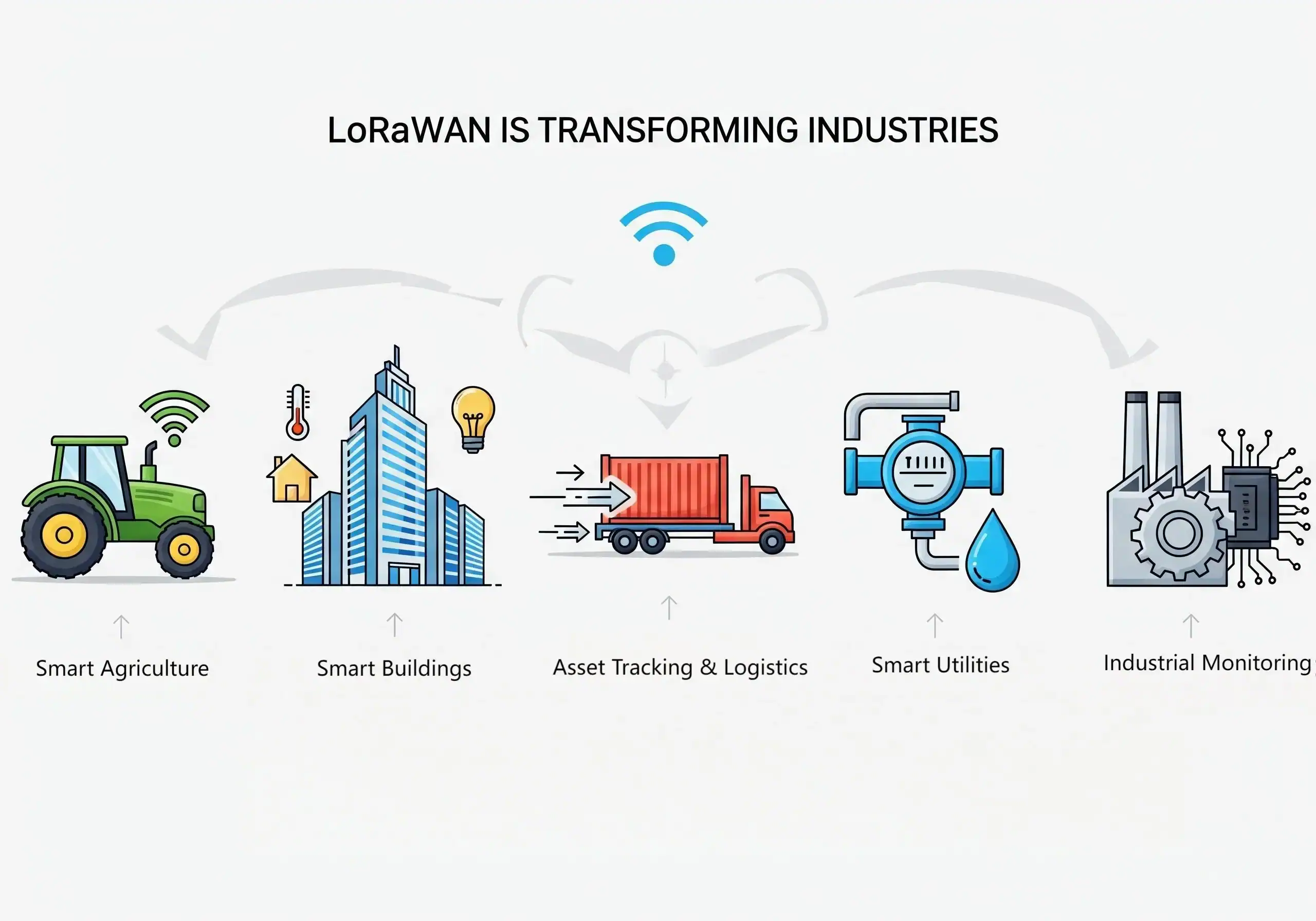
Robustel’s LoRaWAN Gateway Applications video provides a useful visual overview of how LoRaWAN gateways appear across different application environments. The deployment model should follow those environments rather than forcing every use case into the same ownership structure.
A Private Network Gives Control—and an Operating Responsibility
Return to the distribution centre. The company controls the building, has reliable Ethernet connectivity and can determine where Robustel LoRaWAN gateways are installed. Its engineering team also wants to decide when new sensors are onboarded and where application data is processed.
A private network can fit this environment well.
The organisation can make its own decisions about:
- Gateway placement
- Radio coverage
- Backhaul
- Network Server architecture
- Device onboarding
- Application integration
- Firmware and configuration management
- Network expansion
- Troubleshooting
That control is valuable when LoRaWAN forms part of a local operational system. But every item on that list also becomes someone’s responsibility. If a gateway goes offline, the organisation needs to detect it. If a new warehouse zone has poor coverage, the organisation needs to expand the network. If the LNS configuration changes, someone needs to validate the change. If a sensor fails to join, the support boundary does not automatically belong to an external network operator.
This is why “private” should not be interpreted simply as “we own the data.” It also means: We own more of the network lifecycle.
For a relatively contained site, that can be entirely reasonable. Robustel’s Voytech Systems building automation case study provides a useful example of this type of local ownership. R1520-LG gateways receive LoRaWAN sensor traffic and forward it to a Sitelink Controller located within the building architecture. The local controller hosts the LoRaWAN network and application-server functions before information is presented to the BMS as BACnet objects.
The architectural lesson is more important than the individual products. The building does not depend on a geographically distributed public LoRaWAN service to provide its local radio infrastructure. Gateway placement, local server functions and BMS integration belong to the site architecture. That level of ownership can be an advantage when the business has the people and processes to operate it.
An Externally Managed Network Trades Infrastructure Ownership for Service Dependence
Now consider the company’s assets distributed across several cities. Owning one warehouse is very different from owning enough LoRaWAN infrastructure to cover every location where an asset may appear. If a suitable public or operator-managed LoRaWAN service already exists, the company may choose to consume network coverage rather than build it. The operational model changes.
Instead of asking: Where should we install every gateway? the business may ask: Does the provider offer suitable coverage where our devices operate?
Instead of running every part of the LNS environment itself, the organisation may use network services supplied by the operator. That can reduce the amount of radio infrastructure the business must deploy and maintain. But responsibility has not disappeared. It has moved. The company now needs to understand:
- Where service coverage actually exists
- How device onboarding is handled
- Which regional network configuration is used
- How data leaves the operator’s network
- Which APIs or application interfaces are available
- What service levels apply
- How incidents are escalated
- What happens when assets move outside coverage
- How pricing changes as devices or messages scale
- How difficult it would be to change network providers later
A public LoRaWAN network is therefore not automatically the low-effort option for every project. The organisation may operate fewer gateways, but it becomes more dependent on the network provider’s coverage, integration model and service lifecycle.
This trade-off is particularly important for industrial applications. A public network may provide excellent city-scale coverage while still being unsuitable for a shielded basement, underground plant room or remote industrial property. Coverage must be verified at the real endpoint location.
Some Businesses Need More Than One Deployment Model
Private versus public does not always need to be a company-wide decision. The logistics company from the opening example may reach two different conclusions.
For its large distribution centres: Private LoRaWAN. Because the company controls the property, knows where sensors will be installed and can operate the local gateway infrastructure.
For mobile or geographically scattered assets: Externally managed LoRaWAN coverage.Where a suitable provider already operates the required network.
The two approaches can coexist because they solve different infrastructure problems. This is more useful than forcing the entire organisation into one architecture simply to standardise the word “LoRaWAN.”
A third situation can also appear. A business may operate its own gateways at critical facilities but forward them to a centrally managed external LNS rather than running the Network Server independently at every site.
That creates another division of ownership:
Customer owns gateway coverage
- central team or service owns LNS
- application team owns business integration
This is why private/public discussions can become misleading when they focus only on who owns the gateway. LoRaWAN ownership has several layers. A project should identify each one separately.
How the Robustel R1520LG LoRaWAN Gateway Fits Private and Externally Managed Networks
The Robustel R1520LG LoRaWAN Gateway is useful in this decision because its role does not require one fixed LNS ownership model.
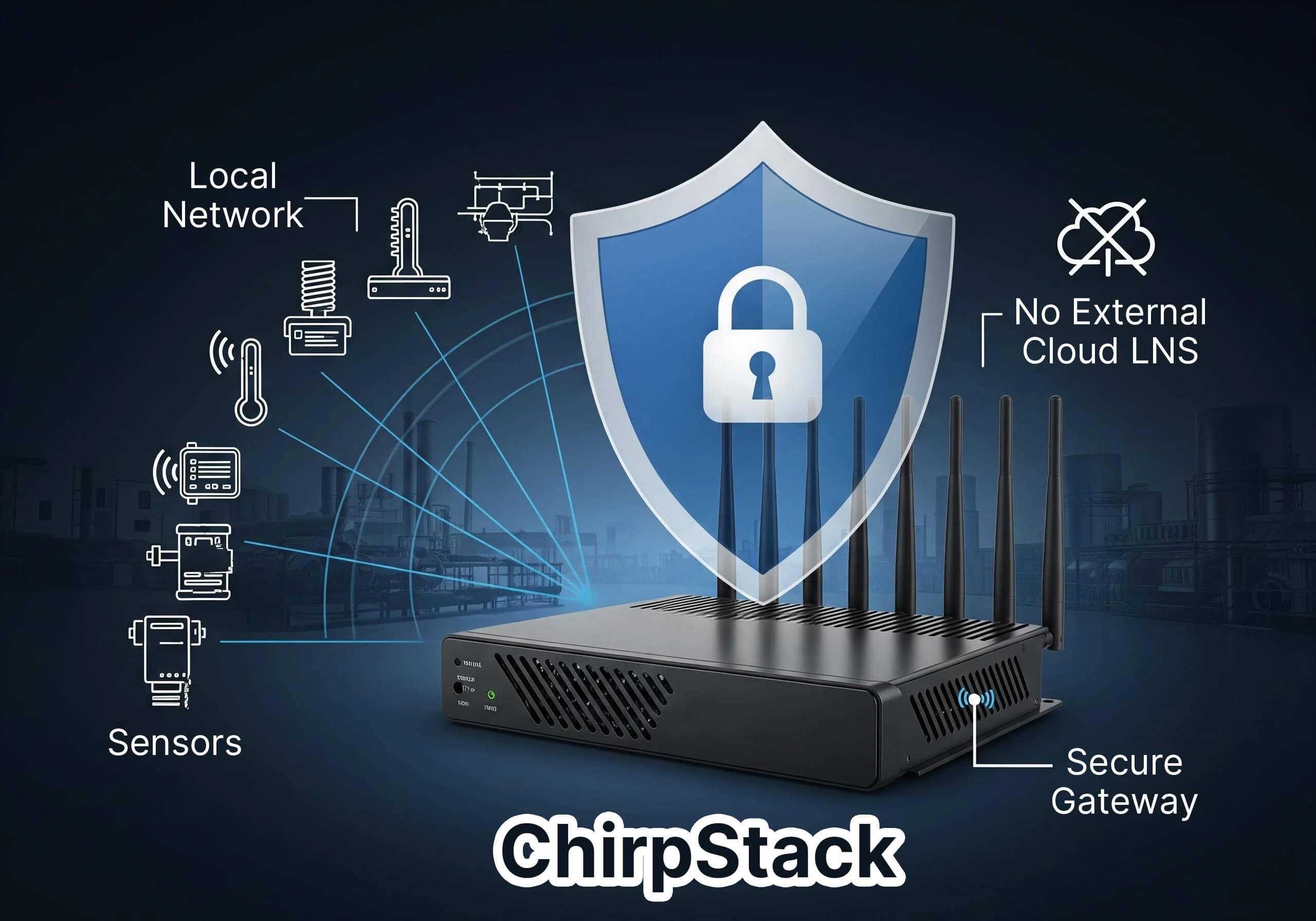
For a contained private network, the R1520LG can operate with an embedded ChirpStack environment.
That architecture can fit sites where:
- The gateway and sensors remain within a defined facility
- The organisation wants a locally controlled LNS
- The expected scale fits the embedded-server architecture
- Local teams are prepared to own configuration and maintenance
Built-in ChirpStack should not be interpreted as a replacement for every centralized or operator-scale Network Server. The appropriate architecture still depends on site count, device estate, operational model and application requirements.
The R1520LG can also forward LoRaWAN traffic to an external LNS through the documented methods: UDP, Basic Station and Loriot.That allows a different ownership model:
- Site gateway
- → IP backhaul
- → externally or centrally managed LNS
The gateway remains under the customer’s or integrator’s control while Network Server operation sits elsewhere. This separation is particularly useful when an organisation wants to standardise gateway hardware across many sites without requiring every site to host its own LoRaWAN server. The product therefore supports several deployment models, but it does not make the ownership decision for the customer.
The business still has to decide who operates:
- Coverage
- Passerelles
- Backhaul
- LNS
- Device onboarding
- Monitoring
- Support
That responsibility map should exist before hardware is ordered.
Use an Ownership Map Instead of a Private-vs-Public Scorecard
A conventional comparison table often tries to score private and public networks as “better” or “worse.” That can hide the real decision. Instead, create an ownership map.
For each layer, write Us, Provider, or Partner.
| Network responsibility | Who owns it? | Question to resolve |
|---|---|---|
| Sensor procurement | Us / Partner | Who validates device compatibility? |
| Device provisioning | Us / Provider / Partner | Who owns credentials and onboarding? |
| Radio coverage | Us / Provider | Who guarantees or validates coverage? |
| Gateway hardware | Us / Provider | Who installs and replaces gateways? |
| Gateway power | Us / Site owner | Who restores local infrastructure? |
| Backhaul | Us / Provider | Who owns Ethernet or cellular connectivity? |
| Network Server | Us / Provider / Partner | Who operates and updates the LNS? |
| Application integration | Us / Partner | Who turns network data into business data? |
| Monitoring | Us / Provider | Who detects faults? |
| Incident response | Us / Provider / Partner | Who acts first when data stops? |
| Expansion | Us / Provider | Who adds coverage when the estate grows? |
Once this table is completed, the preferred deployment model usually becomes clearer.
If most entries naturally belong under Us, a private network may align with the organisation’s capabilities. If gateway coverage, LNS operation and day-to-day network support naturally belong under Provider, an externally managed service may reduce unnecessary infrastructure ownership. If the table contains a mixture, a hybrid operating model may be the most realistic answer. The important point is that every row has an owner.
Coverage Scale Can Change the Business Case
Ownership also changes with geography. A company may find it economical to install three Robustel LoRaWAN gateways across one industrial campus. The same company may not find it economical to install hundreds of gateways across a country simply to support a relatively small number of mobile or dispersed devices.
This is where public or operator-managed network economics can become attractive. On the other hand, an industrial facility may already provide power, Ethernet and technicians at every gateway location. In that environment, paying an external network operator may not remove enough operational work to justify the service model.
The decision should therefore be tested against: Coverage density × site ownership × operational capability
Robustel’s Cibicom nationwide LoRaWAN network case study shows how different the operating model becomes at national scale. Cibicom operates distributed LoRaWAN infrastructure across Denmark, using cellular backhaul from gateway locations towards centralized server systems and a Network Operations Center.
The case should not be used to assume that every Cibicom deployment represents a specific public-network commercial model. Its value here is the ownership lesson: once LoRaWAN coverage becomes geographically distributed infrastructure, gateway sites, backhaul, monitoring and support become an operating system of their own.
A business choosing to build a comparable footprint needs to be prepared to own those responsibilities—or intentionally place them with a network provider.
Choose by Ownership, Coverage and Lifecycle
Before selecting a private or public LoRaWAN model, answer three groups of questions.
Ownership
- Who operates the gateways?
- Who operates the LNS?
- Who provisions end devices?
- Who manages credentials?
- Who responds when something fails?
Coverage
- Are devices concentrated inside owned sites?
- Are they distributed across cities or regions?
- Does a suitable external network already cover those locations?
- Are there basements, plants or private facilities where external coverage cannot be assumed?
- Will assets move between coverage areas?
Lifecycle
- Who adds gateways when the network expands?
- Who patches and monitors the infrastructure?
- How are failed devices replaced?
- How does the organisation change LNS or network provider later?
- What happens when a site closes or an asset moves?
These questions are more useful than asking whether private LoRaWAN is “more professional” or whether public LoRaWAN is “simpler.” Both models can be appropriate.
The better architecture is the one whose operational responsibilities match the organisation that must live with the network after commissioning.
Foire aux questions
Q1. What is a private LoRaWAN network?
A private LoRaWAN network is an architecture in which an organisation or its chosen partner operates the LoRaWAN infrastructure for a defined deployment. This can include gateways, backhaul and the Network Server. The exact ownership model varies, so “private” does not necessarily mean every network component must be located on site.
Q2. Is a public LoRaWAN network better for widely distributed devices?
It can be a strong fit when a suitable operator already provides coverage across the areas where devices operate. This may reduce the need to deploy and maintain gateways at every location. Coverage, pricing, device onboarding, application integration and service dependency still need to be evaluated for the actual deployment.
Q3. Can the Robustel R1520LG LoRaWAN Gateway be used in a private network?
Yes. The Robustel R1520LG LoRaWAN Gateway supports an embedded ChirpStack architecture for appropriate private deployments and can also connect to an external LNS. The preferred design depends on network scale, operational ownership and whether the project wants Network Server functions locally or centrally.
Q4. Does using an external Network Server make a LoRaWAN network public?
No. Gateway ownership and Network Server ownership are separate architectural decisions. A company can operate its own gateways while forwarding traffic to a centrally managed or externally hosted LNS. The complete operating model should be defined by who owns coverage, infrastructure, server operation and support.
Q5. Can a business use both private and public LoRaWAN networks?
Yes. Different applications or sites may justify different models. A company might operate private LoRaWAN inside factories while using externally managed coverage for geographically dispersed assets. The key requirement is to define device provisioning, data integration and operational responsibility clearly across both environments.
Conclusion
The choice between a private LoRaWAN network and a public or externally managed network is fundamentally an ownership decision. The Robustel R1520LG LoRaWAN Gateway can participate in private architectures using an embedded LNS or in deployments forwarding traffic to an external Network Server. That flexibility is useful, but it does not determine which organisation should own the surrounding infrastructure.
Start by mapping coverage, gateways, backhaul, LNS, onboarding, monitoring and support to an accountable owner. Then compare that responsibility map with the actual geography of the deployment.
The better LoRaWAN network model is not the one that gives the business the most control or the least hardware. It is the one that gives each part of the network to the organisation best prepared to operate it throughout the deployment lifecycle.
Explore more articles about Robustel’s LoRaWAN gateway in industrial IoT:


À propos de l'auteur
Robert Liao | Technical Support Engineer
Robert is an IoT Technical Support Engineer at Robustel, specializing in industrial networking and edge connectivity. A certified Networking Engineer, Robert focuses on the deployment and troubleshooting of large-scale IIoT infrastructures. His work centers on architecting reliable, scalable system performance for complex industrial applications, bridging the gap between field hardware and cloud-side data management.