
OPC UA Gateway Buyer’s Guide for Secure IT/OT Integration
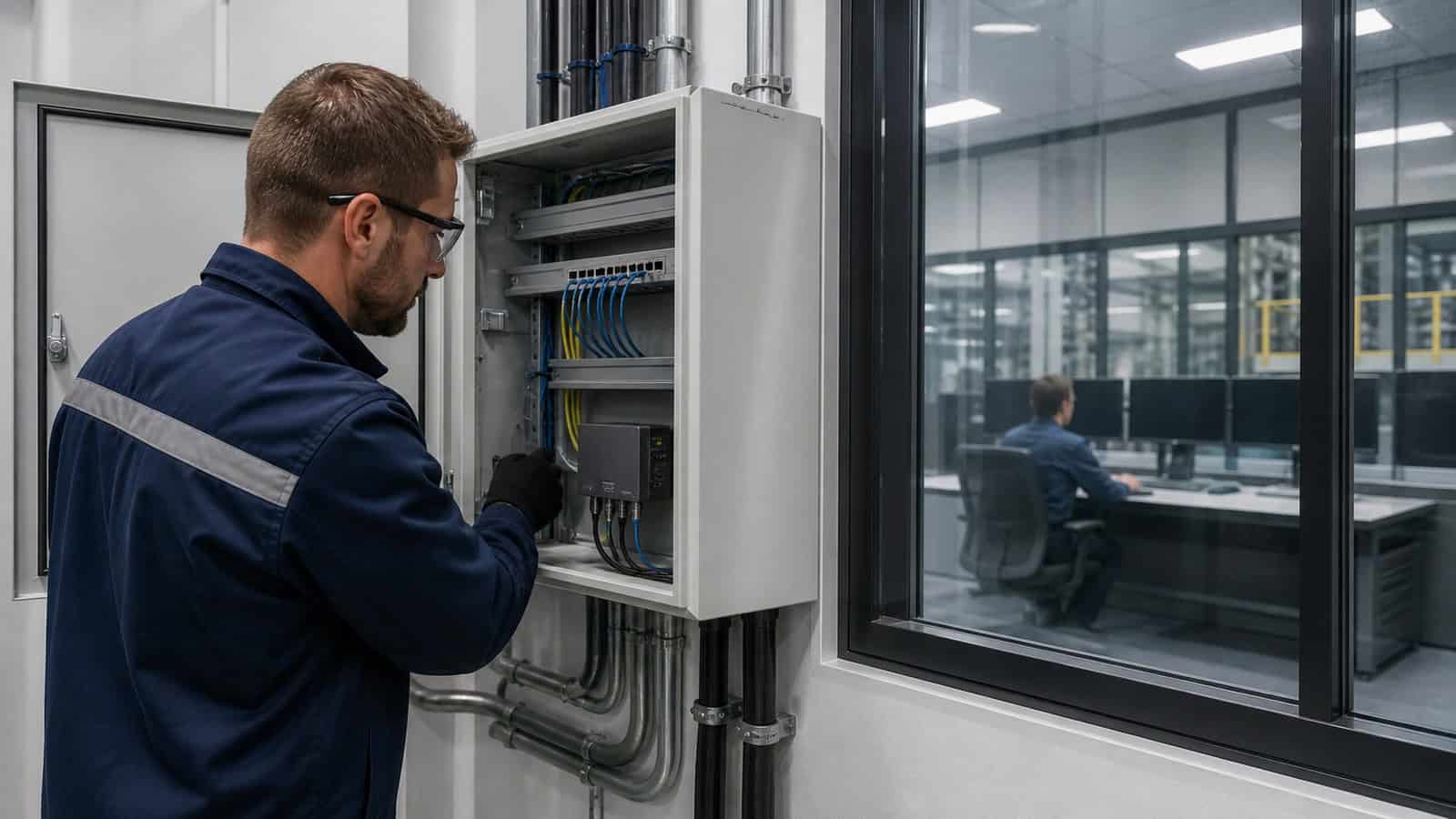
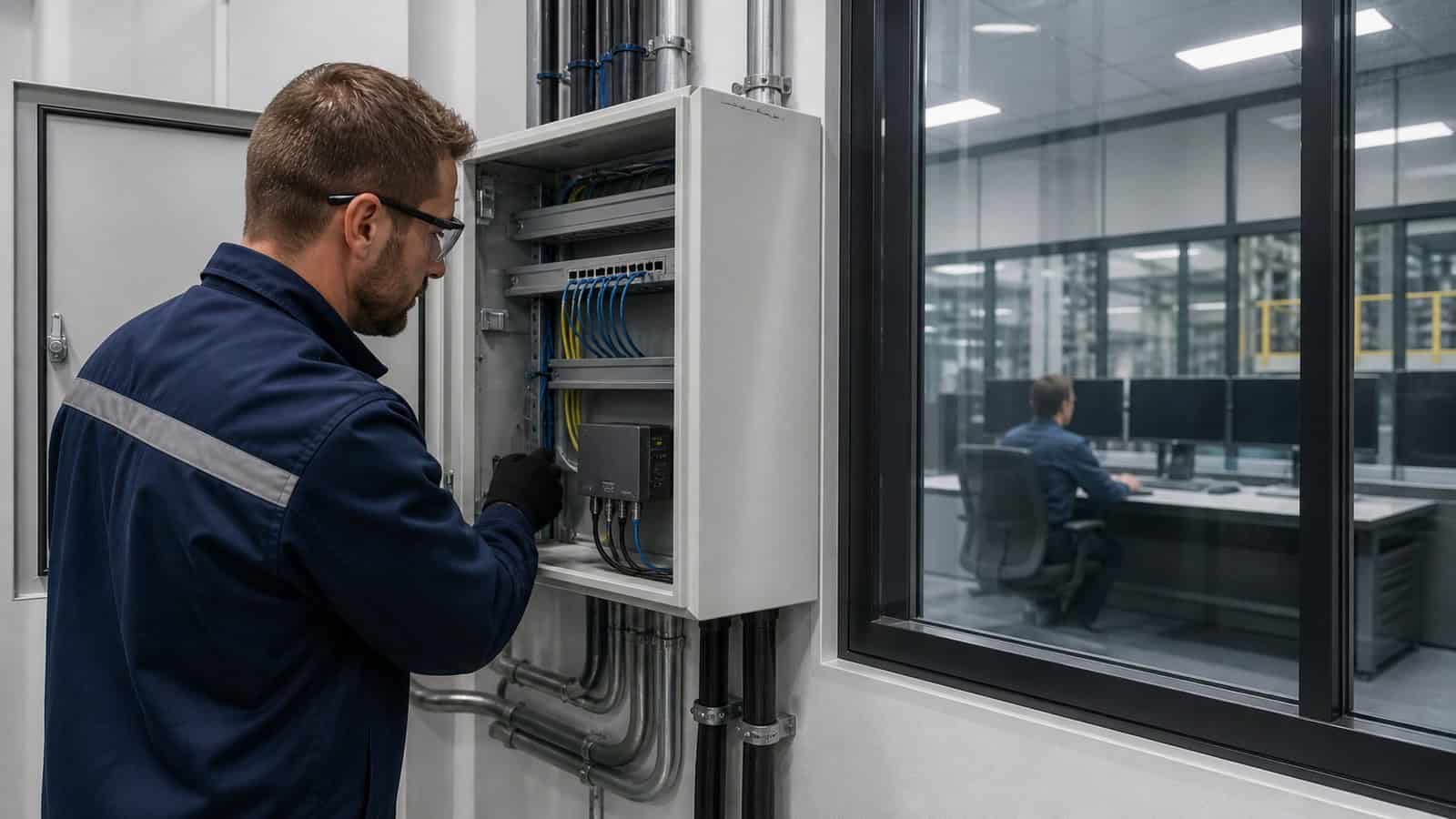
The Robustel EG5120 edge computing gateway can fit OPC UA-oriented IT/OT architectures where selected industrial data needs to be collected, processed and published from a controlled edge layer. The buyer’s priority should not be whether a gateway merely “supports OPC UA,” but how namespaces, certificates, network reachability, buffering and lifecycle responsibilities prevent the integration from exposing more of the control environment than intended.
Consider a plant where the MES team needs production count, machine status, alarm state and energy information. The easiest technical solution may appear to be giving the IT application direct access to the controller network.
The better design question is which approved information should cross the IT/OT boundary, through which endpoint, under whose identity and with what behavior when either side becomes unavailable.
Treat the OPC UA Gateway as a Publication Boundary
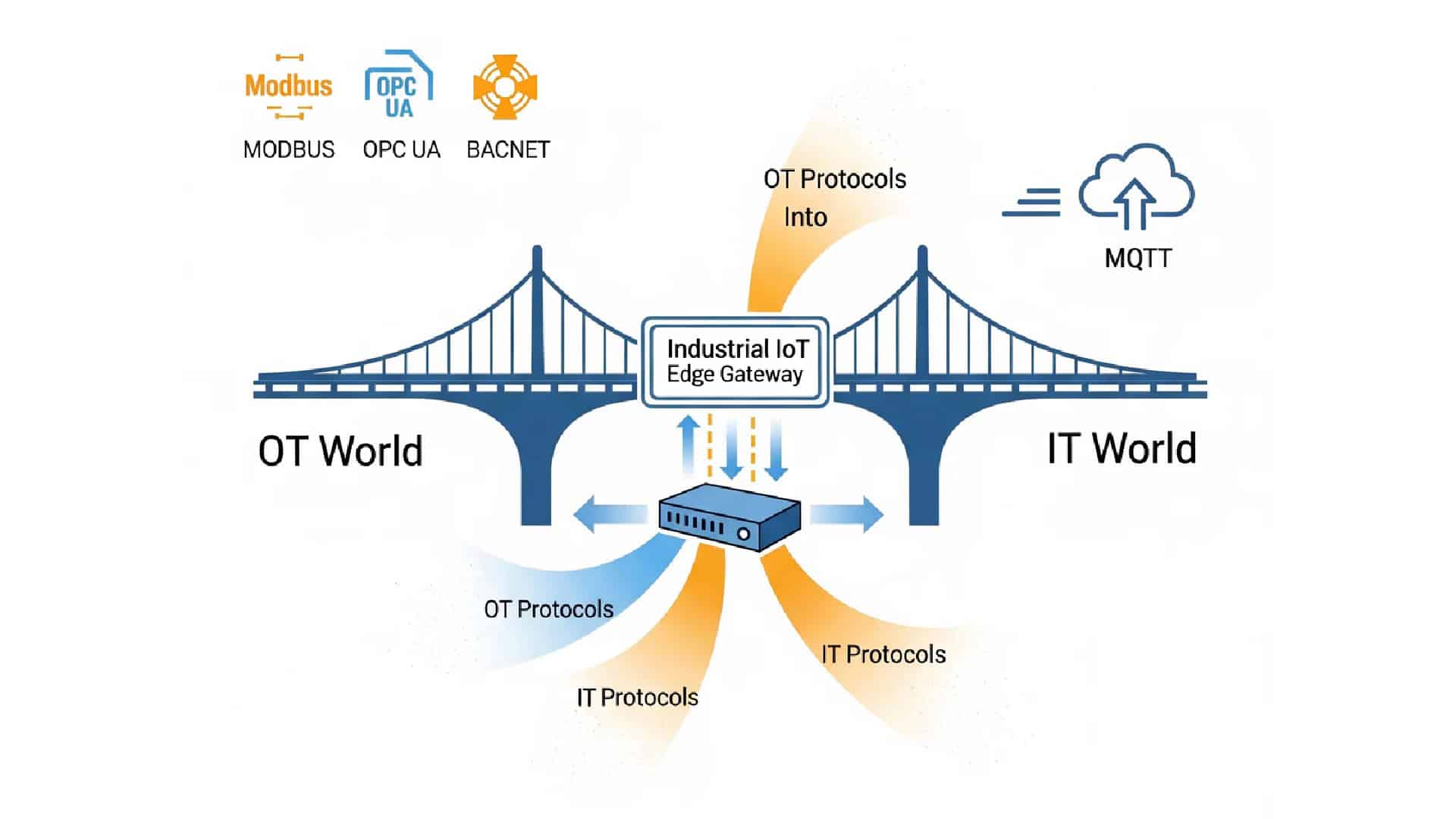
An OPC UA gateway should be treated as an information-publication layer rather than simply a protocol converter.
The OT environment owns the machines and source data. The gateway can collect approved information and expose a defined endpoint to upstream clients. IT systems receive the published model without automatically gaining unrestricted network access to every PLC or field device behind the gateway.
This role fits the broader purpose of the Robustel Edge Computing Gateway portfolio, where industrial interfaces, local applications and upstream networking coexist at the edge of OT and IT systems.
Robustel’s “What Is an Edge Gateway” video provides useful architectural context for this boundary. Once the gateway is understood as a controlled intermediary between field equipment and upstream systems, the OPC UA design can focus on exactly what information is allowed to cross that intermediary. The gateway should therefore expose an intentionally designed information model rather than become an uncontrolled window into the plant network.
Design the Namespace Before Opening the Endpoint
A secure OPC UA connection can still be difficult to use if the namespace has not been designed properly.
The project needs agreed names, units, hierarchy and ownership for the values being published. If two production lines use different register addresses or vendor-specific terminology for the same concept, the gateway layer can provide a controlled point for normalization before the information reaches MES, SCADA or analytics systems.
This is where edge processing creates more value than simple connectivity.
Robustel’s Connected CNC Machines Application Example illustrates the broader integration problem, but it should not be treated as evidence of either OPC UA connectivity or native support for proprietary CNC controller protocols. In this type of architecture, an EG-series edge gateway can use supported industrial interfaces and protocols exposed by the machine, PLC or control layer to create a managed path for selected operational data. The existing CNC control architecture remains unchanged, while the acquired data can then be made available to service or plant-level applications.
The same principle applies to OPC UA: the publication model should be defined independently from the internal details of every machine. For each exposed value, the integration team should know its source, engineering unit, update behavior, quality state and owner.
Separate Certificate Trust from Network Reachability
OPC UA security is not created by certificates alone. Certificates establish trust between endpoints, but network architecture still determines which systems can reach the OPC UA service in the first place.
A buyer should therefore evaluate two separate controls.
The trust model defines which client certificates are accepted, how certificates are issued and renewed, and who can revoke access.
The network model defines which VLANs, subnets, VPN users or upstream systems can reach the gateway endpoint.
A strong design uses both.
Robustel’s Secure Remote Access to Industrial Robots Application Example demonstrates the importance of maintaining a controlled boundary around production equipment. The example is not evidence of a specific OPC UA implementation; it shows why remote IT or service access should terminate at an intentionally managed edge layer rather than expose the controller network directly.
For an OPC UA gateway project, certificate management should therefore be treated as part of a wider IT/OT access architecture.
Decide What Happens When the Upstream System Is Unavailable
OPC UA integration also needs an availability policy. If the MES or upstream client disappears, the industrial process should not fail simply because the reporting endpoint is unavailable unless the application has explicitly been designed with that dependency.
The gateway may continue collecting source data, and a local application may buffer selected records where that behavior has been designed and sized.
Buffering should not be treated as unlimited storage. The project should define what is retained, how long it can remain local and what happens when the buffer reaches its limit.
Similarly, reconnecting the OPC UA client does not automatically guarantee that every value missed during the outage can be reconstructed.
Robustel RobustOS Pro software layer on Robustel edge gateways allows application logic to remain close to the source, which can support controlled processing and buffering strategies when they are required.
The architecture should document these behaviors before production because outage handling is part of the data contract between OT and IT.
How the Robustel EG5120 Edge Computing Gateway Fits a Governed OPC UA Architecture
The Robustel EG5120 edge computing gateway provides the industrial interfaces, compute resources and local application environment needed for a controlled IT/OT publication layer.
Field information can be acquired from approved equipment, processed locally and then exposed upstream through a validated software workflow. The gateway’s Ethernet and cellular connectivity also allow the publication layer to sit within different plant and remote-site network designs.
The software environment is important because OPC UA behavior is application-specific. The RobustOS Pro edge computing operating system provides Debian, containers and native Linux application support, allowing validated OPC UA services or integration applications to run on the gateway where the project requires them.
This should not be interpreted as proof that every EG5120 configuration automatically provides every OPC UA feature. The actual application, security profile, certificate behavior and data model must be validated for the software stack being deployed.
The EG5120’s role is to provide a capable, managed edge platform on which that publication boundary can be implemented.
Commission the Namespace, Trust Model and Management Process Together
An OPC UA gateway should not be accepted because one engineering laptop can browse its endpoint. Commissioning should verify the complete publication contract.
| Decision area | What must be defined and tested |
|---|---|
| Source data | Approved PLC/device values and ownership |
| Namespace | Names, units, hierarchy and quality behavior |
| Access | Read-only or approved write scope |
| Endpoint | Address, interface and allowed client networks |
| Certificates | Issuance, trust, renewal and revocation |
| WAN/VPN | Whether remote access is required and how it is controlled |
| Buffering | Behavior during client or WAN outage |
| Demande | Version, startup and failure recovery |
| Management | Configuration and software ownership |
| Retirement | How certificates and access are revoked |
For a Robustel EG5120 deployment, RCMS can also support device-level monitoring and lifecycle operations, but the operations platform does not own the plant’s OPC UA namespace or certificate policy. Those remain project responsibilities.
The commissioning record should identify who owns each layer. Controls engineering may own the source tags, the software team may own the OPC UA application, cybersecurity may own the certificate policy and network teams may own the permitted routes.
The design becomes easier to maintain when those responsibilities are explicit before the gateway is deployed at scale.
Foire aux questions
Q1. What does an OPC UA gateway do in an industrial network?
An OPC UA gateway can provide a controlled layer that collects approved OT data and publishes it to upstream OPC UA clients. Depending on the software design, it may also normalize data or perform local processing before publication.
Q2. Can the Robustel EG5120 edge computing gateway be used in an OPC UA architecture?
The Robustel EG5120 edge computing gateway can provide the industrial connectivity and Debian-based application environment required for a validated OPC UA integration workflow. The actual OPC UA service, data model and security configuration still need to be verified for the deployed software stack.
Q3. Are OPC UA certificates enough to secure IT/OT integration?
No. Certificates establish endpoint trust, but the architecture should also control which networks and users can reach the service. Firewall rules, routing, VLANs, VPN policy and certificate management should work together.
Q4. Why does namespace design matter?
A consistent namespace gives upstream applications stable names, hierarchy and engineering meaning instead of exposing raw device-specific addresses. It also makes ownership and change control easier when several machines or vendors are integrated.
Q5. Should an OPC UA gateway allow write access to PLC data?
Only where the application requires it and the control-system owner has explicitly approved the behavior. Many monitoring integrations can remain read-only. Write access should be treated as a separate risk and validation decision rather than enabled by default.
Conclusion
An OPC UA gateway should create a governed publication boundary between industrial equipment and upstream IT systems rather than simply expose another protocol endpoint. The Robustel EG5120 edge computing gateway provides a suitable edge platform for architectures that need local data acquisition, application processing and controlled upstream publication, but the value of the design depends on the namespace, certificate model, network boundaries and lifecycle process built around it.
Define which information is published, who trusts the endpoint, who can reach it and how the system behaves when upstream services are unavailable. Secure IT/OT integration comes from governing that boundary throughout the deployment lifecycle, not from checking an OPC UA support box.
Related Reading on Edge Computing in Industrial IoT:



À propos de l'auteur
Robert Liao | Technical Support Engineer
Robert is an IoT Technical Support Engineer at Robustel, specializing in industrial networking and edge connectivity. A certified Networking Engineer, Robert focuses on the deployment and troubleshooting of large-scale IIoT infrastructures. His work centers on architecting reliable, scalable system performance for complex industrial applications, bridging the gap between field hardware and cloud-side data management.