
LoRaWAN Gateway Vendor Evaluation Guide: 12 Questions for Industrial Projects
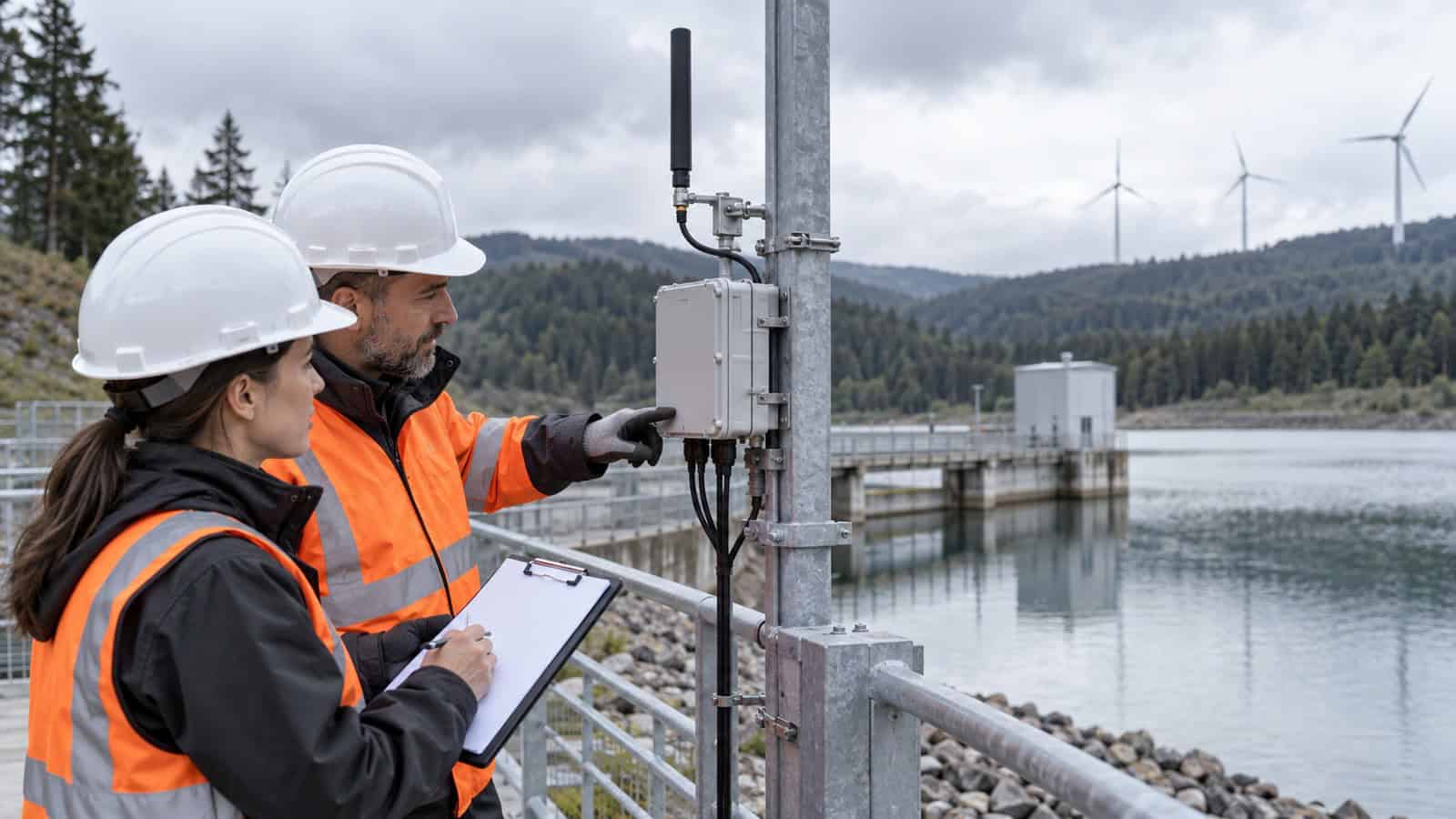
The Robustel R1520LG LoRaWAN Gateway is a useful reference for vendor evaluation because it exposes the decisions that matter beyond the radio: regional variants, external or embedded network-server architecture, cellular and wired backhaul, industrial interfaces and fleet management. A serious comparison should ask how the proposed gateway will be installed, operated and recovered in the target estate.
A Shortlist Should Become Uncomfortable Before Award
A procurement exercise earns its value when it exposes the awkward operating questions early. I would expect bidders to explain who owns credentials, how a failed unit is replaced, what evidence is available when packets stop upstream, and how configuration is recovered across a large estate. A polished feature list cannot answer those questions on its own.
Ask every bidder the same questions and require an exact-model source for each product answer.
- Which regional frequency plans and approvals apply to the destination countries?
- Which LoRaWAN version and device classes are supported?
- Is the gateway a packet forwarder, an embedded LNS platform or both?
- Which forwarding protocols and external LNS services are supported?
- How are gateway-to-server credentials provisioned and rotated?
- What Ethernet, cellular and Wi-Fi backhaul options exist on the exact variant?
- What happens to uplinks and management when backhaul is unavailable?
- Which antenna connectors, mounting conditions and enclosure limits apply?
- How are configuration, firmware, alarms and diagnostics handled across a fleet?
- What local serial or Ethernet integration is actually supported?
- Which replacement, rollback and lifecycle processes are available?
- What acceptance evidence must the project produce before rollout?
The answer “supported” is not enough. Procurement should know where the function runs, who owns it and what evidence demonstrates it.
Three Layers, Three Owners
LoRaWAN gateway selection spans at least three layers. The radio receives endpoint traffic, the packet-forwarding or LNS layer handles network functions, and IP backhaul connects the site to external services. A fault at one layer can resemble another unless alarms and ownership are defined.
| Layer | Vendor evidence | Project acceptance test |
|---|---|---|
| LoRaWAN radio | Region, channels, antenna and exact protocol version | Join and uplink from difficult representative locations |
| LNS/forwarding | Supported architecture and secure transport | Device join, downlink and restart behaviour |
| IP backhaul | Interfaces, VPN and management path | Loss, restoration and fault isolation |
| Operations | Fleet tools, update and diagnostic workflow | Configuration rollback and replacement unit |
Robustel’s Cibicom nationwide LoRaWAN backhaul case study provides deployment evidence that radio reception and IP backhaul remain distinct operating layers at scale. Its LTE450 result belongs to that network; another estate must qualify its own carrier and coverage.
Map the Robustel Portfolio by Architecture
Robustel LoRaWAN gateway portfolio should not be treated as a simple price ladder. Select from the job each site must perform.
| Architecture need | Robustel model direction | Verified role to assess |
|---|---|---|
| Focused forwarding into an existing LoRaWAN architecture | R1320LGe | Packet-forwarder role with cellular backhaul |
| Choice between external forwarding and embedded ChirpStack | R1520LG | External options plus embedded LNS option |
| LoRaWAN plus local edge processing and mixed field interfaces | LG3120e | Integrated LNS and edge-computing role |
| Building-focused integration with LoRaWAN | LG5120 | Building-automation gateway role and exact supported interfaces |
For deployments genuinely built on Robustel LG3120e, E2C Field can add a matched operational layer for LoRaWAN configuration, data handling, local visibility, alarms, workflows and northbound integration. The pairing can reduce separately engineered software work because the gateway and application roles are defined together; it does not imply that E2C Field runs on the other models in the table or is automatically included.
The Robustel R1520LG LoRaWAN Gateway as a Shortlist Decision
Robustel R1520LG LoRaWAN gateway supports LoRaWAN V1.0.4 Class A and Class C, cellular, Ethernet and Wi-Fi backhaul, industrial serial interfaces, external forwarding options including UDP, LoRa Basics Station and LORIOT, and an embedded ChirpStack option. It runs RobustOS Pro and supports RCMS management.
That combination is valuable when the buyer has not yet fixed the LNS ownership model or needs a gateway that can support different site architectures. Flexibility creates a responsibility: the ordered variant and selected software path must be recorded, secured and acceptance-tested. An embedded LNS can reduce dependence on a remote server for defined local functions, but the gateway, power, storage and local software remain failure domains.
The Robustel R1520LG setup video is useful during a proof of concept, after procurement has confirmed the exact regional variant and architecture. It is an orientation aid, not a substitute for the current manual or project test record.
Ask to See the Upgrade and Replacement Routine
Ask the vendor to walk through a real change: add a gateway, rotate credentials, update software, roll back, replace hardware and retire the subscription. Include who approves each step and what remains available if the WAN is down.
Robustel’s Voytech BMS LoRaWAN case study shows how gateway architecture enters a wider operational service. The useful procurement lesson is that avoided cabling, survey work, integration and long-term support belong in one assessment; the deployment outcome is not a universal saving.
Foire aux questions
Q1. How do I choose a LoRaWAN gateway?
Match the regional plan, radio environment, LNS architecture, backhaul, enclosure, interfaces and fleet operations to the site. Then prove join, uplink, downlink and recovery with representative devices before buying at scale.
Q2. Does a LoRaWAN gateway need internet?
It needs an IP path when it forwards traffic to a remote network server or cloud application. An embedded local architecture may keep defined functions on site, but remote management and northbound services still have their own connectivity needs.
Q3. What is the difference between a LoRaWAN gateway and a network server?
The gateway receives LoRa radio packets and bridges them to IP. The network server manages LoRaWAN network functions such as duplicate handling, device sessions and downlink coordination.
Q4. How many devices can one LoRaWAN gateway support?
There is no universal number. Capacity depends on payload size, reporting interval, spreading factors, retransmissions, downlinks, regional constraints, interference and gateway density.
Q5. When is the Robustel R1520LG LoRaWAN Gateway a good vendor choice?
It suits industrial projects that value several backhaul options and a choice between external forwarding and an embedded ChirpStack architecture. Confirm the regional variant, server ownership and recovery process for the exact deployment.
Conclusion
The Robustel R1520LG LoRaWAN Gateway belongs on a vendor shortlist when LNS choice, industrial backhaul and remote operations must be evaluated together. It should be judged inside the complete service boundary, including credentials, replacement, monitoring and degraded-site ownership.
My award decision would follow a witnessed acceptance test and an explained lifecycle routine. A vendor that can describe normal operation but not recovery has answered only half of the procurement question.
Explore More Articles About Robustel LoRaWAN Gateways

À propos de l'auteur
Robert Liao | Technical Support Engineer
Robert is an IoT Technical Support Engineer at Robustel, specializing in industrial networking and edge connectivity. A certified Networking Engineer, Robert focuses on the deployment and troubleshooting of large-scale IIoT infrastructures. His work centers on architecting reliable, scalable system performance for complex industrial applications, bridging the gap between field hardware and cloud-side data management.