
LoRaWAN Gateway for Flood and Water-Level Monitoring: Deployment Guide
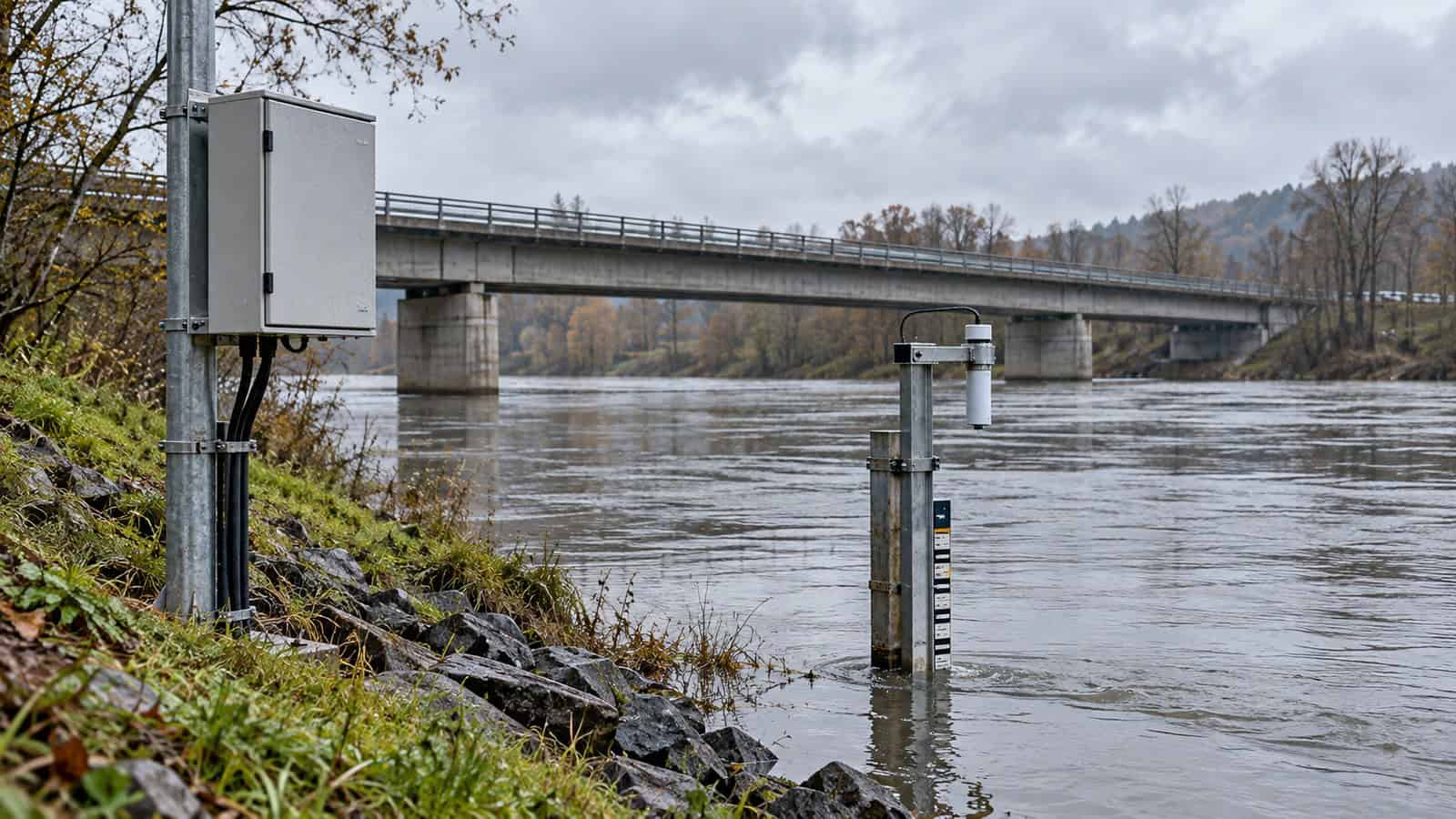
The Robustel R1520LG LoRaWAN Gateway fits flood and water-level monitoring sites that need flexible LoRaWAN, cellular/Ethernet/Wi-Fi backhaul and a choice of LNS architecture. The gateway can carry observations; it does not establish sensor accuracy or guarantee that an alarm reaches the responsible authority.
Survey the Whole Measurement Chain
Begin at the sensor installation: reference level, mounting stability, expected range, contamination, maintenance access and power. Then survey the radio path from the worst anticipated water or vegetation state, not only a dry commissioning day.
| Survey item | Evidence | Design consequence |
|---|---|---|
| sensor reference | surveyed datum and calibration record | determines whether the value is meaningful |
| RF path | RSSI/SNR across representative states | determines antenna and gateway placement |
| backhaul | carrier and Ethernet availability at cabinet | determines recovery and data-delivery path |
| power | load, autonomy and recharge assumptions | determines outage behaviour |
| response | alarm recipient and acknowledgement | determines whether the monitoring service closes the loop |
Robustel’s solar and battery-site LoRaWAN application example illustrates the same remote-site disciplines: field sensors, gateway, power and backhaul are separate design layers. A flood-monitoring project should preserve that separation in commissioning records.
Place the Gateway for Radio and Maintenance
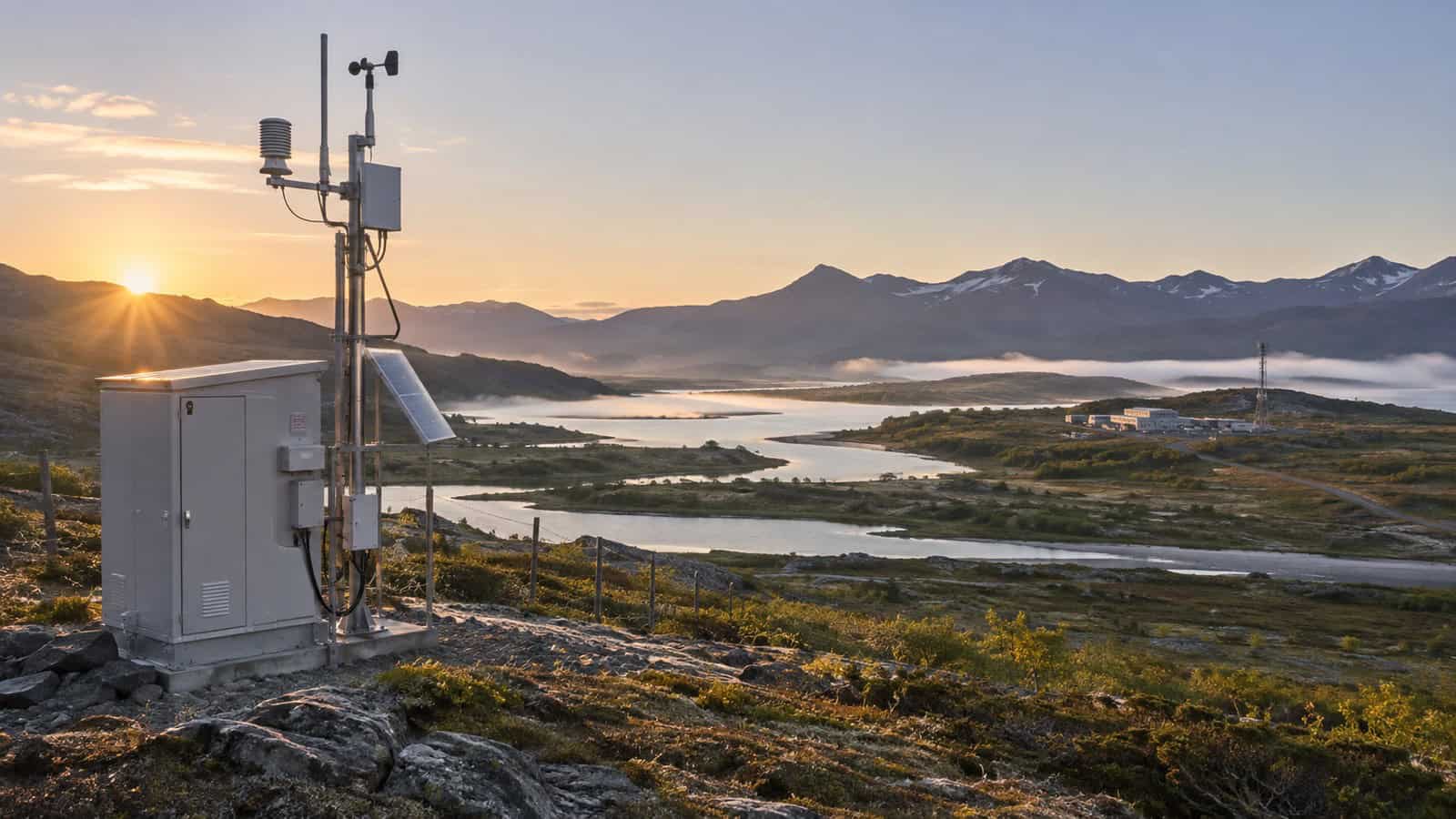
Higher placement may improve the radio path, but access, cable loss, surge exposure and enclosure conditions also matter. R1520LG is an IP30 device, so an exposed riverside or flood-prone site needs an appropriate enclosure and installation design.
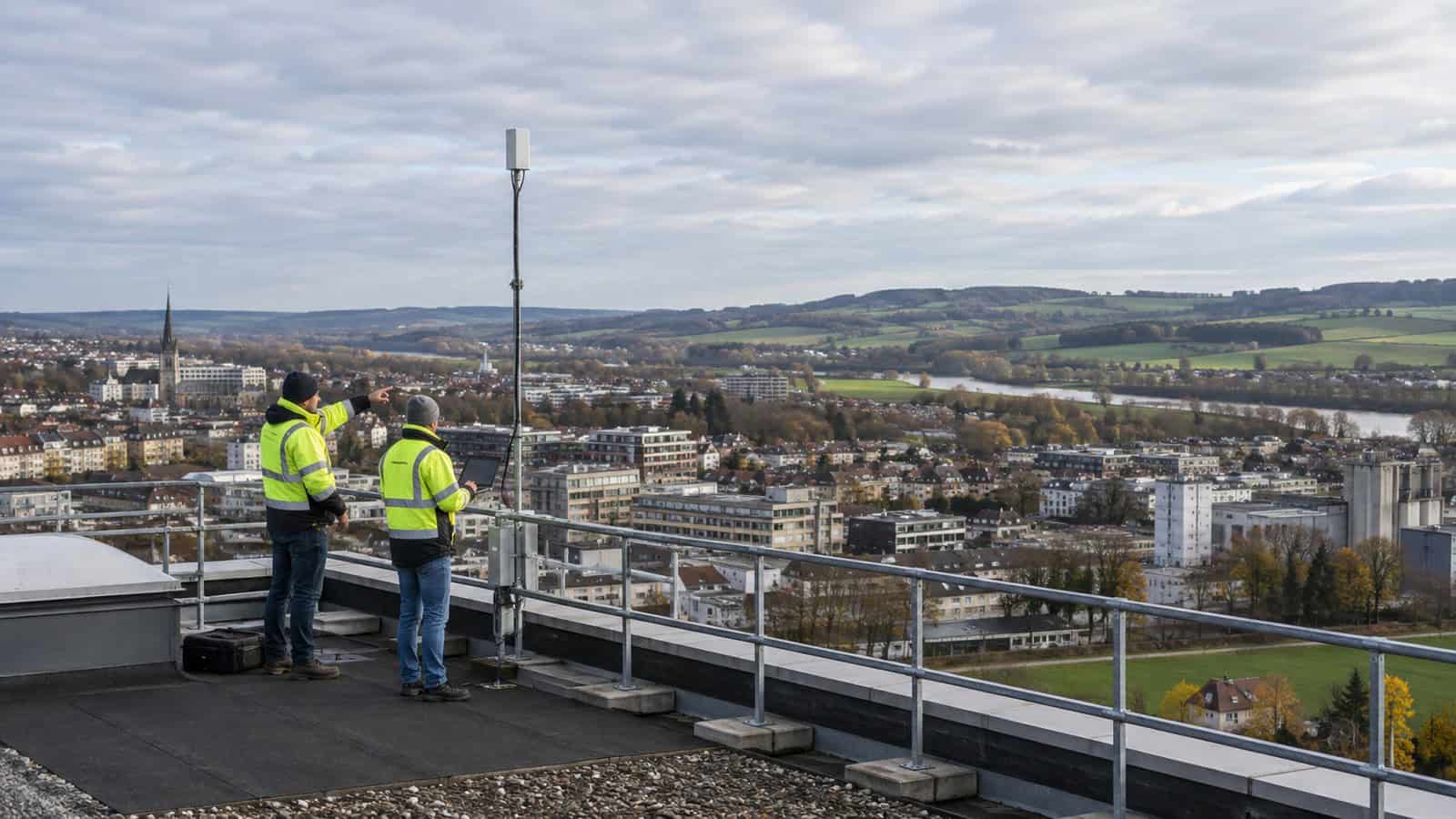
Robustel’s video of “LoRaWAN Gateway Applications” is useful for explaining how remote monitoring fits the broader LoRaWAN landscape. The final location still comes from a site survey and the selected regional frequency plan.
Decide What Happens During Backhaul Loss
Choose the external or embedded LNS architecture deliberately. If the remote WAN fails, document whether frames are received, buffered or lost, which local functions continue and how backlog is handled after reconnection. Do not promise alarm delivery through an unavailable network.
During the outage test, watch the gateway, LNS and application as separate layers. A healthy gateway status does not reveal whether a frame reached the server, and a recovered dashboard does not show whether the displayed level is current or replayed. Give the operator an explicit stale-data indication and record who is expected to respond while the remote alarm path is unavailable.
Restore the WAN with live and queued data arriving together. Retain original measurement times, compare the newest sensor value with the replay backlog and confirm that a large burst cannot delay a current high-water reading. The recovery passes only when the application preserves time order and the operator can distinguish a new event from an old one.
How the Robustel R1520LG LoRaWAN Gateway Fits Remote Water Monitoring
Robustel R1520LG LoRaWAN Gateway provides eight-channel LoRaWAN reception, dual SIM, cellular, two Ethernet ports, Wi-Fi, PoE-PD, 9–60 VDC input and serial interfaces. It supports external forwarding options and an embedded ChirpStack option, allowing the LNS boundary to follow the site’s operating model.
- Use dual SIM for planned subscription diversity, not as a substitute for independent power or antennas.
- Use PoE-PD or DC input according to the cabinet power design.
- Validate the exact LoRaWAN regional variant and antenna arrangement.
- Record RCMS and LNS access ownership before the site is handed over.
The broad power-input and backhaul choices simplify integration, while the final autonomy and environmental protection remain properties of the complete cabinet, supply and installation.
Connect Alarm Evidence to an Owner
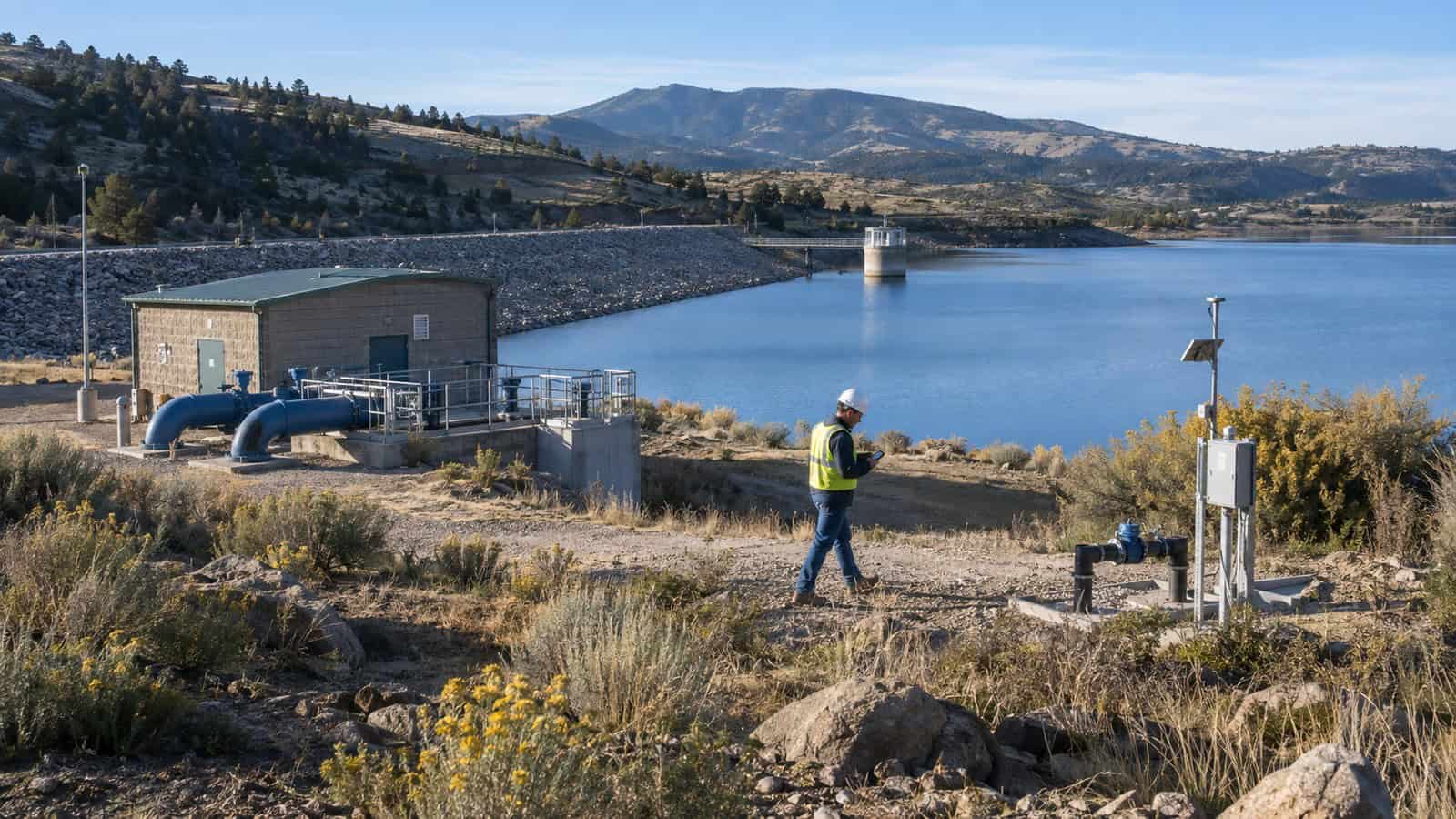
Robustel’s smart-water management case study uses another Robustel connectivity platform, but it provides a useful operational reference for dispersed water assets: remote visibility must be connected to a support and response process. For R1520LG, verify the LoRaWAN radio and LNS design independently while applying that ownership pattern.
Define alarm thresholds, persistence, missing-data handling, recipient, acknowledgement and escalation. A high reading, a stale reading and no reading should create different operational states.
Commission Wet-Season Failure Scenarios
Simulate sensor silence, gateway restart, carrier loss, clock drift and restored backhaul before the wet season. For each fault, capture the first visible symptom at the gateway, LNS and application, then name the action and owner. This prevents several different failures from collapsing into the same generic “no data” alarm.
Repeat the test with a known reference level or controlled input so the team can separate a communications fault from a sensor or installation problem. Inspect enclosure condition, antenna, power and cable entries at the same visit; water ingress or a shifted antenna can alter the radio path without changing the configuration.
The handover pack should contain the surveyed location, frequency plan, device register, LNS configuration, alarm logic, power assumptions, access details and a witnessed end-to-end test. Include the evidence expected during an incident, not only the values recorded on commissioning day, so the first wet-season callout begins with a usable baseline.
Foire aux questions
Q1. Is LoRaWAN suitable for water-level monitoring?
It can suit low-rate remote measurements when the sensor, coverage, reporting interval and application response meet the project requirements. Accuracy comes from the sensing and installation chain, not the radio alone.
Q2. How far can a LoRaWAN sensor transmit?
Distance varies with terrain, antenna height, obstructions, interference, frequency plan and data rate. Survey the final installation.
Q3. Does a LoRaWAN gateway need mains power?
Not necessarily. It needs a correctly engineered supply, which may be mains, DC or a remote-energy system. Calculate autonomy from the complete load and environmental conditions.
Q4. What happens when a remote gateway loses backhaul?
Radio and local behaviour depend on the selected gateway and LNS/software architecture. Test reception, buffering, alarms and replay rather than assuming data will be retained.
Q5. Why use the Robustel R1520LG LoRaWAN Gateway for remote monitoring?
It offers flexible LoRaWAN server/forwarding choices, multiple backhaul options and industrial power inputs. The project still needs a protected installation, surveyed RF and an owned alarm process.
Conclusion
The Robustel R1520LG LoRaWAN Gateway is a flexible field node for flood and water-level monitoring when the project needs several backhaul and LNS choices. Its role is to make the communications architecture operable; sensor validity, cabinet resilience and emergency response remain separate responsibilities.
Approve the site after a witnessed chain from known water level to acknowledged event, then repeat the test with backhaul removed and restored. That evidence gives the maintenance team a usable baseline for the wet season and exposes gaps before the first real alarm.
Explore More Articles About Robustel LoRaWAN Gateways
À propos de l'auteur
Robustel Editorial Team
The Robustel Editorial Team publishes practical articles on industrial connectivity, edge computing, LoRaWAN and device management, focusing on deployment considerations, technical limitations and long-term operation.