
LoRaWAN Gateway Capacity Planning 2026: Airtime, Traffic, Downlinks and Redundancy
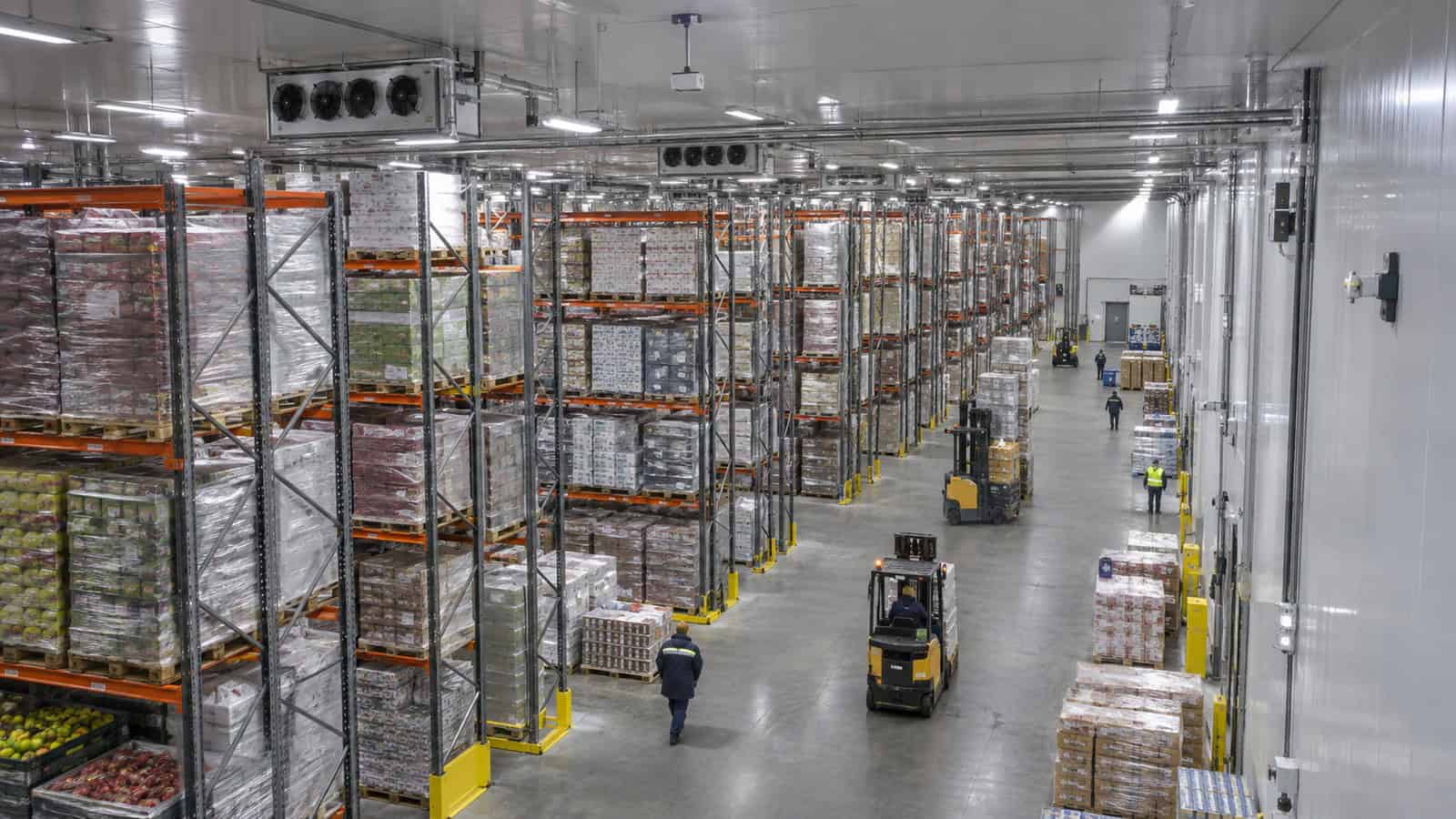
For building- and plant-scale networks that need eight-channel reception plus a choice of external or embedded LNS architecture, the Robustel R1520LG LoRaWAN Gateway provides a useful capacity-planning platform. Capacity cannot be reduced to a sensor count: airtime, spreading factors, reporting intervals, retransmissions, downlinks, RF overlap, backhaul and server processing all shape the usable result.
Two estates with 2,000 devices can behave very differently. Small hourly meter messages may create a light uplink load, while frequent alarms, long payloads and poor RF can consume far more airtime with fewer devices. Start with the traffic contract of each device class.
Build a Traffic Model by Device Class
Record payload size, normal interval, alarm behaviour, spreading-factor distribution, confirmed/unconfirmed messaging, retry policy and downlink demand. Model normal operation and a credible correlated event: power restoration, temperature excursion or scheduled reporting boundary.
| Device class | Normal uplink | Event behaviour | Downlink need | Capacity risk |
|---|---|---|---|---|
| Meter | small, infrequent | possible reporting synchronisation | occasional configuration | many devices transmit together |
| Alarm sensor | heartbeat plus event | burst during shared incident | acknowledgement/policy dependent | correlated event traffic |
| Actuator | status plus command response | repeated state changes | regular commands | downlink and receive-window limits |
| Condition monitor | periodic larger payload | higher rate on exception | limited | long airtime at weak RF |
Convert messages into airtime, not only bytes per day. Spreading factor and regional parameters affect time on air. Poorly placed sensors can therefore consume disproportionate shared capacity even when their business payload is small.
Treat Downlinks as a Scarce Design Resource
Gateways receive across channels, but downlinks require transmission and must obey regional constraints. Confirmed uplinks, frequent reconfiguration and application commands can create downlink pressure. A design that works as passive monitoring may not scale when it becomes a control network.
Review whether every message really needs confirmation. Use application-level exception handling where appropriate and avoid scheduling large groups to receive changes simultaneously. The LNS should expose rejected, delayed and retried downlinks so capacity problems are visible before users call them “random packet loss”.
Add Redundancy Without Double-Counting Capacity
Overlapping gateways improve reception diversity because several gateways may hear the same uplink. The LNS deduplicates those copies; they do not represent extra device messages. Overlap can improve resilience and RF evidence, but it also adds backhaul and operations work.
Separate three failure domains: radio coverage, gateway/backhaul, and LNS/application. A second gateway does not help if both forward to the same unavailable server, and a second LNS does not hear a sensor hidden from every antenna.
Robustel’s nationwide LoRaWAN backhaul case study provides deployment evidence that backhaul and fleet operations become first-class concerns at scale. It should not be read as a universal node-density benchmark.
How the Robustel R1520LG LoRaWAN Gateway Fits Dense Indoor Capacity Planning
The Robustel R1520LG LoRaWAN gateway receives up to eight LoRa channels simultaneously and its page lists EU868, AU915, US915 and CN470 variants. It supports external LNS connectivity through UDP, LoRa Basics Station and LORIOT, or an embedded ChirpStack option. That flexibility lets the server boundary follow the operational model rather than the gateway purchase dictating it.
Dual-SIM cellular, Ethernet and Wi-Fi provide backhaul choices. PoE-PD can help place the gateway for RF performance rather than near a convenient socket. Two Ethernet ports and RS-232/RS-485 are available for broader site integration, although those interfaces do not prove compatibility with every controller or application.
| Capacity decision | Robustel R1520LG contribution | Evidence still required |
|---|---|---|
| Radio reception | eight simultaneous channels; regional frequency variants | final survey, device distribution and airtime model |
| LNS placement | external protocols or embedded ChirpStack | server sizing, backup, security and ownership |
| Backhaul | cellular, Ethernet and Wi-Fi options; dual SIM | outage behaviour, data allowance and end-to-end recovery |
| Placement | optional PoE-PD | cable, PoE switch and RF installation acceptance |
Robustel’s Voytech wireless BMS case study documents R1520-LG gateways in building deployments with more than 200 sensors in one cited project. That is evidence for the described architecture, not a product-wide capacity promise; each new building still needs its own traffic and RF calculation.
Prove Capacity With a Busy-Hour Test
Load the target LNS with representative device profiles and replay the busiest credible message distribution. Include weak-signal devices, alarms, confirmed traffic and downlinks. Watch channel utilisation, duplicates, retries, dropped messages, queue delay and application delivery.
Then remove one gateway or backhaul path. Confirm what remains visible, how alarms are raised and whether queued traffic creates a recovery burst. A design has capacity only if it remains within its acceptance limits during the failure it claims to tolerate.
The Robustel LoRaWAN Gateway Applications video is useful for explaining why different scenarios produce different gateway requirements. Use it for orientation, then retain the project traffic model as the sizing authority.
Foire aux questions
Q1. How many devices can one LoRaWAN gateway support?
There is no dependable universal number. Payload length, interval, spreading factors, retries, downlinks, regional limits and RF conditions determine capacity. Model airtime by device class and test the correlated busy period.
Q2. What affects LoRaWAN network capacity?
The main factors are channel availability, time on air, message frequency, spreading-factor distribution, collisions, confirmed traffic, downlinks and gateway overlap. Backhaul and LNS processing can add separate bottlenecks.
Q3. Do more LoRaWAN gateways increase capacity?
They can improve reception diversity and coverage, but they do not automatically multiply capacity. The same uplink may be received by several gateways and deduplicated at the LNS.
Q4. Why are LoRaWAN downlinks limited?
Gateways must transmit within regional radio constraints and device receive windows. Excessive acknowledgements or commands can therefore restrict scale even when uplink reception looks healthy.
Q5. When is the Robustel R1520LG LoRaWAN Gateway suitable for capacity-led deployments?
It suits building and plant networks that need eight-channel reception, flexible LNS placement and several backhaul choices. Approve capacity from the real device traffic, frequency plan and failure test rather than a node-count claim.
Conclusion
For dense indoor estates where LNS flexibility and backhaul choice matter alongside radio reception, the Robustel R1520LG LoRaWAN Gateway provides a well-aligned platform. Its eight-channel radio and external-or-embedded LNS options help the architect decide where packet and server responsibilities belong.
The limiting factor may still be airtime, downlink policy, weak-device behaviour or the application server. Before procurement is scaled, freeze the traffic assumptions by device class and run a busy-hour test with a gateway or backhaul path removed.
Capacity approval should produce a repeatable model, a redundancy map and monitored thresholds. Those artefacts remain useful when reporting intervals, firmware or sensor counts change later.
Explore More Articles About Robustel LoRaWAN Gateways
À propos de l'auteur
Robert Liao | Technical Support Engineer
Robert is an IoT Technical Support Engineer at Robustel, specializing in industrial networking and edge connectivity. A certified Networking Engineer, Robert focuses on the deployment and troubleshooting of large-scale IIoT infrastructures. His work centers on architecting reliable, scalable system performance for complex industrial applications, bridging the gap between field hardware and cloud-side data management.