
How to Estimate LoRaWAN Gateway Cellular Data Usage
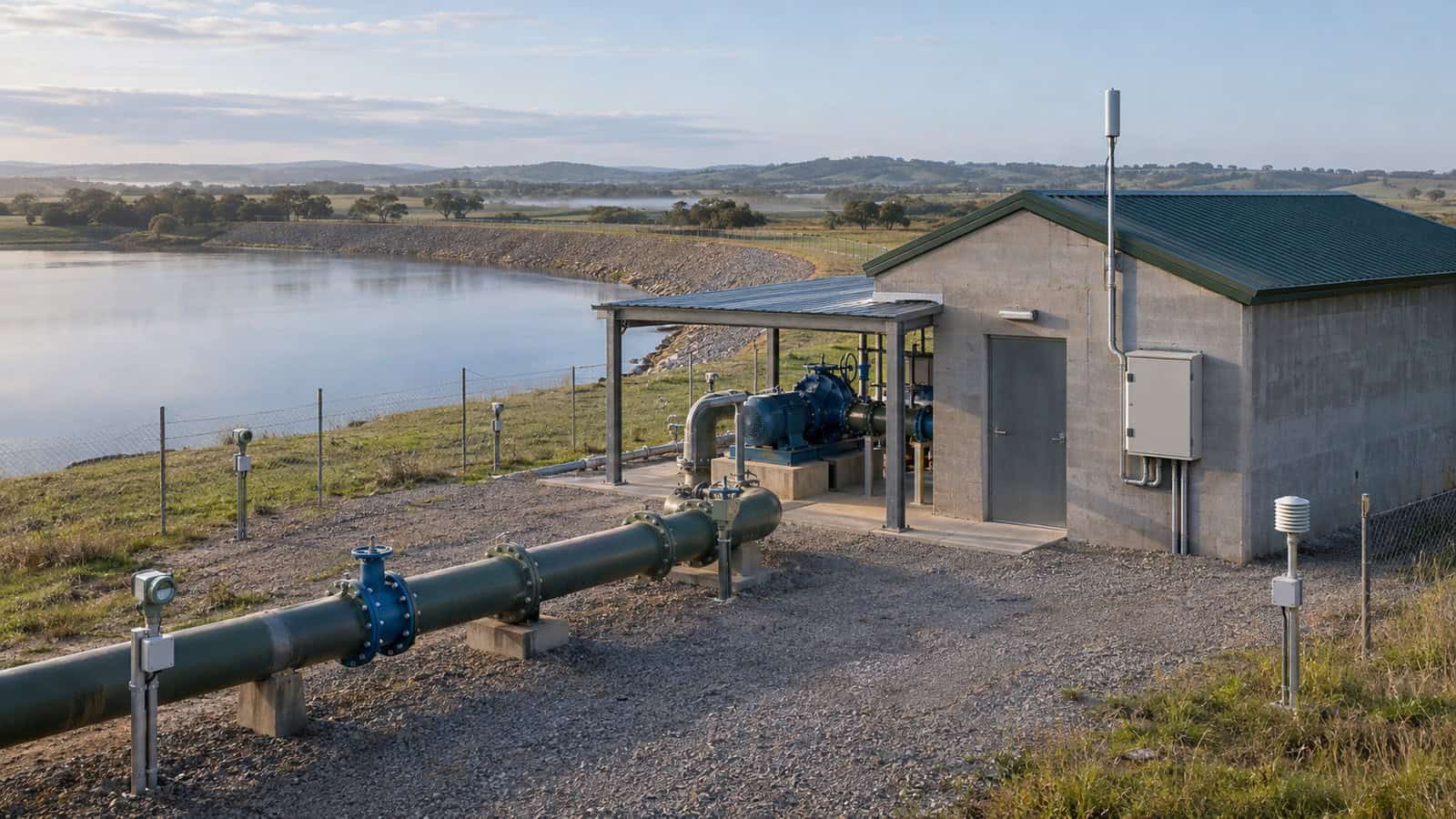
The Robustel R1520LG LoRaWAN Gateway can use cellular backhaul for an external LNS, cloud integration and remote management, but its monthly data usage is larger than the sum of sensor payloads because packet-forwarder framing, encryption, acknowledgements, keepalives, retries, logs and updates also cross the link. Estimate each traffic class separately and confirm the result in a representative pilot.
The calculation is a capacity and cost model, not a carrier invoice. Session rounding, retransmission, roaming behaviour and billing boundaries can make two equal byte counts produce different commercial totals.
Trace the bytes from radio frame to cellular session
The gateway receives LoRaWAN radio frames, adds the forwarding or LNS protocol representation and sends data toward a server or application path. Downlinks, connection keepalives and server control exchanges return over the same cellular service. Management and software traffic use separate flows.
The Robustel video “Why Do You Need a LoRaWAN Gateway?” explains the gateway’s position between devices and the network/application layers. Use that path to identify traffic owners before assigning numbers.
Build the estimate from five components
Monthly bytes = uplink forwarding + downlink forwarding + connection overhead + management + planned/unplanned maintenance
For regular uplinks:
Uplink bytes/month = devices × reports/day × days × measured bytes per forwarded report × retry/duplicate factor
For keepalives:
Keepalive bytes/month = sessions × keepalives/hour × 24 × days × measured bytes per exchange
Use a capture at the cellular interface or aligned router/server counters to obtain the forwarded-report and keepalive sizes. Do not substitute the sensor’s application payload length.
Work a transparent example
Assume 500 devices each report 48 times per day. A pilot measures 320 bytes of cellular transfer per forwarded uplink after protocol overhead, and a 1.10 factor covers duplicates/retries. Downlinks add 5% of uplink forwarding. Keepalives and server control use 150 MB/month, RCMS and logs use 100 MB, and a planned update is 500 MB.
| Component | Assumption | Monthly estimate |
|---|---|---|
| Uplink forwarding | 500 × 48 × 30 × 320 B × 1.10 | 0.253 GB |
| Downlink forwarding | 5% of uplink | 0.013 GB |
| Keepalive/control | pilot measurement | 0.150 GB |
| Management/logs | operating allowance | 0.100 GB |
| Update | one planned package | 0.500 GB |
| Total | sum | 1.016 GB |
The update is the largest component in this example. A plan based only on sensor messages would be undersized even though the sensor estate is large.
How Robustel R1520LG LoRaWAN Gateway supports measurable backhaul
The Robustel R1520LG LoRaWAN Gateway combines an eight-channel LoRaWAN interface with dual-SIM cellular, Ethernet and Wi-Fi backhaul, embedded ChirpStack or supported external forwarding options, and RCMS operations. These paths allow the engineer to compare normal forwarding, management and maintenance windows.
| Estimation pain | Verified capability | Measurement method | Boundary |
|---|---|---|---|
| forwarding varies by LNS path | embedded/external LNS options | measure the deployed packet-forwarder/server combination | one protocol result does not transfer automatically |
| backhaul can change | cellular, Ethernet and Wi-Fi options | hold one egress active during the pilot | mixed egress counters must be reconciled |
| fleet activity adds traffic | RCMS-enabled management | measure normal, diagnostic and update periods separately | RCMS bytes are not the whole device total |
Robustel’s KoolZone cold-chain case study uses cellular backhaul across distributed monitoring sites. That scenario makes roaming stability and alert timeliness important; the actual data plan still comes from measured traffic and carrier rules.
Test the variables that can multiply usage
| Variable | Expected case | Stress case | Operational question |
|---|---|---|---|
| device count | commissioned estate | growth/temporary sensors | is growth reflected in the plan? |
| report interval | normal schedule | alarm or diagnostic mode | can event bursts be bounded? |
| retry/duplicate factor | healthy RF | weak or interfered RF | which sites create excess forwarding? |
| management collection | routine | incident investigation | are log uploads capped and approved? |
| updates | scheduled package | retry/rollback | is maintenance reserve separate? |
Robustel’s Voytech BMS case study shows a dense building estate. The planning lesson is to count actual message behaviour and gateway density, not infer backhaul from endpoint count alone.
Reconcile a pilot with the carrier bill
Run the pilot through a full billing boundary when possible. Export router counters, server receipt counts, Robustel RCMS activity and update records using aligned timestamps. Explain the difference between cellular interface bytes and billed usage, including session rounding and traffic outside the LoRaWAN forwarding path.
Set an alert threshold below the commercial cap and keep a maintenance reserve. When usage rises, compare packet rate, retry factor, keepalive churn, management collection and update jobs before changing the sensor interval.
Foire aux questions
Q1. What is the data rate in LoRaWAN?
It varies by regional plan and device data rate. More importantly for cellular backhaul, the gateway forwards protocol messages whose size is larger than the sensor payload alone.
Q2. Is LoRaWAN better than Wi-Fi for every sensor deployment?
No. LoRaWAN suits low-power, relatively small and infrequent messages over long range. Wi-Fi can be preferable for higher-throughput devices with suitable power and coverage. Compare the workload and ownership model.
Q3. What is the bandwidth of a LoRaWAN network?
Capacity is not one fixed bandwidth figure. It depends on regional channels, data rates, airtime, payloads, retransmissions, downlinks, gateway density and traffic timing.
Q4. How much cellular data does a LoRaWAN gateway use?
It depends on forwarded packet count and size, downlinks, connection overhead, management, logs and updates. Measure the deployed protocol path and model low, expected and stress cases.
Q5. How can the Robustel R1520LG LoRaWAN Gateway be measured for cellular usage?
Hold the selected backhaul and LNS path constant, reconcile interface counters with server messages and RCMS activity, then measure normal, incident and update periods separately.
Conclusion
The Robustel R1520LG LoRaWAN Gateway is best suited to measurable cellular-backhaul planning when the project explicitly records its embedded or external LNS path and separates forwarding from management traffic. Sensor payload totals alone are insufficient.
Create a component model, stress the retry and maintenance assumptions, then reconcile a full pilot period with carrier billing. Keep an update and incident reserve so operational work does not compete with the sensor service for the last available megabytes.
Explore More Articles About Robustel LoRaWAN Gateways
À propos de l'auteur
Robustel Editorial Team
The Robustel Editorial Team publishes practical articles on industrial connectivity, edge computing, LoRaWAN and device management, focusing on deployment considerations, technical limitations and long-term operation.