
Enterprise LoRaWAN Operations Guide 2027: Gateways, LNS, RF and Device Lifecycle
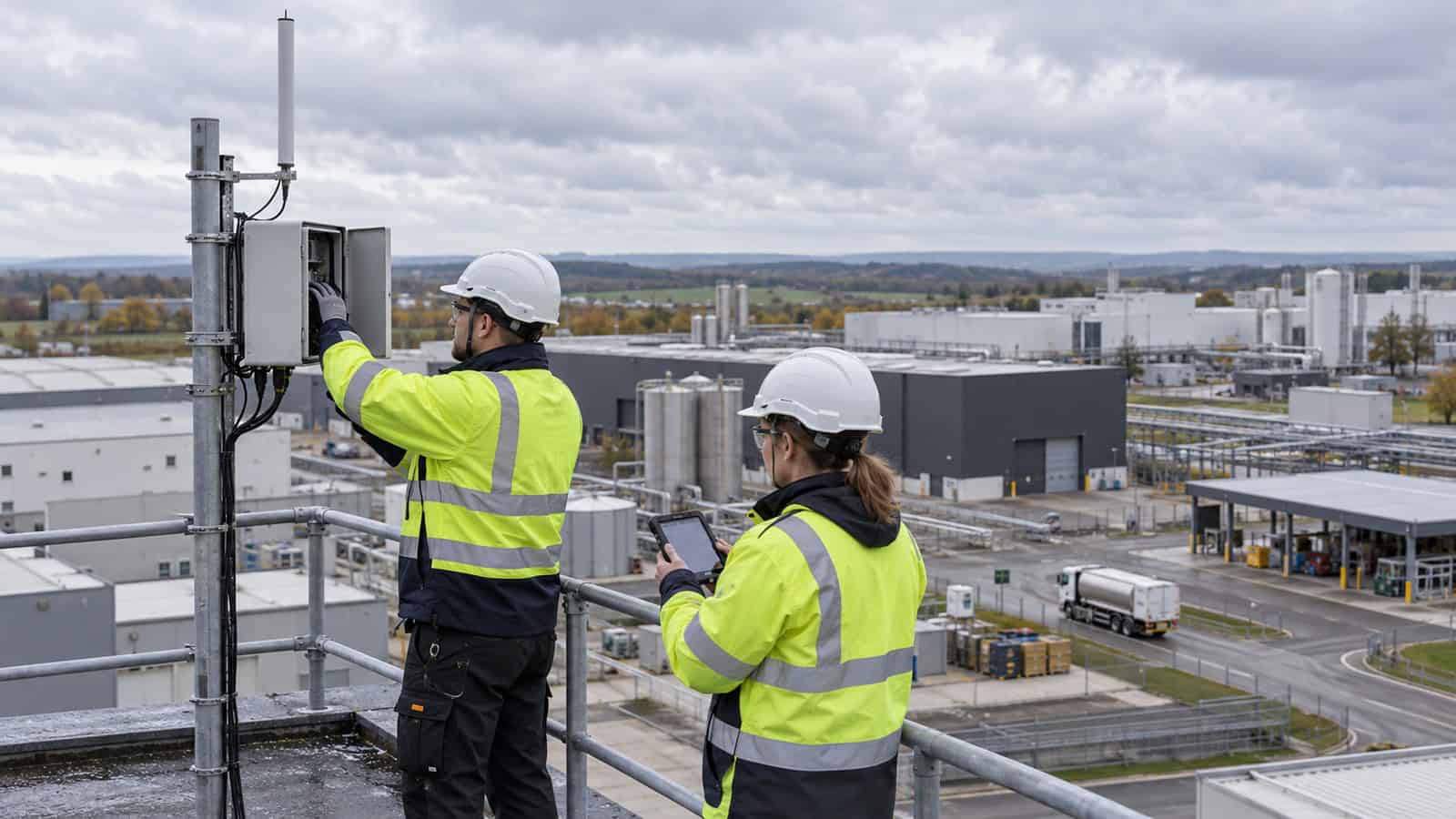
The Robustel R1520LG LoRaWAN Gateway supports enterprise estates that need flexible backhaul and a choice of external packet forwarding or an embedded ChirpStack option, but enterprise LoRaWAN operations must cover more than the gateway. RF coverage, device identities, keys, the LNS, payload handling, backhaul and application alarms form one service with several different owners.
Operate Five Layers Separately
| Layer | Observable evidence | Typical owner |
|---|---|---|
| endpoint | join state, battery, counters and payload format | device/application team |
| RF | RSSI/SNR distribution, data rate and gateway reception | RF/site team |
| gateway | packet forwarder, time, backhaul and health | network operations |
| LNS | joins, frame counters, deduplication and downlink queues | LoRaWAN platform owner |
| application | decoded values, alarms and acknowledgements | business-service owner |
A sensor can transmit while the application shows no new value. The gateway may have received the frame, the LNS may have rejected it, or the decoder may have produced an invalid field. Keeping the layers distinct shortens diagnosis and prevents an RF survey from becoming the answer to every missing reading.
The Robustel video “Why Do You Need a LoRaWAN Gateway?” is useful for aligning stakeholders on the gateway’s role. It does not replace the operating map that names the LNS, decoder and alarm owners.
Treat RF as a Changing Estate
Survey with the final antenna location, building state and hard-to-reach endpoints. Review reception distributions after installation, not only a single commissioning packet. New metalwork, plant layout, foliage or tenant changes can alter paths without any gateway configuration change.
Robustel’s Voytech smart-building case study shows LoRaWAN working inside a wider building-monitoring service. The operating lesson is to retain ownership of both the radio path and the building application rather than treating wireless cabling replacement as the whole service.
Choose the LNS Boundary Deliberately
An external LNS centralises network logic across gateways; an embedded option can keep defined functions at the site. The decision changes update ownership, backup, access, capacity planning and what happens during backhaul loss. It should not be made from gateway price alone.
Record the packet-forwarder method, server address, credentials, regional plan and recovery procedure. If an embedded server is used, back up its configuration and define how device state is restored after hardware replacement.
How the Robustel R1520LG LoRaWAN Gateway Supports Enterprise Operations
Robustel R1520LG LoRaWAN Gateway provides eight-channel LoRa reception, 4G cellular, dual SIM, two Ethernet ports, Wi-Fi, RS-232/RS-485, PoE-PD and a wide 9–60 VDC input. Its documented software options include UDP packet forwarding, LoRa Basics Station, LORIOT and an embedded ChirpStack path. These choices allow the same gateway platform to fit different LNS ownership models, provided the exact regional variant and architecture are verified.
| Operating choice | R1520LG capability | Acceptance action |
|---|---|---|
| external LNS | supported forwarding options | verify TLS/credentials, routing and reconnect behaviour |
| embedded LNS | ChirpStack option | back up configuration and test replacement recovery |
| resilient backhaul | cellular, Ethernet and Wi-Fi choices | test the selected priority and application recovery |
| flexible placement | PoE-PD and wide DC input | validate power budget, enclosure and antenna position |
Manage Devices from Onboarding to Retirement
Keep a device register with identifiers, keys, frequency plan, decoder version, expected reporting interval, battery policy and owning application. Counters and timestamps matter during replacement: reusing an identity or restoring stale state can look like packet loss even when RF is healthy.
Robustel’s Koolzone cold-chain case study demonstrates that gateway connectivity sits inside an operational monitoring service. Alarm delivery, escalation and sensor maintenance still need their own tested workflow.
Build a Monthly Operations Review
Review gateway reachability, RF trends, join failures, downlink use, decoder changes, device silence and unresolved alarms. Compare exceptions by site and cause rather than reporting one estate-wide uptime number. A silent device and an unreachable gateway require different work.
Include one recovery exercise: replace a gateway configuration, interrupt backhaul or restore a device record in a controlled environment. The review is successful when the team can identify the failed layer and its owner from evidence, not intuition.
Foire aux questions
Q1. What does a LoRaWAN gateway do?
It receives LoRa radio frames from endpoints and forwards them towards the network-server architecture. The LNS and application perform separate network and business functions.
Q2. Does a LoRaWAN gateway need internet?
It needs a path to the selected LNS or application architecture. That path may be cellular, Ethernet or Wi-Fi; an embedded design can keep some functions local but still needs an operating and synchronisation plan.
Q3. What is the difference between a gateway and a network server?
The gateway handles radio reception and forwarding. The network server manages LoRaWAN network functions such as device sessions, frame handling and gateway deduplication.
Q4. How many devices can one LoRaWAN gateway support?
There is no universal number. Capacity depends on payload size, reporting interval, spreading factors, retransmissions, downlinks, regional limits and RF conditions.
Q5. Where does the Robustel R1520LG LoRaWAN Gateway fit?
It fits enterprise sites that need flexible backhaul and a choice between external forwarding and an embedded ChirpStack option. Validate the regional radio variant, LNS design and traffic profile before rollout.
Conclusion
The Robustel R1520LG LoRaWAN Gateway can support several enterprise LoRaWAN operating models without collapsing the gateway and LNS into one assumed design. The stronger estate is the one that gives RF, device, gateway, server and application evidence separate owners.
Begin with a service map and one recovery exercise. When the operations team can trace a missing reading through every layer and identify the next responsible owner, the LoRaWAN network is ready to scale as an enterprise service.
Explore More Articles About Robustel LoRaWAN Gateways
À propos de l'auteur
Robustel Editorial Team
The Robustel Editorial Team publishes practical articles on industrial connectivity, edge computing, LoRaWAN and device management, focusing on deployment considerations, technical limitations and long-term operation.