
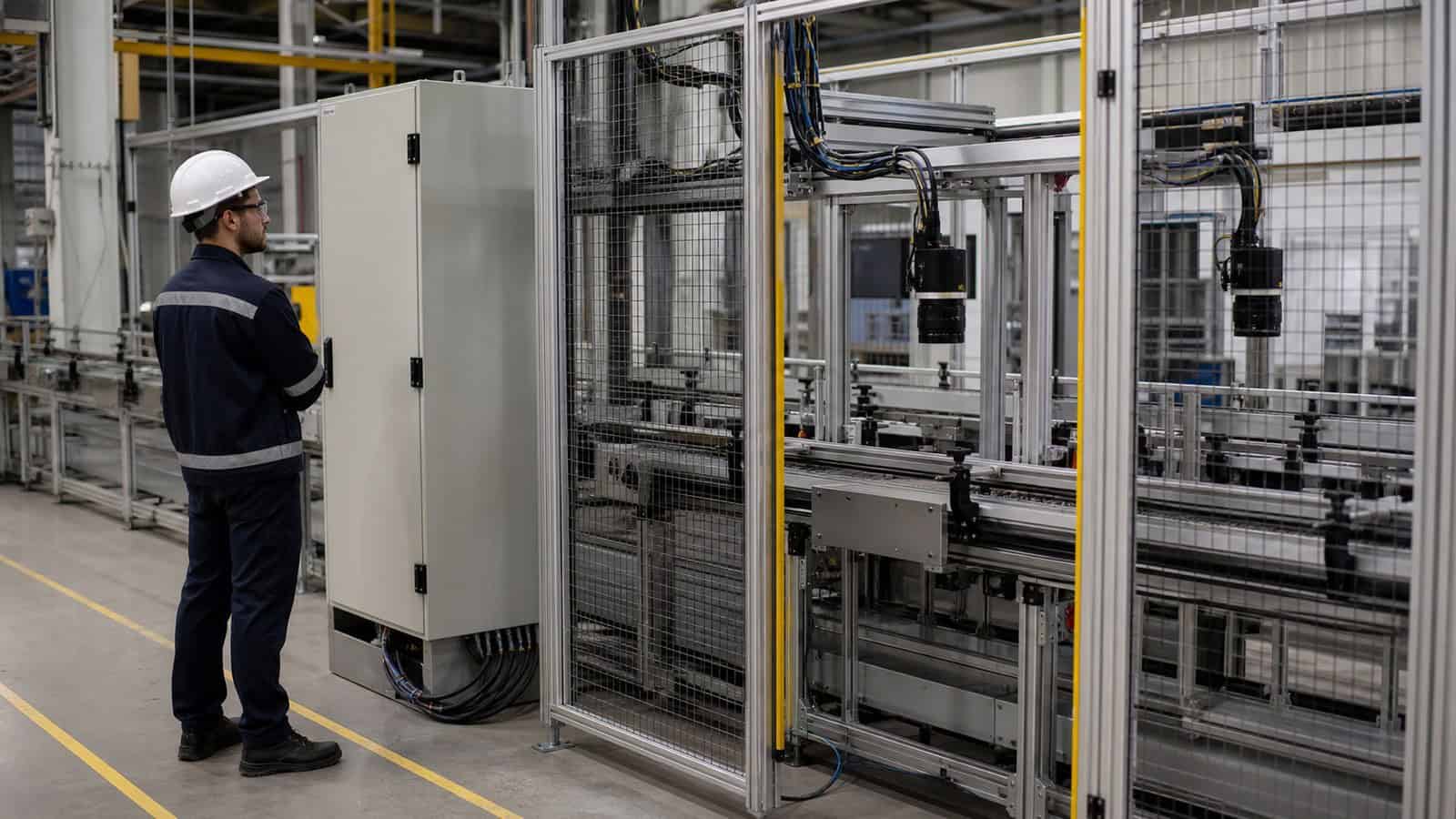
Edge vs Cloud Computing for Industrial IoT: A Workload Placement Guide
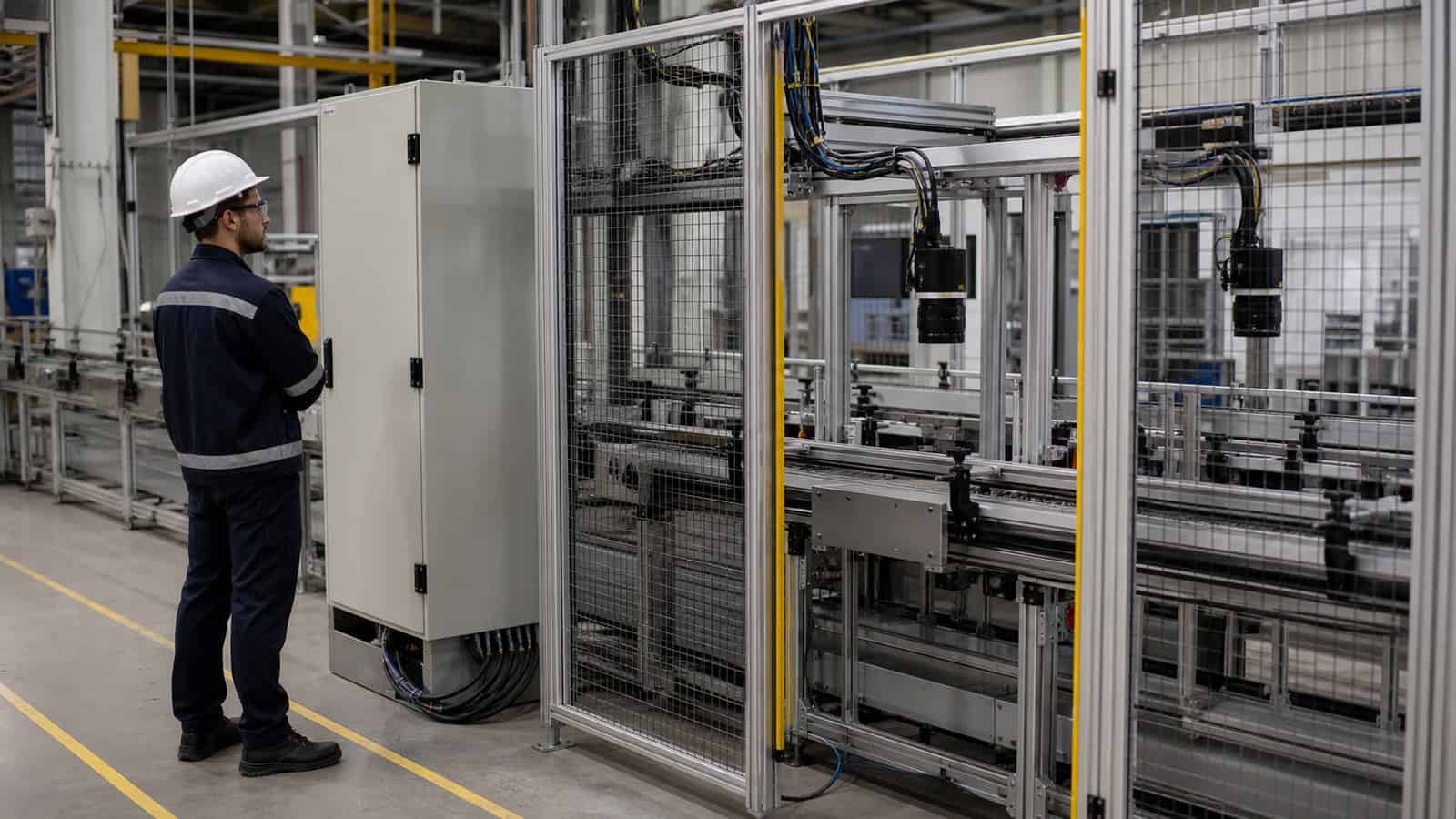
The Robustel EG5120 edge computing gateway fits hybrid industrial architectures where selected processing runs close to the equipment while storage, fleet analytics and other centralized functions remain upstream. The useful edge vs cloud decision is therefore not which platform should run the entire application, but where each individual workload creates the best operational fit.
Consider an ANPR system. Image capture happens at the site. Inference may also need to happen locally so the application does not send every raw image across the WAN. Long-term reporting, historical comparisons and fleet-wide analysis may still belong in a central platform. Treating all of those functions as one workload creates a false choice between “edge” and “cloud.”
Place Individual Workloads, Not the Entire Application
Industrial applications are usually collections of smaller tasks.
A machine-monitoring system may include field acquisition, protocol translation, local buffering, event detection, visualization, historical storage and fleet-level analytics. Some functions need immediate access to local data; others become more useful when information from many sites is combined.
The Robustel Edge Computing Gateway portfolio provides different local compute and interface profiles for the edge side of this split, but selecting hardware should come after the workload has been divided rather than before.
A practical placement review can evaluate each task across six pressures:
| Workload characteristic | Stronger edge pressure | Stronger cloud pressure |
|---|---|---|
| Response time | Fast local decision required | Delay is acceptable |
| Raw data volume | High WAN cost or volume | Data is already compact |
| Privacy | Raw data should remain local | Central processing permitted |
| Availability | Must continue during WAN loss | Can wait for connectivity |
| Compute scale | Predictable local workload | Large or elastic compute demand |
| Coordination | Mainly site-specific context | Requires fleet-wide data |
This is not a numerical scoring system. The table identifies which architectural pressure is strongest for a particular workload.
Latency and Availability Push Some Decisions Toward the Edge
The edge becomes more attractive when an action depends on local context and cannot wait for a remote round trip.
A machine may need to detect an abnormal condition and create a local event even when the internet connection is temporarily unavailable. A vision system may need to classify an image before the result is useful to the nearby application.
These are workload-placement decisions rather than arguments for moving the whole system away from the cloud.
Robustel’s Smart Parking Application Example shows this division clearly. Local ANPR processing can reduce raw data before results are sent upstream, while the wider parking platform still benefits from centralized information across the site or estate.
The local workload therefore handles the part that benefits from proximity to the data source. Central systems continue performing the functions that benefit from aggregation and longer-term context.
Bandwidth and Privacy Change the Cost of Moving Raw Data
High-volume data creates another reason to examine workload placement.
Sending every image, vibration sample or raw machine record upstream may be technically possible, but the WAN requirement and data-governance implications can become unnecessary if only a smaller result is needed centrally.
A local edge application can filter, normalize or summarize data before transmission. This is different from deleting useful information indiscriminately; the application owner must decide which raw records need to be retained, for how long and for what operational purpose.
Privacy can create a similar pressure. Some projects may prefer to keep sensitive raw information at the site while publishing only derived results.
The Robustel EG5120 edge computing gateway is relevant to these architectures because it can host local applications rather than acting only as a communications device. The value comes from placing appropriate processing close to the source, not from the assumption that every dataset should remain local.
Scale, History and Fleet Coordination Still Favor the Cloud
The cloud remains useful precisely because many workloads become more valuable when they are centralized.
Long-term historical storage, cross-site reporting, fleet-wide model management and comparison across hundreds of machines often benefit from infrastructure that is not tied to one gateway.
In a distributed industrial monitoring deployment, a Robustel edge computing gateway can handle approved PLC and field-device data close to the equipment, including collection, normalization, buffering or event detection where the application requires it. The upstream platform can then retain the longer-term and cross-site view needed for reporting, historical analysis and fleet-level comparison.
The same division applies to analytics. A local gateway may identify an event using current site data, while a central system may be the better place to compare that event with months of history from multiple plants. The edge and cloud therefore provide different kinds of context rather than competing for ownership of the entire application.
Edge and cloud therefore solve different scaling problems. Edge scales towards the equipment, while cloud infrastructure scales across sites and history.
Robustel’s Why Do We Need Edge Computing If We Have the Cloud video addresses this complementary relationship. The architectural decision is not to eliminate one side, but to allocate the workload so local and centralized infrastructure each handle the tasks that fit them best.
How the Robustel EG5120 Edge Computing Gateway Supports a Hybrid Workload Split
The Robustel EG5120 edge computing gateway provides the local application environment needed when a workload-placement exercise identifies functions that should remain at the site.
Its compute resources, industrial interfaces and storage allow local applications to acquire and process field data, while Ethernet or cellular networking supports the upstream path required by cloud and enterprise systems. Its NPU can also support compatible local inference workloads where the application has been validated for that hardware.
The software layer matters equally. The RobustOS Pro edge computing operating system provides a Debian environment for containers and native applications, allowing developers to place selected services on the gateway instead of treating the edge functions as fixed firmware features.
A hybrid architecture might therefore keep protocol handling, filtering and a time-sensitive inference function on the EG5120 while sending events, historical summaries and fleet data upstream.
The correct split depends on the application. Higher local compute does not automatically mean that more software should be moved to the edge.
Test Operational Complexity Before Finalizing Placement
Moving a workload closer to the equipment can reduce latency or WAN demand, but it also creates another software instance that has to be maintained.
A cloud application may have one centrally managed deployment. The same function distributed across 500 gateways now requires version control, resource monitoring, application updates and recovery at 500 sites.
That operational cost should be part of the placement decision.
For each candidate edge workload, ask who owns the software, how it will be updated, how logs are collected, what happens after a failed update and whether the application can be diagnosed without visiting the site.
Similarly, cloud placement has its own dependencies. The workload may require reliable WAN connectivity, central infrastructure and sufficient bandwidth to transport the required data.
The strongest architecture is usually the one that minimizes the total operational burden rather than optimizing one metric such as latency.
Foire aux questions
Q1. Is edge computing better than cloud computing for industrial IoT?
Neither is universally better. Edge computing is useful for workloads that benefit from local context, lower latency, reduced WAN traffic or operation during connectivity loss. Cloud platforms remain strong for centralized storage, fleet analytics and workloads that benefit from elastic compute or cross-site data.
Q2. What workloads fit the Robustel EG5120 edge computing gateway?
The Robustel EG5120 edge computing gateway can fit local protocol handling, buffering, data preprocessing and compatible inference workloads where industrial interfaces and local application hosting are required. The workload should still be validated against available CPU, memory, storage and application dependencies.
Q3. Should all industrial AI inference run at the edge?
No. Local inference is useful when response time, bandwidth or privacy creates a strong reason to keep processing close to the source. Training, fleet-wide analysis or very large models may remain better suited to centralized infrastructure.
Q4. How does WAN availability affect edge vs cloud placement?
A workload that must continue during temporary WAN loss has a stronger reason to run locally. Functions that can safely wait for connectivity may remain centralized. The expected outage duration and recovery behavior should be part of the architecture.
Q5. Does moving a workload to the edge increase maintenance?
It can. Distributed applications require versioning, monitoring, updates and recovery across many devices. That operational complexity should be compared with the latency, bandwidth or availability benefit gained from local placement.
Conclusion
An edge vs cloud computing decision should place individual workloads rather than force the entire industrial application into one environment. The Robustel EG5120 edge computing gateway provides a platform for workloads that benefit from local processing, while cloud or enterprise infrastructure can continue handling historical, fleet-wide and centralized functions.
Evaluate each workload by latency, bandwidth, privacy, availability, compute scale and operational complexity.
The best hybrid architecture keeps processing close to the equipment when locality creates real value and moves work upstream when centralization provides the stronger advantage.
Related Reading on Edge Computing in Industrial IoT:
À propos de l'auteur
Robert Liao | Technical Support Engineer
Robert is an IoT Technical Support Engineer at Robustel, specializing in industrial networking and edge connectivity. A certified Networking Engineer, Robert focuses on the deployment and troubleshooting of large-scale IIoT infrastructures. His work centers on architecting reliable, scalable system performance for complex industrial applications, bridging the gap between field hardware and cloud-side data management.