
Designing LoRaWAN Gateway Redundancy for Mission-Critical Sites
The Robustel R1520LG LoRaWAN Gateway can be used as a building block in resilient LoRaWAN site architectures because it provides documented Ethernet, Wi-Fi and cellular connectivity together with RCMS-based device management. Overlapping radio coverage, independent power and independent backhaul are deployment properties rather than built-in guarantees of the gateway. Redundancy only improves availability when radio, power, backhaul and server failure domains are designed separately rather than duplicated on the same infrastructure.
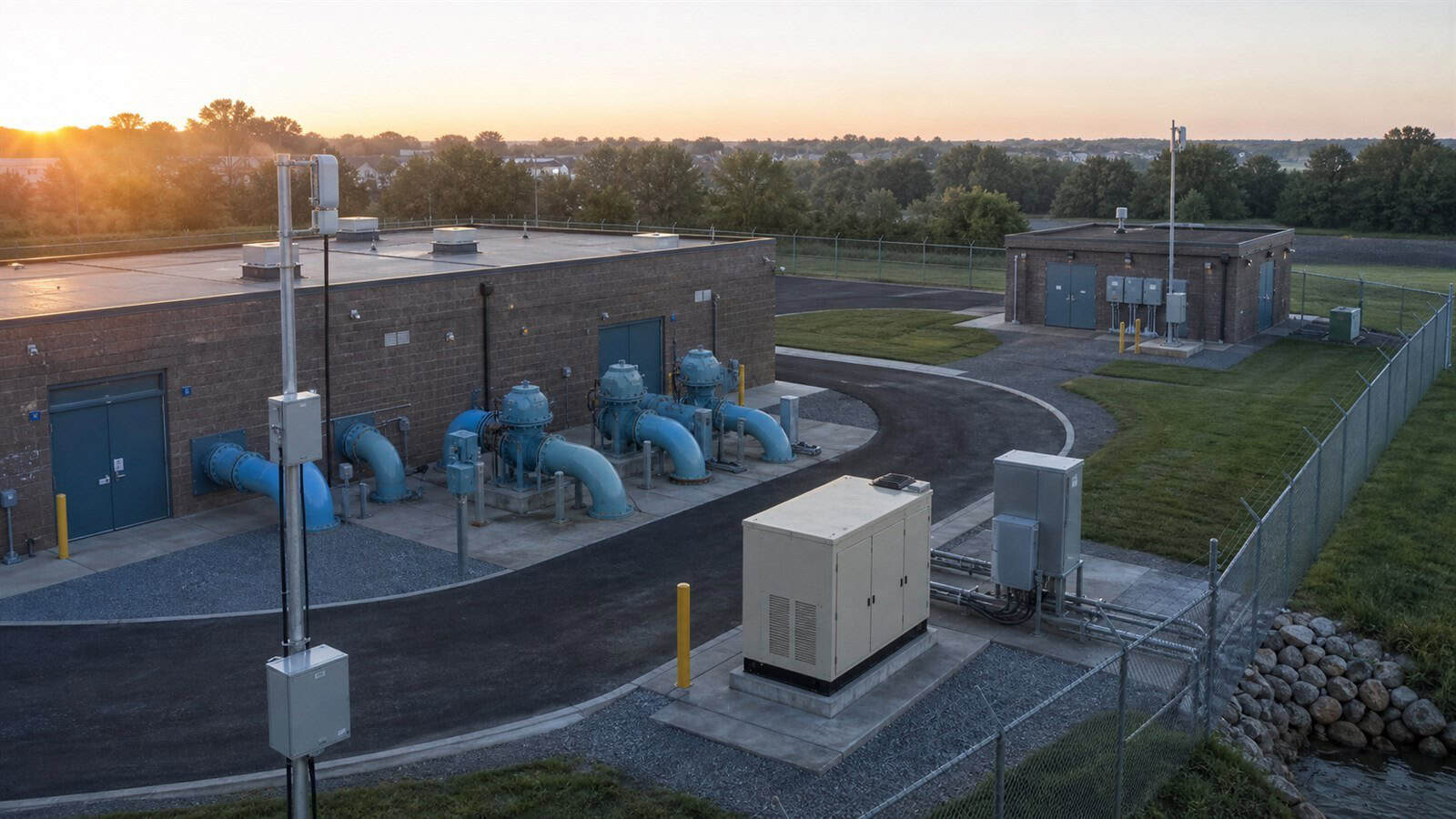
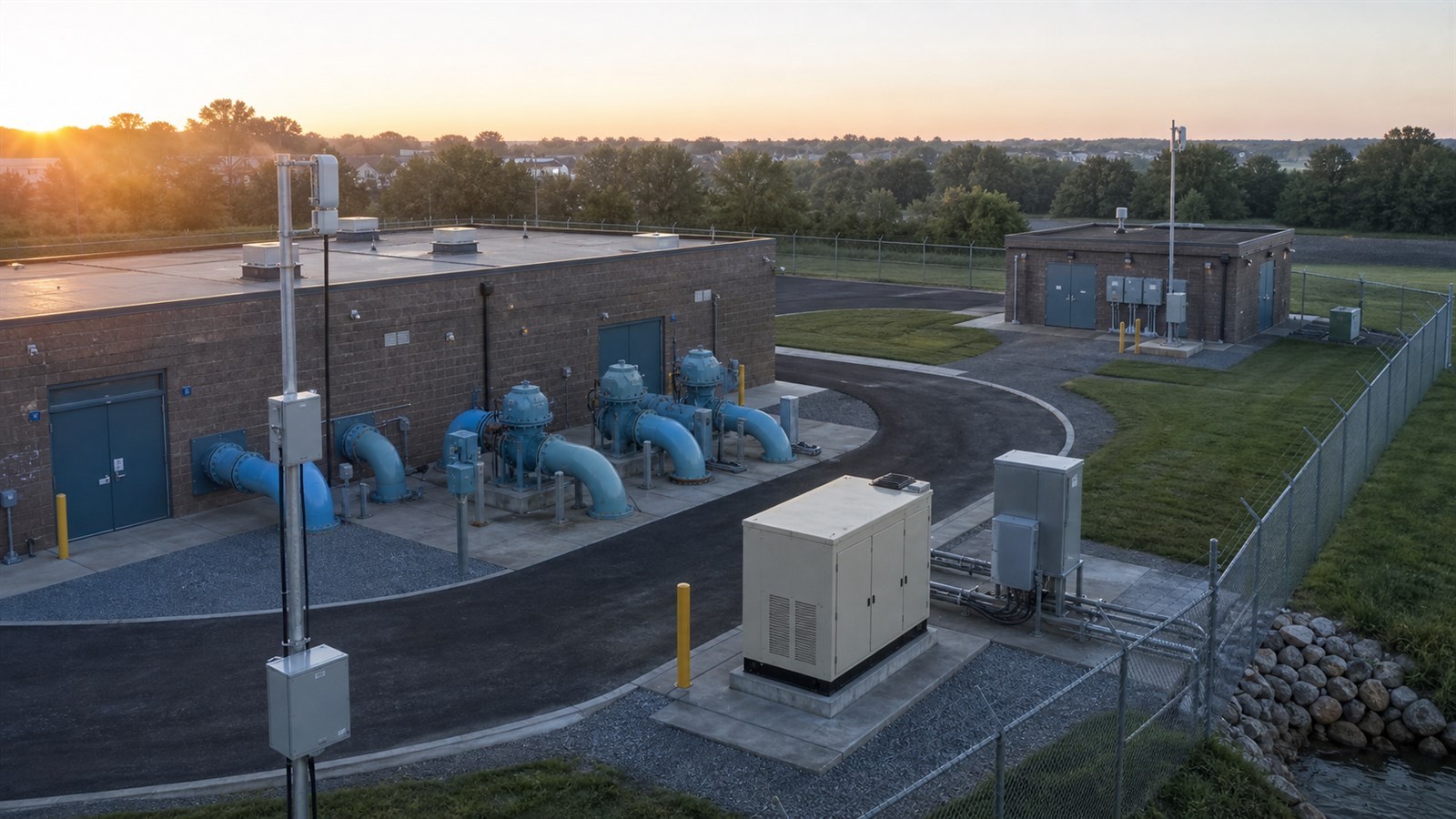
Consider a water-treatment site where LoRaWAN sensors report tank levels, pump status and environmental alarms. The design includes two gateways and dual-SIM cellular connectivity, so the project team describes the site as “redundant.” Then the primary power circuit fails. Both gateways go offline. The design contained duplicated hardware, but it did not remove the failure that mattered.
Redundancy Starts by Naming the Failure You Need to Survive
A mission-critical LoRaWAN project should not begin with the requirement: Install two gateways. It should begin with: Which failure must the service continue through?
For a Robustel LoRaWAN deployment, the answer may involve several different failure classes:
- One gateway stops operating
- One antenna or RF path is damaged
- Cellular service from one operator is unavailable
- Ethernet backhaul fails
- A local switch loses power
- The entire gateway cabinet loses power
- The external LNS becomes unavailable
- A configuration error affects multiple gateways
- The operations team cannot identify the fault remotely
These failures do not respond to the same redundancy measure. Two gateways can protect against one gateway hardware failure only if critical sensors can actually reach the surviving gateway. Dual SIM may provide another cellular option, but it does not solve a site-wide power loss. A second backhaul path does not protect against an unavailable LNS.
An additional gateway does not protect against a configuration mistake pushed to both devices. This is why redundancy should be treated as failure-domain design, not as a hardware count.
For a short refresher on where the gateway sits between LoRaWAN end devices and the upstream IP network, Robustel’s “Why Do You Need a LoRaWAN Gateway” video helps clarify why a gateway failure and a backhaul failure affect different parts of the data path.
Separate Radio, Power, Backhaul and Server Failure Domains
Once the required service level is defined, inject failures into the architecture one layer at a time. Suppose the site uses two Robustel R1520LG LoRaWAN Gateways, both able to receive the most important sensors. At first glance, that appears to remove the single-gateway risk. Now test the dependencies around them.
Radio Failure
Turn off Gateway A. Can the critical sensors still reach Gateway B under real installation conditions? Not from a desktop coverage drawing, but from the actual final antenna locations.
If the gateways were installed next to each other because one cabinet was convenient, they may share the same RF shadow. Hardware duplication alone does not guarantee independent coverage.
Power Failure
Remove power from the cabinet. If both gateways use the same supply, breaker or UPS, both disappear together. The gateway layer is duplicated, but the power layer is not.
Backhaul Failure
Disconnect the primary Ethernet WAN. If both gateways depend on the same switch and ISP connection, the second gateway may continue receiving LoRaWAN packets while neither gateway can forward them upstream.
The Robustel R1520LG supports Ethernet, Wi-Fi and cellular connectivity, so projects can design different upstream paths where the service requirement justifies the extra complexity. The important point is not the number of interfaces available; it is whether the alternate interface removes the intended failure dependency.
Server Failure
Finally, remove access to the external LNS. If both gateways forward to the same unavailable server instance, gateway redundancy cannot restore application service. The failure is now above the gateway layer.
A useful architecture review therefore looks like this:
| Failure domain | Example failure | Does a second gateway help? | What else must be considered? |
|---|---|---|---|
| Gateway hardware | One gateway stops operating | Yes, if RF coverage overlaps | Monitoring and replacement |
| RF path | Antenna or installation problem | Possibly | Independent placement and antenna path |
| Ethernet | Switch or wired WAN failure | Not by itself | Alternate backhaul |
| Cellulaire | One operator unavailable | Not by itself | Operator/path diversity |
| Site power | Cabinet power loss | No if both share power | Independent or protected power |
| LNS | Server unavailable | Non | Server architecture |
| Configuration | Same bad config applied twice | Non | Change control and rollback |
| Operations | Fault goes unnoticed | Non | Monitoring and escalation |
The goal is not to make every layer fully redundant. It is to identify which failures create unacceptable business impact and remove those specific single points.
Design Coverage Overlap Around Critical Sensors, Not Every Device
Radio redundancy does not require every sensor to be heard equally well by every gateway.
That can be unnecessary and expensive.
Instead, identify the sensors whose loss would materially affect the process.
At the water-treatment site, these might include:
- High-level alarms
- Pump-state monitoring
- Chemical-storage alarms
- Critical pressure measurements
- Environmental sensors protecting equipment rooms
For those endpoints, the project can verify whether both Robustel LoRaWAN gateways provide usable reception from physically independent positions. Less critical sensors may remain dependent on one preferred gateway if their temporary loss is acceptable. This creates a more practical design than trying to duplicate every radio path on the site.
The key concept is service continuity, not perfect RF symmetry. Suppose Sensor A is normally received most strongly by Gateway 1 but can still be received reliably by Gateway 2. That may provide sufficient radio redundancy.
Sensor B, by contrast, sits in a concrete basement where only Gateway 1 can receive it. If Sensor B is mission-critical, the design still contains a radio single point of failure even though two gateways exist elsewhere on the site.
This is where coverage planning and redundancy planning intersect without becoming the same exercise.
- Coverage asks: Can the sensor reach a gateway?
- Redundancy asks: If its normal gateway disappears, can the required service still continue?
Robustel’s Voytech Systems LoRaWAN building automation case study provides useful architectural context. R1520-LG gateways act as distributed LoRaWAN reception points feeding the wider building-control architecture. The relevant lesson for redundancy is that adding another gateway changes the available reception topology; it does not simply add another identical box to the network.
The number of gateways should therefore follow the critical coverage requirement rather than a blanket “two of everything” rule.
Test Recovery Instead of Assuming Failover
A redundancy design should be commissioned by deliberately breaking it. For a Robustel R1520LG deployment, choose representative failure scenarios and record what actually happens.
Start with a gateway failure. Power off the primary gateway and verify:
- Critical sensors are received by the remaining gateway.
- The LNS continues processing their traffic.
- The application continues showing required data.
- Operations can identify that one gateway is unavailable.
- The failed gateway can later return without disrupting the surviving path.
Then test the backhaul. If the deployed architecture has been configured and validated to use cellular as an alternate IP path, disconnect Ethernet and observe the defined recovery behaviour. Observe:
- How failure is detected
- Whether the alternate connection becomes usable
- How long cellular registration takes
- Whether VPN or LNS sessions reconnect
- Whether packets are lost during transition
- Whether the operations team receives useful status information
The R1520LG has two physical SIM slots, but dual SIM should also be tested as an operational mechanism rather than interpreted as a guarantee of continuous cellular service.
Two SIMs may still share:
- The same operator infrastructure
- Poor coverage at the site
- The same antenna system
- The same gateway power supply
A successful failover test provides stronger evidence than the presence of two SIM slots in a specification. The same method applies to power.
If a secondary gateway is intended to survive failure of the primary cabinet, remove that cabinet’s power and verify whether the supposedly independent gateway actually remains operational. Redundancy becomes credible only after the intended failure has been reproduced.
How the Robustel R1520LG LoRaWAN Gateway Supports Resilient Site Architectures
The Robustel R1520LG LoRaWAN Gateway fits resilient LoRaWAN architectures where projects need multiple reception points and flexible IP connectivity within the same gateway platform.
Relevant capabilities include:
- Up to eight simultaneous LoRaWAN receive channels
- Two Ethernet interfaces
- Wi-Fi connectivity
- Integrated cellular backhaul
- Two physical SIM slots
- External LNS connectivity
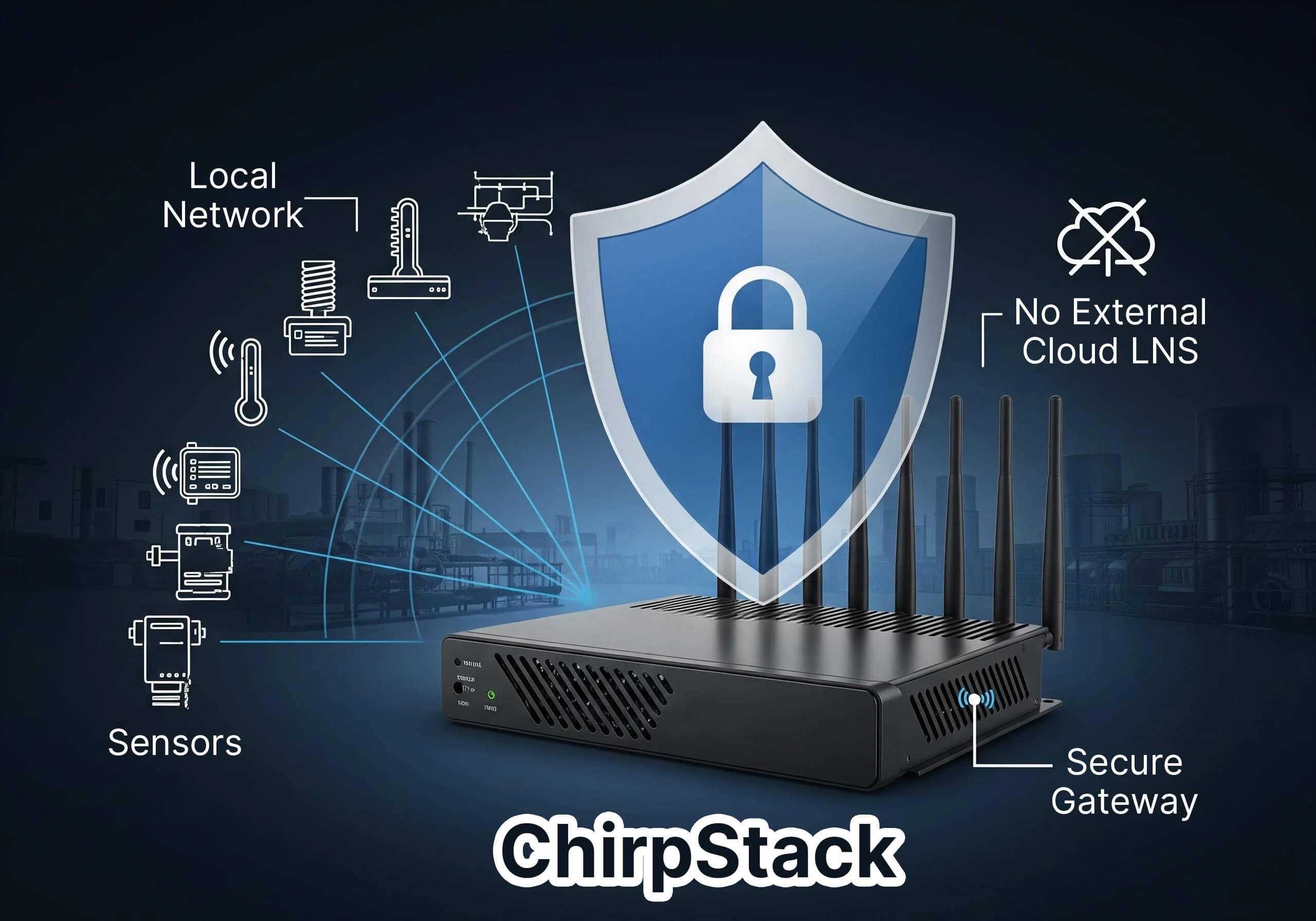
- Embedded ChirpStack for appropriate local architectures
- Centralized device management through RCMS
These capabilities allow engineers to build several different resilience models around the same gateway hardware.
One site might use:
- Gateway A → Ethernet
- Gateway B → cellularAnother might use:
- Gateway A → cellular SIM/operator strategy
- Gateway B → separate cellular path
A contained industrial site might keep a local LoRaWAN architecture, while a wider enterprise network may forward both gateways to a centrally managed external LNS. The R1520LG provides the interfaces needed to build those architectures, but the gateway does not decide which failure domains are truly independent.
For example, two cellular connections do not provide meaningful operator diversity if they ultimately depend on the same network path. Two gateways installed on the same unprotected power circuit do not create power redundancy. Two gateways forwarding to one unprotected LNS do not create end-to-end service redundancy.
This distinction is important for technical clarity alike: The Robustel R1520LG LoRaWAN Gateway supplies building blocks for resilient network design; service availability remains an outcome of the complete architecture.
Centralized monitoring also matters because redundancy that fails silently has limited operational value.
The Robustel RCMS remote device management platform can support centralized visibility, configuration and maintenance workflows for distributed Robustel gateways. In a resilient architecture, that helps the operations team distinguish “the service is still running through another path” from “everything looks normal.” Those are very different operational states.
Define the Minimum Acceptable Service During a Failure
Mission-critical does not necessarily mean that every feature must continue working normally after every failure. A better requirement is to define a minimum acceptable service state.
For the water-treatment example:
Normal state
- All sensors reporting
- two gateways available
- primary backhaul active
- full remote management available
Gateway-failure state
- Critical sensors still reporting
- one gateway unavailable
- alarm raised for operations
Backhaul-failure state
- Critical data continues over alternate path
- reduced performance or temporary interruption within an accepted limit
- fault visible remotely
Major site-power failure
- Perhaps no gateway service at all unless the business requirement justifies independent power
This final state is important. Not every project needs a redundant power architecture capable of surviving a complete site outage. If the monitored process also stops when site power fails, maintaining LoRaWAN communications may provide limited value.
Redundancy should follow the business consequence.
Robustel’s KoolZone LoRaWAN monitoring case study offers a useful distributed-operations perspective. R1520-LG gateways are used across monitoring locations with cellular connectivity and centralized management, where service visibility and avoiding unnecessary site intervention matter operationally.
The lesson for a mission-critical design is not that every KoolZone site uses a specific redundancy model. The case shows why gateway availability becomes an operational issue once monitoring depends on distributed infrastructure rather than one locally supervised device.
A resilient project should therefore define in advance:
- Which sensors must remain available
- Which failures must be tolerated
- Which temporary degradation is acceptable
- How quickly a fault must be detected
- How long the system may operate in degraded mode
- When an engineer must visit the site
- What evidence is required before normal service is declared restored
This turns “redundant LoRaWAN” into a measurable service requirement.
Run a Failure Drill Before Production Handover
Before the site is accepted, perform a small failure drill. Do not tell the operations team exactly which component will be disabled. Then observe the response:
- Fault occurs
- → monitoring detects abnormal state
- → team identifies affected layer
- → service continues where designed
- → recovery action is taken
- → normal state is verified
A useful handover record might include:
| Test | Expected service state | Result |
|---|---|---|
| Gateway A offline | Critical sensors remain visible through Gateway B | Pass / Fail |
| Gateway B offline | Critical sensors remain visible through Gateway A | Pass / Fail |
| Primary Ethernet disconnected | Approved alternate backhaul becomes available | Pass / Fail |
| Primary SIM unavailable | Defined cellular recovery process operates | Pass / Fail |
| One gateway loses power | Other gateway remains independent | Pass / Fail |
| External LNS unavailable | Behaviour matches documented system design | Pass / Fail |
| Gateway restored | Network returns to preferred normal state | Pass / Fail |
For a Robustel gateway deployment, this record becomes more valuable than simply documenting that two R1520LG units were installed. It proves which failures the architecture can actually tolerate. It also exposes hidden dependencies while engineers are still on site.
Foire aux questions
Q1. Do two LoRaWAN gateways automatically provide redundancy?
No. Two gateways provide hardware duplication, but redundancy exists only when the second gateway can maintain the required service after the first fails. Critical sensors need appropriate overlapping reception, and the gateways should not unintentionally share the same power, backhaul or other single point of failure.
Q2. Can the Robustel R1520LG use two SIM cards for redundancy?
The Robustel R1520LG LoRaWAN Gateway provides two physical SIM slots, which can support a multi-SIM cellular strategy. This does not guarantee uninterrupted connectivity. Operator coverage, registration time, switching behaviour, antenna conditions and shared infrastructure should be tested under representative failure conditions.
Q3. Should redundant LoRaWAN gateways be installed next to each other?
Not necessarily. Co-locating gateways may simplify installation but can leave both exposed to the same power failure, RF obstruction or physical incident. Where radio redundancy is required, placement should be validated around the critical sensors rather than assuming that two nearby gateways automatically provide independent coverage.
Q4. Does dual backhaul provide complete LoRaWAN redundancy?
No. Dual backhaul protects only certain IP-connectivity failures. Gateway hardware, radio coverage, site power, LNS availability and configuration errors remain separate failure domains. A resilient design should identify which of these failures need to be tolerated rather than relying on one connectivity feature.
Q5. How should LoRaWAN gateway redundancy be tested?
Deliberately remove one dependency at a time under controlled conditions. Disable a gateway, disconnect the primary backhaul and test relevant power or cellular failures. Confirm that critical data still reaches the application where required, that operations can detect the fault and that the system returns correctly to its normal state after recovery.
Conclusion
LoRaWAN gateway redundancy is not achieved by simply doubling the number of gateways.
The Robustel R1520LG LoRaWAN Gateway can support resilient site architectures through overlapping LoRaWAN reception, multiple IP connectivity options, dual-SIM cellular capability and centralized management. Those features become meaningful only when they are mapped to specific failure domains.
Start by identifying the failure the business needs to survive.
Then separate radio, gateway hardware, power, backhaul and server dependencies. Protect the critical sensors rather than every endpoint equally. Finally, disable components deliberately and verify that the service behaves as designed.
A redundant LoRaWAN architecture is not one that contains duplicate hardware. It is one that has been tested to continue the required service after a defined failure actually occurs.
Explore more articles about Robustel’s LoRaWAN gateway in industrial IoT:



À propos de l'auteur
Robert Liao | Technical Support Engineer
Robert is an IoT Technical Support Engineer at Robustel, specializing in industrial networking and edge connectivity. A certified Networking Engineer, Robert focuses on the deployment and troubleshooting of large-scale IIoT infrastructures. His work centers on architecting reliable, scalable system performance for complex industrial applications, bridging the gap between field hardware and cloud-side data management.